Since the Russians don’t provide any media coverage of the conflict on their side, while there is plenty of such from the Ukrainian side, I must point from the outset that everything written here is based on the available information and my good judgment. Having said that, we are at the 21 day of fighting which does make it possible to analyse the behaviour of the two armies and rivalling countries to learn about what is situation there.
- Alexandru Muraru acuză PSD: Vrea să decidă fără să răspundă, să conducă fără să semneze
- Grefierii se pregătesc de grevă
- Kelemen Hunor nu e „masochist politic”, iar Tomac face apel ca partidele să nu fie „mai catolice decât Papa”
- DNA a demarat audierile în dosarul de corupție care o vizează pe vicepremierul Oana Gheorghiu
- Guvernul Tomac: tehnocrați pentru criză sau sacrificați pe altarul FMI?
Let’s start with what appears to be long-term mistakes, namely Russia’s preparations for a ground conflict.
The first is related to the construction of the army (what we call the power building). The ground fighting battlefield of today is multi-system warfare and the old platforms like “stupid tanks and aircrafts” are not suitable for it. An aircraft without radar systems, GPS, electronic warfare systems, independent defense systems, etc., becomes easy prey for both enemy aircraft and anti-aircraft fire, and most importantly, it does not constitute a force multiplier in aid of ground forces. The same comments are true for the tanks and the APC (armored personnel carriers). It seems according to the media reports that the damage to Russian tanks and APC by Ukrainian “tank hunters” is done relatively easily and even with simple Molotov bottles and certainly by anti-tank missiles.
The second mistake involves two areas, training of the forces and the lack of operational planning practiced by the forces so that every division knows its objectives and knows how to respond correctly in the event of a change in the battlefield and there will always be changes because “war is the kingdom of uncertainty”.
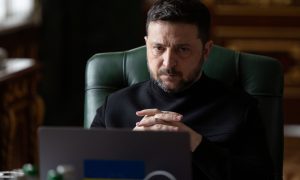
The third mistake, it can be attributed to the fact that the Russians were captives in the concept that that the takeover of Ukraine would be just a continuation of the Russian military’s “trip” to Crimea in 2014, a mistake based on an incorrect assessment that the nationalism and patriotism of Ukraine today under the presidency of Vladimir Zalinski is very high.
I can also point out at least 3 mistakes the Russians made regarding the implementation of the treaty.
First, the choice of the date of the war on Ukraine precisely in the winter and precisely when other talks on the nuclear weapons agreement with Iran come to a signing evening in Vienna. Winter is difficult for both the attacker and the protective force. But it is absolutely clear that the difficulty with the attacking force that is – the mobile, with long logistics lines, far from home – the difficulties are much greater.
The second mistake, the entrance to the city centers on the way to Kiev, the capital, and the centers of government. The defensive force has a huge advantage in fighting in built-up territory. Instead of bypassing all the cities on the way to Kiev, arriving with more power from the north (via Belarus), Russian forces chose to get stuck in cities on the way to the main goal – Kiev. Add to that the mistake for which the war artist Sun-Tzu warned 2,520 years ago that an army that surrounds a city would be better off leaving a free escape hatch to weaken the resistance.
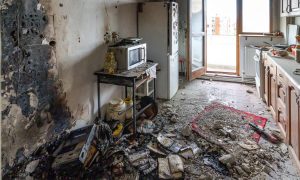
The third mistake, the targeting of civilian homes, hospitals, and the like, beyond being a violation of international laws of war, has only increased the anger of the citizens of Ukraine and perhaps even morally harms the Russian soldiers who see their brothers getting killed by planes and artillery encounters.
When it comes to the intervention of third parties in this war, things are even more unclear.
On the one hand, Ukraine is not a NATO member, and this Western organization has not yet been put to the test of the question of whether it would take a role in the conflict at all. Would the Russian’s bombardment of a city in Poland (for example, claiming that the Ukrainian army headquarters had settled there), will be sufficient reason for NATO forces to retaliate against Russia? Will the use of unconventional weapons by the Russians (either directly or by hitting a nuclear reactor from which the environmental damage will be huge), would that be sufficient reason for practical U.S. intervention?

Sergey Shoigu and Vladimir Putin, în 2017
What we clearly see at this point is that Russian President Putin, negatively surprised by the situation for two reasons: first, 21 days of fighting has not yet brought him to any substantive achievement (except for President Zelensky’s announcement that he is renouncing Ukraine’s accession to NATO – (as if he had it at all?). And the second, is the response of the economic sanctions on Russia and their intensity by countries and especially by about forty international giant companies.
Putin and the people of Russia know that rebuilding the Russian economy after this war will be perhaps more difficult than the reconstruction of Ukraine, which could receive a “MARSHAL PLAN” by most Western countries.