
Damon Wilson, the executive vice-president of the Atlantic Council (a strategic group that promotes and evaluates NATO’s policies) was the first official to launch on Twitter the hypothesis that Mircea Geoana could become the new Secretary General of NATO.
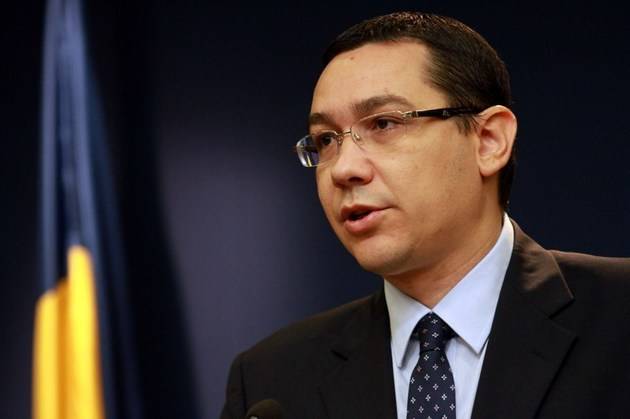
Prime Minister Victor Ponta followed with a televised declaration about the possibility that the future Secretary General could be elected from one of the newly entered countries, such as Romania and Poland, stated that “somebody else, not Băsescu, came and discussed with me this subject, and I fully support him.” The prime minister mysteriously abstained himself from pronouncing the name of the one that he is supporting, but did not say no to the insinuation that it is Mircea Geoană. As a matter of fact, this solution perfectly suits the prime minister, since it would send the former PSD president into a “bright” exile, especially after the latter had stated that he would be the most eligible candidate for the presidency of Romania. By these declaration, Mircea Geoană is in deep opposition with the calculus made by PSD until now: Crin Antonescu being the official supported presidency candidate.
A few days later, the former Ministery of Defense, Mircea Pașcu, has endorsed Mircea Geoană. “Mr. Geoană is definitely a candidate; he was Minister of Foreign Affairs in Romania. He even made a tour in the States to obtain some support from there.” MEP Mircea Pașcu has stated that by looking at the criteria on the whole, “the candidate itself is the fundamental criterion”, taking into account that in the end “it is not the country that will lead NATO, but the elected candidate.”
From your experience as a reputed analyst, which qualities do you think make a successful Secretary General? Could you name some examples in the history of the organization?

A successful Secretary General in my view is one who sees his role to lead NATO and advance Alliance interests, rather than simply manage to the middle of the consensus. NATO needs a leader who urges Allied political leaders to take tough, principled decisions. Rasmussen has very much followed this course, serving as the most important advocate for a strong NATO policy in Afghanistan for instance. I worked for Lord Robertson and very much believe he was one of the best Secretary-Generals of NATO given his willingness to provide leadership in difficult moments, rather than simply seek safe ground during debates.
The Romanian media has launched also a rumor about President Traian Basescu (which is on his final mandate due to expire next year) to be in the cards for the NATO position. Do you believe this information as plausible?
I do not know about the truth of the information. I do know that any head of state or government within the Alliance with a strong track record on Alliance matters, such as President Traian Basescu, would of course be a serious and competitive candidate to lead the Alliance.
On another note, Romania has been a strategic partner of the US in the past 20 years and entering NATO was of great importance for our country. Nevertheless, this has always caused negative reactions from the Russian authorities- at least declarative ones- and has reached a high point with the anti missile defense system built in Romania. Are relations with Russia degrading or is it just their typical debating and contesting of any American/NATO actions?
NATO, the United States, and Romania have worked hard to extend a hand of partnership to Russia, especially on missile defense. However, Kremlin leaders are not prepared to shed their zero-sum approach to policy and embrace cooperation rather than competition with NATO. The Alliance and Romania must pursue what is in their interests while remaining open to further partnership with Russia when Moscow makes such cooperation possible.
Secretary General of NATO
The Secretary General office of NATO is traditionally appointed to a European representative from the member states, to counter balance the US influence in the decision area of the Aliance. There is no formal process of election for this job, but there is an internal lobby system for some of the diplomats for the member states of NATO. Usually, the allies rapidly reach a consensus for the election of the new Secretary General for the next 4 years (though it is possible to extend the mandate, like the current situation of Anders Fogh Rasmussen, which will remain in function until 2014), nevertheless, in 2009 there was a public opposition of Turkey against the current leader. Among the responsibilities of the diplomatic leader, the Secretary General chairs the Defense Planning Committee and the Nuclear Planning Committee, two of NATO’s important military organizations. He also leads the Euro-Atlantic Partnership Council, the Mediterranean Cooperation Group.
Larry Watts, historian
“This is not a merely honorary position. The NATO allies gather together in usually very contentious meetings of quite long duration to determine how they would like to see the alliance develop in the near future. Only after that process do they begin seeking candidates who best represent their joint vision of the near-time future development of the alliance.
Hypothetically, any real assessment would involve getting NATO’s vision of its near-term (1-5 years) development and then comparing it with Mr. Geoana’s vision of the same.
It would be unprecedented to name a head of state as NATO secretary general. And it is generally assumed that head of state trumps NATO secretary general in terms of political importance. No serving head of state would be named NATO secretary general. That said, hypothetically speaking, if a former head of state represented what the other NATO allies identified as their vision for the future of the alliance, the possibility (although not necessarily the probability) would exist for such an appointment.”
Atlantic Council
The Atlantic Council is an institution devoted to promoting transatlantic cooperation and international security, founded in 1961, which provides an essential forum for navigating dramatic shifts in economic and political influence. Distinguished American foreign policy leaders along with their European partners developed an ambitious agenda on matters of global concern, from NATO’s future to energetic security. The Atlantic Council promotes constructive U.S. leadership and engagement in international affairs based on the central role of the Atlantic community in meeting the international challenges of the 21st century.