
“Russian intelligence services are present everywhere in Romania — in the economy, in politics, and, not least, in the military,” Alexandru Bălan acknowledged in an exclusive interview with Q Magazine.
- Topul libertății presei: România, locul 49 mondial. Ce state africane o depășesc
- Q Magazine face-to-face with Alexandru Balan. Pawn. Spy. Traitor.
- Din fabrica Philip Morris România de la Otopeni spre 54 de țări, pe 5 continente
- Putin și Trump, convorbire telefonică „prietenoasă, sinceră și practică”
- James Comey, fostul șef FBI, se predǎ autorităților în dosarul „86 47”
Thirty-five years after the fall of communism, last year, Romanian intelligence services succeeded, for the first time, in capturing a genuine spy.
Balan. Alexandru Balan is the name of the James Bond who comes from the East. Not the West. A Moldovan with Romanian citizenship, a former deputy director of the Information and Security Service of the Republic of Moldova (SIS), a spy who was identified and officially confirmed on April 28 as working for Belarus.
It was a movie-like operation, involving teamwork among agents from seven countries. He was accused in Bucharest of selling state secrets to the Belarusian KGB, endangering Romania’s security. And it ended just like in the movies: after international negotiations involving even Donald Trump, an exchange of agents took place, just like in “Bridge of Spies.”
Q Magazine interviewed Alexandru Balan while he was in pretrial detention in Bucharest, managing to get him to admit that “Russian intelligence services are present everywhere in Romania: in the economy, in politics, and, last but not least, in the military.”

FROM RUSSIA, WITH LOVE
In recounting Balan’s statements, I leave it to the reader to answer the question: how does a man come to betray the country that placed its utmost trust in him and for which, at certain moments, he even demonstrated patriotism?
The conversation with Balan begins with an account of a pivotal moment in his career: 2012. This was the year he uncovered the involvement of Russian special services in the 2009 protests, when the so-called “Revolution” took place and the communist government in Chișinău was overthrown. The events took place in 2009, on April 6 and 7.
“Everyone was left with the impression—and many still hold it today—that it was a youth uprising against the communist regime, resulting in the burning of the Parliament and Presidential buildings,” says Balan. “Until 2012, there was enormous pressure, including from the local media, to establish the circumstances and the truth. There were numerous headlines at the time asking: ‘What, after all, is the truth about April 7? What actually happened?.’ At that time, as an officer in the Counterintelligence Directorate—where I spent my entire career, rising to leadership positions—I identified primary intelligence regarding certain citizens of the Russian Federation who were involved in those events.
It was a completely different perspective from the general perception.
Most of the population believed that the revolution had been organized by the Romanian state, with the support of the European Union. This perception was fueled by the fact that the slogans and chants during the demonstrations were pro-European and pro-Romanian. People chanted “Romania!”, “The Romanian language!”, “The history of the Romanians!”, “Down with the communists!”, and the European Union flag was flying everywhere. There were around 50,000 protesters, most of whom were students.

From the Counterintelligence Directorate’s perspective, we identified certain individuals, citizens, and elements from the Russian Federation who were involved in those events.
Together with the General Prosecutor’s Office and several colleagues from the Intelligence and Security Service, we located the individuals from the Russian Federation whose role was to infiltrate and incite the masses toward destabilisation and direct confrontations with the police. It was all part of a script, because immediately after those events, on April 8, 2009, former President Vladimir Voronin—whose party had been the target of the protests—came out with direct and official accusations against Romania and the European Union.
As a result, there was even a period when visas were introduced, and Romanian citizens wishing to enter the Republic of Moldova during 2009 were required to obtain a visa—a nonsensical and utterly harmful decision against our Romanian culture, tradition, and spirit.
Eventually, early elections were called, and the government was replaced by a pro-European one.
That was my first public statement from within the closed environment of a secret service. As an SIS officer, I was directly assigned to assist prosecutors in identifying those Russian citizens.”
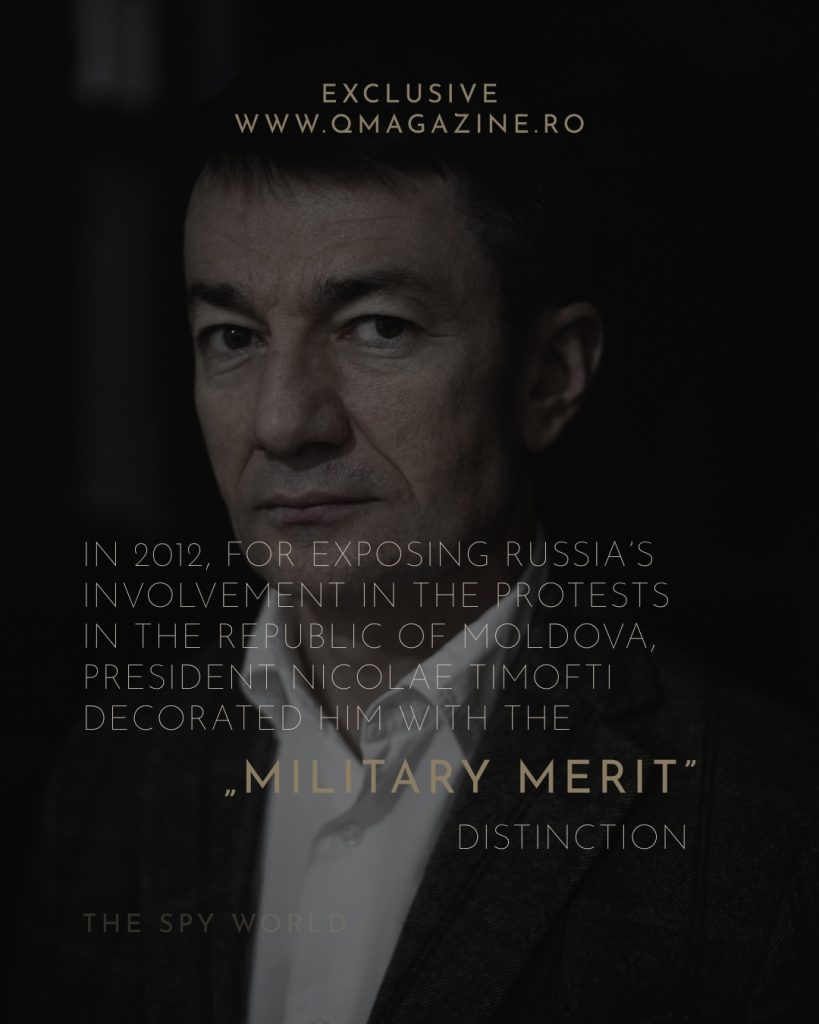
In 2012, President Nicolae Timofte awarded him the state distinction “Military Merit” for exposing Russian involvement in the protests in the Republic of Moldova.
YOU ONLY LIVE TWICE
“Obviously, from that point on, I became a target of the Russian secret services.
One of those Russian citizens, Eduard Bagirov—a Russian blogger who was also a member of the United Russia party, to which Vladimir Putin belongs—was arrested in Chișinău. He spent several months in Penitentiary No. 13, where I interacted directly with him. After being placed under house arrest, he fled to the Russian Federation via Transnistria. It was a well-thought-out scenario by the Russian Federation to get him out of the country and send him home.
For me, who was directly involved in investigating this case, it was incomprehensible how he, as a citizen of the Russian Federation, was placed under house arrest, given that he had no domicile or residence in Chișinău, but it was a political decision. I believe this dilemma could be explained by the former leader of the Liberal Democratic Party of the Republic of Moldova, Vlad Filat, who was prime minister at the time and knows in detail how the events unfolded, as well as the political connections and implications of that period.
“As a security officer, I can state with certainty that the events of April 7, 2009, in Chișinău were planned and carried out to the detriment of the national security of the Republic of Moldova, based on a well-defined plan by the special services of the Russian Federation. Subsequently, blogger Bagirov was convicted in absentia in the Republic of Moldova, but he was already safe in Russia,” explained Alexandru Balan.
THE WORLD IS NOT ENOUGH
Alexandru Balan’s career continued under various pro-European governments that came to power starting in 2009.
“In 2017, when I held the position of deputy director of the SIS, I coordinated an operation to expose an agent recruited by the GRU (Military Intelligence Service of the Russian Federation). We caught him red-handed while he was talking to an undercover GRU officer at the Russian Embassy in Chișinău.
It was an operation carried out together with our Western partners, following which the SIS became known throughout the intelligence community.
That’s when the doors to the most important Western intelligence services began to open for us.
Immediately after that sting operation, we decided to expel five GRU officers operating under diplomatic cover. This was a resounding blow, unbelievable to many: a small country with a small intelligence service could carry out such decisive actions to curb Russian subversive activities. We must bear in mind that we are talking about the Republic of Moldova, which includes the Transnistrian region on its territory, where the Russian army and over two thousand Russian officers are still stationed today.
I recall discussions with representatives of U.S. intelligence agencies, who couldn’t understand how we manage to document and counter such large and powerful services. My explanation was always the same: we are a small country, a small institution, and decisions are made much more quickly than in massive organisations.
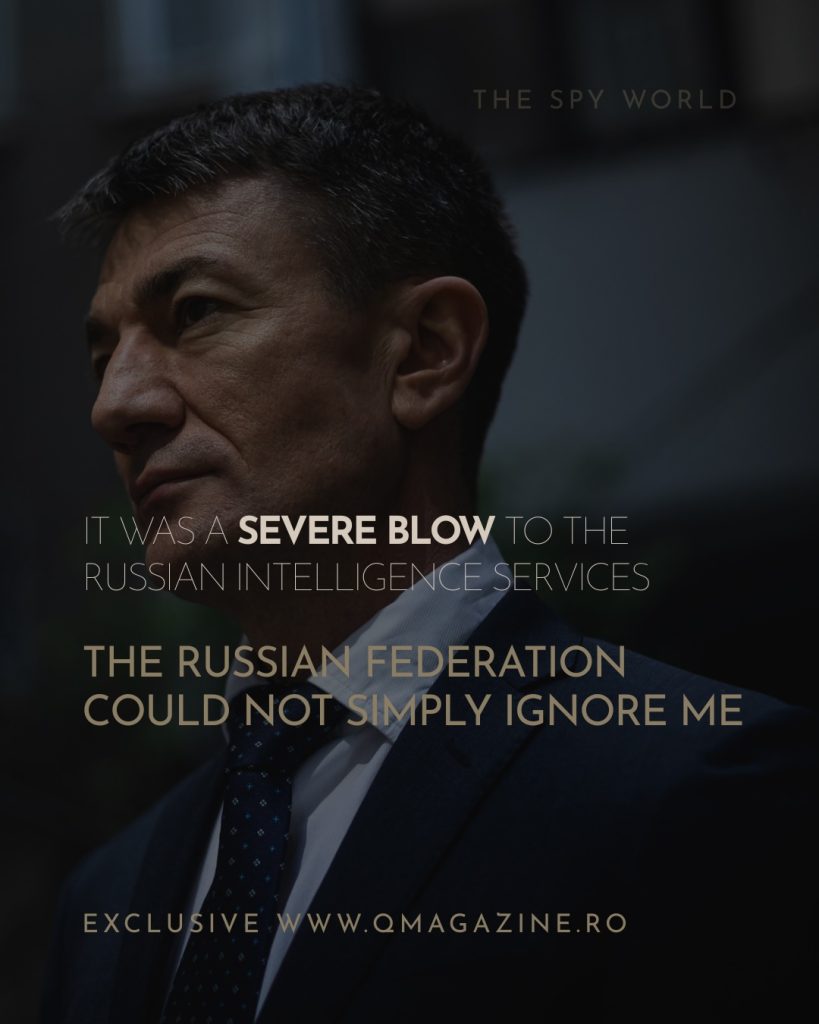
That operation was a severe blow to the Russian services, and the Russian Federation had no choice but to take notice of me. They began to monitor and closely surveil me to prevent further actions of this kind. “Vladimir Putin neither forgives nor forgets!” explained Alexandru Balan to Q Magazine.
OCTOPUSSY
The Russian octopus has many long arms. Balan says that “we currently have officers within the SIS who are graduates of the FSB.”
“In the 2000s, these officers graduated from a specialized program in the Russian Federation, at the FSB Academy in Moscow—five years of study leading to a bachelor’s degree exclusively in security. We, in the Republic of Moldova, did not have such an opportunity at that time.
In the case of these officers, that was the situation at the time, because it was the Communist government (2000–2009). During that period and up to the present, these officers have been supported, promoted, and remain active within the SIS of Moldova. From the discussions I’ve had, both as an SIS officer and, on many occasions, as a security expert within various European platforms, this fact was incomprehensible. Quite simply, foreign partners couldn’t understand this situation,” Balan told Q Magazine.

To any outsider, it is clear that the FSB did not even need to directly recruit a student, a future officer within the Moldovan SIS; rather, it was sufficient to instil in him the pro-Russian mindset that permeates the entire curriculum of the FSB’s Intelligence Academy, and to monitor his personality to know when and how he could be persuaded or blackmailed.
The reason why Maia Sandu would tolerate, within the SIS, officers who are products of the Russian intelligence school remains a mystery to everyone.
A VIEW TO A KILL
Alexandru Balan believes that the current government in Chișinău does not understand the danger.
“They are not aware of the risks and vulnerabilities that may arise from this area and mistakenly believe that this does not directly concern them. It is an entirely political decision, which has nothing to do with institutional leadership.
At the institutional level, there is a deputy director who should step forward and explain this situation, since all appointments and promotions are ultimately coordinated with the director. In turn, the director coordinates them with the Presidency or the Cabinet of Ministers, depending on the lines of activity and the processes taking place within the institution. “So, they directly approve these individuals,” explains the former deputy director of the SIS.
Although at the time we met face-to-face, Alexandru Balan rejected the accusations levelled against him, the reality of the present blatantly contradicts him.
“I have never worked for the Russian services, nor, more recently, for those in Belarus. It is a complete fabrication. During my service, I was a counterintelligence and counterespionage officer, meaning I fought precisely to counter foreign espionage,” Balan stated shortly before being welcomed with flowers in Belarus and thanked by President Lukashenko.
“Those who know me and those in the field know that my profile is clear: I am pro-European, I hold Romanian citizenship, obtained through my own efforts, and this is my conviction. I come from a family with a Romanian upbringing, and I am Romanian. This fact, I believe, refutes those suspicions that the Russian secret services recruited me.” was Alexandru Balan’s firm response when I asked him exactly how the Russian services had blackmailed him into being recruited by them, as I was fully convinced that the accusations levelled against him were true.
Romanian intelligence officers would never have formally brought charges of such magnitude against a citizen of the Republic of Moldova through DIICOT prosecutors in the absence of solid evidence.
Balan attempted an explanation by accusing colleagues, “within or outside the SIS, many of whom he had dismissed from their posts because they did not align with the interests of the service and the security of the Republic of Moldova.”
“For me, what is happening regarding my case, especially in Romania, is a confusion and a mistake,” Balan stated.
NEVER SAY NEVER AGAIN
Alexandru Balan told Q Magazine that “within the SIS, he had a very good relationship with the Romanian services.”
“There’s a saying among colleagues: in the services, there is no friendship, only partnership. And our partnership was a very good one. This was also due to the involvement of the director at the time, Mihai Bălan, who played a crucial role in reforming the Information and Security Service. He was the person who, together with the team I was part of, changed the face of the institution, eliminating that old KGB-style imprint and transforming it into a modern intelligence agency, aligned with European standards.”

“I have never encountered any obstacles in collaborating with the SRI or SIE. We have carried out joint operations with Romania and achieved significant results, which they can confirm. I believe these relations will continue to develop,” Balan stated optimistically at the time of the interview, despite the official accusations levelled against him.
GOLDEN EYE
He confirmed to Q Magazine that Russia’s eye is constantly watching Romania. In short, Russia is spying on Romania. That this is admitted by an officially recognised intelligence agent from Belarus is, perhaps, the most concrete argument for the decisions taken by Romanian officials against the Russian Federation.
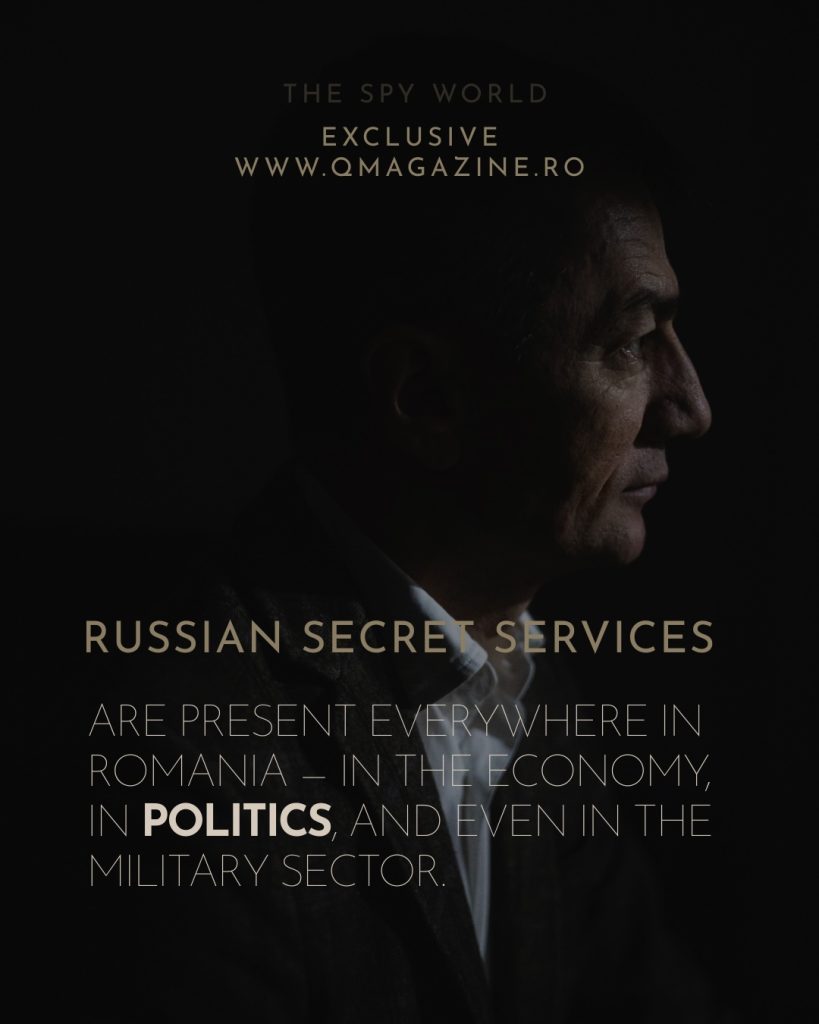
“Certainly, Russian intelligence services are present not only in Romania, but all over the world. Just like the American, French, or Chinese ones. We’re talking about major countries that can afford the luxury of ensuring the financial resources for operations carried out over long periods, with massive budgets.
Unlike them, a country like the Republic of Moldova cannot afford this luxury, especially in the field of espionage. In the world of intelligence, espionage is the most expensive service: it is the best paid and the best technically supported.
It is essential that the leaders of our countries understand a clear message: there should be no cutting corners when it comes to intelligence services, especially espionage.
Although these expenses may seem difficult to justify at the moment, in the long term, they bring benefits that cannot be compared to the risks that may arise in their absence,” said Balan.
“Russian intelligence services are present everywhere in Romania: in the economy, in politics, and, last but not least, in the military sphere. They must be closely monitored by our own intelligence services so that we can react and, above all, prevent threats.
The primary task of an intelligence service is prevention, unlike the police or the military.
We must prevent risks from materializing, including those of a military nature.
Although many people wonder when an invasion by the Russian Federation might take place in Romania or the Republic of Moldova, as far as I know, there are currently no such scenarios.
There is a lot of speculation on this subject to keep the population in a gray area, unable to perceive reality.
However, I repeat: the task of the intelligence services is to monitor everything closely. I am certain that the intelligence services (SRI, SIE) have a good understanding of the situation and promptly inform the state leadership so that political decisions ensure national security,” Alexandru Balan told Q Magazine.

LICENSE TO KILL
Furthermore, he even offers a lesson to the authorities in Bucharest. “There is a certain logic to the secret services. Often, accusations of treason, espionage, or illegal funding from foreign services are difficult to prove. If you make such accusations without irrefutable evidence, you only radicalize society and create a tool that is not accepted by the moderate public.
My tactical recommendation is different: focus on tax evasion or other concrete legal violations. These are specific, entirely legal avenues through which the services can act. As long as a person (a satellite of foreign intelligence services) is occupied with resolving their civil, administrative, or misdemeanor cases, they no longer have the time or resources to focus on political projects that would pose a danger to the country.”

DIAMONDS ARE FOREVER
In a subjective ranking—admittedly, but nonetheless closer to reality than what laypeople might come up with—of the quality and performance of intelligence services worldwide in 2026, Balan says that “we cannot ignore the major powers, but there are also notable exceptions.”
“The State of Israel, through the Mossad, remains one of the most respected services in the world. Here, I would draw a parallel with the Republic of Moldova. The Western community often wonders how we manage to achieve results with such limited resources. The conclusion is that, overall, financial power isn’t the only thing that matters.
The basic criterion is intelligence and the mind of the intelligence officer.
Whether they are Israeli, Albanian, or Moldovan doesn’t matter; if you do your job well, if you know how to process information and monitor foreign espionage to report areas of vulnerability to the state leadership, that is the charmof our work.
I would place the Americans, Russians, Chinese, and Israelis on the same level. I would have particular respect for Romania’s intelligence services; I wouldn’t overlook them at all. I would rank them among the world’s top performers.”
DIE ANOTHER DAY
Despite the complex picture that, viewed from the outside, involves arrests, charges, convictions, extraditions, pardons, and “changes,” Alexandru Balan had his own perspective and looked to the future: “I see my future in the same world of intelligence, alongside colleagues who are already outside the official security institutions.
I wish to contribute, with all the knowledge and experience I have, to ensuring the national security of our state, now working in the non-governmental sector.”
As we read these lines, we know that the “our state” he was referring to is…Belarus.

1 IN 100
Alexandru Bălan was recruited by the Information and Security Service (SIS) of the Republic of Moldova while still in college. He passed all the tests. The acceptance rate is one in a hundred.
He worked in the SIS from 2000 to 2023. He witnessed both the KGB-style covert command structure and the American-style reform of the Service. Moreover, as deputy director, he was part of Director Mihai Bălan’s team, which purged virtually everyone with Russian-style influence and training and instilled in the officers a Western system of work and values.
Throughout his career, Balan focused exclusively on counterintelligence. Together with American and Romanian officers, he coordinated several operations that exposed and dismantled espionage missions and efforts to undermine the safety and security of the Republic of Moldova.

TIMELINE OF THE INVESTIGATION
“Criminal Judgment No. 65/F of April 18, 2026
Pursuant to Article 47 in conjunction with Article 48 of Law No. 302/2004 and Article 1 of the European Convention on Extradition, signed in Paris on December 13, 1957, the proposal of the Prosecutor’s Office attached to the Bucharest Court of Appeal regarding the extradition request made by the judicial authorities of the Republic of Moldova concerning the aforementioned Balan Alexandru is hereby accepted.
Orders the extradition and surrender to the judicial authorities of the Republic of Moldova of the person subject to extradition, Balan Alexandru, (details), for the purpose of serving the sentence of 1 year and 6 months’ imprisonment, imposed by the judgment of the Chișinău District Court (Buiucani Branch), dated April 15, 2026, rendered in case no. 1-1029/2026, for committing the offense of attempted disclosure of state secrets, as provided for in Article 27 and Article 344(1) of the Criminal Code of the Republic of Moldova.
Pursuant to Article 47 of Law No. 302/2004, it is noted that the person subject to extradition, Balan Alexandru, has consented to extradition and has not waived the benefit of the principle of speciality.
Pursuant to Article 43(6) of Law No. 302/2004, orders the arrest of the extradited person, Balan Alexandru, for the purpose of surrender for a period of 30 days, from April 18, 2026, through May 17, 2026, inclusive. Final.”
The speed with which the “Alexandru Balan” case was handled is remarkable.
For eight months, he was detained in Romania, in various prisons, but when the intelligence services’ stars aligned, a perfectly coordinated “exit” was organised within three days between Bucharest, Chișinău, Moscow, and Washington.
A case was opened against him in the Republic of Moldova. The charge was similar to the one for which he had been detained in Romania: “possession of strictly classified documents without a security clearance and the disclosure of state secrets to KGB officers from Belarus.”
On April 15, he is tried in a closed-door hearing; the defendant appears online from his house arrest in Bucharest, pleads guilty, and, within an hour, receives a sentence of one year and six months.
Three days later, on April 18, the Bucharest Court of Appeals approved and ordered Balan’s extradition to serve his sentence in Moldova, a decision with which he, of course, agreed.
Less than a week later, on April 24, the former officer is taken to the border with the Republic of Moldova and handed over to the authorities across the Prut River. Apparently, to be incarcerated in a prison.
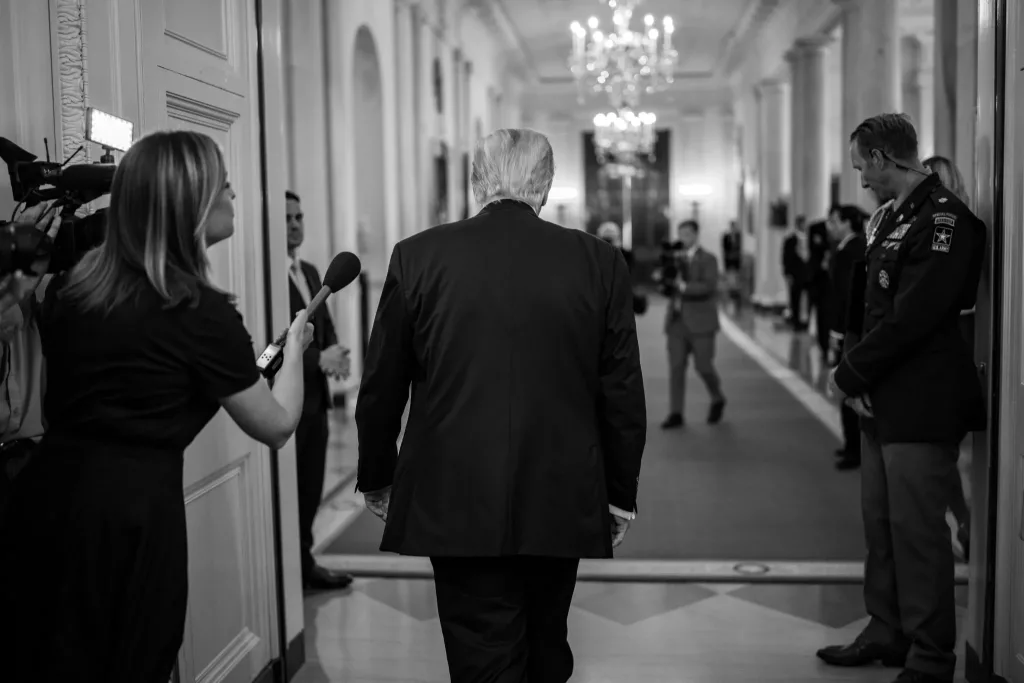
TRUMP – PERSONALLY INVOLVED IN THE OPERATION
On April 28, four days later, Maia Sandu publicly announced that she had pardoned him. Now a free man with no criminal conviction, Balan was exchanged, along with a Russian woman, for two Moldovan citizens arrested in Moscow. The exchange was coordinated—in a completely unusual move—by U.S. President Donald Trump himself, whom Maia Sandu thanked in an official statement.
“The Republic of Moldova has succeeded in freeing and bringing home two Moldovan citizens who were being held captive in Russia. Both, being employees of the Information and Security Service, were released and returned to our authorities in an international prisoner exchange.
I thank President Trump for his involvement and that of the U.S. administration in the success of this operation.
I thank all our partners—from the U.S., Poland, and Romania—for their involvement at every stage of the process and for the support provided to our authorities…
To bring them home following a complex operation, the two officers were exchanged, as requested by the other side, for two other individuals: a citizen of the Russian Federation, Popova Nina, who was acting against the state of the Republic of Moldova, and Alexandru Balan, a citizen of the Republic of Moldova, accused of treason in the interest of the Belarusian KGB, who was pardoned so he could leave for Belarus.
“For our country, this is a gain that cannot be measured by a simple mathematical equation—we have brought home two citizens who work for the Republic of Moldova, giving up, in exchange, two prisoners who worked against the Republic of Moldova,” Maia Sandu stated.
RETURN “HOME”
A few hours after the pardon, Alexandru Balan arrived in Belarus and was greeted with flowers, like a hero, according to photos published by the Minsk press.
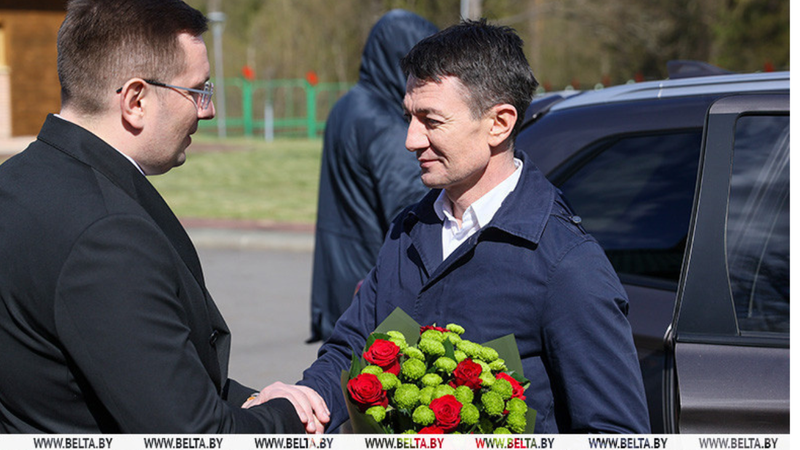
“Thus, from Polish territory (where the prisoner exchange took place, with Belarus releasing three Polish citizens), Belarusian intelligence agents Alexandru Balan and Vladislav Nadeiko were returned, as well as two citizens of the Russian Federation—archaeologist Aleksandr Butiaghin and Nina Popova. Among those transferred to the other side are Andrei Poczobut, as well as Polish citizens Grzegorz Gawel and Tomasz Beroza. Experts describe the exchange process as unique,” reports the Belarusian news agency BelTA.
“It was a complex and lengthy process. It took about a year,” said the deputy head of the Belarusian KGB’s Investigation Directorate, Lieutenant Colonel of Justice Aleksandr Tarasevich.
According to him, KGB employees acted on the orders of Belarusian President Aleksandr Lukashenko. The head of state reportedly personally conducted negotiations with the leaders of the countries involved.
According to the Belarusian official, the leadership and employees of the Russian Federal Security Service made a significant contribution, working together with their Belarusian colleagues during the most difficult stages.
“The individuals returned by the Polish side were warmly welcomed on Belarusian territory, congratulated on their release, and presented with flowers and gifts from the President of Belarus,” reports the Minsk press.
“The President of the Republic of Belarus has instructed the leadership of the State Security Committee to provide maximum support to our intelligence officers, who, risking their lives and health, have steadfastly and courageously fulfilled their duty to the motherland,” stated Aleksandr Tarasevich.
“For those who have returned to Belarus, concerns about their own fate, uncertainty, and other difficulties are now behind them. Now they can breathe a sigh of relief and relax: they are home,” notes BelTA.
The case in which Alexandru Balan is accused in Bucharest of allegedly selling Romanian state secrets to Belarusian officers is still pending, but it is unlikely to proceed. And even if convicted in absentia, will Belarus extradite him to serve his sentence in Romania? Hard to believe.

TREASON. TRAITOR
How an intelligence officer went from coordinating high-profile operations against Russian intelligence services—resulting in public expulsions—to selling information to them is a question that will certainly remain without a concrete answer. Traitors, in such cases, are either ideologically motivated, bribed with money, or blackmailed.
ABOUT THE INTELLIGENCE SERVICES IN ROMANIA
Today, in light of what has already transpired, knowing that this was no mistake, we can appreciate the performance of the intelligence services of Romania, the Czech Republic, and Hungary, which uncovered not just an individual case of treason, but an entire regional intelligence network hostile to NATO countries.
The U.S. Embassy’s thanks for Bălan’s release
Just as the former deputy director of the SIS was being honored in the country that recruited him, the U.S. Embassy in Bucharest expressed its gratitude to Romania: “We welcome the release of three Polish citizens and two Moldovan citizens from detention in Belarus and Russia, an important achievement made possible by sustained diplomatic efforts and close coordination among partners. Romania played a significant role in supporting these efforts, collaborating with the United States, Poland, and Moldova to facilitate the safe repatriation of the five individuals. This outcome underscores the importance of trusted partnerships and cooperation in advancing shared security and humanitarian objectives.”
Discreetly, on its official website, tagging President Nicușor Dan and the U.S. Embassy in Bucharest, the Romanian Intelligence Service stated that it “honors all commitments made in external partnerships.”
“The Romanian Intelligence Service thanks all domestic partners for their exemplary coordination in protecting national security, including the promotion of Romania’s strategic interests. Respect!”—a veiled message to the officers, prosecutors, lawyers, and judges involved in this case, which has transcended our country’s geographical and legal boundaries.

CONCLUSION
We have all watched a spy story of the kind rarely seen in the public sphere and more often in Hollywood productions. Much has come to light, and yet, even more remains unsaid and unwritten. It is likely that all the behind-the-scenes details of this extremely complex story will only be revealed many years from now, given that, especially in the world of espionage… nothing is as it seems.