As one could notice, even from Bucharest, we are sailing through murky waters, since we all have more and more aspirations and less and less achievements, and there are more and more players and less and less decision makers. Once again, the studies or reports made public before or on the occasion of the event, as well as the media coverage of the event and the numerous statements included, implicitly or explicitly, all the global challenges for which decision makers should have found the best solutions in time. The viewpoints included topics like: the environment and lack of resources, job-related skills and human capital, gender equality, long-term investments, infrastructure and development, food safety and agriculture, investments and international trade, future of Internet, world crime and corruption control, social inclusion and future of financial system. The speakers also dealt with topics, such as: geopolitical tension escalation, recrudescence of various types of terrorism, pandemics of all sorts, as well as the new European and global energy circumstances.
The globalisation of terrorism
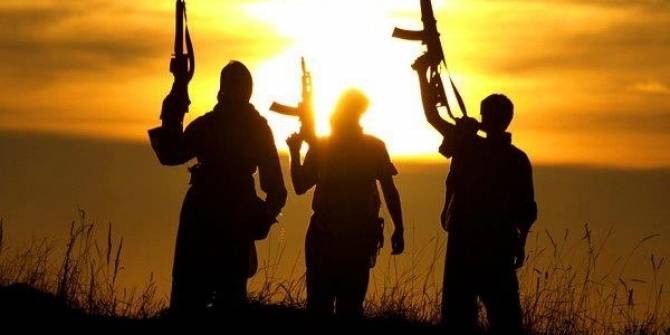
Most of the opinions expressed by the speakers reveal that all societal players should study more thoroughly topics like: explosive mixture of geopolitics and geo-economics; challenges of the new techno-industrial paradigm; labor market segmentation and income discrepancies; limited access to productive resources and vocational training programs; new generation volatility of the international capital market, business information and technology; unpredictability of the space and time dimension. Some of the participants at the World Economic Forum of Davos focused on a series of risks threatening global stability, such as: radicalism “globalization”, the conflict for geopolitical and trade domination between the United States, Europe and Russia, the crisis in Ukraine, the collapse of oil prices and toxic waste left by the global financial crisis on the markets and especially in the American economy. Some of the sensitive topics dealt with by most speakers included fears related to stricter crediting policies in the United States, American dollar appreciation, Chinese economy slowing-down (which a great capital market specialist called “hard landing”) and goods “super-cycle” implosion. They concluded that 2016 may become a landmark of populism recrudescence in Europe; that we witness global insecurity worsening and a refugee crisis with unpredictable consequences; that economic growth has failed to reach the expected level and the markets are still unstable; that there may occur events the aftermaths of which are difficult to predict – the result of the UK referendum on a possible British withdrawal from the European Union, the political and economic developments in Russia or generated by its attitude, the reforms that China intends to implement.
The next industrial revolution

 One of the most important topics of this year’s edition of the Forum was the forth industrial revolution. Apparently, the intended purpose of this year’s edition is the identification and implementation of an aggregate system of circumscription of this revolution with a view to its proper understanding, flexible stimulation and integration in the logic of the new developments. The specialists who have analyzed the pending phenomena of this revolutionary stage in the development of our society argue that the vectors of this revolution are: the dynamic work climates subject to multidimensional changes; the higher importance and societal relevance of the middle classes in emerging economies; the worrying climate changes, the increasingly higher constraints imposed by the balance of natural resources; the ever growing geopolitical volatility; the increasingly higher concerns of consumers all over the world related to the ethical implications of privacy; plant “graying”; the considerable population growth rate discrepancies among various world regions; the impressive dynamics of the urbanization process. It is absolutely essential that all these sensitive topics also be high on the agendas of the Romanian public decision makers. These topics should be discussed in academia, public debates and should be the concern of all citizens.