
…and they succeeded, including thanks to European funds. We have discovered recently (September 17-19), together with fellow journalists, some successful projects funded by EU money, in Madrid.
The official visit was organized by the Ministry of European Funds as part of the project “What does Cohesion mean in the EU?.”Thus, let us see what Cohesion looks like.
EXAMPLES OF GOOD PRACTICE
Spain has passed a law, in 1982, according to which all companies with more than 50 workers must have among employees at least 2% persons with disabilities.
ONCE is a large Spanish foundation that has been active for decades, which writes projects for social inclusion of people with disabilities. We visited a company activating within ONCE, where we met a blind young man who develops web accessibility services for the visually impaired. Accompanied by his friend, a beautiful dog, Pedro Esquiva showed us what he does. With only a few clicks, he manages to remotely control his home.
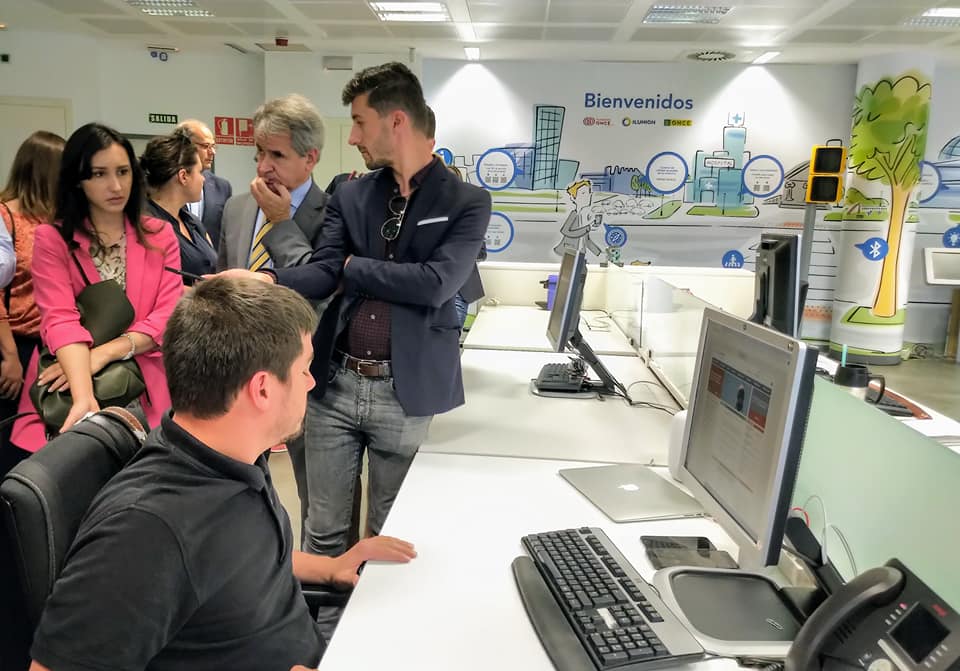
Just by pointing your finger over the screen, its applications and functions are communicated. In one of them, named“Home,”he checked, for example, if he forgot the light on in one of the rooms and told the phone to turn it off.

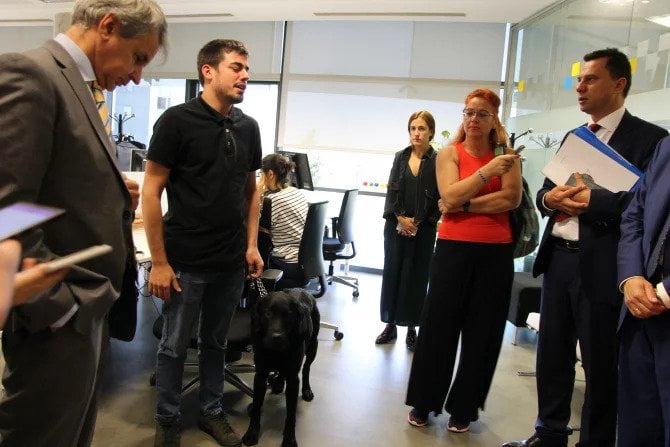
Photo: DC NEWS
His field of work is vast, from the accessibility of the web pages of certain public institutions, to the development of smart tools for hotels within the ILUNION network.

At one of those events, we met Jose Maria. A few years ago he suffered a serious accident and, after a difficult recovery, he could no longer find a job. Until one day, when he sent the CV to ILUNION and it was accepted immediately. Since then his life has changed. As he himself told us, this was his lucky break.

ONCE in figures
9,632 jobs created for people with disabilities;
40,800 candidates for the jobs offered by the companies;
266,180 people in the database comprising job seekers.
The ONCE social group, which is part of the Once Foundation, the National Organization of the Visually Impaired, Ilunion Hotels and Ilunion Technologia – started 20 years ago, with the help of European funds, a vast program meant to improve accessibility to the labor market for people with disabilities.The ONCE Foundation has so far accessed 166 million euros in EU funds,of which 40 million euros are for the inclusion of young people with disabilities.
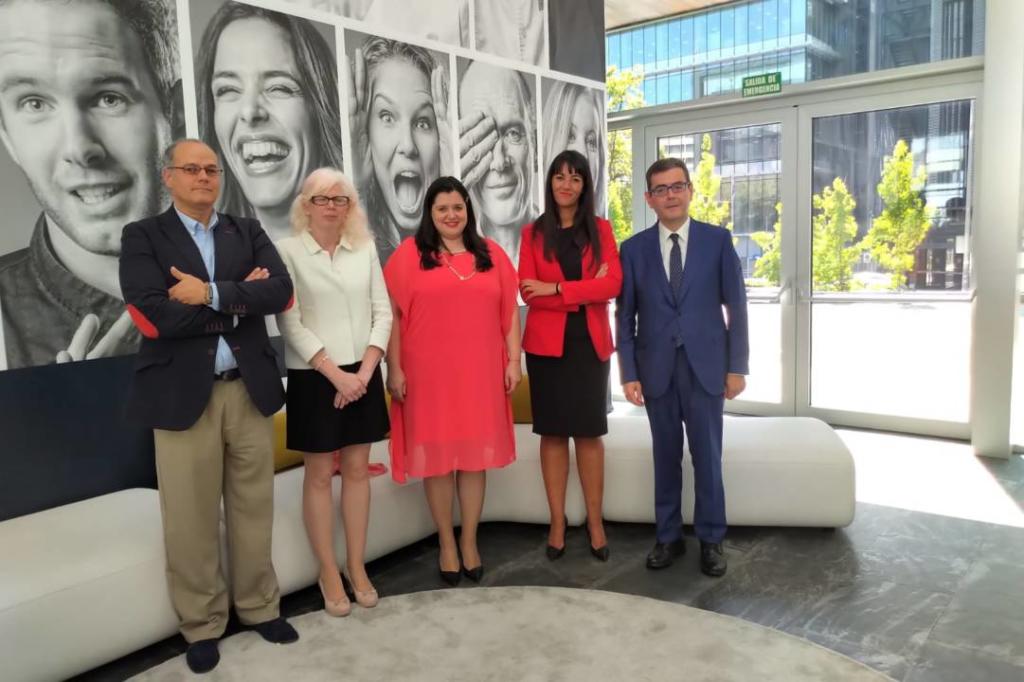
Currently ONCE is implementing 6 projects with European funding, through the Operational Program for Inclusion and Social Economy and the Operational Program for Youth Employment.
The journalists visit is part of a project implemented by the Communication Department of the MEF, in order to ensure, with the help of the media, a better visibility of the benefits that Cohesion Policy generates for the lives of Romanian / EU citizens.
15 000 Kilometers
The Spanish railway infrastructure has been expanded in recent years with new rail networks for high-speed trains, build with the help of the European Regional Development Fund (ERDF).
We visited two infrastructure projects, the Puerto de Atocha Railway Station and the Paco de Lucia Metro Station.

Puerto de Atocha Railway Station – a historical building that has become a tourist destination over time hardly shows the fact that it needed decades of investment and effort. The result – 15 high-speed train lines with a total length of 15 000 km.



Paco de Lucia Metro Station – the latest built in Madrid, is an innovative station due to the joint efforts of private and state-owned companies. The biggest problem – graffiti. The main investment – maintenance at the highest level. Without a doubt, Spanish people can be proud of the modern infrastructure, and the efficient management of European funds deserves some of the merit.
THE ROMANIANS IN SPAIN, IN THE FIRST PLACE
The Secretary of State Ana-Maria Buşoniu presented, in Madrid, at a press conference, in the presence of journalists, the status of the implementation of the Diaspora Start-Up program.
Funded by the Ministry of European Funds of Romania, through the Human Capital Operational Program during the current programming period, the Diaspora Start-up program had an allocation of 30 million euros.
The Secretary of State Ana-Maria Buşoniu pointed out that Spain occupied the first position with regard to the selection of the target group for the projects of this entrepreneurship scheme.
Out of a total of 7,725 people, 2,093 were selected from Spain, of which 1,961 also benefited from the entrepreneurial training program.
P.S. We appreciated throughout the visit the openness and support of the representatives of the Romanian Embassy in Madrid, who are also constantly helping the Romanian community in Spain.