
The difference between a nation that stands on its own two feet and one that is on its knees is not measured in billions. It is measured in the preparedness and character of those who lead it…and sign on its behalf.
- Roman Gofman a devenit noul director al Mossad. Netanyahu: Ridică-te și strălucește!
- Prof. Mariana Badea revine cu „Bumerang de manele… lingvistice”
- Generalul Gheorghiță Vlad: Resping toate acuzațiile! Nu pot ignora faptul că afectarea imaginii conducerii instituției Statului Major al Apărării într-un asemenea moment produce efecte care depășesc persoana mea
- Sindicaliștii din TVR amenință cu greva generală. Adriana Săftoiu, acuzată că dorește eliminarea drepturilor angajaților
- Ștefan Avrămescu, AUR: Atâta vreme cât nu suntem parte a unui guvern, nu înţelegem de ce să-l votăm
There are weeks when two neighboring countries, receiving the same tool, reveal everything that separates them.
Poland and Romania both requested funds from the European Union’s SAFE program—European loans for rearmament. Poland received the largest allocation in the Union, 43.7 billion euros. Romania, the second-largest, received 16.68 billion. Both fear the same neighbor to the east. The same deadline. The same conditions. And then, in that same last week of May 2026, the two countries signed. What they signed—and especially with whom—says more about each of them than a hundred speeches.
An uncomfortable question
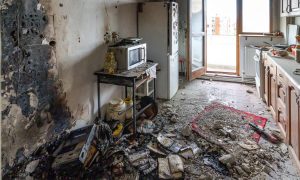
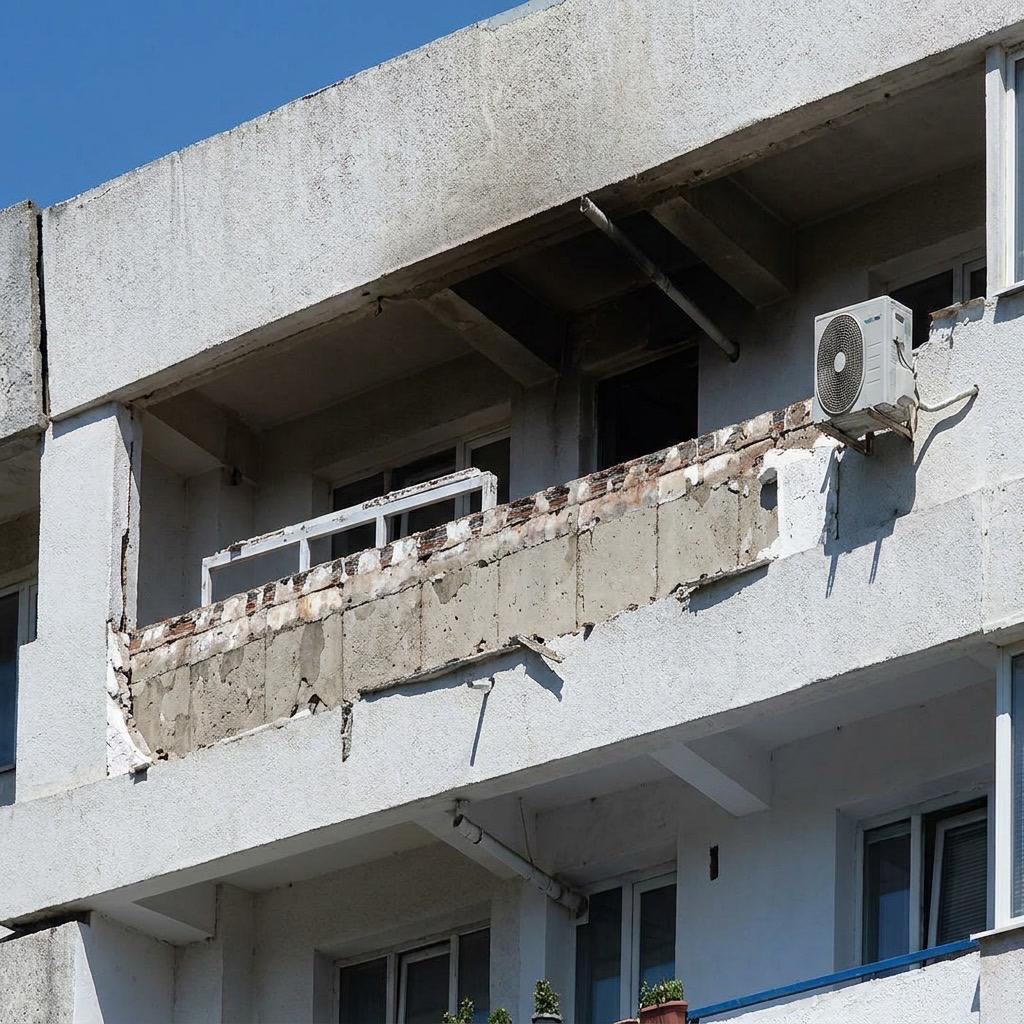
Romania is not a poor country. We have the second-largest European allocation from a 150-billion-euro program. We are not a small country. We are the largest market, the largest territory, and the most populous nation on NATO’s eastern flank, after Poland. We are not short on money. We are not short on stature. We are not short on danger—a Russian drone struck an apartment building in Galați on the very night the contracts were signed.

And yet, that same week, receiving the same equipment, our northern neighbor emerged with a strengthened defense industry, with drones, with its own artillery, and with a clear message to the world—while we emerged with four contracts signed with a single foreign supplier, with our national industry sidelined, with nineteen questions that Q Magazine posed 20 days ago regarding the SAFE contracts to the Minister of Defense and to the Office of Prime Minister Ilie Bolojan—all unanswered—and with a 45-year debt.
If it is not money that separates us from Poland, nor our position, nor the danger—then what? There is only one answer, and it is not a comfortable one: we are separated by the people who sign the contracts.
We are separated by their intellectual preparation, their ability to think of a state in terms of twenty years, not twenty days. And we are separated by their character, their strength to put the country before fear, comfort, and personal calculations.
It is not poverty that makes a colony. It is the lack of preparation and character of those who sign on its behalf.
Two neighbors, two destinies
What Poland did
On Saturday, May 30, 2026, Warsaw did something unprecedented. In a single day, the Polish state signed 29 contracts with the defense industry, worth approximately 78 billion zlotys—about 18.4 billion euros.
Defense Minister Władysław Kosiniak-Kamysz, present at the signings, called the day “an absolute world record” and “a day that changes reality.” But the lesson isn’t the figure. The lesson is who Poland signed with.
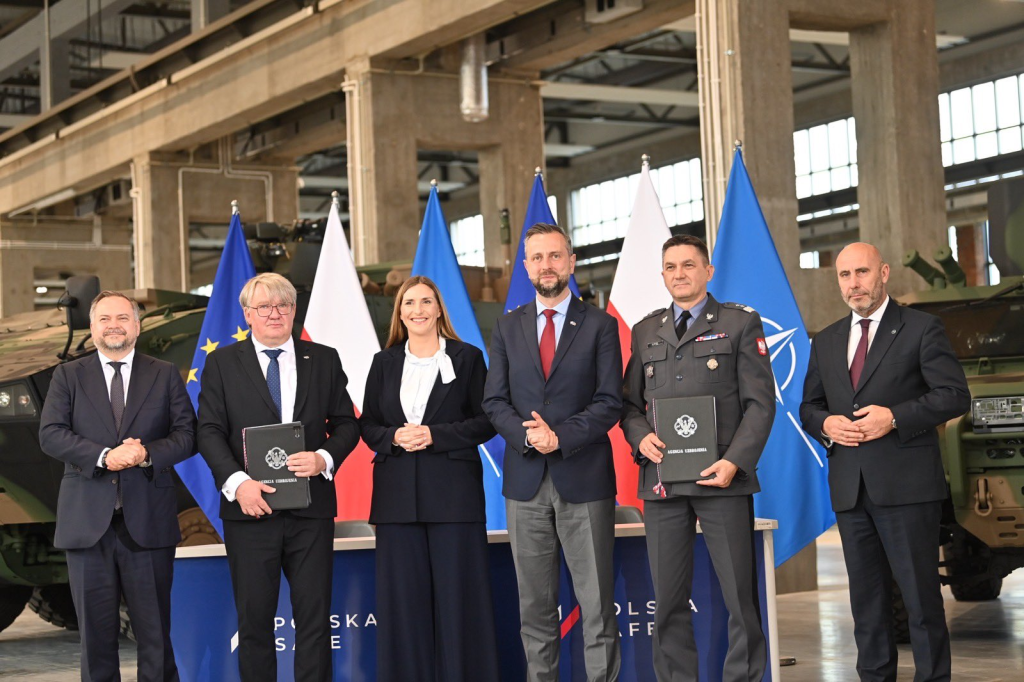
It signed, without exception, with its own domestic industry. Approximately ninety percent of this money remains in Poland.
Leading the way is Huta Stalowa Wola, a subsidiary of the Polish Armaments Group (PGZ), the state-owned Polish defense holding company, which received the largest share of the package, approximately 60 billion zlotys, about 14 billion euros.
Next is Rosomak S.A., for forty-eight medical evacuation and command vehicles. Then WB Group, Poland’s largest private defense firm, for drones and loitering munitions. Then the Military Electronics Works in Zielonka, for radar and electronic warfare. Then the mechanical plant in Tarnów, for infantry weapons. Plus Makspol and Jelcz for helmets, vests, and trucks. For the 155 mm ammunition, a separate contract worth approximately 13.5 billion zlotys—over 3 billion euros—with the state-owned Dezamet factory. For the reconnaissance ships, the Polish shipyard.
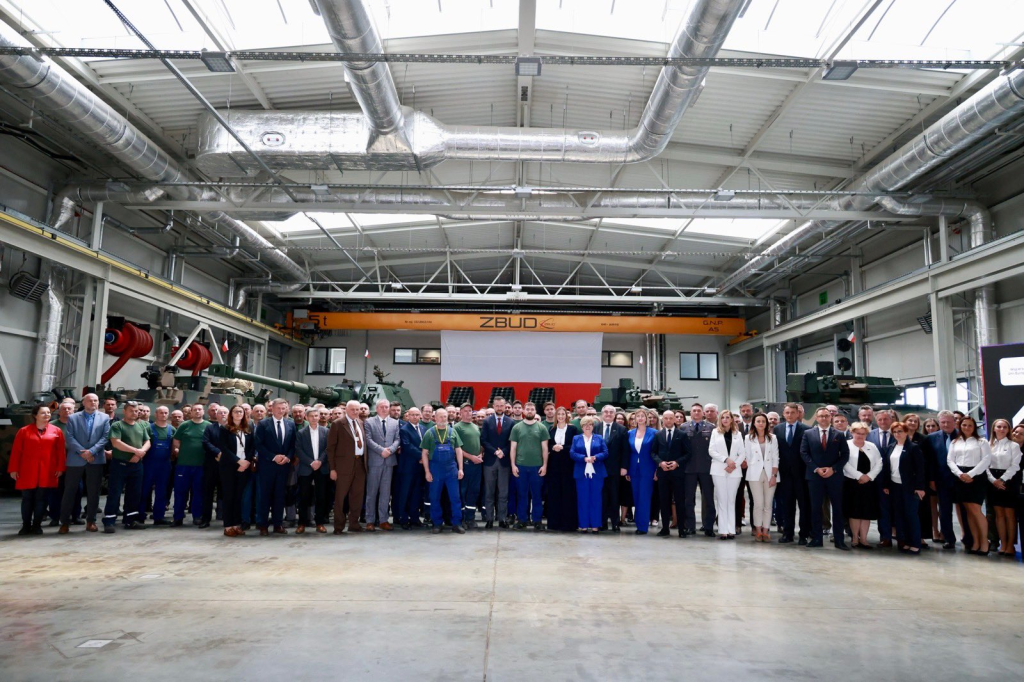
Every zloty borrowed from Europe remains, through these contracts, in the Polish economy, in Polish factories, and in Polish hands, sustaining a supply chain of thousands of domestic companies.
Military sources told Q Magazine, on condition of anonymity, that all Polish acquisitions target “everything that modern warfare entails.” “The centerpiece is the Borsuk infantry fighting vehicle, the first tracked combat vehicle designed and built entirely in Poland, intended to replace the fleet of Soviet transporters, equipped with a domestic turret, a 30mm cannon, and Spike anti-tank missiles. One hundred forty-six firm units, under a framework agreement that could reach up to one thousand four hundred. Then ninety-six 155mm Krab self-propelled howitzers, for four artillery battalions. Then K9 howitzers, Rak mortars, and vehicles for Homar-K rocket launchers. And, crucially, drones, loitering munitions, and electronic warfare. “That is, exactly the weapons that are deciding the war right next to us today, in Ukraine,” explained the military experts consulted by Q Magazine.
Poland’s state-owned industry was ready to absorb European funds because Warsaw had been investing in it for years.
This is, in fact, the first sign of intellectual preparedness: when the European funding arrived, the Poles already had a plan, an industry, and a product. They didn’t buy out of panic, but because the country has a strategy.
Poland asked what it could produce. Romania asked who it could buy from.
What Romania Did
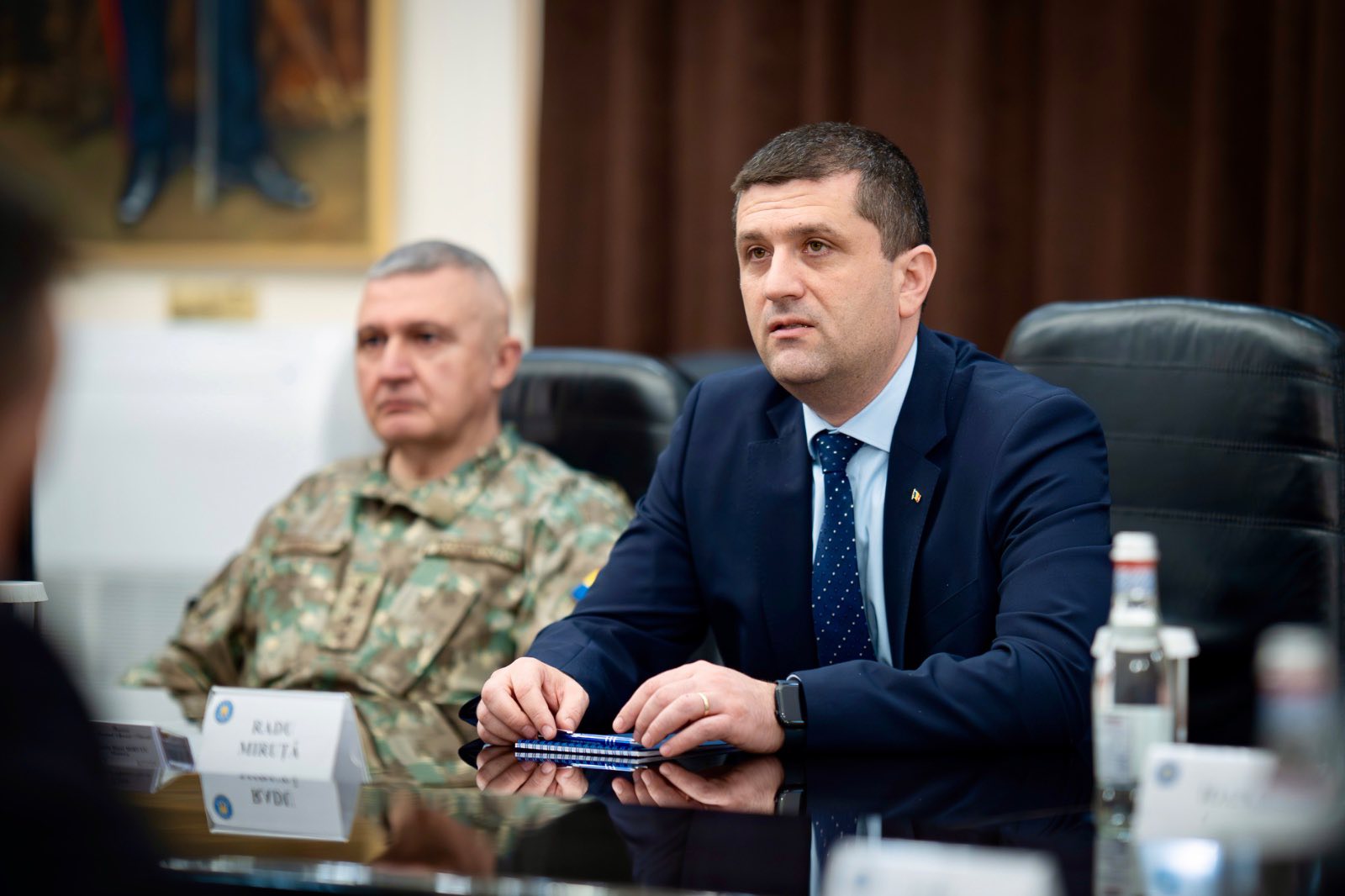
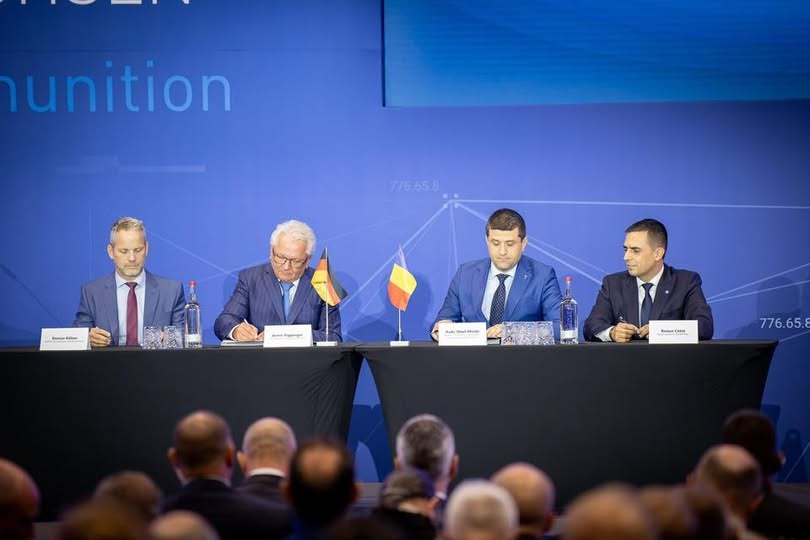
In that same last week of May, under pressure from the same deadline, the Romanian state signed as well. Four contracts, totaling approximately 5.69 billion euros, on the night of May 29, 2026, around 9:45 p.m., as Minister Radu Miruță happily announced to us.
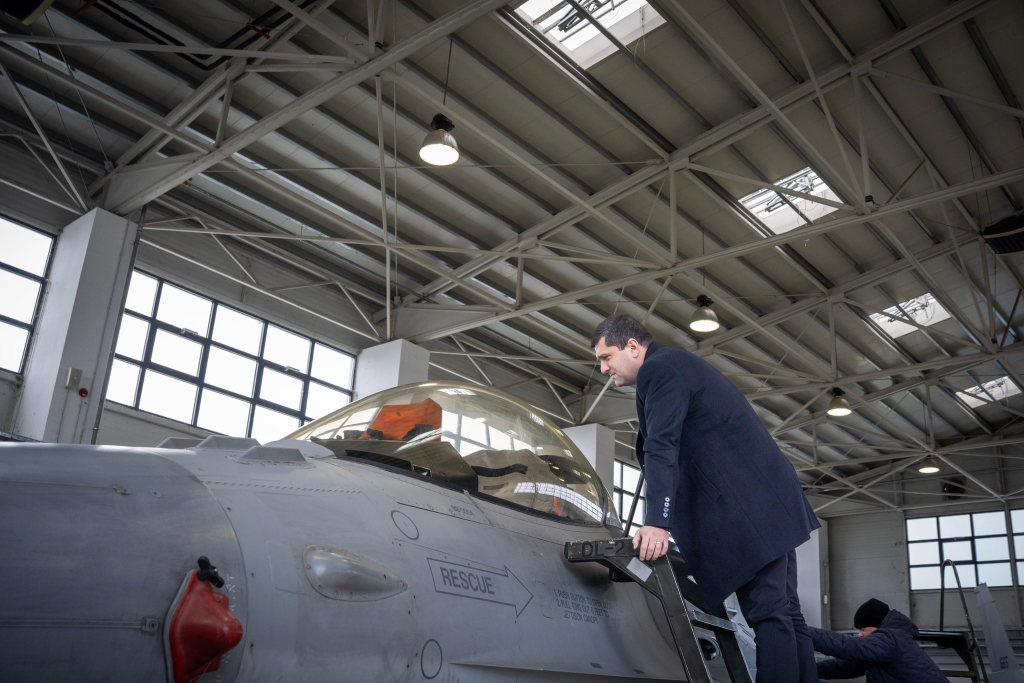
The breakdown by supplier, according to the official press release from the Ministry of National Defense dated May 29, 2026, is as follows:
298 Lynx-Rheinmetall infantry fighting vehicles, supplied by Rheinmetall Automecanica. Value: 3,337 million euros.
Anti-aircraft and anti-drone systems—seven SKYNEX, two SKYRANGER 35, and two Millenium—from Rheinmetall Italia. Value: 981.95 million euros, with delivery scheduled for 2027–2028.
Two maritime patrol vessels and two diver support boats—NVL, the naval division of Rheinmetall. Value: 920 million euros. 401,760 rounds of 35 mm AHEAD ammunition—Rheinmetall Waffe Munition. Value: 449.75 million euros.
Distribution by industrial groups: 100% Rheinmetall. A single supplier. And the only “Romanian” entity in the scheme, Rheinmetall Automecanica in Mediaș, is the result of the German group’s purchase of the Romanian plant in 2023, with a localization rate of approximately 30%; the rest is produced outside the country. Poland has signed 29 contracts with its industry. Romania has signed four contracts, all with the same German group.
Poland: 29 contracts, all domestic. Romania: 4 contracts, all German.
What was signed and what was rejected
The math of one night
Five figures summarize the night of May 29–30, 2026, in the recent history of the Romanian state’s military procurement.
17 days, the interval between the moment Q Magazine submitted 19 official questions on May 12, 2026, and the signing of the contracts on May 29 at 9:45 p.m. During this interval, although the officials involved were aware of the facts and issues, we were told we would receive a response in 30 days.
We will publish them at that time, of course.
19 questions that we posed on behalf of the public, each with the legal basis indicated. No response had arrived by the signing date, even though it would have clarified many controversial issues. In fact, Q Magazine formulated the 19 questions precisely in this spirit, to give the Prime Minister, the Head of the Chancellery, Mihai Jurca, and the Minister of Defense, Radu Miruță, the opportunity to transparently explain how these contracts came to be signed, with the legal and procedural steps outlined.
5.69 billion euros, the total value, excluding VAT, of the four contracts. The funds go 100% to Rheinmetall AG Germany and its subsidiaries.
45 years is the maturity of the SAFE loan that will finance these contracts, according to the agreement signed by the European Commission with Romania on May 21, 2026. The total value of the loan is 16.68 billion euros, the second-largest European allocation, after Poland.
1, the number of rejected projects out of the eleven individual procurement projects. The only one rejected was also the only one with entirely Romanian production.
5.69 billion euros for a German supplier. A single rejected project, the only Romanian one. 45 years of debt.
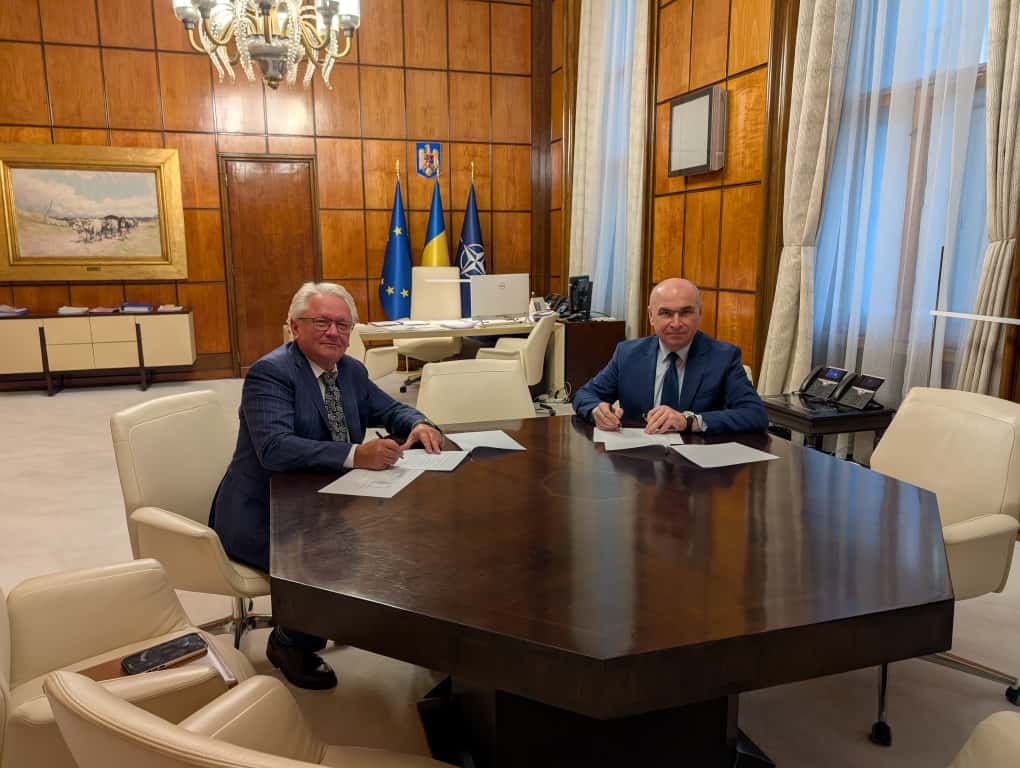
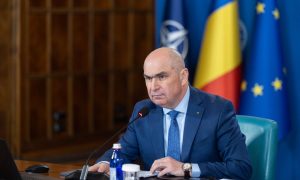
Ilie Bolojan and the CEO of Rheinmetall AG, Armin Papperger, at the Romanian Government headquarters Photo Gov
What was signed at 9:45 PM
The official press release from May 29, 2026, issued by the Ministry of National Defense and made public following the minister’s press conference, lists exactly four contracts signed at the headquarters of the General Directorate for Armaments.
Rheinmetall Automecanica, framework agreement for 298 Lynx-model tracked infantry fighting vehicles and derivatives. Value: 3,337 million euros. Group: Rheinmetall AG Germany.
Rheinmetall Italia, seven SKYNEX systems (ground-based anti-aircraft artillery with anti-missile and anti-drone capabilities), two SKYRANGER 35 systems (mobile very short-range air defense), two Millenium systems (close-in air defense). Value: 981.95 million euros. Group: Rheinmetall AG Germany.
NVL, two maritime patrol vessels and two diver support boats. Value: 920 million euros. NVL, formerly Naval Vessels Lürssen, is the naval division acquired by Rheinmetall.
Rheinmetall Waffe Munition, 401,760 rounds of 35 mm AHEAD ammunition. Value: 449.75 million euros. Group: Rheinmetall AG, Germany.
The total value of contracts signed on the night of May 29, 2026, is 5,688.7 million euros. The distribution among European industrial groups is 100% to Rheinmetall AG. By manufacturing member states: Germany, three contracts; Italy, one contract, Rheinmetall entity. To the independent Romanian defense industry, no contracts.
Four contracts. A single German industrial group. 5.69 billion euros.
The only rejected project was the only Romanian one
Here the story ceases to be about comparison and becomes about character. The SAFE program began, for Romania, with eleven individual procurement projects. One was transferred to the Ministry of Internal Affairs. The rest were approved and signed. And only one was rejected.
This single rejected project has a feature that no official communication has wanted to highlight: it was the only project in the entire package with entirely Romanian production.
This is the Piranha 5 armored personnel carrier, manufactured at Uzina Mecanică București, a company in the portfolio of the National Company ROMARM, the state-owned holding company of the defense industry. The reason for the rejection, publicly cited by the Minister of Defense, was the price. The amount approved by Parliament was approximately 6 million euros per unit; the final bid had risen to 9.4 million, nearly double, and on this basis, the project was rejected.
This fact cannot be viewed in isolation. During the same period, regarding contracts awarded to the Rheinmetall group, the same ministry publicly acknowledged, at a press conference on April 28, 2026, a price increase of over 30% compared to the initial estimates. That increase did not lead to rejection. It led to the signing of the contract.
Under the same authority, within the same decision-making window, two pricing standards were applied: one for Romanian state-owned production, another for the German supplier.
The price increase was grounds for rejection when it came from a Romanian factory, but the price increase was grounds for signing when it came from Rheinmetall. This is not an accusation. It is a cold, hard fact, verifiable through the minister’s own public statements.
Overlaying this asymmetry are two elements of institutional context, both public.
First, an open conflict: at the time of the decisions, the Minister of Defense was in a declared public conflict with the leadership of the national state defense industry; the general director of ROMARM and president of the industry’s employers’ association had publicly demanded that the minister “be tried for high treason and undermining the national economy.”
The resulting administrative law question does not concern individuals, but rather the procedure: is it compatible for a public official in a declared public conflict with a state-owned company to be the very decision-maker who rejects the only contract that was going to that company?
Second, a conflict of roles: the program’s procedural architect, the head of the General Directorate for Armaments, is simultaneously a member of the SAFE Inter-institutional Working Group that proposed economic operators to the CSAT. The same body that proposes suppliers is also the one that evaluates them. Who controls the controller?
Before any other explanation, Romanian officials owe answers to at least two questions:
1.Why didn’t the domestic industry receive the same negotiating table as the German supplier?
2. If a 30% price increase could be negotiated and accepted with Rheinmetall, why wasn’t an increase for the Piranha negotiated, but instead directly rejected?
To leave no room for misinterpretation, we clarify that this is not about canceling the SAFE program, but about publicly explaining the criteria by which the Romanian state accepted price increases from the foreign supplier and rejected, within the same decision-making window, the only project with entirely Romanian production.
They sign off on the foreign supplier. They reject domestic production. On the same night. Under the same signature.
The Math of Public Alternatives
The press’s questions were not speculation. They were based on three public signals sent by Hanwha, Damen, and Beretta, which—regardless of the exact technical comparability of the bids (a matter that, in the absence of published supporting documents, remains an open question in itself)—raise, in fact, a procedural issue.
Hanwha Aerospace, the manufacturer of the AS21 Redback platform, which is operational in Australia, publicly submitted an unsolicited bid for the infantry fighting vehicle program in the spring of 2026. According to the specialized press, the bid included a price point approximately 537 million euros lower than the signed contract, a declared 80% industrial localization in Romania—compared to approximately 40% in the German version—direct investments in the order of 1.3 billion euros, and thousands of promised jobs. The bid received no response.
Damen Galați, a shipyard located in Romania with a history of military projects, reportedly expressed interest in the naval contract subsequently awarded to Rheinmetall’s NVL division for 920 million euros. In both cases, the procedural question is the same: was there a documented comparative evaluation? The technical-economic analysis document was never published.
The third issue concerns the Individual Weapons System program, assault rifles, with a publicly estimated value of 816.5 million euros, for which the Italian manufacturer Beretta filed an official complaint on April 24, 2026, regarding its exclusion. Beretta cited compliance with the requirement that at least 65% of components be from the European Union.
The announced supplier is a consortium led by the Romanian-registered subsidiary of the American manufacturer SIG Sauer, which, according to the press, emerged as the winner following a procedure in which it had initially ranked eighth out of a group of seven selected bidders. The procedural question—to put it most cautiously—concerns compliance with European rules of origin for components and the transparency of the award criteria.
None of these three issues is a subjective conclusion of the experts consulted by Q Magazine for this analysis; rather, they are legitimate questions, based on verifiable public information, whose answers lie in the documents that the ministries were legally required to publish. Except that these documents were never published.
The Anatomy of a Silence
17 days, 19 questions
On May 12, 2026, through two official letters, Q Magazine exercised its legal right to access information of public interest, while also invoking the desire to accurately inform the public, and addressed the Minister of Defense, Prime Minister Ilie Bolojan, and the head of his Chancellery, coordinator of the SAFE Inter-institutional Working Group, posing several questions on various procedural aspects.
First, the selection procedure: who was contacted via a Request for Information for each project? In the case of the infantry fighting vehicle, the largest contract at 3.34 billion euros, the request was sent exclusively to Rheinmetall, ignoring established NATO alternatives, and if so, on what legal basis? Second, the justification for the approximately 30% price increase: for which components—platform, armament, maintenance, technology transfer? Third, the legal weighting of evaluation criteria, time versus price: what were the specific scores obtained by each operator? Fourth, the origin of the components and compliance with the European Regulation. Fifth, the parliamentary procedure: the €8.33 billion documentation was submitted to the joint defense committees on April 27, 2026, at 7:22 p.m., 14 hours and 38 minutes before the vote, instead of the twenty days required by law.
Sixth, contracts awarded through direct negotiation without a call for bids: on what specific legal basis?
We submitted an additional ten questions to the Prime Minister’s Office regarding the date of the CSAT decision, the nominal composition of the Inter-institutional Working Group, the Prime Minister’s opinion, the comparative analysis between individual and joint procurement, the Legislative Council’s negative opinion, the amendments made to the ordinance during the government meeting, and the public communication plan. We have not received any response so far.
17 days later, on the night of May 29, the state signed. No response to the nineteen questions had been published. Not because the answers did not exist, but—if the decisions were properly substantiated—because they already existed in the analysis document, in the CSAT decision, and in the Working Group’s opinion. Communicating them did not mean producing them, but merely copying them.
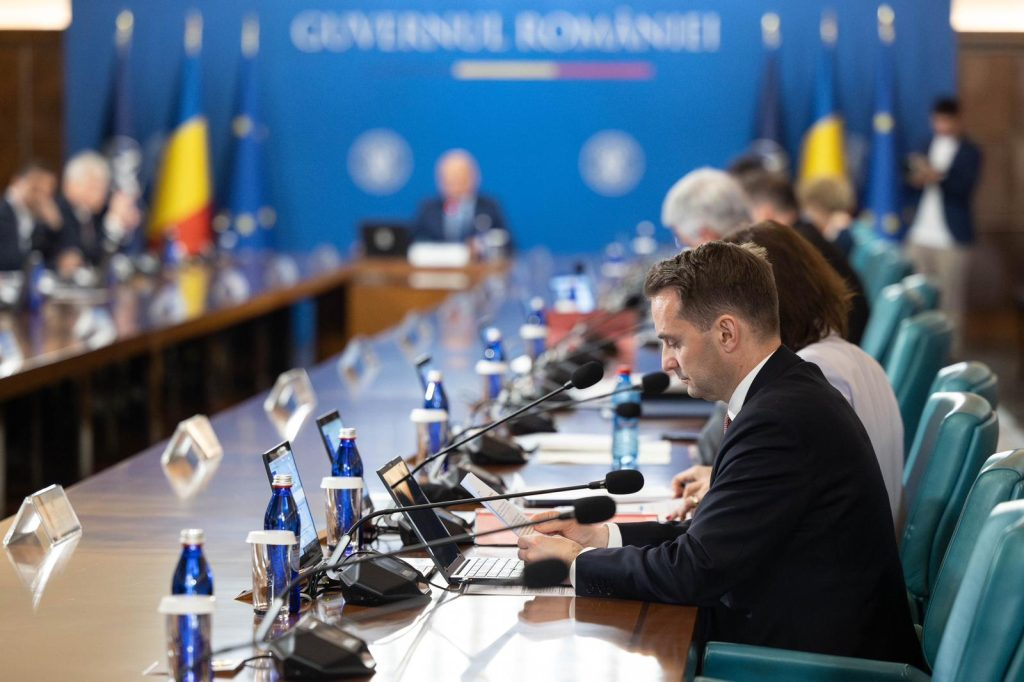
When Q Magazine followed up five days after the initial request—in which we asked to receive the answers promptly, as this was an important issue on the public agenda, especially given that certain aspects were already known—Mihai Jurca called me and asked, stunned and annoyed: What is the urgency behind my request to receive the answers sooner? It was precisely the elimination of any suspicions surrounding the signed contracts that was the justification officials would have had the greatest interest in taking advantage of.
Seventeen days of silence, followed by a late-night signing of nearly six billion euros, is no coincidence of timing. It is a method.
17 days of silence. 19 unanswered questions. A signature at 9:45 p.m.
The May 30 deadline alibi
The official defense was that of urgency. “We had to sign by May 30, otherwise we would have lost the money.” The statement is, legally speaking, structurally false. Council Regulation (EU) 2025/1106 provides for two paths. The general path, the rule, is joint procurement—multiple states purchasing together, with deadlines of June 30, 2027, for implementation decisions and December 31, 2030, for the availability of funds. And the May 30, 2026 deadline was not the rule, but a derogation, introduced by the explicit wording “by way of derogation from paragraph 1,” a narrow exception for procurements that a state wishes to carry out on its own, individually.
In other words, the May 30 deadline did not impose any obligation. It applied only if you deliberately chose the individual path instead of the joint one. Romania itself had legislated, through Emergency Ordinance 21/2026, the right to transition from individual to joint procurement by the end of 2027.
The path with more time, greater transparency, and collective bargaining power existed. It was ignored.
And the proof that this distinction was known at the highest level comes directly from the Minister of Defense, in an interview with the European press a week before the signing: “May 31 is the deadline for individual procurements. After this date, we can move to joint procurements.”

To Romanians and to Parliament, however, the message conveyed was different: the deadline as an absolute rule, the loss of funds as an automatic consequence. It was not haste that imposed silence. Silence needed the alibi of haste.
The May 30 deadline was not a rule. It was an exception. It was used as an alibi.
The chronology of a constitutional abuse
There is one detail that history will remember. The emergency ordinance that established the framework for these procurements was adopted by a government that, at the time, was already facing dismissal through a motion of no confidence.
A government on the brink of collapse launched the largest military procurement program in Romania’s modern history.
The timeline is public and dated. On May 4, 2026, during a cabinet meeting, the government adopted the draft emergency ordinance on the implementation of SAFE, a text that was amended right in the middle of the meeting. On May 5, the Legislative Council, a body with a mandatory advisory role, issued a negative opinion, explicitly identifying violations of eight articles of the Constitution: Article 1, paragraph (5), Articles 41, 42, 44, and 53, Article 110(4), and Article 115(4) and (6). On May 8, the ordinance was published in the Official Gazette, with a text that differed from the initial draft due to the addition of new articles that had not undergone the decision-making transparency procedure. And in the days that followed, the Ombudsman referred the matter to the Constitutional Court, stating that this was “the first time” he had seen such a procedure “since the Constitution came into force.”
These are not opinions. They are public documents, dated and signed. They describe a state that has rushed not against Russia, but against its own oversight institutions. And the legal question remains, to this day, unanswered: what is the legal rationale that justified the adoption of an emergency ordinance despite an opinion identifying the violation of eight constitutional articles?
A War and a Duty
The Doctrine of a War Being Waged Now
A few hundred kilometers from Galați, the first industrial drone war in history has been raging for over four years. Its lessons are written in blood and are public knowledge. Military experts consulted by Q Magazine indicate that, according to independent monitoring sources such as Oryx—validated by institutions like the Royal United Services Institute and the International Institute for Strategic Studies—the Russian Federation has lost over 4,000 main battle tanks, and a large portion of the armored vehicle losses are caused by FPV drones costing a few hundred dollars. An entire fleet, the Russian Black Sea Fleet, has been decimated by a country that has virtually no navy: between 30% and 40% of its ships are out of action, including the cruiser Moskva, by naval drones costing several hundred thousand dollars each. The British Ministry of Defense declared the Black Sea Fleet “functionally inactive” as early as the spring of 2024.

This does not mean that heavy platforms are obsolete. Serious NATO armies are keeping their tanks. Germany has approved the Leopard 2A8 generation, Poland is purchasing hundreds of K2s and Abrams tanks, and the United States is developing the AbramsX platform, according to military experts. But it means something else, a more demanding one, namely that a heavy platform that is not integrated with reconnaissance and strike drones, electronic warfare, surveillance, and long-range precision fire is no longer a capability. It is an expensive target.
Poland has learned its lesson. In its Saturday package, it purchased combat vehicles, as well as drones, loitering munitions, electronic warfare systems, and precision artillery with a range of tens of kilometers. It purchased a system.
Romania signed four contracts: 58.7% of the total value—that is, 3.34 billion—goes toward tracked armored vehicles, precisely the category with the highest losses in the war next door; 17% goes toward anti-drone systems with delivery not until 2027–2028; 16% on ships, and the rest on ammunition. Zero contracts for domestic drone production. Zero for offensive electronic warfare. Zero for deep-strike precision strikes. Zero for satellite surveillance. In other words, the very categories that will decide the war on our border are missing from the Romanian list, and the absence of drones and electronic warfare has nothing to do with the size of the domestic industry. These could have been purchased as off-the-shelf products, just as Poland did.
The drone that crashed in Galați won’t wait until 2028. The next one won’t wait either.
“A platform without a network. A tank without drones. This is not integrated defense; it is fragmented defense.,” military sources told Q Magazine.
The generation that isn’t voting today
SAFE does not mean non-repayable European funds. SAFE is a loan. The 16.68 billion euros allocated to Romania will be repaid, principal and interest, over 45 years, with a grace period of up to ten years. By whom? By a generation that, on the night of May 29, 2026, was asleep, or had not yet reached the age of majority, or had not yet been born. Those who, in the first ten years, will pay only the interest, will leave the repayment of the principal as a legacy to future generations.
And here the contrast with Poland reaches its most painful point. The Poles are borrowing too. They, too, will be paying for decades on end. But every zloty borrowed by Poland goes back into Polish factories, Polish wages, Polish patents, and Polish know-how.
Their debt finances national capacity. Our debt finances foreign bills.
In 45 years, the Polish generation will inherit a mature, export-oriented defense industry. The Romanian generation will inherit a bill for equipment, much of which will already have been obsolete and scrapped long before the final installment is paid.
When a government takes on a 45-year sovereign debt—sovereign meaning not just the institution, but the people themselves—transparency, deliberation, competition, and justification cease to be merely administrative matters. They become matters of mandate, of legitimacy, of a pact between generations. We are not discussing how we spend European money. We are discussing how we are burdening Romania’s children for the next four decades.
The Polish generation inherits an industry. The Romanian generation inherits a debt.

Conclusion
Lay all the facts side by side. The same Europe, the same program, the same timeframe, the same fear of the same neighbor. Poland emerges with a strengthened industry, with drones, with artillery, with a message sent to the world. Romania emerges with a single foreign supplier, with its own industry rejected, with 19 unanswered questions, with a constitutional abuse, and with a 45-year debt. The money was there, in comparable amounts. The danger was the same. The difference was not in resources. It was in people.
A state led by intellectually and professionally prepared people would have seen, like Poland, that the European instrument is used to build national capacity, not to pay foreign bills. It would have learned, like Poland, the lessons of the war next door and would have bought drones and electronic warfare capabilities, not just heavy equipment. It would have thought in terms of 45 years—the duration of the debt—not 14 hours, the length of the parliamentary debate. A leader’s intellectual preparation is evident in the horizon their mind can encompass. And the horizon of those who signed on the night of May 29 stopped at the next day.
A state led by people of character (I’m not saying those who love their country!) would not have rejected its own industry on the very same night it generously paid a foreign supplier.
It would not have allowed a public official in open conflict with the national industry to be the very one to reject it. It wouldn’t have remained silent for 17 days; on the contrary, it would have sent all the responses the very next day. It wouldn’t have rushed to act against its own Constitutional Court. A leader’s character is seen in the loyalty they show to their country when no one is forcing them to. And the loyalty of those who signed was directed, that night, toward anything but Romania. “In the dead of night” is, however, too trivial a phrase for the responsibility they have undertaken.
A colony is not born of an invasion. It is born of a signature.
This is why the word “colony” is not a rhetorical exaggeration, but a technical description. A colony is a territory that buys everything from abroad and produces nothing of its own; that finances its master instead of financing itself; that is a market, not a producer.
A state that receives the second-largest European allocation and spends it entirely on an external supplier, thereby rejecting its own factory in the process, fits this definition perfectly. It was not conquered. It offered itself up.
And that is why the word “slavery” is not a figure of speech either. A slave is one who works today to pay off a debt that someone else contracted in his place. The generation that is paying for 45 years for a signature put down one night, without debate and without explanation, did not choose that debt. It inherited it. And a debt inherited without consent, which leaves behind no capacity, only an obligation, has an old name.
And here, finally, is why such a state cannot be taken seriously.
The world’s chancelleries do not respect size, but backbone.
A state that does not defend its own industry, that does not negotiate prices with suppliers, that signs in the dark and remains silent when questioned sends a single message: you can come here, sell at a high price, and leave.

Poland told the world on Saturday that it is a partner with will, industry, and a plan. Romania conveyed, that same week, that it is a market for selling. No one seats at the decision-making table those who seat themselves at the customers’ table.
On the Danube, in Galați, the building struck by the drone underwent a structural assessment the following morning.
At the Ministry of Defense headquarters, the contracts signed the previous night were filed away. The nineteen questions remained, as of this morning, unanswered. And a few hundred kilometers to the north, at the Stalowa Wola plants, production was already underway for the vehicles that the Poles will drive, repair, and export on their own.
On the long nights along Fănuș Neagu’s Danube, when darkness catches the waters off guard, the old men at the inn would say a saying that people of yesteryear knew by heart: fear not those who shout in the square, but those who sign in silence. Those who guided our destinies in May of 2026 did not shout.
They signed quietly at 9:45 p.m., on the night the country was struck by a drone. They signed with a foreign supplier and rejected their own industry. They signed a 45-year debt on behalf of a generation that did not vote for them and will never be able to hold them accountable. This is not a tragedy of poverty. It is a tragedy of those who, having everything at their fingertips—money, position, the living example of their neighbor—had neither the mind nor the character to choose otherwise.
Poland signed for the Poles. Romania signed for foreigners. The difference is called character or… You decide!