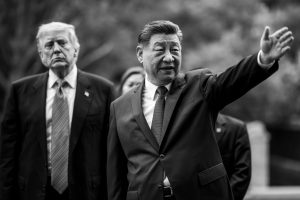

The visit to Beijing by the U.S. delegation led by Donald Trump felt more like a diplomatic performance than a decisive summit. Moreover, the meeting proceeded according to the “red lines” imposed by China, communicated to the American press and publicly stated by President Xi Jinping at the start of the meeting, explicitly targeting the issue of Taiwan.
- A Snapshot of a Diplomatic Failure: A Banquet in Beijing, War Behind the Scenes
- Remus Ștefureac, INSCOP: În premieră în ultimii șase ani, PNL trece în fața PSD
- La aceeași oră, trei evenimente s-au întâmplat fără să se atingă…
- Consultări la Cotroceni în ziua în care INSCOP dă AUR pe primul loc în alegerea românilor. Simion: Am pus pe masa lui Nicușor Dan planul pentru scoaterea României din criza economică și politică
- După 7 ani la EPPO fără rezultate notabile, Kövesi demarează campania „UE e de vină”
Showcase Diplomacy, Theoretical Business
Symbolically, the Chinese authorities did not even alter their agenda to grant the American visit the exceptional status that the Western press had attributed to it. At the same time, the President of Tajikistan, Emomali Rahmon, was also in Beijing, and media and protocol attention seemed to be focused more on him. Trump’s reception at the airport was cold and minimalist: no high-ranking Chinese officials, just standard protocol—red carpet, military guard, and children waving flags.
The American delegation included big names from the business world—Elon Musk, Jensen Huang (Nvidia), Larry Fink, and others—but it lacked precisely the essential component for genuine strategic negotiations: the U.S. administrative apparatus. Any state visit aimed at concrete results is preceded by months of technical and diplomatic negotiations between representatives of the two countries. In this case, nothing indicated the existence of such preparation.
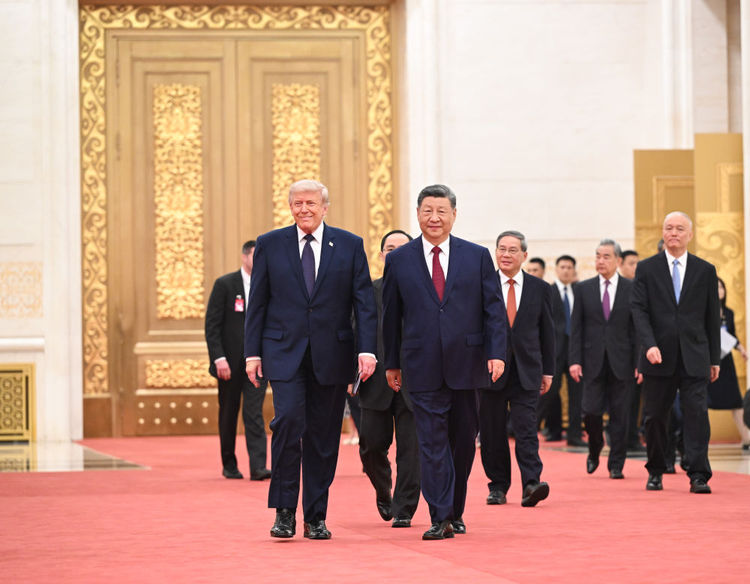
Donald Trump visited China at the head of an impressive delegation of American businessmen / Photo: X

Beyond the pomp, banquets, and ceremonial statements, the actual discussion between Trump and Xi Jinping lasted about two hours—insufficient for topics of the magnitude of Sino-American relations. The context, however, is essential: the visit comes after the escalation of the trade war between the two powers, when the Trump administration imposed severe tariffs on China, and Beijing responded by restricting exports of rare earths and strategic minerals. Subsequently, following the bilateral meeting in Korea, China partially eased the restrictions, but only for a “trial period,” contingent on Washington’s behavior.
The importance of these resources is enormous. According to Bloomberg, approximately 4% of U.S. GDP—about $1.2 trillion—depends directly on sectors that use Chinese rare earths. Restricting exports of eight such elements would severely impact the U.S. technology and defense industries. Trump tried to find alternatives in Canada, Australia, or Greenland, without success. At the same time, Washington attempted a strategy of encirclement against China by putting pressure on Beijing’s allies—Venezuela, Cuba, Russia, and Iran. The only partial success appears to have been Venezuela.
Under these circumstances, Trump arrived in Beijing without the strategic advantages he had hoped to secure. Russia continues to advance in Ukraine; the conflict has become a financial and military burden for the U.S.—with American investments reduced to ashes and rubble—and tensions in the Middle East have also exposed issues related to U.S. ammunition stocks. The attempt to pressure Iran did not produce the anticipated results, but rather a new geopolitical and economic failure.
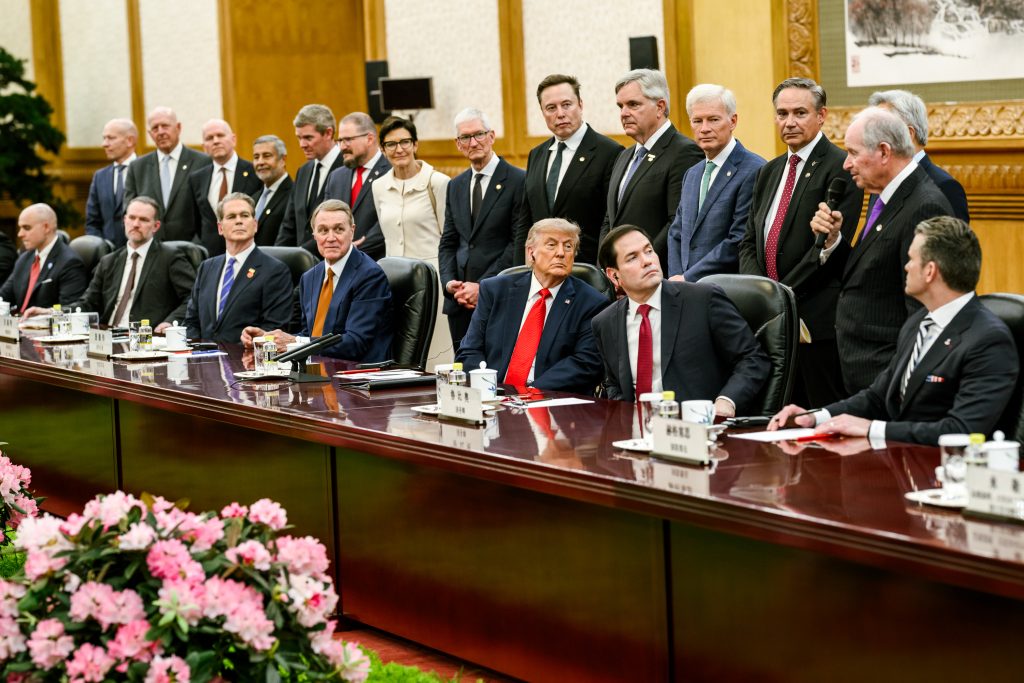
The American economic delegation lined up behind President Trump / Photo: X
The U.S. economic delegation announced spectacular prospects—sales of hundreds of Boeing aircraft, cooperation in the fields of electric vehicles, batteries, semiconductors, and agricultural products such as soybeans or beef from Cargill. However, no concrete contracts signed with the Chinese side were presented. There is a reason for this! The White House noted that “leaders of many of the largest companies in the United States participated in part of the meeting,” treating it as a substantial business relationship.
The Chinese statement noted that Trump “asked each of the business leaders traveling with him to introduce themselves to President Xi”—presenting it as a courtesy introduction rather than a substantive business discussion. In this situation, Nvidia CEO Jensen Huang was seen eating Beijing’s famous fried noodles with bean sauce in front of a food stall, while Elon Musk—less fortunate—had to deal with the endless line of Chinese people lining up next to him for a selfie.
Between Taiwan and Hormuz
For Beijing, the meeting was neither strictly diplomatic nor ideological: the Chinese were “buying time,” as we can see. The language used, consequently, was quite harsh, at times imperious. China firmly reiterated that Taiwan represents a “red line,” a subject on which it accepts no negotiations. Beijing no longer shows any interest in Western discourse on democracy and human rights. Xi was unequivocal: “The Taiwan issue is the most important issue in China-U.S. relations. If handled properly, the bilateral relationship will enjoy overall stability. Otherwise, the two countries will face clashesand even conflicts, putting the entire relationship in grave danger. ‘Taiwan independence’ and cross-strait peace are as irreconcilable as fire and water. Safeguarding peace and stability across the Taiwan Strait is the greatest common ground between China and the US. The U.S. must exercise greater caution in handling the Taiwan issue.”
For Washington, however, Taiwan remains a strategic tool. The U.S. is aware of the difficulty of a direct military confrontation with China, but it can stimulate indirect conflicts to drain Beijing’s resources, following the Ukrainian model. This is why the Americans have refrained from making absolutely any comments regarding Taiwan. In this context, the U.S. is committed to a military assistance contract with Taiwan (the Taiwan Relations Act) worth tens of billions of dollars, and the contracts include advanced systems such as anti-aircraft missiles and radar systems, equipment for fighter jets, artillery, and spare parts. Due to the depletion of U.S. military stocks in existing conflicts, naturally, the weapons intended for Taiwan have been moved further down the list at present.
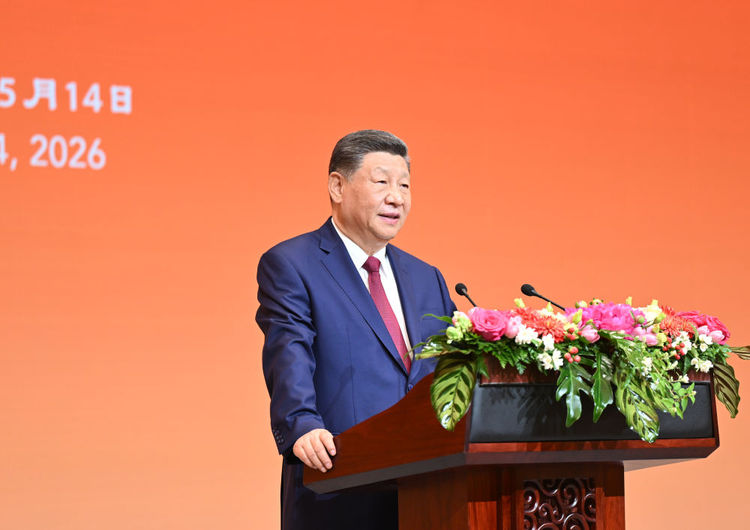
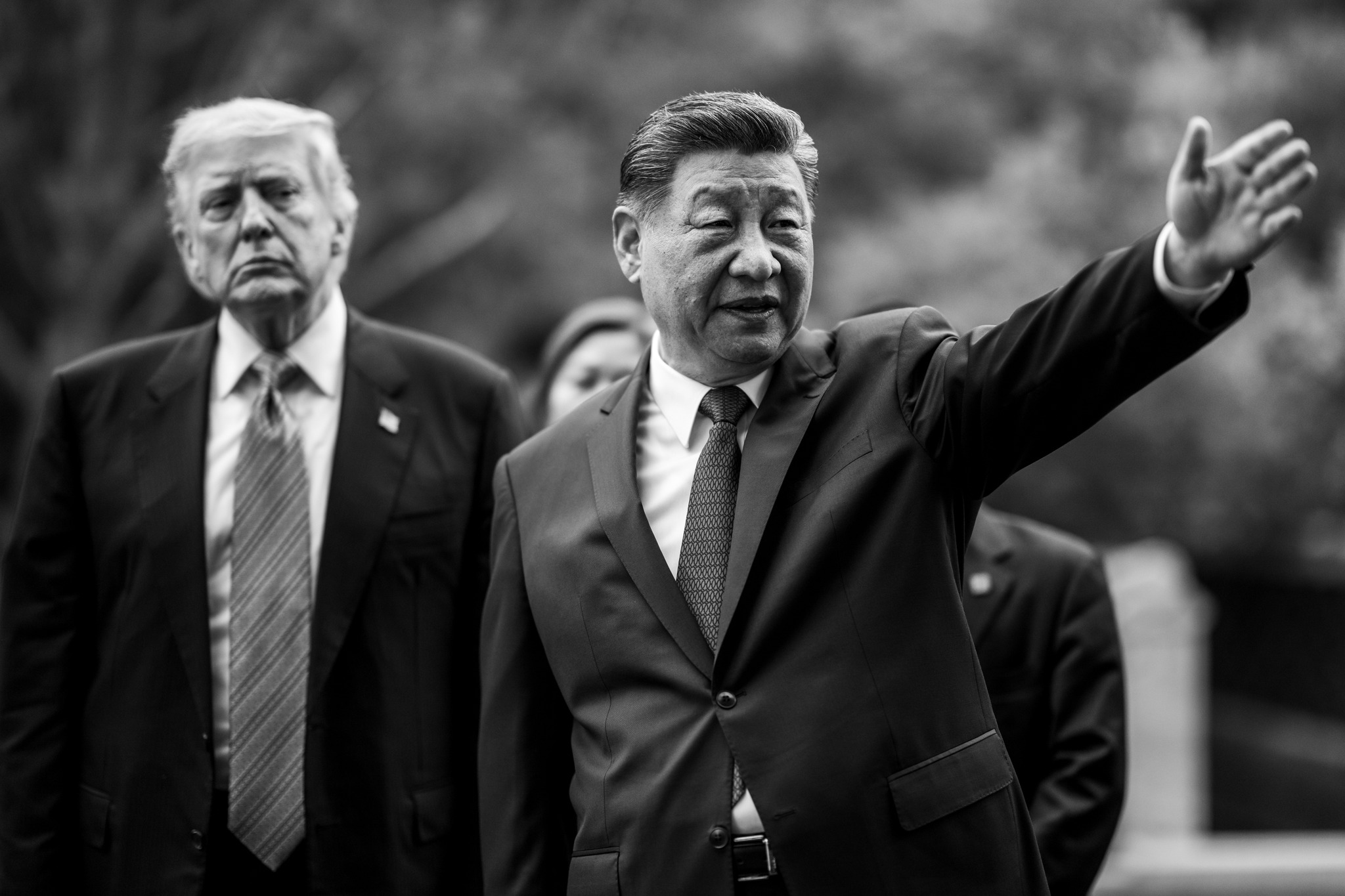
President Xi Jinping speaking about Sino-US bilateral relations /Photo: X
Another sensitive item on the agenda was Iran. U.S. requests for Beijing to scale back its relations with Tehran were perceived in China as naive and unrealistic. Despite speculation in the American press regarding China’s dependence on Iranian oil, Beijing also benefits from a substantial supply from Russia. Furthermore, China and Iran are BRICS members, and Beijing understands the vital importance of oil exports to the Iranian economy, which has been affected by sanctions since 1951. Let us also add here that the list of sanctions imposed by the U.S. also targets a number of Chinese entities. Regarding U.S. sanctions against Chinese companies collaborating with Iran, Beijing has introduced the possibility of challenging them in Chinese national courts.
A key factor in Sino-American relations is the lack of trust stemming from the complete unpredictability of U.S. policies. While relations were frosty during the Obama era, they saw a slight thaw during Trump’s first term, only to later degenerate into an economic war. Then, the Biden administration proved that dialogue is impossible. Donald Trump’s return to the White House once again raised hopes, which, once again, were dashed with the resurgence of economic conflicts and the cancellation of previously established bilateral agreements. Last but not least, China remains officially defined as a “strategic adversary” in the U.S. National Defense Strategy, and this fundamental contradiction was not even symbolically resolved ahead of the visit.
The Chinese lack of trust is not unique! Trump does not enjoy much sympathy even among his so-called allies, whether we are talking about the EU, Japan, or South Korea. The situation is even more serious with Russia; the so-called “Anchorage thaw” (the 2025 summit with President Putin) is now just history. The Russians had the opportunity to see that the Americans’ involvement in the so-called peace negotiations with Ukraine was completely useless; moreover, the Americans subsequently agreed to supply Ukraine with long-range missiles capable of striking Moscow, culminating in the attempted assassination of President Putin at Valdai. Consequently, it is clear that Russia’s position does not differ substantially from China’s.
The figure of Marco Rubio—mocked in the Chinese press—highlighted the contrast between current American diplomacy and the era of Henry Kissinger—to which President Xi referred in his speech during the state dinner. Beijing is making it clear that it no longer trusts Washington’s statements, and any trade agreements resulting from the visit could quickly become irrelevant in the event of a new economic or military escalation. At the same time, the Chinese want to maintain a channel of dialogue with the U.S. and minimal bilateral relations.
The current head of U.S. diplomacy, Marco Rubio, is persona non grata to the Chinese. Rubio is banned from entering China! However, if he goes to China accompanying the president, at the latter’s request and without his persona non grata status being revoked, the Chinese have shown that they can pretend he is two different people: Rubio—in the Latin script—or Lubio—as it might be read in Chinese.
What remains clear is that the state of American diplomacy has reached an abysmal, unprecedented low. What the current administration’s actions demonstrate (continuing the failures of previous administrations) is that the U.S. is no longer capable of dialogue, let alone showing respect for its interlocutors, nor does it have any interest in establishing normal diplomatic relations with its international partners.
Thucydides’ Trap, Served with Gold Cutlery
Nevertheless, Chinese diplomacy has maintained its pragmatic style: politeness, cooperative language, and an emphasis on mutual interests. The Chinese leader sought to give the summit a broader strategic dimension. Xi spoke of “transformations unseen in a century” and a “fluid and turbulent” world, posing three key questions to Washington: Can China and the U.S. avoid the “Thucydides Trap” and build a new model of relations between great powers? Can the two countries jointly manage global challenges? And can they build a stable, long-term bilateral relationship?
In this context, Xi presented the concept of a “constructive relationship of strategic stability” between the two superpowers: cooperation as a central element, competition kept within manageable limits, manageable differences, and predictable peace. According to the Chinese leader, this formula should guide the bilateral relationship “over the next three years and beyond.”
On the economic front, Xi reiterated that Sino-American trade relations are “mutually beneficial,” and that any friction must be resolved exclusively through consultations “on an equal footing.” Beijing insisted that China’s economic opening continues “on its own terms,” not as a result of U.S. pressure regarding market access.
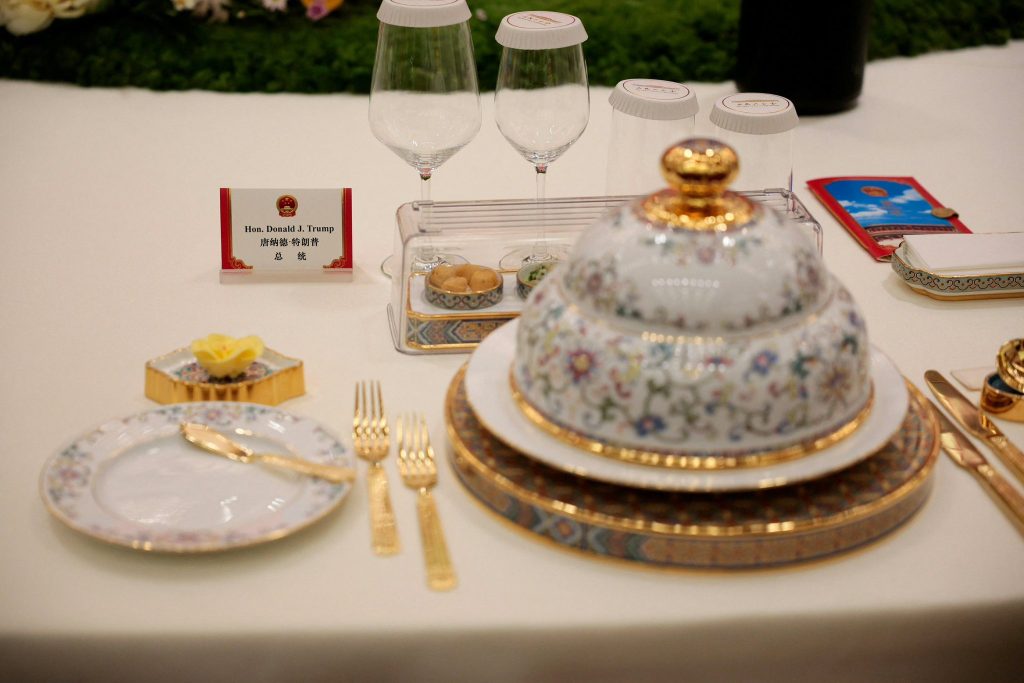
Gold cutlery was prepared for the “honorable” U.S. president / Photo: X
Gold cutlery was prepared for the “honorable” U.S. president at the state dinner, given Donald Trump’s fondness for all things golden and shiny. The musical repertoire also included the famous song Y.M.C.A.—in case the guest wanted to show his hosts a few graceful dance moves like those at the political rallies he attends in the U.S. After all, the new world order isn’t negotiated at a banquet.
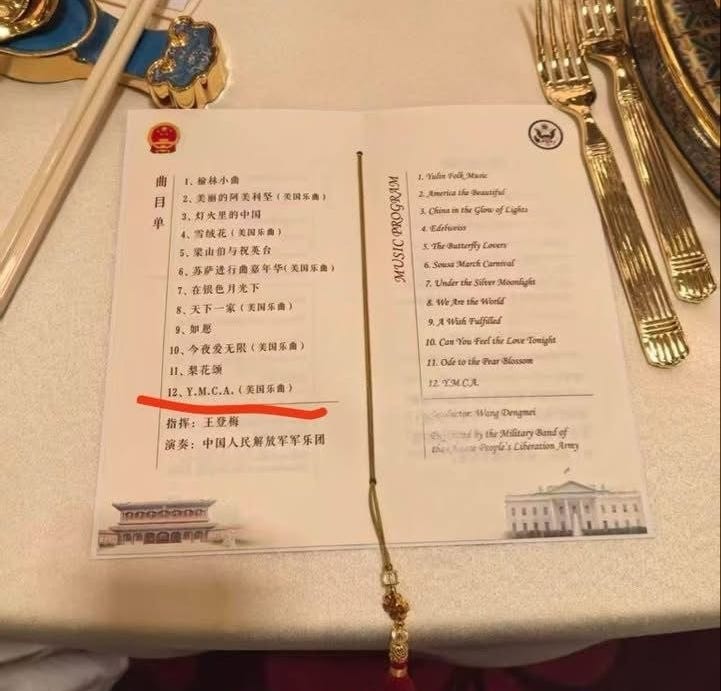
The musical repertoire also included the famous song Y.M.C.A. / Photo: X
Reading the official statements
The real differences between the two camps, however, became evident in the official statements released after the summit. The White House claimed that the discussions included sensitive topics such as Iran, the Strait of Hormuz, the fight against fentanyl, and increased Chinese purchases of American agricultural products. According to Washington, both sides reportedly agreed that Iran “must never possess a nuclear weapon,” and Xi Jinping reportedly expressed opposition to the militarization of the Strait of Hormuz and even interest in additional purchases of American oil.
The Chinese statement almost completely omitted these issues. Beijing limited itself to general statements about “discussions on the Middle East,” with no mention of Iran, Hormuz, or the Iranian nuclear program. Sources close to the negotiations even claim that Xi rejected Trump’s request to exert pressure on Tehran.
The same discrepancy emerged regarding fentanyl. Washington stated that reducing the flow of chemical precursors to the U.S. was discussed, but the Chinese side made no mention of the subject at all, as Beijing has long considered that it has made sufficient concessions on this issue.
Differences were also evident regarding agricultural trade. The White House spoke of an increase in Chinese purchases of American agricultural products, while the Chinese communiqué offered only general statements about the mutual benefits of bilateral trade.
The most significant asymmetry, however, concerned Taiwan. The U.S. statement completely avoided the subject, while Beijing placed the issue at the center of the entire meeting. Xi Jinping stated unequivocally that the Taiwan issue is “the most important matter” in bilateral relations and warned that Taiwan’s independence and peace in the Strait are incompatible “like fire and water.” The Chinese leader warned that mishandling the issue could lead to “clashes and even conflicts” between the two countries.
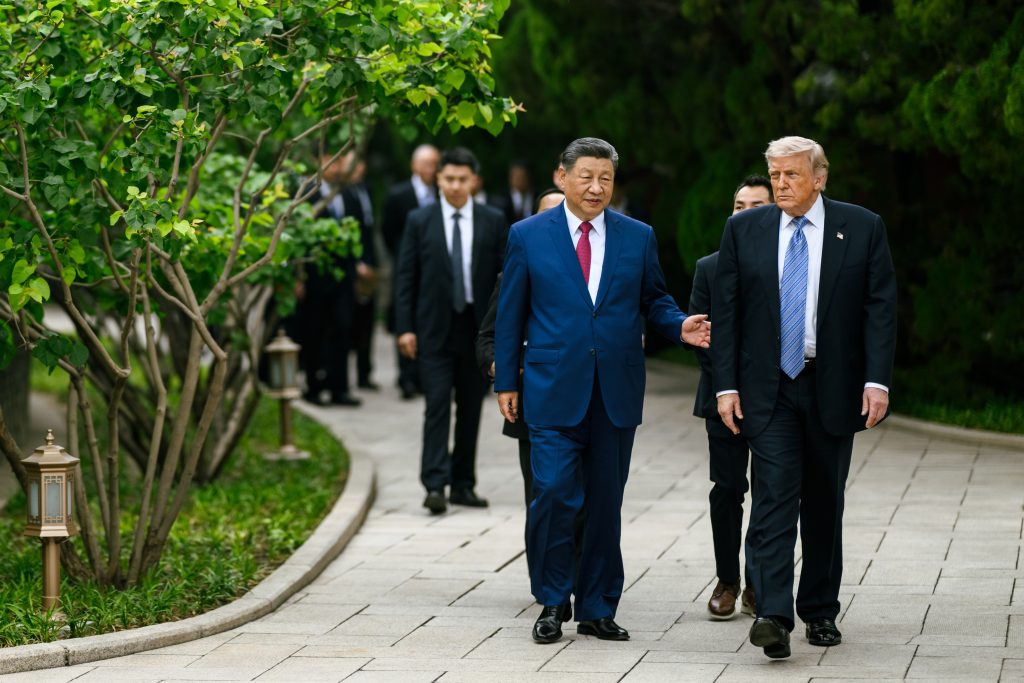
A relaxing stroll in the Zhongnanhai Garden / Photo: X
The Iranian Issue and the Illusion of Strategic Stability
Following the meeting, U.S. officials sought to downplay the impression that concessions had been made to the Chinese side regarding Iran. Marco Rubio publicly stated that the U.S. “is not seeking China’s help on the Iranian issue,” directly contradicting the triumphant tone of the White House statement. Interesting, isn’t it? Especially considering the statements made by Rubio himself to the Financial Times prior to the visit, for example, where, alongside other voices from the Republican Party and individuals within U.S. intelligence agencies, he asserted in unison that the main objective of the visit was to secure China’s support, from which they expect concrete steps to intervene with Iran’s leadership to halt the conflict in the Persian Gulf and “open” the Strait of Hormuz.
Except that Iran has never closed the strait to countries with which it is not in conflict! Instead, it has banned access to vessels belonging to countries with which it is in conflict—specifically the Americans.
In reality, the summit reflected more the pattern of Sino-American relations in recent years: temporary economic truces, managed strategic competition, and mutual attempts to buy time. Since 2017, relations between the two powers have gone through successive phases of tariff wars, technological restrictions, and attempts to reduce mutual economic dependencies.
At the same time, Beijing and Moscow are attempting to build, through Pakistan, a new security architecture in the Persian Gulf, designed to reduce the region’s dependence on the United States. According to diplomatic sources, China and Russia are trying to convince Saudi Arabia and Qatar to reduce their military cooperation with Washington and accept security guarantees offered by Beijing and Moscow. If Gulf states continue to limit the U.S. military’s use of their bases for potential operations against Iran, Washington may be forced to abandon plans for military escalation in the region.
In conclusion, the Trump–Xi summit did not produce any decisive agreements or major strategic shifts. It couldn’t have! There was no final joint statement, and the concrete outcome of the two days of meetings was limited to official photos, carefully calibrated diplomatic language, and a new demonstration of the deep mistrust that continues to define the relationship between Washington and Beijing.
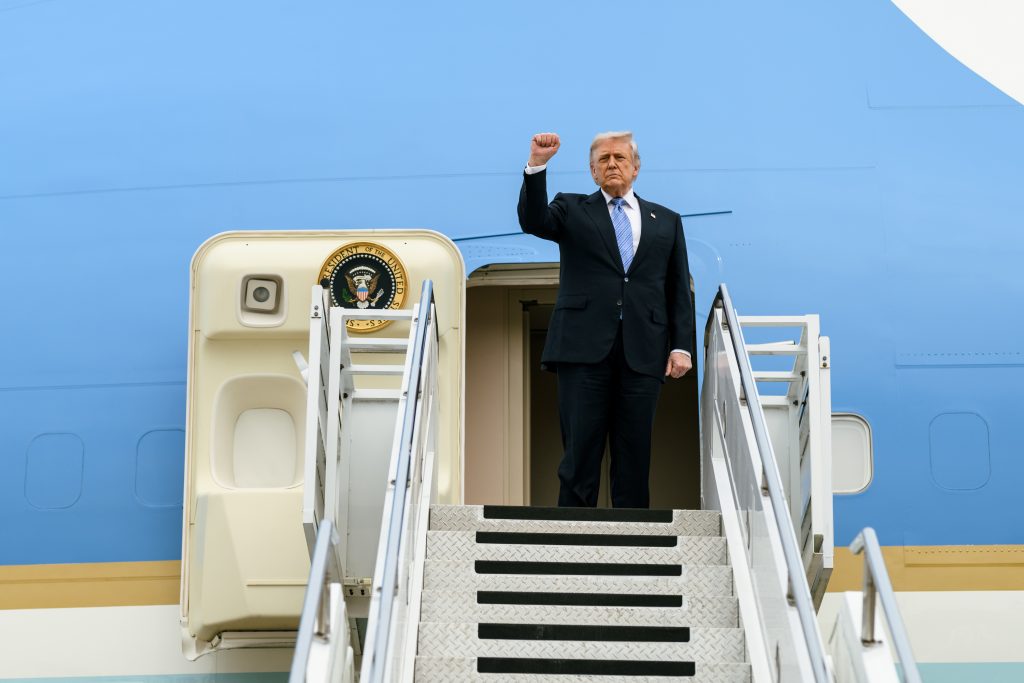
Donald Trump leaving the Chinese capital aboard Air Force One / Photo: X
The very departure of the American delegation was shocking! Contrasting with the projected image of illiterate communists in perpetual difficulty—which we constantly encounter in the American press—the pathological fear of Chinese espionage—this time—extremely advanced, generated unprecedented security measures. The entire U.S. delegation threw away every item provided by Chinese officials before boarding Air Force One. Gifts, gadgets, badges, press materials, and other items were tossed directly into the trash bins at the aircraft’s stairs. The rule was absolute: nothing from the Chinese hosts could make it onto the plane. Absolutely any item of Chinese origin was treated as a potential tool for covert surveillance technology, including audio transmitters, tracking devices, RFID chips, or malicious hardware implants.