Andrey Korobyak is an Estonian chef who brought a new concept in cuisine to the Romanian capital: the Nordic gastronomic philosophy. He explained to the readers of Q Magazine why he chose to open BOSCO-Gourmet Nest, the newest restaurant in Bucharest.
- Institutul Național al Magistraturii: Tot mai puțini tineri își mai doresc să devină judecători și procurori
- Noua practică bruxelleză: lobby mascat pe lângă oficialii europeni prin intermediul presei
- Polița privată de sănătate sau drumul către occidentalizarea sistemului public de sănătate
- Fostul ministru Darius Vâlcov a fost eliberat condiționat
- „Mircea Lucescu” va zbura spre marile capitale ale lumii
WHERE ANDREY COMES FROM…
Developing a restaurant from concept to launch, encompassing kitchen design, interiors, atmosphere, lighting, sound, and customer service, represents a novel approach for Romania, that is increasingly gaining popularity on the international gastronomic scene.

“In over 20 years of business, I’ve gained experience in more than 25 different restaurants.“

Andrey Korobyak has worked on various continents and has developed businesses in different cultures. He thoroughly explores the environment and culture before opening a new restaurant and selects his team not only for their skills but also for their mindset. He disagrees with the saying “the customer is always right” and provides reasons for his stance. Korobyak describes the Nordic model of creating and managing a restaurant, regardless of the cuisine, and explains what a “complete experience” means when dining out.
Andrey, the creator of BOSCO – Gourmet Nest which opened this year in Bucharest, discussed the trends in Romanian and international gastronomy with us. His insights reveal that dining at a restaurant is a far more complex and interesting experience than we might have previously thought.
You were born in Estonia and have been a chef for 20 years. Why did you choose this career, and has your native culture influenced your journey in this field?
It started when I was around 14 years old. I had a passion for France and I also kind of fell in love with cooking, I used to spend time in my mother’s kitchen, so that was a natural environment for me. Then I started dreaming about becoming a chef, working in the best restaurants, learning from the best, and also being in France.
In 2004 I joined the team of Egoist, which was at the time one of the best restaurants in Tallin and the Baltics. I was also studying at a cooking school. When I went to Egoist asking if they would have any job for me, washing dishes or anything, one of the chefs said “you know, people who want to learn from us need to pay, we are the best restaurant; so if you want to work here you have to pay us ”. But when he saw I was serious about it, he allowed me to join them as an apprentice, working for free, for food. Then they said that if I would reach a certain level I could replace one of their line cooks (also called a section cook, working in a certain area of the kitchen as part of the team). So I started working there six days a week after school, I was studying from 8 or 9 in the morning until 1 or 2 afternoon and then went directly to the restaurant until 11 at night.
That place made me discover this golden culinary world, the “Olympics of cooking”. The food there was mostly French with Estonian roots, which I loved.
In my menus you will notice that I try to keep my Estonian heritage, I try to spread the passion for certain products we use, including preserved, fermented or foraged foods (like mushrooms), used in the old-fashioned way of cooking. But I always try to bring something new, depending on the concept.
THE SIGNIFICANCE OF ONE „STAR”…. OR MULTIPLE STARS
You’ve worked in various Michelin-starred restaurants around the world. How did these experiences shape you?
Michelin restaurants represent a distinct category, embodying a particular mindset and offering a unique experience not only for the clients but also for each member of that staff. Earning a Michelin star involves more than the quality and aesthetics of the final dishes. It also encompasses the restaurant’s level of organisation, the attitude of the entire team, the thought process behind the operation and the consistency maintained throughout, all under the guidance of the chefs.
Taste is subjective, there are restaurants that some people think are amazing yet for others are not a memorable experience.
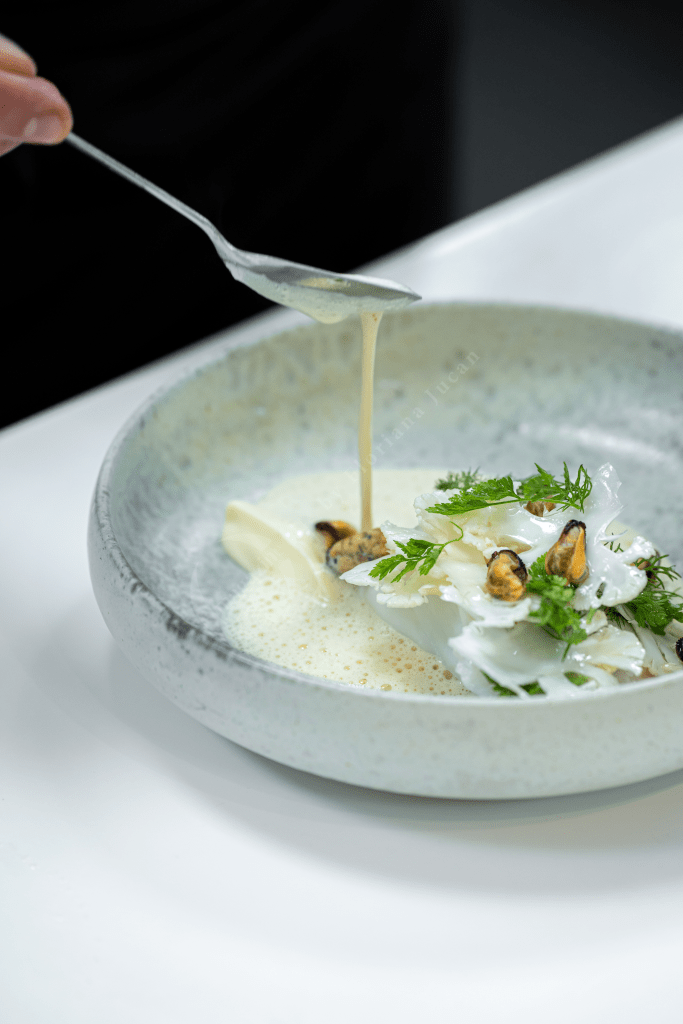
“We update the menu based on the season, available local ingredients, and feedback from our guests.”
To create a gastronomic experience worthy of Michelin stars, you need an exceptional team, comprising individuals who are not only talented but also driven to achieve excellence, grow, learn and push their boundaries. Each team member must be capable of replicating the dish in the kitchen at the same level of quality as the head chef, not just occasionally. Perfection must be a constant standard, not an accident.
A Michelin restaurant teaches you a certain discipline and structure that is crucial in a top-tier kitchen.
Of course, there are special dishes and techniques, but for me, it is more about the organisation of the whole process, without which you cannot achieve high quality. So, working in Michelin restaurants has equipped me with valuable skills in organisation and in managing those around me and also with unique work techniques. It has taught me discipline, effective coordination of my work and, most importantly, the ability to lead and manage the work of my team.
That’s why they say a kitchen is like an army, and it’s true, the structure is almost military, there is a general (the head chef), soldiers (the line cooks), and in between you have sous chefs and people who work on their small part. It’s a well-defined hierarchy. Some say this is old-fashioned, lacking democracy, even with a touch of dictatorship.
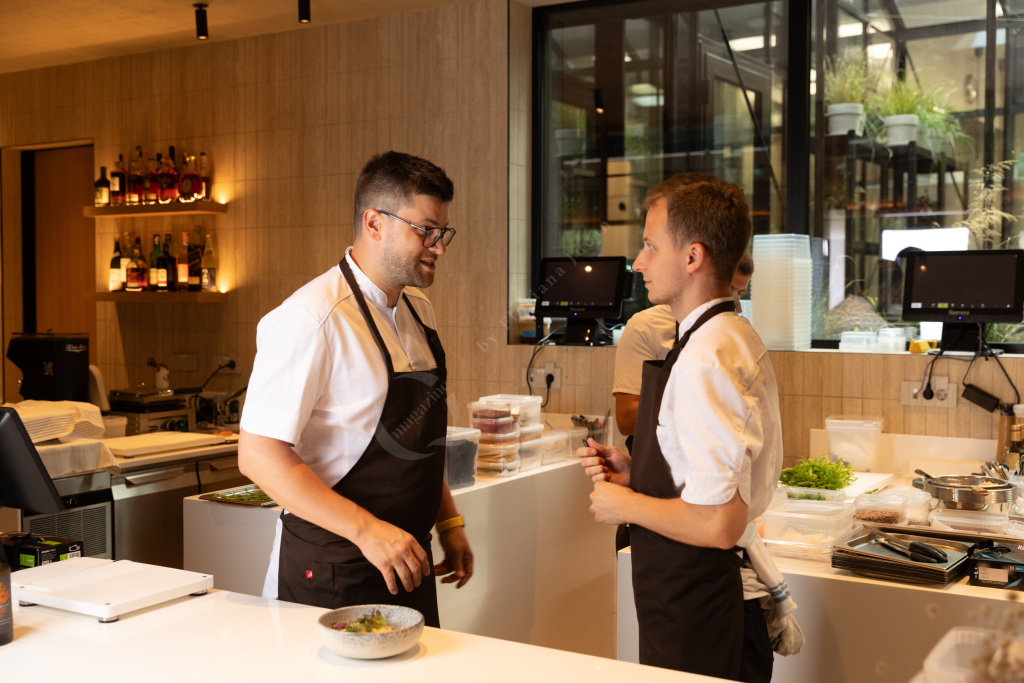
“I prefer a menu where at least 30% of the dishes are new and different from what the public is already familiar with.”
In such a kitchen, personal opinions are set aside; only the direction set by the head chef matters. This system has its pros and cons, of course. This model is more prominent in traditionalist countries like France and Italy. In Scandinavia, there is a hint of democracy in the kitchen, but it’s still essential for everyone in the team to follow the lead of one person, the chef.
Which model works better for you?
It’s similar to raising kids: if you let them do whatever they please without guidance, occasionally with a firm hand, they may become arrogant, lack proper skills, and things won’t turn out well.
In a restaurant kitchen every little detail matters, it must be like a perfectly functioning Japanese factory.
In France there is less freedom, for example when I worked there we only had vacation from the 3rd of January until mid February, that’s it. Non-negotiable.
I learned a lot in France, but I left it when I understood the system wasn’t the right fit for me. I do better in a calmer environment with a Nordic approach, although I still apply many of the things I learned there.
My philosophy is that i must provide people with the best possible conditions before expecting them to give their best effort. So I try to create the best environment and conditions in my kitchen, enabling the team to work effectively and continuously improve.
Your training with culinary legends like Pierre Gagnaire (chef and owner of a famous eponymous restaurant in Paris, a pioneer of the fusion cuisine movement, who won 3 Michelin stars) and Rasmus Kofoed (an award-winning chef, co-owner of the 3 Michelin-star Geranium restaurant in Copenhagen) must have been transformative. What did you learned from them?
Such chefs are big personalities, but they also care a lot about the teams they create.
Working with Rasmus was pivotal for me; his organisational methods and team-building system aligned with my style. He empowers his team.
In a kitchen, you can often feel a negative stress and a positive stress. The first one is destructive, the positive stress is pushing you to challenge your limits and improve.
From Rasmus I learned how to organize a team, and in France with Pierre it was all about the product. Every good modern chef has had or should have the experience of working in France, to understand a few basic things from the French culinary heritage, like the respect for each ingredient, how to combine them, how to organise a kitchen, etc.
There are legendary masters there, regardless if you like their end products or not. It’s a great place to start your training.
I have been opening restaurants on my own now for quite some time, but my current focus is more on developing and managing restaurant concepts of the restaurant, team, direction and financial aspects. Occasionally, I still take on the role of chef as well.
WHAT WE CAN EAT AT BOSCO
You emphasize pure taste, naturalness, seasonality, and minimal heat treatment, concepts stemming from the Scandinavian cuisine philosophy. How do these principles manifest in the menu at BOSCO?
We do not do Scandinavian or Nordic cuisine here, but there is indeed a Scandinavian, a Nordic way of doing things in the kitchen.
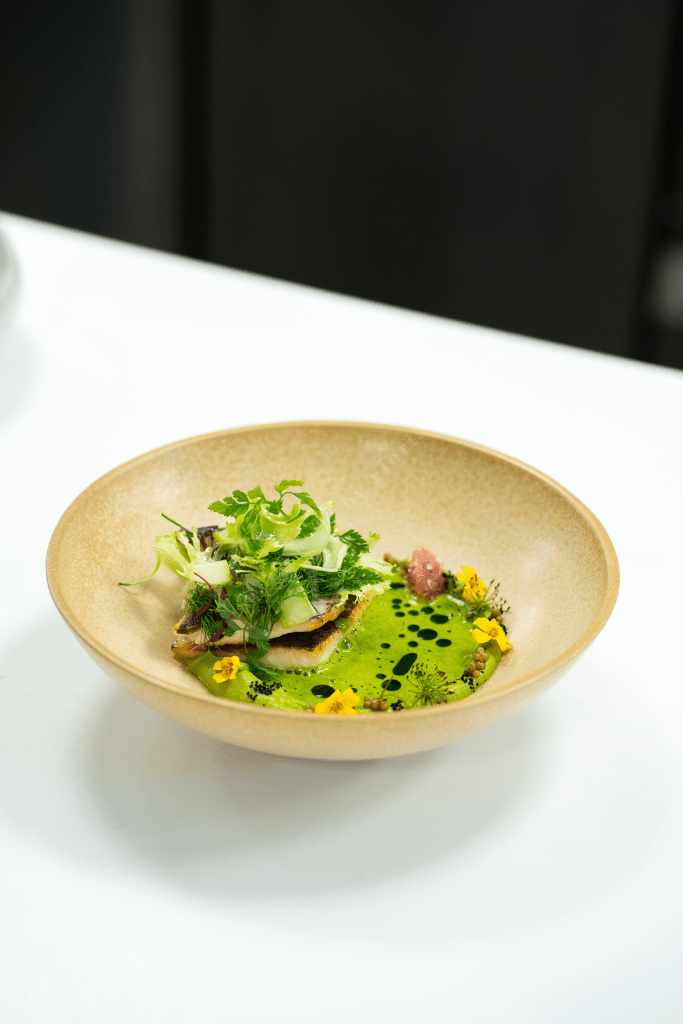
The key concept at BOSCO Gourmet Nest revolves around three principles: TASTY. WARM. GREEN.
In Budapest, the approach has recently mirrored the philosophy outlined in the renowned manifesto of the Danish chef Rene Redzepi (co-owner of a 3 Michelin star restaurant in Copenhagen called Noma). His philosophy advocates for moving away from French products and focusing more on local ingredients and methods. This is how things develop organically in this industry.
Russia represents another example, I worked there too. In Moscow, currently, the standard of restaurants is often higher than in London or New York.
When working in a certain geographical environment and lacking certain ingredients, chef becomes more creative. The same happened in Scandinavia, initially people used more Italian or French ingredients. But then the mentality changed, the producers of various local foods united and became an important part of the gastronomic development. The farmers understood that the restaurants can support them, so they started to provide them with more products, thus slowly developing the taste of customers too.
It happened similarly everywhere and I think it is happening right now in Bucharest. Here, currently, the restaurant scene is not very developed, but I think it will be in the next couple of years. That’s the reason I’m here.
Currently, many restaurants in Bucharest offer very similar dishes. A few are keeping, though, to the cuisine of certain regions in Romania and those are increasingly successful. In Romania, at present, few people focus on savouring delicious local products.
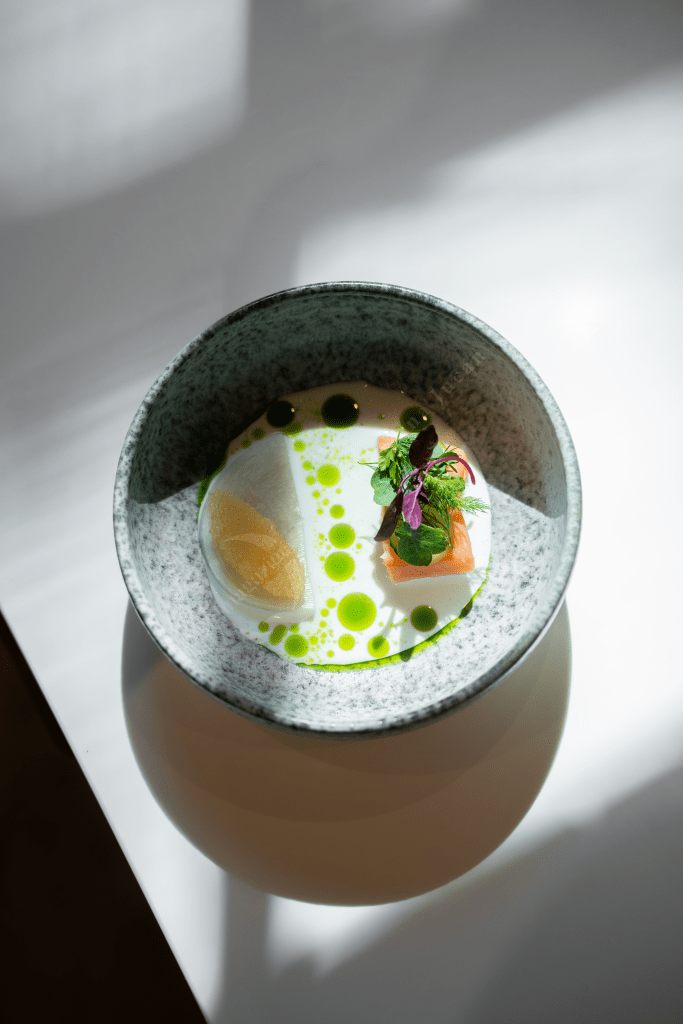
At BOSCO, we are just to explore and understand the local market, evaluating local products, flavors, seasonal ingredients, etc. We have crafted a menu that changes with the season.
We currently have only around 50% local products because there is no system of provision for such products, we need to identify the right farmers and start building a network.
I could even launch a call: “Farmers, come to me!“
Most of the restaurants here often use foreign or general ingredients, they prefer the more popular types of fish, for example, and rarely have vendors bring them something else.
Our mission is to offer comfort food with a gastronomical twist and local ingredients. We aim to create a dining experience and culture that is not only sophisticated but also comfortable and accesible for everyday enjoyment, not just special occasions.
Farmers are starting to understand that we are a solid partner for them and that we can support their growth. We already have discussions with producers for deliveries for the next season, so that both us and them know what to expect and how to plan.
For example, we meet now with them for products for the next season, so they know in advance what we need. This is a community-building effort as well. We started researching about seasonal and local products, and we made a nice summer menu that will have some changes in September and then in November, getting inspiration from nature and the local resources. We need a constant supply of good quality products and want them from local suppliers and markets.

At BOSCO we create a gastronomic atmosphere based on the Nordic cuisine philosophy, a balanced, disciplined and harmonious system. When hiring new team members, I told them: “Imagine this restaurant is located elsewhere, not in Romania. Let’s approach things the way we envision them rather than sticking to traditional methods. Let’s think outside the box and continuously strive to improve everything.”
I would describe BOSCO as offering European cuisine with Nordic influence, emphasizing the use of local ingredients.
How do you adapt the concepts of the Nordic cuisine philosophy to suit the tastes and preferences in different countries, including Romania?
I discovered here a rich cultural heritage and various local influences around the country. On the other hand, can you name traditional restaurants, even in Bucharest, that are always full, mainly with locals? Not that much. Romanians still rather prefer Mediterranean cuisine, Italian first. This happened in other countries too, while the cuisine was developing, then it became more important to eat local and be proud of that. Romania is not there yet, people are still reluctant to try dishes they don’t know or understand, but this is the direction it’s going in the next couple of years, I think.
It is still mostly tourists that visit frequently traditional Romanian restaurants.
When I worked in Russia, there was a certain political situation (the embargo on foreign products) that favoured the development of a bigger taste for local cuisine. I developed a system in which 70% of the menu were dishes people knew and liked, and 30% were new gastronomic proposals, for foodies, the people in the gastronomic business but also as a proposal for the general public. We take the same approach at BOSCO, slowly presenting people with new things alongside local ingredients.
Another fact is that Romanians often come to the restaurant in big groups, with friends or family. That means they should preorder at the restaurant, but you don’t have that habit here, people expect to just come in, however many, and order whatever they want. That is difficult for restaurants, it affects how long such groups and even other customers will wait for their food, even the quality and warmth of the food. In Copenhagen and many other places, if you want to make a reservation for more than 8 people, the restaurant will ask you to specify exactly how many people and will recommend a preorder.
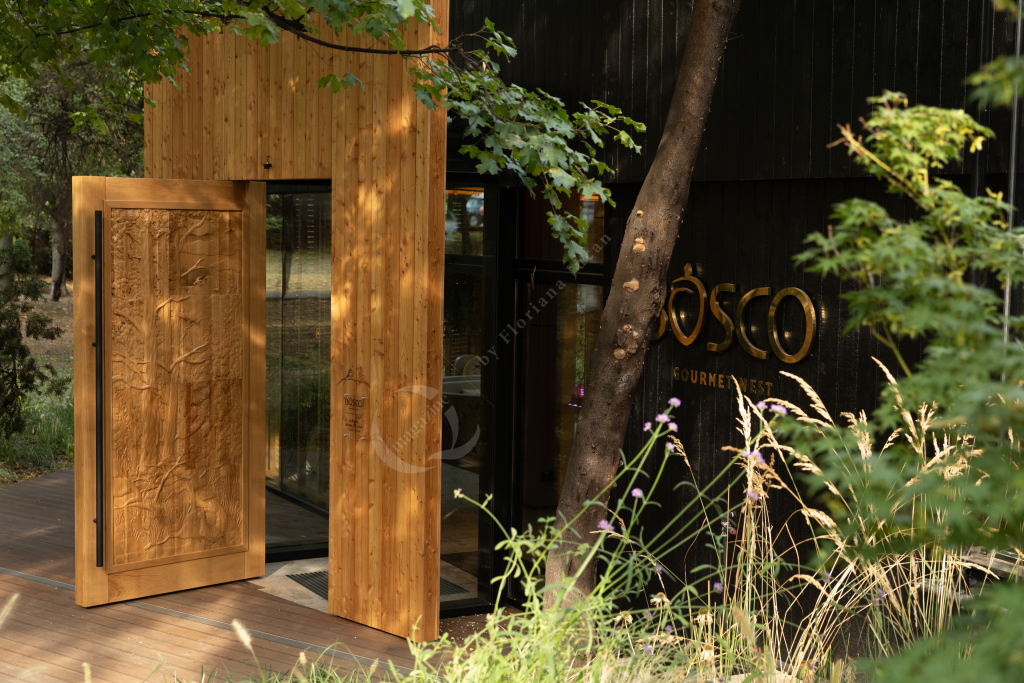
The total investment in BOSCO, including the analysis development, was around two million euros and took a year and a half to complete.
I have noticed that some restaurants here say, “We cannot ask people to preorder, or even say we cannot receive them if they just arrive here in large groups otherwise, they will not come back”. Together with our team at BOSCO, we launched an intensive program to educate both our partners and the market. For us, each guest visit to the restaurant is a genuine experience filled with emotions. Every element—from the food and wine to the ambience, the setting, the staff, the wait time, and the presentation—plays a crucial role in creating a memorable dining experience. Sometimes, people remember a restaurant for years because of the details that make the difference.
A great restaurant delivers an emotional experience; it’s not just the food, but the entire atmosphere that creates lasting memories.
Michelin restaurants particularly understand this emotional experience of eating. Teaching people, presenting them with new things, is a slow process.
You say BOSCO offers simple comfort food with Nordic influences. How do you actually define this concept?
Comfort food can be different things for different people. For me, comfort food in a restaurant is something that you can imagine eating every day. Of course, this is not intended for people who rarely go to a restaurant, only on special occasions, but for a public who is used to eating out. In this concept, comfort food means just a few ingredients and tastes, somehow as the French cuisine golden rule says, not more than 3 to 5 ingredients on a plate.

“Our menu is seasonal and continuously evolving. It features European cuisine with Nordic influences, based on local ingredients.”
The Nordic philosophy emphasises simplicity in food, favouring fermented products to better preserve seasonal ingredients, as well as foraged items such as local mushrooms. It focuses on foods that are easy for people to understand and connect with. This is the opposite of fine dining, which means smaller portions, different courses on the menu, and a different approach overall to the restaurant experience.

We also introduced at BOSCO the concept of the open kitchen where everybody can see the cooks and what they do. I was involved in many details here, including the design of the restaurant, the choice of plates, the cutlery, and the table decorations – which, by the way, are made of organic clay or are local pottery products that were made especially for us.
THE BEST MICI
You mentioned that you spent time exploring Romania to understand its local gastronomic specifics. Where did you go and how did this research influence the menu at BOSCO?
I travelled by motorcycle throughout Transylvania. I visited major cities and checked out various restaurants. One of my favourite restaurants in Romania is One Soul in Brașov (a young and very talented chef there), in Bucharest I like La Hambar and Soro Lume, each with their different style. I continue my exploration of your gastronomical culture, ingredients and food attitudes.
Each country has its own gastronomic particularities and habits. In Italy, if you go to any countryside place, the food is going to be delicious, whereas this does not happen all over Romania. For example, the best mici for me are at Obor market in Bucharest. To recreate that experience in a restaurant is very challenging (we are currently trying to find a way).
Another particular example is the gulash: the one in our menu, taste wise, it just a very rich goulash with high quality ingredients, but the presentation is different than what people are used to, and we call it “new goulash”.
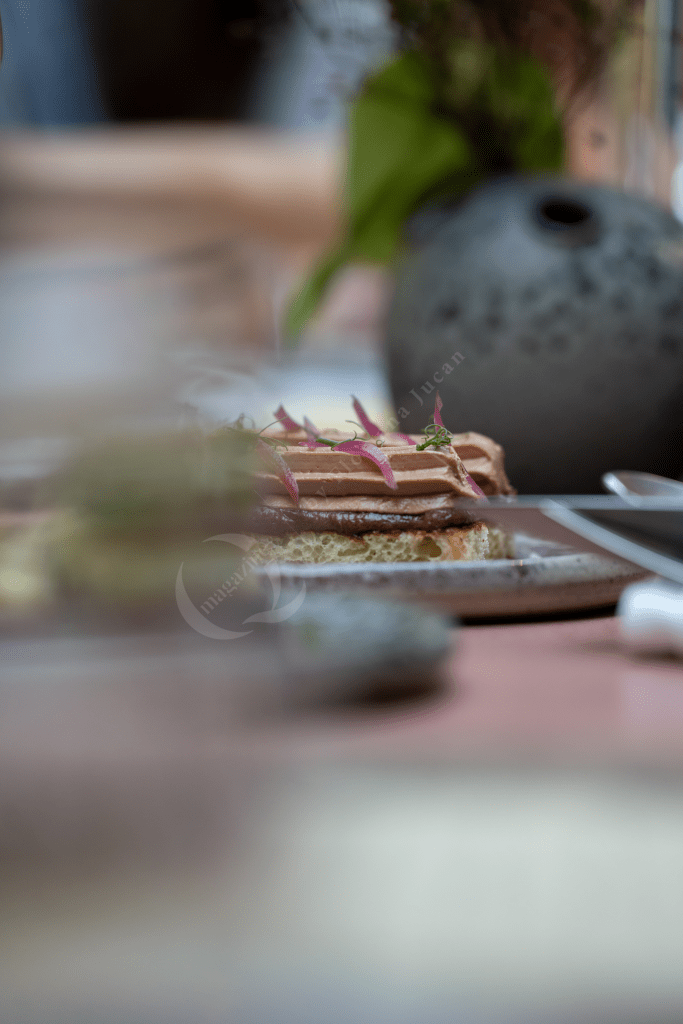
”Our focus is on using seasonal ingredients and preserving them. For instance, during spring time we picked wild garlic, salted it and preserved it. We do the same with unripe tomatoes, pine blossoms, gooseberries, and elderberry flowers. Everything was handpicked by, processed in the kitchen, and later incorporated in various dishes.”
At BOSCO, we also adjust the menu to align with the local eating habits and the weather conditions. Romanians are not used to cold dishes, you prefer warm ones. In Estonia, we have some cold soups, but we take them out from the menu around September when it gets cold. In Romania, real autumn starts rather mid-October, so we adapt accordingly.
Achieving the right balance when updating the menu is essential. Normally, it is done 4 times a year, but in Romania, we will do it a bit differently, for winter and summer seasons and in between some changes of the dishes according to the seasonality of foods, like mushrooms or local fruits.
I get my inspiration from the local products I come across
You have an obvious passion for local products. Why is that so important, and how do you build connections with Romanian farmers and producers?
We use local vegetables, some dairy products, local trout (which is very good quality), beef and especially mangalița, which I like. When it comes to dairy, I face an interesting situation: Romania has a strong tradition in dairy production, yet it is rare to find products of exceptional quality. The reliability of deliveries consistency of deliveries from farmers are also a challenge, even when you find high-quality providers they don’t always maintain consistency in product delivery.
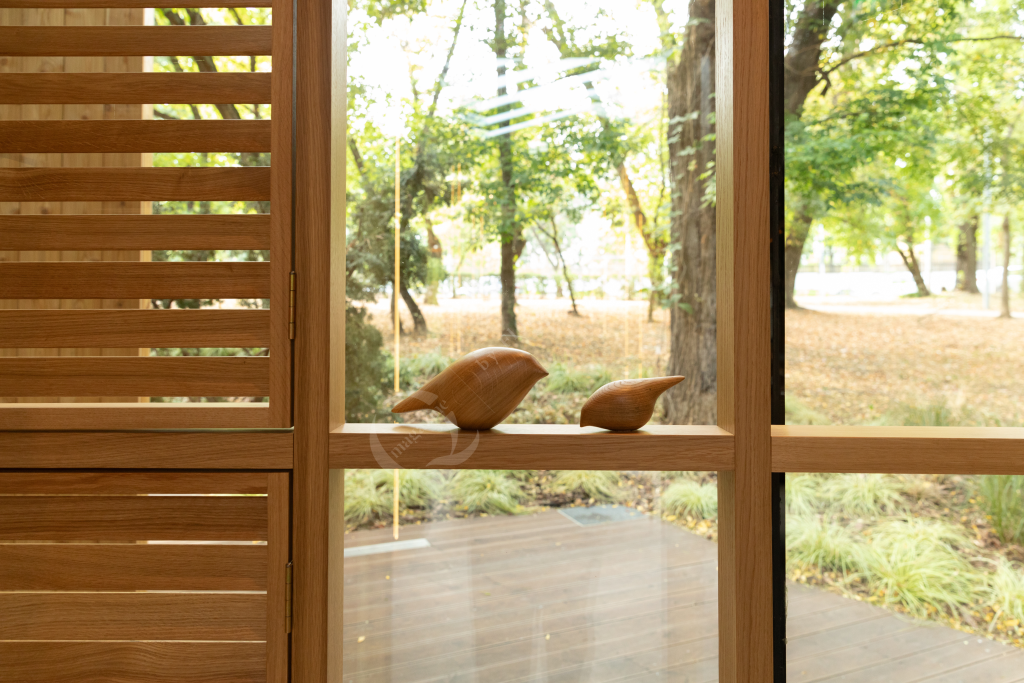
The interior design concept was inspired by the forest and our desire to create “a gourmet nest” in the heart of nature. Every element aligns with this vision and incorporates only natural materials: wood and travertine, vast glass surfaces, earthy tones, olives, a clay ceiling, and burnt wood outside.
Next year, we plan to collaborate with a farmer who will grow vegetables specifically for our restaurant, a practice that is also becoming common here. However, I will not be using local products at all costs. If local options compromise taste or quality – for example, if I don’t find good quality or properly cured meat – I will seek alternatives as close to Romania as possible.
Your compatriot Eduard Kisseljov, who also worked at Geranium, has joined you at BOSCO as Head Chef. How has this shaped your kitchen dynamics and the menu?
For me it is very important to create a stable environment that works well, so I very much needed a good chef. Bringing Eduard here was a big success, he is very talented and passionate – and the great thing is he is already familiar with the philosophy I am trying to implement here.
Creating a restaurant concept from scratch up is no easy task. What challenges did you face during the concept phase of BOSCO, and how did you overcome them?
The challenge is how to communicate your vision to your team. There are many skilled individuals, unfortunately with a very rigid approach to innovation. To learn and improve your skills one must have an open mind, and also travel and experience other venues. I certainly did that, but many people in this business don’t. It was challenging to convince people to trust me and accept doing things differently than they were used to, or than others do here since forever. So, the mindset towards new things was the biggest challenge.
I often use Budapest as an example to demonstrate how a gastronomy scene can rapidly evolve. This transformation happened when people began to believe in and embrace a shift in attitude.
Budapest now boasts eight Michelin-starred restaurants, two of which hold two stars. Bucharest and Romania still have none.
What sets BOSCO – Gourmet Nest apart from other dining establishments in Bucharest?
I believe it’s primarily about the philosophy guiding how we approach our work. Additionally, it involves the ambition to make fine dining an everyday experience with a unique twist. We aim to build a team that, as they develop and potentially embark on their project, will look back with satisfaction on their experience and learning at ”The BOSCO School”.
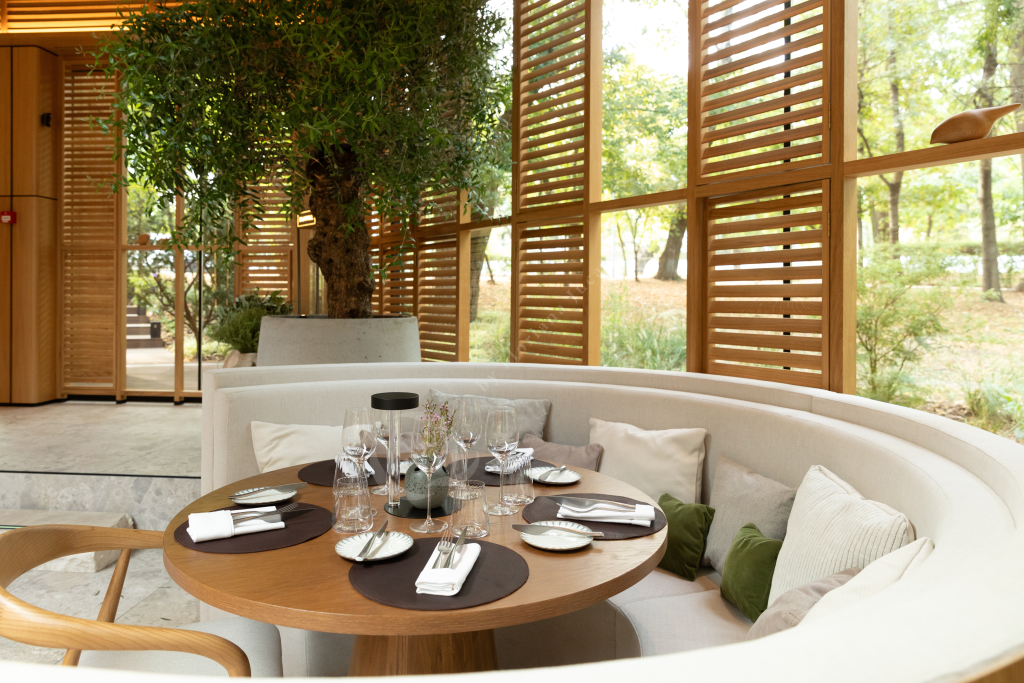
The natural light floods the space through glass walls and a large ceiling luminary, creating a comfortable ambience. In the evening, the lighting systems designed by the specialists from Design Radar transform the atmosphere into something special.
Ultimately, the success of a restaurant is determined by the public. We are not chasing the title of “best restaurant” or being above any other restaurants. Should people at some point say that about us – fine, but competition is not our goal. In this business, it is very easy to mess up while trying to show something you are not. I would say BOSCO is surely one of the most beautiful restaurants in Romania, the kitchen included. Food in itself is a very subjective experience, but that aside, a restaurant is also about many other things, like the quality and the consistency of the service, the atmosphere, and the attitude of the people working there – all these things contribute to the success of such a business.
WHAT’S SPECIAL ABOUT ROMANIANS?
How does the Romanian restaurant public compare to that in other countries where you’ve worked?
One thing I’ve noticed is the request for large tables when eating out, that is going to a restaurant as a social experience first and foremost. Romanians like to dress well and go out to the restaurant, something you don’t see anymore for example in New York, where they don’t care about how they dress and show up.
Currently, many people go to restaurants more for socializing and spending time together rather than for the food experience. It’s common to see tables overflowing with food, yet lacking respect for it. I believe this will soon change. I saw the same trend in Moscow – people initially were going to the restaurant to have fun, to show off their money, to dress very nicely, so it was not mainly about the food. If you want to have a party you’d better go to a bar or a club. Of course, food and entertainment can sometimes be combined (like when, after 11 pm, a restaurant brings in some music or entertainment). But if you constantly try to combine food and entertainment, with loud music, food is always going to be the loser.
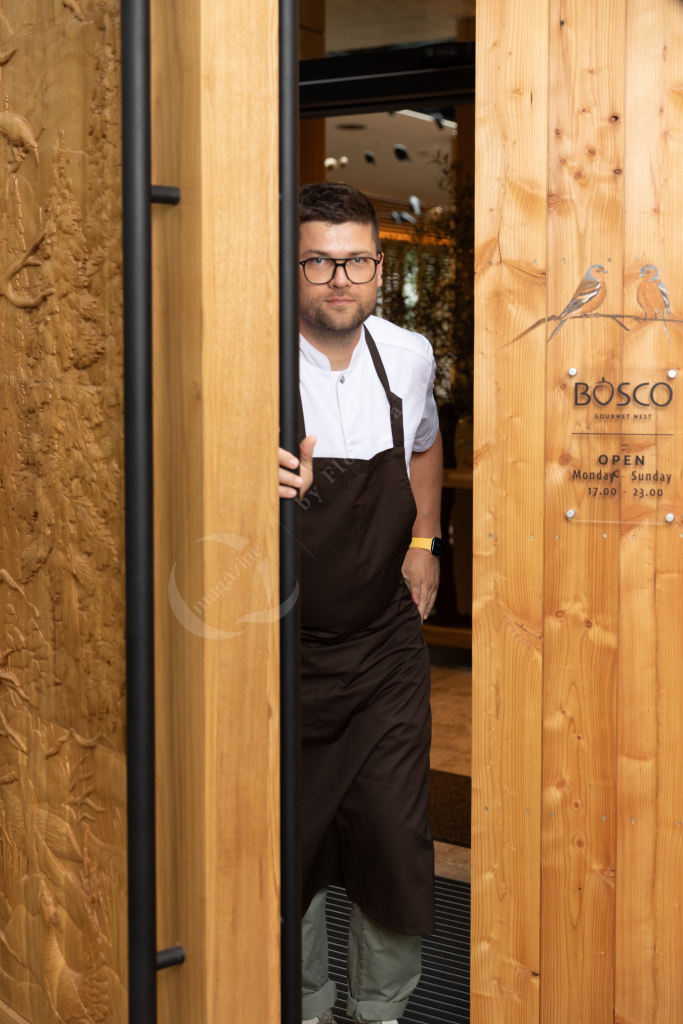
“We created many unique pieces for this project: the central sharing table, made of concrete, the massive wooden door at the entrance, sculpted with forest motifs, the semicircular couch areas that offer a sense of intimacy, and many more.”
In Moscow I saw some big restaurants with huge menus (75 dishes, everything from sushi to pizza) and loud music like in a disco. A restaurant is not a club though, and this model will die out soon, naturally, and there will be a growing trend of smaller restaurants with a focus on the food experience.
I’ve noticed that Romanians often eat a lot of bread. This might be due to a concern that the upcoming dishes won’t fill enough.
I’ve also noticed that people often feel uneasy about shorter menus. They prefer comprehensive ones, with a large variety, from which they will however end up choosing few things. I guess this is a psychological thing.
How can one chef satisfy many different taste buds, and how does he integrate feedback?
It is important to listen to guests, but equally crucial to filter their feedback. Sometimes small, routine mistakes can happen, it’s how things go. I’m not in favour of the famous saying, that “the customer is always right because he is paying”. In Russia, for example, I saw people with huge amounts of money but lacking basic behavioural skills, to put it that way, or being very arrogant. I appreciate it when our guests treat us with the same respect and courtesy that we show them. We are professionals in the kitchen, we know what we are doing, and we do listen to suggestions from our guests – and if they are good, we consider them.

Each restaurant has a concept and an identity that have to be respected and observed. We are open to suggestions and try to provide as much as possible personalized services, as long as that does not cancel our base concept.
If somebody wishes for a special dish that is not on the menu, we kindly ask them to let us know in advance to be able to prepare it properly. If a request lies within the limits of our business concept, then we will happily comply, if not – then I am sorry.
Why is that it is mostly men, unlike women throughout history, that have become the big stars of the kitchen?
Generally, the best professional cooks are men, and the best home cooks are women. There are exceptions, of course, but there is a simple reason for that: being a chef is a very hard career and life. In a restaurant kitchen, it is not just about the cooking. Women have a more refined taste than we do, but professional cooking is more about management of operations and hard work, you need to be able to manage at least 15 cooks in a restaurant kitchen, be on your feet for many hours, know how to manage mistakes and crises, be stress resilient – so you need to be a strong hand. That’s the nature of the job, the physicality of it. For women it’s hard to live in a professional kitchen like that, emotionally it’s hard.
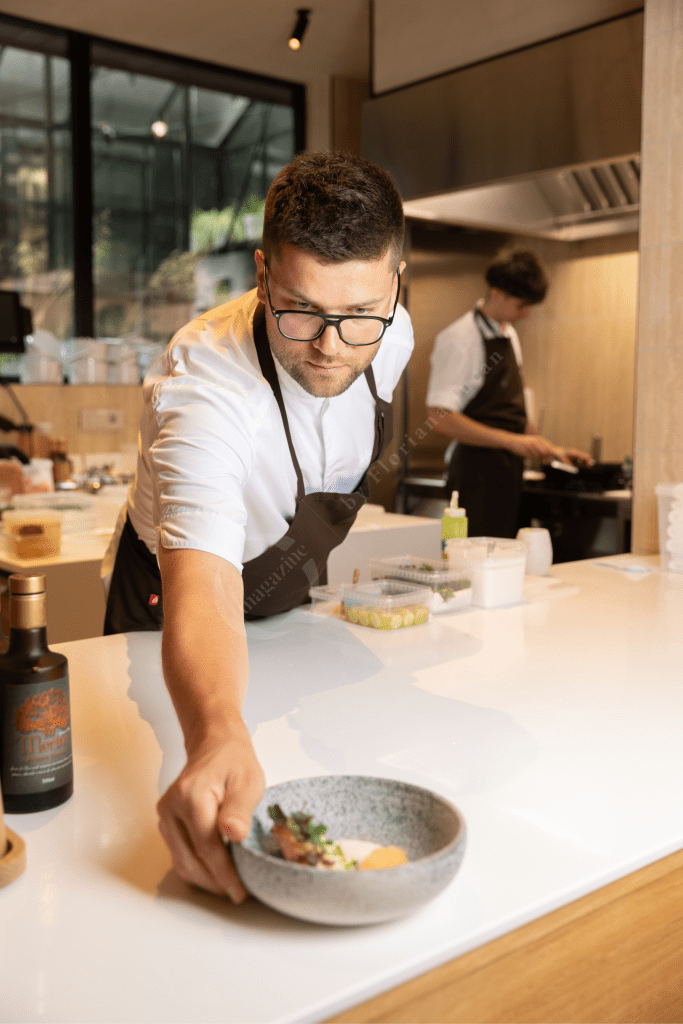
“Gastronomy is often a craft, yet at times it transforms into pure art that requires mastery.“
In the kitchen, you will find a lot of psychological pressure, and you cannot crash and cry about it. Then, the whole team must be mentally strong, if you have one person struggling and making mistakes, everybody will struggle, and it’s a domino effect. When that happens, the team initially helps the person, but if things do not improve fast then the team tends to push that person out, because otherwise, the whole outcome will not be good. I do have girls in my kitchen, but I have noticed they have a lower stress tolerance.
What would you like guests to remember after eating at BOSCO?
I ask myself one question about any restaurant I’m visiting: do I want to come back here? Ideally the answer is: “yes, of course, I want to come back tomorrow, for the food and the whole experience, food, service, everything”. That is what I would like people to think as well about us.
Sometimes, a restaurant may offer excellent food and poor service, which will determine you not to come back. I focus on the details – everything needs to impress the guests. The details make a significant difference, especially when they are part of a concept.
Our restaurant’s design features reused wood panels, reflecting a Nordic mindset, focused on sustainability and zero waste.
We paid close attention to small details including the plates, the cutlery, the bathrooms, etc. This business involves a significant amount of psychology in addition to specialised knowledge. It’s essential to have a team that understands and accepts these aspects, and recognizes that there si never a second chance to rectify a poor first impression.

Andrey Korobyak has worked as a chef at restaurants like Geranium (Copenhagen), The Three Sisters Hotel (Tallinn), La table du gourmet (Riquewihr, Grand Est), Egoiste (Tallinn), Courgette (Canberra), MAXIM (Moscova) and has been a consultant for various international projects.