
With dozens of foreign meetings in the last year and a half, it seems that the Premier is a globe-trotter who embroiders his own foreign policy vision. He rapidly managed to be welcome in all major Western chancelleries, something that others have failed to doeven after many years in office.
“We have to admire those who know how to govern a kingdom.”
Machiavelli, Speeches
In terms of his image abroad, Victor Ponta had an unusual beginning. Being the youngest prime minister of Romania, the first head of government whose biological and political maturation occurred after the fall of communism, it was expected that Victor Ponta would be well received externally. Instead, during the referendum in 2012, the charge of plagiarismwas glued toVictor Ponta’s image, and his reception abroad was moreevaluativein nature.
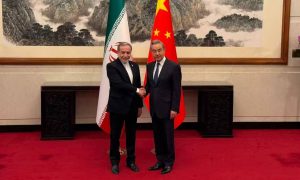
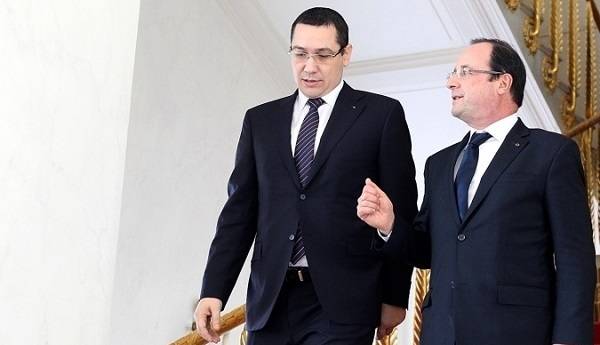
But since last summer, the Prime Minister has had dozens of foreign meetings. A list for recent months includes: a meeting with Angela Merkel in Berlin in early June; on June 18th, in Bucharest, a meeting with CIA chief, John O. Brennan, followed by a meeting in Madrid with Prime Minister Mariano Rajoy and King Juan Carlos I. On the 2nd of July, the Beijing meeting with Chinese President Xi Jinping and Prime Minister Li Keqiang and eight days later – discussion with French Prime Minister Jean-Marc Ayrault and President François Hollande received him at the Elysee; in early September –a meeting with Turkish Prime Minister Recep Tayyip Erdogan and Turkish President Abdullah Gül.
These are just some of the Heads of State and Government who met with the Prime Minister, without counting the regular contacts at the European Commission, European Parliament and PES levels.

What is the goal?
What are the objectives of the dozens of foreign meetings that Victor Ponta hadthe past year and a half? Clearly, not only the simple introduction of the Romanian leader. Is there a redefinition of foreign policy strategy? Of course, the main direction can not change, but the footprint is personal.
First, Victor Ponta has gone way beyond the stage of “damage control” after the allegations in 2012. At the EU level, political leaders from Angela Merkel to EC President J. M. Barroso have finally deciphered the political game of last summer and see a dialogue partner in the head of the Government of Romania and a leader who will dominate Romanian politics for a long time to come. At the Socialist International level, Victor Ponta is in the top ranking of young leaders whose political future looks long and interesting.
Two explanations can be found for this dense foreign meetings agenda: on one hand, the Prime Minister naturally crystallizes his own plan of external positioning, step by step; on the other hand, deriving from institutional realities, but alsofrom the internal political game trend – the Premier aims to take over a space that, until now, was exclusively occupied by President Traian Basescu.
A foreign policy axis builds and strengthens in a decade. The Premier assumesleadership of a country engaged in a strategic partnership, but that does not mean that he will not enrich Romania’s position in the worldwith his own vision.
A difference from Traian Basescu – a deliberate player, who has pragmaticallysketched a strategic axis, at first even somewhat unidirectional – Victor Ponta seems to casually assess opportunities for economic openness and prefers to add as many contacts as possible to his personal list.
President Basescu made foreign policy because of pragmatism, at a time when Romania was still settinginto an external orientation, driven by the orange revolutions, in a context of economic growth and with the background of relatively stable power poles in the world. Victor Ponta must assume a foreign policy strategy already in place, but in an unpredictable economic environment dominated by changes in global balance. The PM does not easily reveal his thoughts meticulously buildsand, for the time, after clarifying last summer’s political scandal, has no major pressure and, more important, has enough time at his disposal.
Romania needs economic contacts to recover itseconomyafter the crisis and the experience ofEmil Boc’scrisis governance foreign actionsis somewhat eloquent. Emil Boc was a prime minister without a foreign agenda. Trapped in the economic crisis, the former head of PDL seemed more concerned with what was happening inside the country than outside it. Victor Ponta not only shows a different thought process, but he is also forced by the poor financial resources and the stillunconsolidated economic environment; while economic concerns dominate the agenda, the Prime Minister is seeking opportunities and business partners for Romania.
Foreign Policy – an image engine
Returning to domestic political dynamics, while looking forward to an election year, foreign contacts also also have a stake regarding public image. For President Traian Basescu, foreign policy is an important image engine, which he skillfully used during tense political moments.Foreign policy events, even if they fail to make the media agenda, certainly offer a different way of expressing beyondannoying everyday political issues; foreign policy means power and a positionabove dailyscandals. The public has the perception that while “politicians argue”, someone is also speaking about important topics;the issues of foreign policy have become even more relevant after the economic crisis, when people now fully understand the argument regarding theeconomic value of external contacts.
Since Adrian Nastase no other Romanian leader has had such an extensive foreign policy plan. At a time when our country wasnegotiating entry into NATO and the European Union, Nastase “conquered” vote after vote in personal discussions with foreign counterparts, which often took place in front of works of art or during hunting trips. Ponta understood how a direct relationship with a foreign prime minister can result in an economic or political advantages for Romania.
There has been much discussion about the parallels between the Prime Minister and his political model Tony Blair and it is interesting to note what Victor Ponta has learned from the former British Prime Minister – a political leader with extensive international experience, who offers interesting insight, with lessons about the steps to be taken not only for acquiring external contacts, but also for shaping a vision for international action.
Tony Blair is certainly the man who can provide ideas for a political vision and for ways of achieving it, and Victor Ponta seems to have a perfect strategy of shaping his portrait into a“new Machiavelli”,a cold leader with stronginfluence, a visionary withintegrity, an ambitious leader who knows how to handle power in the modern world.