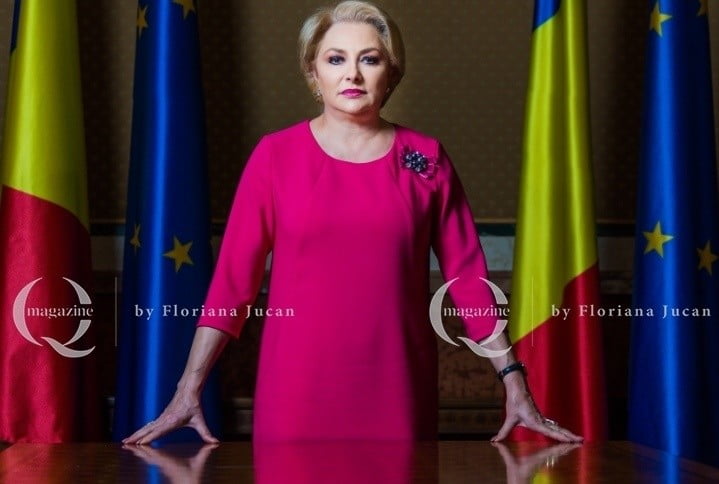

If the depreciative attributes the Romanian society overwhelmed Viorica Dăncilă with, the first female Prime Minister in the history of Romania, would be gathered in a book, we would be able to make a dictionary of infamy of the dimensions of an encyclopedia.

DECAY OF THE ROMANIAN SOCIETY
No other Prime Minister – at least in the post-communist era – has been treated in such a manner.
I wonder why? The search for the explanation leads us to the decay of the Romanian society, both with its polarization. The two are linked to each other.
The Romanian society is nothing but profoundly conservative through its traditions.

The traditional Romanian family is authoritarian and egalitarian. The Romanian peasant farmed his land together with his family, under the authority of the its eldest member, who, at death, shared his property equally among his children.
The intrinsic contradictions of this model of family organization facilitate the slippage to communism to the left, and to fascism to the right.
The invasion of forms without substance in the history of modern Romania made the conservative party disappear in the 1920s, so as not to be reborn until today.
Subsequently the Romanian political space was dominated by “progressive” parties only, alien to the organic evolution of society – „national-liberal” and „national-peasant”, until 1946, „social-liberal”, after 1990.
The absence of a conservative party has left with no obstacles the sideslips to the extreme, making it not only possible, but even inevitable, the „Iron Guard” wandering of the 1930s, and the current neo-fascist one.
After 1990, the model of society imposed on the Romanians by the post-communist power was, under the influence of the American super-power, a diametrically opposed to the Romanian traditions, respectively liberal and inegalitarian. Another shock.
Missing the protection and guidance of a leader and forced to manage on their own in a world of free competition, where even the economic nationalism was forced to vanish, while the cultural one became suspicious, the Romanians, barely out of the dictatorship, found themselves in a foreign universe and fell into neurosis.
The jump from national-communism to international-capitalism has pushed a nation still too young to gain the certainty of its cultural and geopolitical identity, and too often forced, over its too short century of modern history, to start start new transitions before ending the previous ones, back to the age of adolescence.
This explains the teenager collective behavior of the Romanians: arrogant and depressing, aggressive and defeatist at the same time; venturesome, when it comes to getting started, and fatalist when it comes to finishing the job.
This has overlapped the confusion between real and imaginary, long cultivated in a highly creative and adaptive nation, but evolved through imitation in jumps, swallowing more models than it could have digest, and producing or importing more history than it could have consumed.
At this point the anticorruption industry intervened, which, in one shot, destroyed both the Romanian middle class, already hit by the globalized neoliberalism, as the national elites condemned by the neo-conservatism of the global powers.
Spineless and headless, the Romanian nation, neurotic already, broke into adverse groups, fundamentally adopting irrational and radically negative attitudes, and formally using insult as the only language capable of expressing in a penetrating manner … nothing.
THE ANTIPOD OF HYSTERIS
In this aberrant universe has fallen Viorica Dăncilă. A woman of perfect common sense, nonconflictual, the opposite of hysteria and suburban language. A normal woman in an abnormal world.
Viorica Dăncilă is neither foolish, nor uneducated, nor parochial, nor blunderer. She is simply an honest actor, distributed as a substitute in a role the principal player is unable to play.
Previously, there was an attempt to substitute the latter with actors having a more appropriate body language, but they turned out to be only the puppets of some hidden directors who tried to take advantage of the situation to give hand-to-hand tickets to turbulent viewers interested only in compromising the performance. This explains the appearance of Mrs. Dăncilă.
If she did not accept, the play could not be played, and the paying audience (the Romanian voters) would be left moneyless.
Every profession has its specific language.
If you give a text in the field of petrochemistry to a great life-saving surgeon, he would stop in words like an illiterate.
Poets often recite their poetry miserably. There is one thing to write and another to declaim. Precisely the sensibility, which fills the writing in intimacy, lacks reading in public.
It is exactly what happened to Mrs. Dăncilă, uninspiredly bound by the customs of the ludicrous politics, for which she has no blame, to read texts written in an unknown language.
This has fueled the accusations of illiteracy coming from those for whom the grammar of the Romanian language remains a great mystery.
Those who put the comma between the subject and the preach accuse Viorica Dăncilă of illiteracy.
Those wondering whether it is right to pronounce Iran or Iraq, without knowing that those are two different countries, and who were not outraged when the former NATO Secretary General Javier Solana, declared his joy to be in Budapest while arriving in Bucharest, are outraged that Viorica Dăncilă confused Podgorica with Pristina.
They even links to this innocent confusion terrible geopolitical consequences.
Viorica Dăncilă is also guilty of the fact that the protocol service inherited from its predecessors has tied badly to the mast the flag of Estonia.
What difference does it make that this Government has increased pensions or determined, by appropriate policies, the fall in food prices?
Read here: The speach of a Romanian who didn’t speak before the European Parliament
A HEALTHY PRIME MINISTER IN A SICK SOCIETY
If there’s anything to be reproached to Viorica Dăncilă is that she still accepts not to be entirely herself.
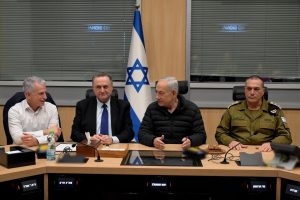
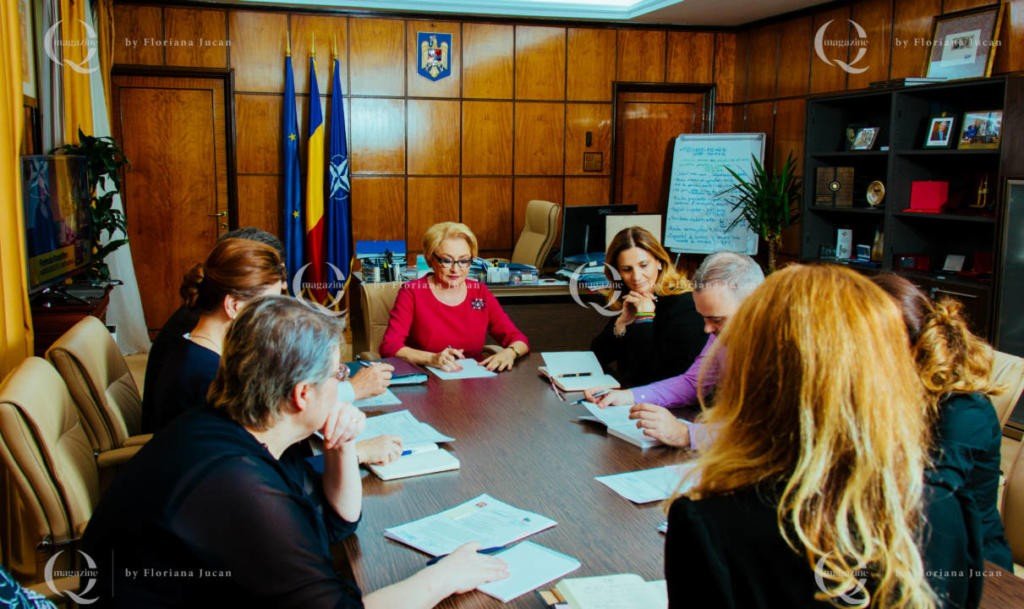
She still holds Government meetings open to the press, she goes to the blackboard to explain what the Government is doing and she is holding press conferences although specialized spokespersons should do it.
In other words, she accepts the rules of the “state show”, which makes the delight of the hooligans from the gallery.
When she is the modest Prime Minister, not the narcissist Prime Minister, the commoner Prime Minister, and not the hero Prime Minister, the balanced Prime Minister, and not the hysteria Prime Minister, the femininity Prime Minister, not the slick Prime Minister.
Viorica Dăncilă is not an entertainment politician. She is a stranger to the theatrical character that makes ratings on television. She is not interested in her image.
And above all, she does not want to be Prime Minister at all costs. Meaning, she is not quite the same as all the politicians we despise. Those who honor the nation publicly and insult it privately.
Viorica Dăncilă neither honors nor insults; just works.
Ms. Dăncilă wants to work, not to gesticulate; is active and not agitated. She is part of those leaders who prefer to let facts speak for them.
She is convinced that pensioners and employees know they have increased pensions and salaries, unemployed people they have found jobs, entrepreneurs they benefit of lowered taxes, farmers they have their aid paid on time or that the state has provided irrigation for free, consumers they know the inflation did not overflow, without the Prime Minister communicating on television or press conferences how well they are doing.
She feels that the Prime Minister’s “working visits” during times of crisis or in places hit by calamities do not help the flood victims, but only complicate the specialist’ interventions.
She behaves with the common sense of those who know that the leader is not the smartest of the subordinates.
Under Dăncilă’s cabinet, even if the Prime Minister is forced to work with a team imposed by the priorities of the power struggle in and between the ruling parties, Romania recorded a quarterly economic growth among the largest in the EU, according to Eurostat.
It has overtaken France in the production of maize (a fact bitterly confirmed by French media) and Hungary at the investment level (as Swiss banks inform).
These results are perhaps less of a consequence of the ministers’ excellence, as of the calmness the Prime Minister has shown in letting the administration and civil society to function, refusing management by hysteria and combating the one through crisis.
Yes, Viorica Dăncilă is not the inspirational leader, but the one who manages. And isn’t that exactly what those who criticize her ask for?! Isn’t exactly the theatricality, hypocrisy and grandiloquence those which have dissatisfied us with other dignitaries who preceded her?!
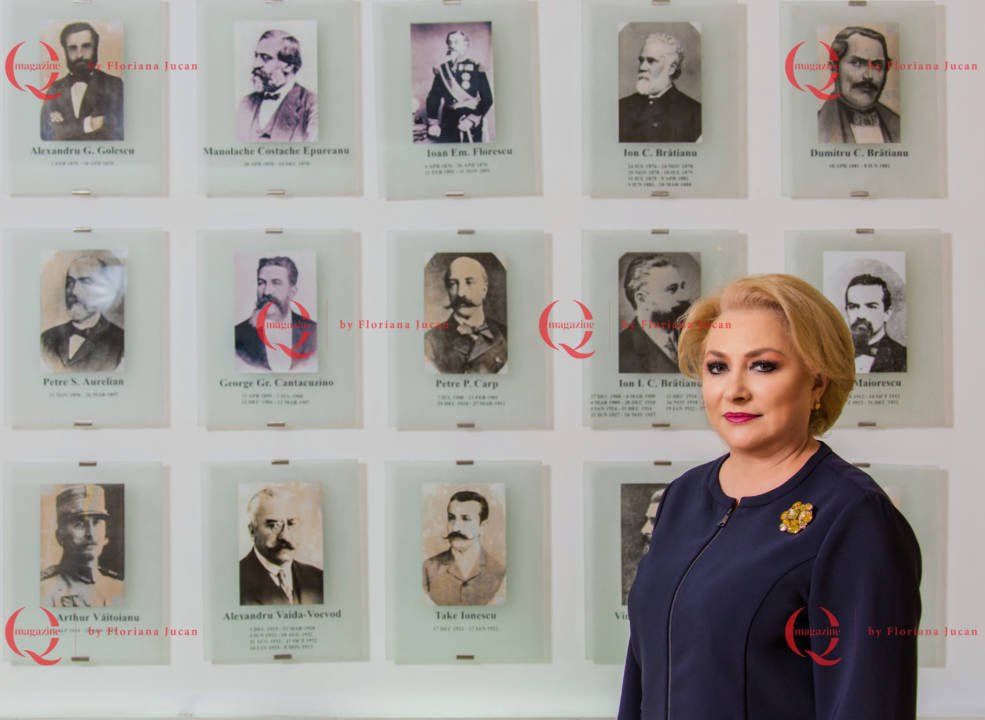
WE HAVE A PRIME MINISTER
When stucked into the provincial emptiness of his political and intellectual impotence, the mediating President Klaus Iohannis, with the attitude of a fake Fuhrer, summoned her “immediately” to the Presidential Palace to report on Government’s policies, criticized before being explained, Viorica Dăncilă simply responded that she has another agenda and is available for consultations as soon as the priorities related to the management of the citizens’s affairs will allow it.
Thus, the world learned that the President of Romania is not the “head of state”, and the myth of the semi-presidential republic collapsed.
When the “fifth column” of PSD attempted to give a party blow and to determine the resignation of President Liviu Dragnea, for which Viorica Dăncilă had the reputation of being just a box of resonance, she simply announced that regardless of the outcome of the intestinal struggle, she will not resign from the head of the Government, and will take her mandate to the end.
Thus, the plotters’ strategy collapsed, and the mischievous found out that the country has a Prime Minister with political autonomy, whose existence is not bound by umbilical cord of different gray eminences.
When the triad of the social-democrats’ party amazons, Firea-Andronescu-Crețu, tried to lure Viorica Dăncilă by giving her the poisoned fruit of PSD’s interim leadership, she responded declining the offer.
Not the obedience to the one ascending her to a position she did not want determined this reaction, but the knowledge of her own limits, and especially the lack of ambitions and the refusal to be part of political maneuvers.
When asked to adopt by Governmental Decree the regulations necessary to rehabilitate the act of justice, Viorica Dăncilă said it would do so if the general interest required it and urged the minister responsible to give up his eternal shirks, but also announced the Government’s Coalition leaders that she does not understand to be the “arrow” of personal agendas, being ready to assume responsibilities only under the conditions of a transparent solidarity of the entire parliamentary majority.
When the European Parliament summoned her about the situation of justice and democracy in Romania, unfairly accusing sideslips and separation from European standards, Viorica Dăncilă surprised everybody with the calm but inflexible dignity she responded with.
Her words “I didn’t come here to report back to anyone”, “I came here because I value and respect you and I demand the same valuing and respect for the Romanian people I represent”, or “what is good for the other EU Member States must be accepted as good for Romania too”, surprised those familiar with a slavish Romania led by faked males alpha such as Băsescu, Iohannis, Boc, Ponta etc.
A woman from the slick’s country spoke with the force of a proud nation and galvanized in a few minutes the national feelings of all the Romanians; except the manipulated ones or of those proud only to be a servant. Simple, calm, quiet.
Even those who vehemently challenge her exclaimed, both astonished and enthusiastic, on social networks: “We have a Prime Minister!”.
To the grandiloquence lacking grandeur, which was to be exhibited in the same Parliament just two weeks later by the President Iohannis, through his empty speech, Viorica Dăncilă offered the alternative of grandeur without grandiloquence.
IN THE COUNTRY OF “THE MISCHIVOUS”
In the society of hatred, division, primitive aggression, the loafer needs spectacle; adrenaline, show-Government, prima donna Prime Ministers, fanfaron leaders.
Those you can whistle, curse, throw broken tomatoes in their heads. When, after the hysterical puppeteers, a regular person comes to the head of the Government, a person like the average Romanian, she’s undesirable.
We hate it just because it resembles us, since in a depressing society, the comfort of resemblance is neutralized by the discomfort of self-contempt.
When after duplicitous and intriguing leaders of the executive and after presidents who split and fueled conflicts, the Governmental leadership is taken by a non-conflicting person, with no personal ambitions, with non-aggressive speech and unostentatious gestures, we are dissatisfied.
It is not fun. It does not help us to get rid of our frustrations.

And what is that we’re doing when feeling dissatisfied? We offend, insult, outrage, humiliate.
We offend a seed of ours. We are insulting a person who manages our interests.
We offend an official of the Romanian state. We humiliate a woman.
In fact, that’s the message of a loafer, foolish, maneuvered, mischievous world. An insult. That’s all a thought traumatized by freedom can express.
That’s all a loafer can create, whether he’s the atypical one – schooled (even done in vain) and rich (even of primitive accumulation).
Schooled, but uneducated. With money, but with no soul. With information, but without education. With fortune, but without identity. With claims, but without merit. With a stomach, but without a mind. With a voice, but without words.
This is not the people, but only the mischievous.
And Viorica Dăncilă must go on, with her confused smile, with her bold step, with the imperturbable calm, for, thank God, the people do not get confused with the mischievous, even if the roar of the minority robots seek to cover the healthy breathing of the diligent majority.