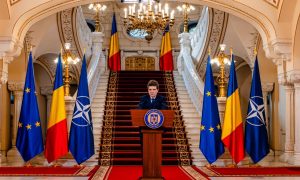
Colonel Shlomi Cohen has a 30 years carrier in the Israeli Defense Forces and has led numerous war operations in the name of his country against his enemies.
He accepted the interview of Q Magazine about possible scenarios for the outcomes of Syria, about Iron Dome, the Israeli defence system designed to intercept and destroy short-range rockets and artillery shells and about the countries with nuclear potential.
Syria- 5 scenarios
Which is the worst AMAN scenario concerning the Syrian crisis in the region? Israel has already launched an attack on several targets in this country and has informed Washington about the delivery of four S-300 counter-rocket batteries, from Russia to Syria. Each battery is composed out of 6 missile launchers, with 144 short-range missiles. The first delivery might be made within the next three months and is due to be finalized by the end of 2013.

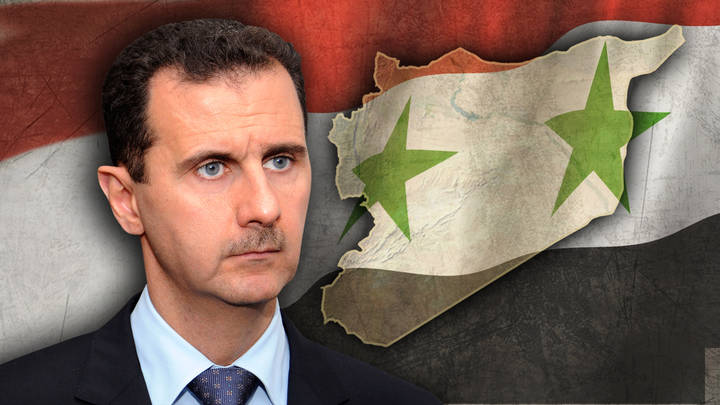
Nobody knows when and how the Syrian conflict will end and therefore, at least we may draw the lines of several scenarios of what may happen next.
First of all.The survival of the Assad regime.
According to this scenario the largest part of the Syrian territory is controlled by opposition and governing powers. Bashar al-Assad is partially maintaining his governance due to several key locations (Damascus, Alep and the coastal area), meanwhile keeping the territorial contingency and main economic and security strategic objectives of Syria. A temporary and “fragile” ceasefire is possible under UN and Arab League. Syria is confronting with an economic and humanitarian crisis.
Secondly. Assad regime is attempting to survive by gauging warfare against Israel.
It is a desperate attempt to salvage the Assad regime through missile attacks on Israel (supported by Iran and Hezbollah) and generating regional conflict, therefore shifting the attention from the internal conflicts against the regime. The war against Israel shall stop, at least temporary, the threats of the opposition against the regime. Therefore, even though this strategy might fail and Assad might lose the power he shall remain in history as a patriot fighting against the enemies of Syria and not against his own country.
Third of all.The fall of Assad.
The chaotic situation and the opposition's complexity are prohibiting the formation of an interim regime and are waging civil war between ad-hoc coalitions amongst the opposition. The Syrian army ceases to exist, soldiers and their weaponry are scattered between various leading actors. The internal struggle of Syria is intensified by external factors which is helping several allies from the grand arena. Syria is currently a state in complete chaos, a failed state. Considering the severe humanitarian crisis, the international system shall try to solve the difficulties and insecurity that consume the country. The neighbouring countries shall be flooded by hundreds of thousands of refugees, while as the Golan front shall be dealing with terrorist attacks against Israel.
Fourth of all.The fall of the Assad regime.
The Syrian state will split into several governmental entities, denying a central government to be formed due to the conflict of interests amongst the opposition. Under the egis of UN and Arab League a ceasefire is signed and practically some Syrian regions are controlled by different power actors. Consequently it leads to a cantonization of Syria (e.g.: after the Swiss model), mainly on religious and ethnical basis (the Kurd region, Druze, Alawi etc.). Syria is dealing with an economic and humanitarian crisis while external interventions are more and more often. The Syrian army shall no longer exist, being split up between various power actors.
Fifth of all. A new government is formed.
The Assad regime falls and a new government is formed dominated by Sunnites, “a government of unity and national reconciliation”. The opposition remains united, under the influence of the international community and is able to stabilize the situation in the country and restore governance. This legal government shall be attaining international recognition as well as western and several Arab League countries'assistance. A moderate and pro-western regime will dissociate its self from the strategic alliances with Iran and Hezbollah. After stabilizing and consolidating the new regime, Syria encouraged by the West could be a partner in the peace process with Israel.
Implications for Israel
Currently we are following the evolution of the Syrian revolution with concern and we'd rather avoid an intervention in the North. Israel has strategic interest in weakening and even destroying the Iran-Syria-Hezbollah axis, but after the fall of the Assad regime the situation in Syria shall be uncertain.
According to the abovementioned scenarios the upcoming reality might be dangerous for Israel.
In the abovementioned scenarios we are talking about instability and weak governance.
We are concerned that the Golan Heights might become the conflict area between Israel and radical Islamic parties and other hostile elements that might exploit the situation in order to build a new front against Israel.
Another menace could be the „leak” of advanced weapons (long range ground missiles, anti-tank and anti-aircraft missiles) by Hezbollah or other terrorist organizations.
Within this context, the most serious threat is the possibility that unconventional weapons (chemical and biological) shall fall into the hands of the terrorists from the Syrian army. Both Israel and the US have announced that they shall try their best that conventional Syrian weapons shall not reach terrorist groups.
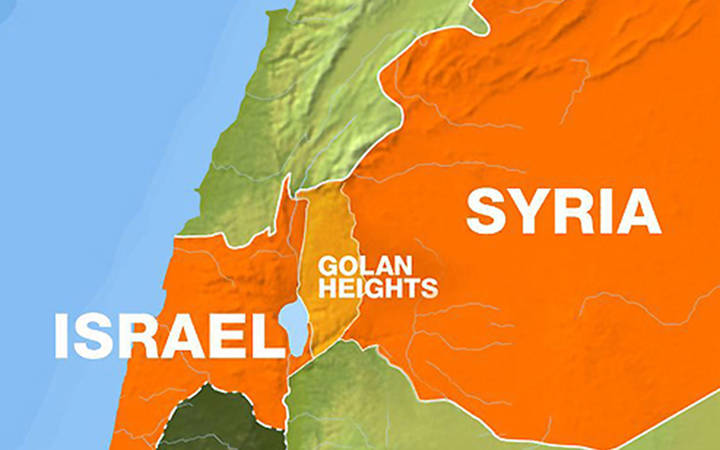
Without doubt the scenario which both Israel and the West desire the formation of a new regime in Syria, democratic and inclined towards Western values. It is desirable that such a regime should be installed through a democratic process, with minimum external intervention, which will give it legitimacy. Despite separatist movements of several Syrian groups, Israel's interests and the West's is maintaining territorial integrity and sovereignty of Syria within its current borders. Israel's limited capacity to influence the Syrian events and to intervene in the internal affairs of this country might have a boomerang effect. I do not believe Syria shall reciprocate for the recent attacks on Syrian military bases, but Israel must prepare itself for all threats on its security without excluding an escalation of the situation in Lebanon. Our country along with the friends from international community must act to put an end to the crisis.
Iran North Korea
How do AMAN analysts perceive the threats launched by North Korea a few weeks ago? Are they following Iran's actions regarding nuclear weapons manufacturing, having Israel and NATO countries as targets? How advanced is the Iranian – North Korean cooperation in the nuclear field? What should USA do and how would a military leader act in the face of such threats?
Warfare is suggested by North Korea by neighboring countries and USA in order to stimulate risks and opportunities discussions.
In order to avoid any confusion let me clarify this: along my career within Israel's army I have lead war-time military operations and I am not a supporter of these, exactly because I know all so well the price people have to pay and because you might know when a war begins but you never know when it ends. Nevertheless, an analysis must be made from a larger and more expert perspective.
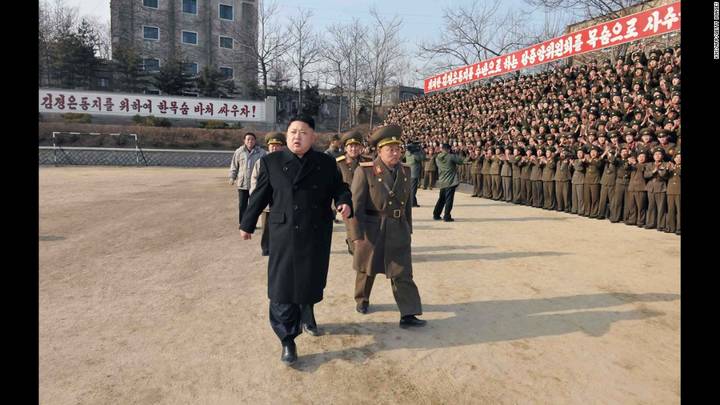
When North Korea began its long distance nuclear tests, I've heard in Washington strong positions to stop them, even though it was well known that its neighbors had both informational capacity, as well as military capacity in order to defend and counter real nuclear attacks. In the last years, a series of sanctions imposed by USA were not able to be implemented in North Korea and despite numerous attempts to stop it, the aggressive defiance acts have continued till present, so much we may consider it a war declaration.
I'm not entirely sure I can explain the young North Korean „leader's” actions (Kim Jong Eun) and how far they will go, however one thing is certain: he wants to challenge the West and especially USA. Moreover, the process of examining the situation from the Korean peninsula should take into consideration several factors.
The tensions created and the risks of situation deterioration may lead to a change in world order. Insofar, North Korea thought it had an „insurance policy” against eventual attacks only because it owns nuclear capabilities.
Beyond the remaining risks there is a change to solve to major issues. In the event of an attack lead by USA against the North Korean nuclear capabilities and infrastructure might determine a new reality that has the power to change the world. Assuming the American Air Forces (along with other US weapons) have the capability to disable North Korea's launching capabilities, the situation would lead to a direct implication of Russia or China. Such a leap implies two necessary steps to change the world reality. A local one: North Korea's collapse might lead to a unification process with the South, like the unification model of the two Germanys in the early 90's, even though there were other circumstances.
This would be a life changing step for the 25 million people currently living in poverty. Secondly, internationally: the dissolution of the imaginary „insurance policy”, transmitting a message to Iran regarding its own nuclear program.
Altogether Iran's allies specialized in transport and export of nuclear capabilities and technologies, affected by this collapse, will understand that the North Korean experience is irrelevant. It's not only about owning nuclear weaponry and threatening the world with it but also a political insurance is truly important for a country. A short term fight in the North Korean arena is by far the cheapest and most significant alternative to avoid an indefinite more complex battle, by bringing Iran in the operation.
It's not only about owning nuclear weaponry and threatening the world with it but also a political insurance is truly important for a country.
This hypothesis I have presented is obviously the most complex challenge for a leader in command of an army like the USA president. You expect from someone who owns a Noble Prize for peace to know how to take a war decision, even though it assumes an aggressive and determinate act but avoids a conflict that is a thousand times more difficult and more complex. Sometimes initiating an offensive act may outline the terms in a world in which power and threats have taken us prisoners. The day after the world would be a better place.
The implications for Israel in this context are far-fetched. Beginning with the help given to South Korea in order to protect its territory on the base of the active defense concept developed and implemented with the Americans, preceding with disabling North Korea's capabilities to promote Iran's nuclear program and ending with the effort of the implied risks awareness of using unconventional weapons by unconventional regimes, such as Iran's case. Time shall reveal if we are able to use even the slightest chance to avoid a war which could get a lot worse.
IRON DOME
Is Iron Dome a success? How do Israeli experts see USA's approach regarding the counter-missile defense system in Europe? How would Moscow react?
The Israeli Iron Dome system's success was attributed to the missile interception, during the recent conflict with Hamas supporters, which deflated the American counter-missile defense system and attracts a leading weapon market such as South Korea, which is confronting with the short-range missile threats from their neighbors. But even for the most eager supporters of the counter-missile systems, the size of the terrain matters, which protects in the case of USA and other NATO countries, despite the limitations of the Iron Dome system, which was projected to intercept tactical missiles not sophisticated ones – even though bombs fly – within less than 80 miles radius.
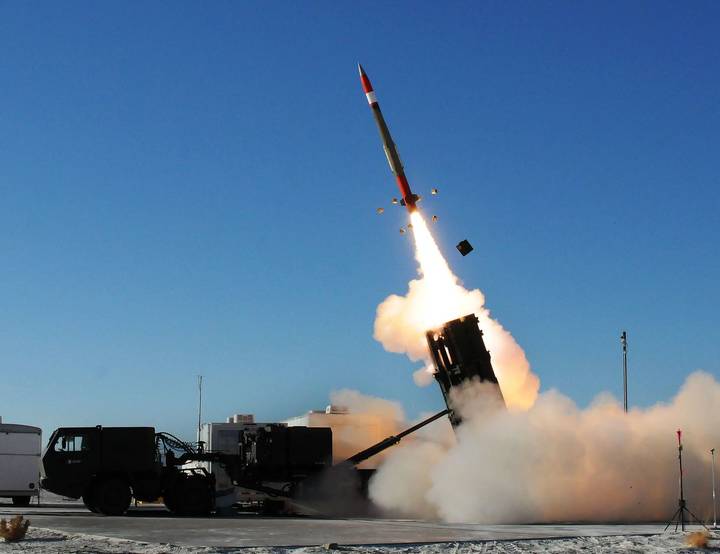
The Israeli-Hamas conflict draw the world's attention towards the counter-missile defense system and this comes at a time in which USA and its Arab allies have taken the task of creating an expensive defense system the Persian Gulf, in order to protect the cities, refineries, oil pipes and military bases against Iran's possible attacks.
The Persian Gulf protection program will include advanced radar models, as well as two missile systems with embedded radar structures: Patriot Advanced Capability interceptors and Terminal High Altitude Defense system. This type of military equipment will be connected to radar and missile systems on board of American war ships docked at sea.
A similar protection system may be found in the Pacific Ocean and is based on radar systems located in Japan, USA war ships and ground interceptors from Alaska and California.
The Obama administration has recently focused on protecting European NATO countries which use advanced radar systems placed in Torrico, Spain, and long-range intercepting systems which are to be introduced for the first time in Romania and later on in Poland. American officials have underlined that the few intercepting systems placed throughout Europe are meant only to protect against missile threats from Iran and basically act as a shield for Russia's nuclear missiles; even though the system has caused tensions in the relations with Russia.
During the Hamas conflict, Israel reported that the Iron Dome system has intercepted more than 400 Gaza launched-missiles towards populated centers, with a success rate of 85%. Hamas claimed that during the 8 days of conflict more than 1400 missiles were launched, but Israel was able to limit Hamas's capability to launch a number higher than 12.000 missiles, by targeting the warehouses they were kept in.
The Iron Dome system's capabilities are whole different story should it take for it to protect Israel from long range missiles launched from countries such as Iran or North Korea, even though these states have a limited number of missiles. Moreover this system will be useless in front of the prospect of intercontinental missiles from grey zones of countries such as Russia and China.
Altogether South Korea has expressed its interest to purchase the Iron Dome system in order to protect the population from the border with North Korea, were there are thousands of short range missiles. Even Singapore is negotiating the purchase of Iron Dome.
Israel admits that Iron Dome is not enough to satisfy the needs for counter missile defense and is developing „David's Slingshot”, a defense system for medium range missiles as protection against the Hezbollah group from Lebanon. Meanwhile, the system is projected with Arrow missiles against long range ones that Iran could launch.
America in Europe
Defense against ballistic missiles: the European-American Cooperation
USA is planning on protecting Europe by placing SM-3 intercepting missiles against those with medium range. These missiles will be placed in Europe war ships Aegis which will cruise the Mediterranean Sea. The main problem of the Americans is how they will distribute them. SM-3 can protect against medium range missiles, against Iranian Shihab medium range missiles, or, eventually Ashoura medium range (MRBM).
However, long range missiles are faster than SM-3 and this makes their intercepting difficult. Eventually, in order to protect Europe from Iranian missile threat, we must consider Binibstiim missiles, (intercontinental ballistic missiles, ICBM).
The Americans consider their defense system with the next SM-3 model to act faster and more precise, with extended autonomy.
The problem is that the RAM system (Rolling Airframe Missiles) is still completely new. In other words, discussing the new missiles hasn't even been put on paper and if we take into consideration the Obama Administration to downsize the Defence budget, we can't be sure of a new missile. I could say that this „illness” is causing waves: an unprotected Europe or just partially protected, in case Iran shall acquire Binibstiim missile technology (which is on its way, as satellites show) shall be held hostage by Iran.
The previous program of the Bush Administration was far more ambitious and included placing similar radars to SBX-1, to GBI interceptors in Europe. The problem of the Bush Administration's plan was that it was too explosive politically speaking. The Russians rightfully got scared that such a modern system could rival the nuclear downfall of Russia's ballistic arsenal.
The Obama administration plan wants the Russians, and therefore a radar will be moved in Turkey while as SM-3 missile interceptor bases will be stationed in Easter Europe. The question remains: is gaining Moscow coming at a too expensive price for Washington's European allies.
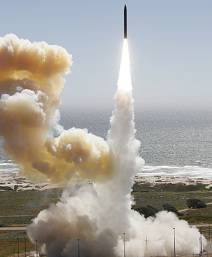
SM-3 (RIM-161 Standard Missile 3) – Water short range ballistic intercepting missile system
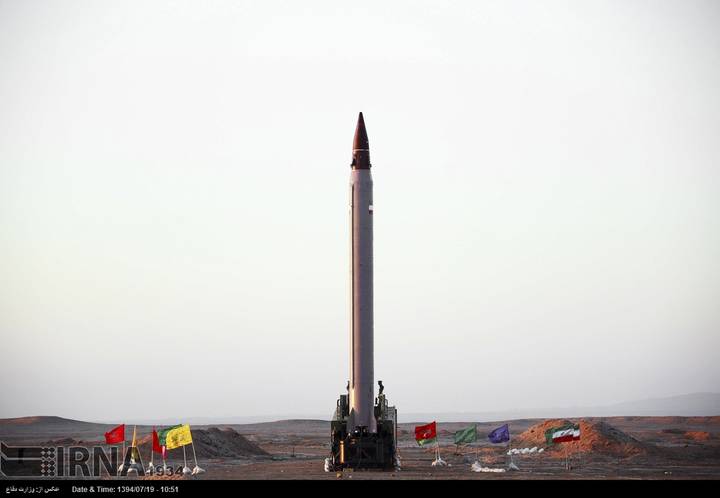
MRBM (medium-range ballistic missile) – Medium-range ballistic missile between 1000 and 3000 km.
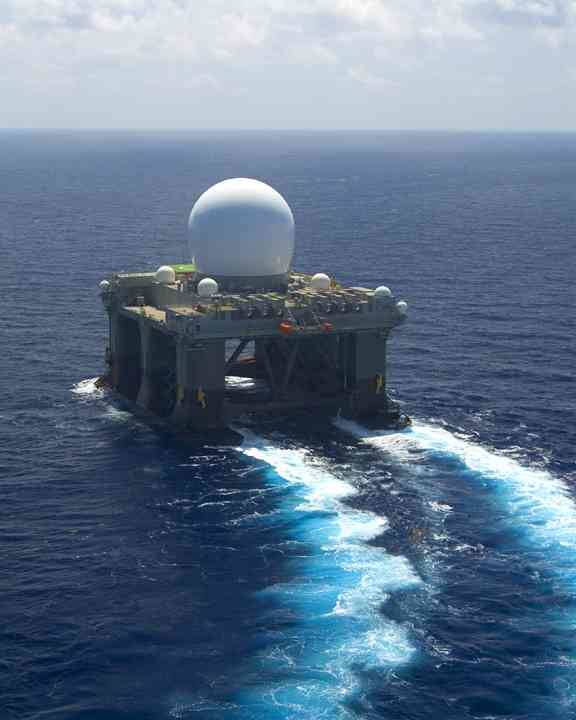
SBX-1 (Sea-Based X-Band Radar) –
Mobile radar, placed on a fifth generation semi-submersible CS-50 which operates on water detecting ballistic missiles
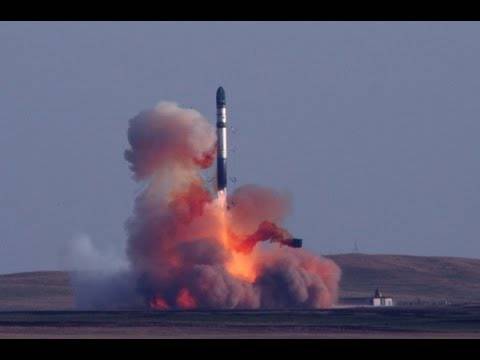
ICBM (Intercontinental Ballistic Missile) – Ballistic missile with over 5000km range used especially for launching nuclear weapons
COHEN: „IF WE DON'T KILL THEM, THEY'LL KILL US”
Shlomi Cohen joined the Israeli army in 1986. His father was part of the air commando during the operation “Entebbe” in Uganda, in 1976, when 100 Israelis were taken hostage by Palestinian terrorists and set free through a spectacular Israeli military action.
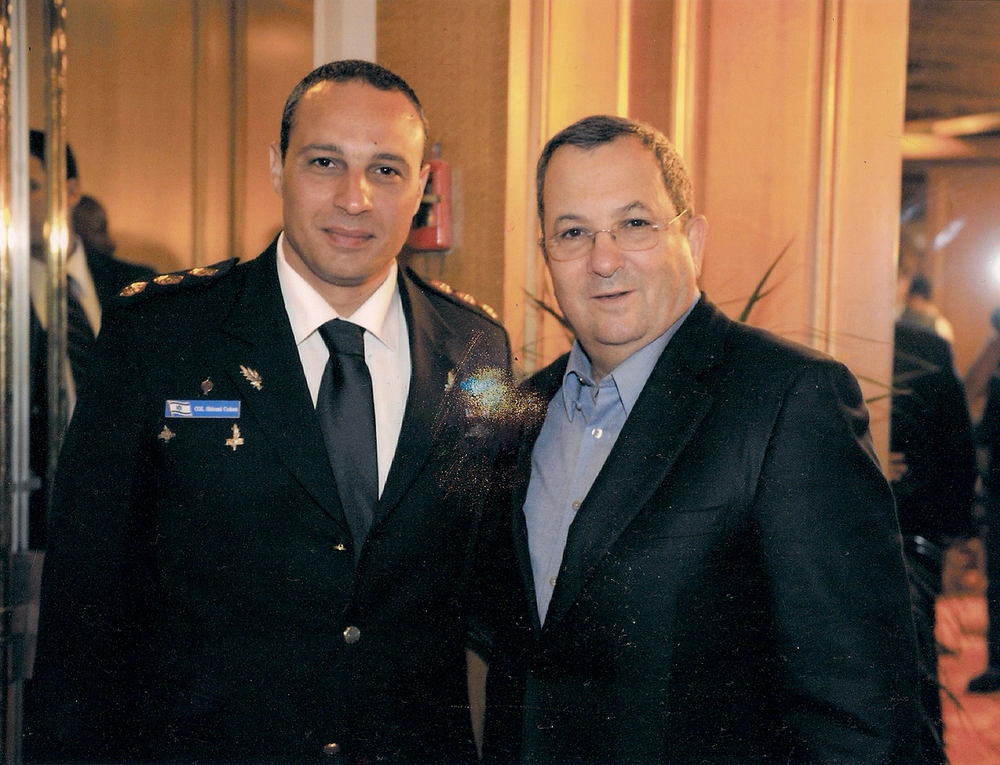
Col. Cohen and Eduh Barak
In the years of 2002, 2006 and 2009 col. Shlomi Cohen has lead war operations of Israel against Gaza Palestinians and against Lebanon.
According to the Hebrew edition of „Maariv”, Cohen was one of the toughest commanders of the Israeli forces, holding memorable speeches in front of his soldiers.
During the time in which he lead „Alexandroni Brigade”, which fought in the second Lebanon war, Cohen told his soldiers: „We came here to kill as many Arabs as we can. Otherwise they will kill us. You're going to war where you must take aim and kill your targets. This is not a practice, nor daily routine. Our goal is to win and this means to kill the enemy“.
In 2002, Cohen was in command of the „Elyakim” group which was training soldiers and special operations against Palestinian terrorists. During the „Defence Shield” operation, the Israeli army lead by Cohen has killed and arrested several Palestinians that were acting against Israel.
Between 1998-2008 he has occupied commanding operational positions in IDF military operations, including: Major State Chef, Commander of the InfantryBrigade, Instructor for the Battalion and Campaign Commander course, operational commander of 12th Battalion from the „Golani” Brigade. B
etween 2008 and 2011 was a military attaché and chef of defence ministry delegation for Central and Eastern Europe, position which implied developing affairs and advancing marketing process for the defence industry, as well as identifying potential markets.
Also, col. Cohen was responsible from this position for developing commercial and security relations with Central and Eastern Europe (Romania, Bulgaria, Ukraine, Italy, Greece and Serbia).
He received the award for Excellence in Action given by Chief Major State IDF and by general Major of the North Commandment.