Chief of staff over 940 employees, besides collaborators and liaison officers. He is not the CEO of a mega corporation … he is the director of Europol, the European Police Office.
Born in the early 70's, the idea of Europol did not materialize until 1992, when it became strictly a unit to combat drug trafficking. The mastermind of this project is none other than German Chancellor Helmut Kohl, who supported the need to create a European Police Office, a corespondent of the Federal Bureau of Investigation (USA).
Europol began operating de facto in January 1994 and continued to extend until 2002, being mandated to tackle all serious international crimes such as organized crime, human trafficking, terrorism, cybercrime etc.
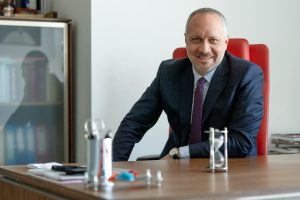
 The current director, Rob Wainwright, lead the institution beginning with 2009, with a mandate until 2017. Wainwright is the first director of Europol who does not belong to a police structure.
Between 2000 and 2003, Wainwright was the Head of the UK Liaison Bureau at Europol, and also responsible for the Europol National Unit in London. In 2003, he was promoted to the position of Director International of the National Criminal Intelligence Service (NCIS), where he was responsible for its international operations and for developing and implementing the UK strategy against facilitated illegal immigration.He also managed the UK's National Central Bureau for Interpol and its Europol National Unit.

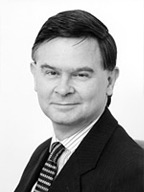 For 10 years, Wainwright was a MI5 intelligence analyst, specialized in organized crime and counterterrorism, where he worked under the guidance of director Stephen Lander (pictured), who reformed the domestic intelligence agency of the United Kingdom. Wainwright confesses that Lauder, with whom he teamed up not only in MI5, but also within the Organised Crime Agency, learnt him the value of strategic information, and the complex mechanisms operating in world governance.
Today, Rob Wainwright is the head of an agency which carries out cross-border investigations on average 18,000 per year, which means about 49 cases per day. How many of them are linked to terrorism and how the Islamic State appearance led to the institutionalized fight against jihadism, the Europol director tells us exclusively for Q Magazine.
5,000
Europe is a continent no longer safe. It is a reality that all nations noticed after the failure in fighting terrorism and which the European authorities began to admit it.
 Europe is facing the highest terrorist threat during the last decade”, tells Q Magazine, head of Europol. Countries such as France, Belgium and Turkey were victims of brutal attacks by the jihadist group ISIS, resulted in hundreds of dead and wounded. The most recent terrorist attack on the Ataturk airport in Istanbul, which left 41 people dead, show that terrorist offensive is becoming increasingly developed.
„Europe needs to increase the trust between national CT (counter-terorism) services so that they see an added value in sharing more intelligence and information at EU level”, explained Wainwright.
„Recent terrorist attacks in Europe are a further reminder of the volatile terrorist threat faced in Europe today. We have consistently reported our judgment that there are at least 5,000 EU nationals who have been radicalised by the so-called Islamic State and engaged in conflicts in Syria or Iraq. Some of these so called foreign fighters, the precise number of which is unknown, have since returned to Europe with the intent and the capability to carry out terrorist attacks. We also believe that the Islamic State retains a capability, through these and other radicalised members, to carry out further attacks of the nature seen in Paris last November or in Brussels this March”, said Wainwright to Q Magazine.
Globalization jihad
„We have seen an international dimension in planning and coordinating attacks, rather a network involving some individual authors and do not,” said Rob Wainwright, which claims that ISIS has a new strategy under which plans international attacks. Public events are targeted, as it was the Euro 2016 football tournament, where security measures have been strengthened amid fear of possible terrorist attacks.
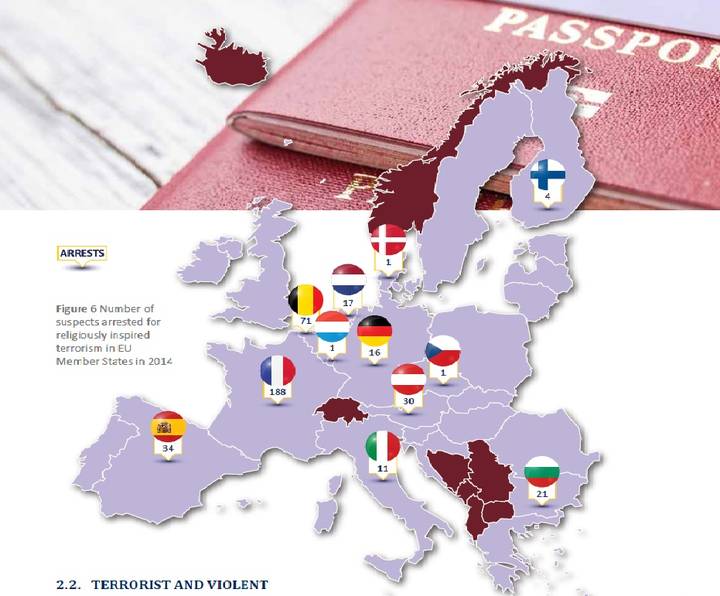 „This strategy is a tangible and concrete threat against Europe. ISIS has demonstrated capabilities appropriate to plan and support such actions in the long term,” says Wainwright, whose explanations are supported by figures: last year alone there were 211 terrorist attacks, successful and unsuccessful, and over 1,000 people were arrested for terrorism-related offenses in the 28 EU countries. The most serious cases are linked to what is called jihadist terrorism: 17 attacks, 150 dead and 667 arrests.
The European fightback
Insufficient cooperation in the filed of exchanging information at a European level (which was seen in the case of the terrorist attacks in Paris, when suspects of terrorism in a country were able to carry out an attack in another country) is signaled by the director of Europol, advocating of increased trust between inteliigence services.
Since 2001, several high-level declarations of the European Union called for an improved exchange of information and for operational cooperation between Member States in the field of counter-terrorism. However, until recently, political statements have not resulted in a higher level of intelligence sharing. „Europe must increase trust between national counter-terrorism services so as to result in added value in exchanging information”, explains head of Europol for Q Magazine.
To blur this legislative shortcomings, the European Union launched a new center to coordinate the fight against violent extremism, under the auspices of Europol. European counterterrorism center will assist EU member states.
„It is a permanent structure, decided at the political level, which established for the first time in Europe a dedicated operations center, which acts on sensitive issues related to terrorism,” said Rob Wainwright.
Within this unit will operate and an office specialized in identifying and combating online propaganda of jihadists, one of the most powerful tools used to attract and keep followers by ISIS.