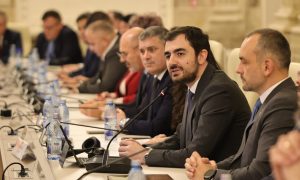
Somewhere, in a Romanian city, a group of brilliant Romanians, humble and unknown, they prepare the information collection for the operations carried out by the North Atlantic Alliance, consisting of 28 Nations. Q Magazine talked to them.
THE BEGINNINGS
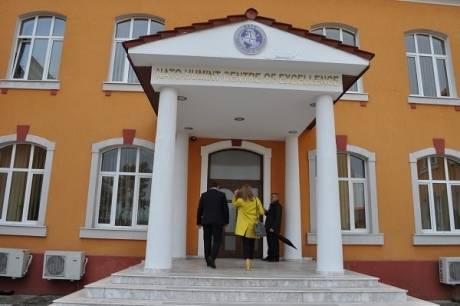
Minutes before landing in Oradea, I see from the airplane, spread over the meadows, several flocks of sheep. A few kilometers away, the NATO HUMINT Centre of Excellence, from Oradea, is the most important HUMAN intelligence provider, within the Alliance. Romania remains the country of paradoxes and extremes. This must be the reason of being so fascinating.
For many years we have known about the performances of the officers from Oradea. The NATO Headquarters consider their subject matter expertize recognized and essential. Moreover, ten years ago when the decision to establish HCOE (NATO HUMINT Centre of Excellence) was made, the HUMAN intelligence collection, although existing on doctrinal and conceptual level, used to be underdeveloped organizational wise, even in some of NATO member Nations.
Romania, always having an excellent performance on Intelligence field, identified this potential showing determination in establishing a NATO Centre of Excellence. Romanians understood that the spectrum of threats is dynamic and, despite the development of other intelligence collection domains (e.g. SIGINT or IMINT), we face new security challenges having the human dimension as a fundamental element and consequently HUMINT is the key. The unprecedented technological progress allowed the development of more and more sophisticated intelligence collection systems. However, the current and potential operations of the Alliance prove the NATO commanders critical need for collecting intelligence from human sources in any type of mission. The idea of establishing a NATO centre of excellence could come from two directions: either from NATO – as a result of identifying gaps within the existing capabilities, or from an Allied Nation – as a consequence of initiatives on tactical, operational, strategic or even political fields. In any of these situations, the support between the two entities –NATO and the Nation (Nations) – should be mutual, and the initiative has to reach the support of as many of the Allied Nations as possible.

“The information gathered during a conflict may stand as an identified lesson. Only producing transformation it becomes a lesson learned, and this is what we have mastered from the perspective of HUMINT discipline in NATO”.
Eduard Simion
In the case of HCOE, the NATO Military Authority Intelligence Coordination Group (NMAICG) identified gaps in building a functional HUMINT capability within NATO. There was an urgent need of a coherent and structured approach from the Allied Nations and Romania assumed the role of providing a coherent doctrine and the implementation of it. Colonel Eduard Simion, the director of the centre from the early stages, explained us how this project was born: ”Military intelligence constitutes one of the core domains of NATO’s transformation, along with concept development and experimentation, training according to the doctrine and NATO standard procedures as well as the options of providing research and integration of future concepts.
The NATO Centres of Excellence, as a whole, come to fulfill the transformation needs (having, consequently, the means and necessary expertise), encouraging their establishment in niche domains, which need new energies in defining and developing new dimensions within NATO. This kind of domain, the development of which was considered essential from the perspective of assimetric conflicts, specific for the beginning of this century, is the intelligence collection from human sources as well, and Romania considered that could provide value added”.
The experience of the Romanian military, at all levels, in NATO missions in Kosovo and Irak proved to be essential. They understood not only the vectors of transformation – planning process, lessons learned and best practices resulting from concrete actions (operations, exercises, gained experience within the functional processes) but also the pillars of transformation –analysis and lessons learned, doctrine and standards, concept development and experimentation, education and training.
”Our participation in the theatres of operations along with the allied troops was the most important advantage for our Armed Forces. These experiences prepared us for any challenge and more than that, trained our capacity of learning lessons. The information gathered during a conflict could remain a lesson identified. It becomes a lesson learned if generates transformation and this is what we mastered from the HUMINT perspective at NATO level” says Simion. In 2007, at the level of General Directorate for Defense Intelligence the decision was made that Romania should ask the Alliance to establish a Centre of Excellence. The request was accepted. Colonel Simion considers that the reasons why Romania was given this military organization, were: ”recognition of the expertise in military intelligence collection, experience in the theaters of operations, existing infrastructure and last but not least political will”. ”In the very beginning in the first year there was nothing here, there was literally a pit” remembers the colonel, while walking on the alleys of the Center, which today has several buildings with classrooms, amphitheatres, tennis or basket-ball fields, well equipped military hotel and a training range.
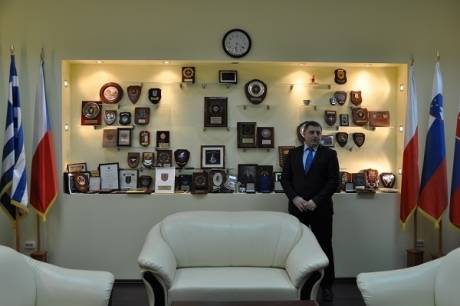
Colonel Eduard Simion leads HCOE since 2007. He is licensed in Foreign Languages, has a PhD in Geography and has had in time multiple command assignments within military Intelligence. He is the author or co-author of 15 studies on Intelligence and military operations. His deputy at HCOE is the US Air Force Colonel Greg Sawyer; after the joining of the USA, although it was not a premiere, it looked like something new, having a Romanian colonel in a command position over a US colonel. “We have had a lot to learn from each other, and the working relation has been impeccable”, Simion says.
”We started the necessary steps for the accreditation and activation as an International Military Organisation; then together with the initial team, we worked on developing the organization with everything that this implied: infrastructure, human resources, legal fundaments of dual functioning –National and NATO; we shaped the vision and development strategy, built a program of work; developed the relational basis and the connection to the international flux of NATO’s transformation. In the beginning our financial effort consisted of an approximate 5 million EUR. Later the investment grew and other Nations joined the project: Greece, Hungary, Poland, Slovakia, Slovenia, Czech Republic, Turkey and the USA. Now after almost 8 years we are already consolidated within the Alliance’s network of centres of excellence.
The big challenge of NATO, today, is the transformation and the reconfiguration from a status oriented in fighting insurgency towards the area of a conventional war”
THE CONVENTIONAL WAR WILL NOT DISSAPEARIf we analyze the evolution of the conflict in Syria, we notice that all forces involved acted according to the standards of a conventional war. Colonel Simion is a little bit more skeptical than the futurists who forsee that the war of the future will be more unconventional, and says, without neglecting these projections, that the Alliance has to shape strongly in order to be capable of facing a conventional war.
I asked him how he recruited his instructors who educate and train today in the Centre, but he corrects me, wishing to take me as far as possible from any association, assimilation, or similitude with espionage, strongly delimiting himself from that, since the Centre does not belong to any intelligence service but belongs to NATO, and the organizational structure as well as the principles of its activity are as transparent as possible. ”I would change the nuance of the term recruiting and I would say that we assigned the national and international positions according to the provisions of existing national and participating nations’standards. Of course the national resource was determinant, meaning experienced and performant people, who participated in missions abroad, who speak English at a high level; from the international resource we took what the Nations had their best; expert guest instructors and guest speakers” underlines the coordinator of HCOE.
“The role of HUMINT is to provide informations from human sources in support of mission and comander’s decision making process at different levels in theatres of operations. We do not perform espionage! The Centre is an International Military Organization, but not part of NATO’s command structure; it is part of, so called, NATO Command Arrangements. One does not have to assimilate the collection of data and information in military operations from human sources, with espionage. Within Alliance’s operations there is the requirement of obeing the limits set by international legislation and the specific rules of conducting the war” adds Simion.
The role of the Centre is essential because, without these informations from human sources the course of some actions would be different from the desired one. But the collection, analysis and dissemination requires a special technique and necessitates years of experience. The sources providing relevant informations could be neutral as well as close to, or hostile to the cause. Officers, diplomats, reporters, curiers, military attachees, non-governmental organizations, prisoners of war, refugees, patrolling troops, tourists, and so on, any of these could be a vital information source in configuring a military operation.
HCOE MISSIONSHCOE requested to take the custodianship for the development of two major documents regarding operations in this field: NATO HUMINT Doctrine (AJP 2.3) and the Standard for NATO HUMINT Techniques, Tactiques and Procedures (AintP-05). HCOE equally coordinates the development of NATO HUMINT policies for the NATO Military Committee (MC).
When the Alliance decides to take part in an armed conflict, has to keep in mind, among others, the strategic, operational and tactical military intelligence. The capabilities, vulnerabilities and probable courses of action of other nations, are basic informations which determine the planning and conduct of
The Centre of Excellence from Oradea, traines actually military personnel from all 28 NATO member Nations, at a tactical level or operational management, for the collection of information from human sources, in the perspective of future Alliance’s operations.
“The length of courses we provide in Oradea varies according to the objectives as well as the operational requirements of the NATO command structures; the courses are oriented towards acquiring at a medium or advanced level, the necessary theoretical and practical knowledge required for the conduct of military activities, having as reference the NATO standards in the field. Our role is to standardize HUMINT within NATO” underlines Simion.
”The missions Romanian officers participated abroad – as KFOR in Kosovo, ISAF and Resolute Support in Afghanistan – definitely helped developing our skills. Considering the information acknowledged through lessons learned in theatres of operations, the Centre has prepared analytical products highly appreciated at strategic headquarters level, and disseminated to Member Nations”, my interlocutor says.
Data and information collection sources
HUMINT (Human Intelligence – Intelligence derived from information from human sources)
GEOINT (Geospatial Intelligence – Intelligence derived from geospatial data and information recorded by satellites, aerial photo, maps and data about terrain)
MASINT (Measurement and Signature Intelligence – Intelligence derived from data resulted from analysis of electronic measurements and signatures)
OSINT (Open Source Intelligence – Intelligence derived from information retrieved from analysis of open sources)
SIGINT (Signals Intelligence – Intelligence derived from data collected through interception of radio and electronic signals)
TECHINT (Technical Intelligence – Intelligence derived from analysis of weaponry and equipment used by the Armed Forces of other nations/ entities)
FININT (Financial Intelligence – intelligence derived from financial transactions analysis, etc.)
The Romanians and their foreign comrades coordinated by Colonel Eduard Simion have defined the human aspects of the operational environment, as a result of a research project that gathered military and civilian experts in history, anthropology, economy and other important features defining the comprehensive setting of a potential theatre of operation. “We look for offering political and military leaders, down to the tactical level of the Alliance, those concepts and instruments that improve the perception of NATO actions in front of the local population. We cannot understand these mechanisms if we are not aware of local culture, the motivating factors behind the communities’ attitude and behavior toward NATO troops and their commanders. It is essential to make distinction between a political-cultural context in Iraq, or the one of Romania – let’s say”, Simion says.
The development of the NATO HUMINT operators’ toolset is another important project granted to the Centre of Excellence hosted by Romania. “Furthermore, lessons learned and research led to identification, and have supported the recommendations that shaped the configuration of the endowments essential to HUMINT operators in theatres of operations, in order to ensure interoperability and contribute to the successful achievement of the mission”, my interlocutor added.
THE BEST SECURITY SYSTEM IN COUNTRYTaking advantage of the fact that my visit in Oradea is in a day free of courses, we visit all classrooms. In a separate building, some rooms are decorated to reconstitute the environment and specific items of a different cultural context – such as Kosovar, Afghan or Iraqi. Here is the place where, during courses, the student operators perform practical activities related to data and information collection.

“If we look at the last terrorist attacks, the bombs have been detected due to the human factor, not by technical screening… If even a fraction of the actual spending on screening would be invested in Intelligence services, then flights would be much more protected” Marijn Ornstein, Chief of Security, Schiphol Airport, Amsterdam
Moreover, once a year, with the sustained support of the Centre of Excellence from Oradea as host of the event, takes place the NATO HUMINT exercise Steadfast Indicator, an event on the priority list of the Allied Command Operations. This is an important stage in the pre-deployment training. Over 300 officers and NCOs from NATO countries are reunited into an exercise that simulates different warfare scenarios, so the Alliance can stand for planning and operationalization of forces for potential missions.
“The Steadfast Exercise of 2015 was one of the most important in the history of NATO. At the level of HUMINT discipline we have simulated information collection operations in wartime, meanwhile checking the interoperability level and the capacity to manage crisis situations by HUMINT elements of the NATO Response Force”, affirms Simion, but without detailing the conclusions.
In one of the classrooms we met the coordinator of the International Cooperation Department and two of the Centre`s instructors. Wearing regular clothing, with a surprisingly common appearance, are hidden exceptionally skilled militaries that accumulated years of experience and lessons learned in the Iraqi or Afghanistan wars, who got specialized at the highest level in Intelligence, and to whom, if you accidentally share neighbouring seats in a plane, would tell all your life story and all your secrets, being convinced they are the most innocent interlocutors.
I invite them to an exercise of sincerity, a complicated venture for a military officer used to perfectly deceive any inside reality. One of them confesses the emotion of the beginning: “This is true we are experts in our branch, but, when acting for the first time as a course speaker, we have had to bypass the barrier between knowledge and the teaching skills”. Teaching lessons, formation, debriefing and correction of foreign officers, coming from different cultures, at different levels of knowledge and preparedness, it requires capacity and resilience.” When I asked them if there were information leaks in the institution, they answered that HCOE is aligned both to national and NATO security standards. “More precisely, confidentiality is ensured by permanent preparation of the personnel, strict security rules, and nonetheless an integrated security system, extremely performant. With no lack of modesty, I would state this is the most performant in our country”, Colonel Simion completes. Describing the profile of those activating in military Intelligence, the Romanian instructors tell me that “they are first of all humans, people with strengths and weaknesses. Not personality, but rather the demeanour, self-control, next to intelligence, cultural awareness, education are those making difference.”
BETS ON ROMANIA’S FAILURE
In one of his visits to Bucharest, a General from the NATO Command Structure told me, some time ago, that when Romania advanced its proposal to set up the NATO HUMINT Centre of Excellence in Oradea, many put bets that this initiative will not succeed. He honestly declared not only he is one of the bet losers, but alongside those like him, he became an ambassador of the Centre he considers one of the best in NATO, if not the best one.
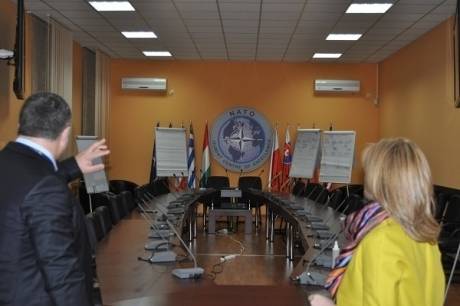
The Centre of Excellence from Oradea has been appointed as Department Head for HUMINT education and training in NATO since last year. Thus, the Allied Command Transformation has granted to HCOE the task to align operational requirements to education and training solutions at the level of the whole Alliance. The Centre is the custodian for the NATO HUMINT Doctrine and provides chairmanship for the NATO HUMINT working groups. “Any form of HUMINT training in NATO has to be endorsed by HCOE, to be validated from the content perspective. This is an honouring position, but raising responsibilities in the same measure. This is why we are committed to proceed with research, preparation and continuous adaptation for each event we host. Each instructor works for a course preparation at minimum 6 months. Courses are never identical; they are aligned to new contexts and developments.”
Colonel Eduard Simion says, looking retrospectively, that effort has been worthwhile. Today, not only the authority of the Centre of Excellence from Oradea is recognized for HUMINT matters, but equally the efforts and personal skills of the Romanian officers manning the organization, for anticipating and offering solutions for Alliance’s priorities.
Romania’s commitment to engage in this complex endeavour to establish a multinational organization has been rewarded – the Centre of Excellence from Oradea is nowadays appreciated as a NATO hub for HUMINT expertise and has reached an integration level within the Alliance which is hardly comparable with that of other entities out of the NATO Command Structure.
There are just few talks about the NATO HUMINT Centre of Excellence from Oradea, despite of being a great ambassador of our country, of our competence and people. HCOE shows why Romania is so fascinating with his extremes.