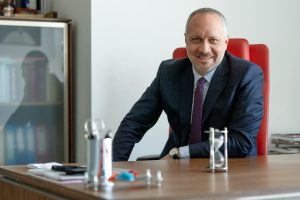
As Coordinator of the Neurosurgery Department at the Military Hospital in Cluj-Napoca, Dr. Iustinian Simion has performed some of the most complex brain surgeries. In one remarkable case, the patient, a tenor, sang famous arias during the procedure, allowing the surgical team to monitor in real time whether speech centres were being affected.
Dr. Simion describes his mentor, Professor Ștefan Florian, as “the bravest surgeon” he has ever met. He also experienced what he calls a leap “100 years into the future” during a training program in China, where he worked alongside the world-renowned neurosurgeon Professor Bin Xu. Known for performing brain bypasses with the ease of an appendectomy, Professor Xu has a waiting list of over 6,000 patients.
Beyond his medical career, Dr. Simion is also the founder of a Byzantine choir and a private medical network, both named Anastasios. While he says it’s impossible to mathematically quantify how much of brain surgery is human effort and how much is divine intervention, he firmly believes that without God, man can achieve nothing. “It’s only an illusion that he can,” he says.
- Sondaj Avangarde. 56,4% dintre români agreează ideea alegerilor anticipate
- In the same week that Poland signed 29 defense contracts with its own national industry, Romania signed with a single German supplier and rejected the only project manufactured domestically
- Mircea Cărtărescu împlinește 70 de ani. „Viața e mai mult decât scrisul! Îmi spun asta, practic, în fiecare zi, dar, îmi spun și asta: eu nu pot percepe viața decât prin scris! E diformitatea, monstruozitatea mea”
- Copiii României: Aproape 20% nu merg la școală, 25% se simt „frecvent triști” și 56% suferă de oboseală
- Iran nu crede „nici în cuvintele, nici în promisiunile” SUA
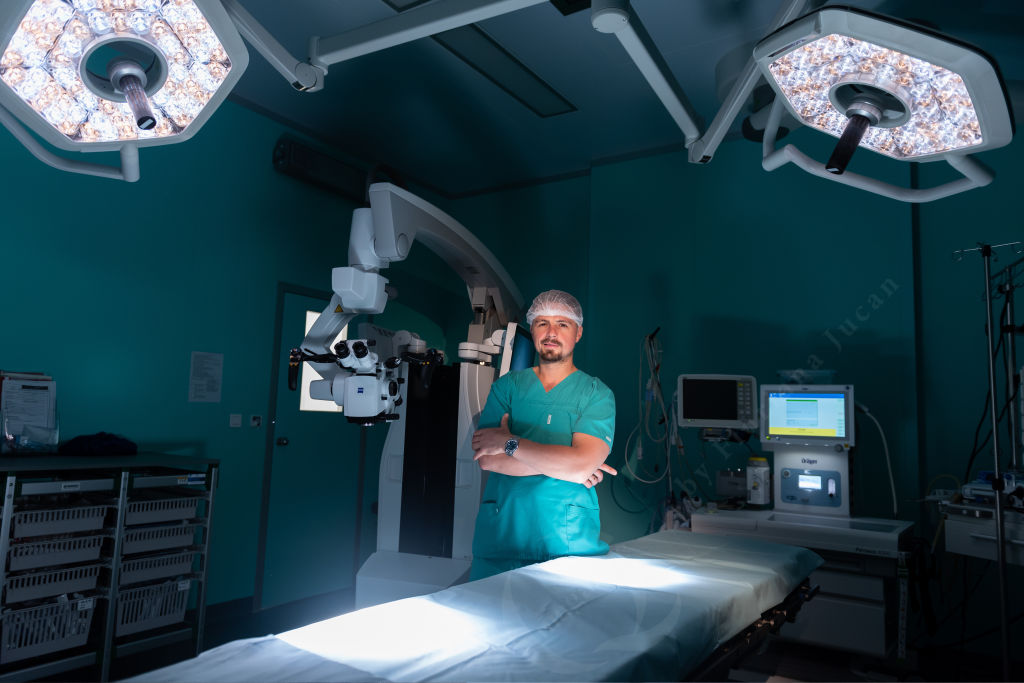
THE BRAIN IS BORN BEFORE WE ARE
What do you associate the brain with?

Personally, I’ve been fascinated by this part of the human body since childhood. In my second year of medical school, when I first studied neuroanatomy, I was completely captivated. The brain took hold of me entirely—its complexity, its mysteries, the countless unanswered questions, the theories, the assumptions.
Through years of analysis, research, and hands-on surgery, I’ve come to understand that the brain is the command centre, the regulator, the sustainer, and the core support system of the entire human organism.
Do “stupid” people have different brains than those we consider intelligent? What actually makes the difference?
It depends on what we mean by “stupid.” If we’re speaking purely from an anatomical perspective, various imaging techniques can show the differences between a brain that is actively used and one that is more inactive or under-stimulated.
The brain functions much like a muscle. Its structure adapts depending on how much we train it.
Unlike skeletal muscles, which grow in size through physical training, the brain doesn’t increase in volume; it becomes more toned, more agile, more plastic, and better equipped to respond swiftly and effectively to challenges.
Reading, solving math problems, and engaging in other mentally demanding tasks are all forms of brain training. It’s essential to dedicate time to these activities, even though they are increasingly pushed aside in today’s fast-paced, digitally dominated lifestyle. In the past, they were a regular part of daily life.
How much of our brain’s capacity do we actually use?
That largely depends on the nature of the activity and, crucially, on how much we train our brain.
The common myth is that we only use 10% of our brain’s capacity, but neuroscience tells a different story: we use the entire brain. However, not all parts are active simultaneously.
There is a technique called functional magnetic resonance imaging (fMRI) that allows us to see how different regions of the brain become active at different times—even during rest. Every area plays a role depending on the task at hand.
In neurosurgery, we often use fMRI when operating on brain tumors, to assess the relationship between functional brain areas and the tumor. This helps us avoid damaging critical functions during surgery.
How does the brain develop from childhood to adulthood?
The development of the brain is an incredibly complex, gradual, and fascinating process.
Chronologically, brain formation begins during the prenatal period, as early as the third week of pregnancy.
It grows rapidly, producing millions of neurons every day. By the time of birth, a child has nearly all the neurons they will ever need. However, the connections between these neurons mainly form during the first three years of life, a critical period for the development of the senses, motor skills, language, learning ability, and emotional attachment.
Afterward, childhood and adolescence further refine and shape the brain into that of a fully mature adult, with each stage having its own unique characteristics.
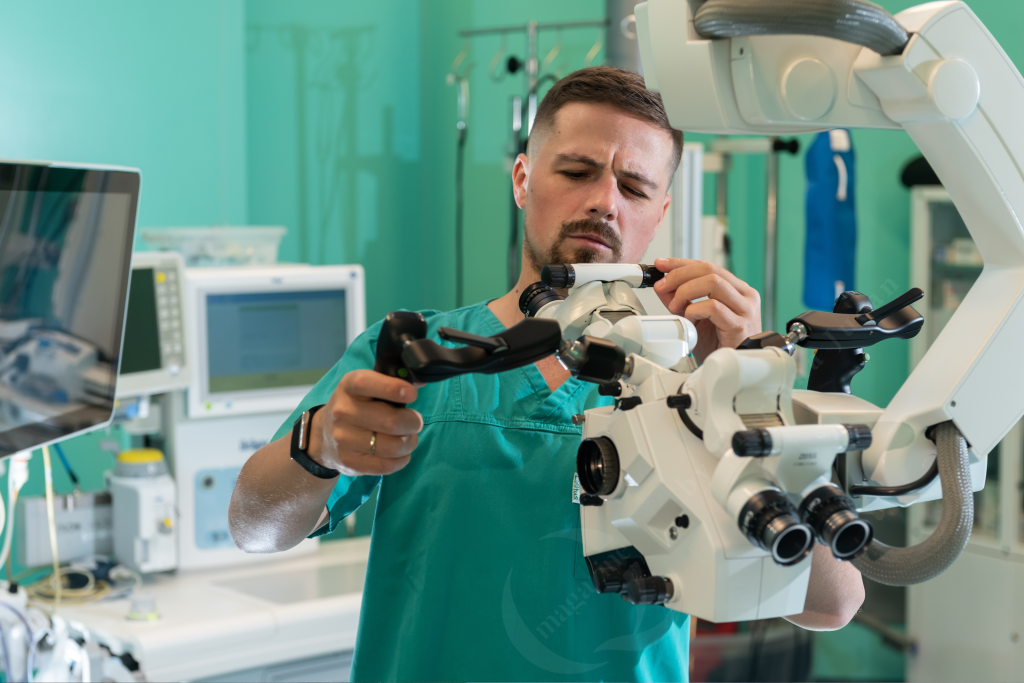
WHAT DOES THE BRAIN REMEMBER?
What does the brain remember most easily?
Emotions. They leave a deep and lasting impact on the individual, both positive and negative. This is why advertisements promoting various products, services, or events constantly use different techniques to evoke emotions in their audience.
Are there differences between the female and male brain?
This is an extremely complex and somewhat controversial topic. Anatomically and structurally, male and female brains are essentially identical. The differences arise from a variety of factors, with hormonal influences being the most understandable and significant.
It could be said that women have a more complex hormonal profile. Some brain regions differ slightly in size between men and women.
For example, the hippocampus, which plays a key role in memory, is often larger in women. In contrast, the amygdala, the area responsible for emotions and the fight-or-flight response, is usually more developed in men.
Functional MRI studies have revealed that women tend to have stronger connections between the two hemispheres of the brain, while men show stronger connections between the front and back regions within the same hemisphere.
What relaxes the brain the most?
This question might seem unusual, given that the brain functions continuously, even during deep sleep.
Here, we refer to reducing stress and agitation.
There are many ways to relax the brain, and the effectiveness of each method depends on the individual’s personality, current situation, and lifestyle. However, some methods are almost universally beneficial.
In my opinion, the simplest and most effective technique is deep, conscious breathing, which activates the parasympathetic nervous system, the system responsible for rest and recovery.
Research shows that just 5 to 10 minutes of mindful breathing can significantly reduce cortisol, the hormone associated with stress.
Music is another powerful tool for calming the brain. High-quality, relaxing music can actively promote a sense of well-being.
Additionally, spending time in nature and engaging in physical exercise are highly effective ways to induce relaxation.
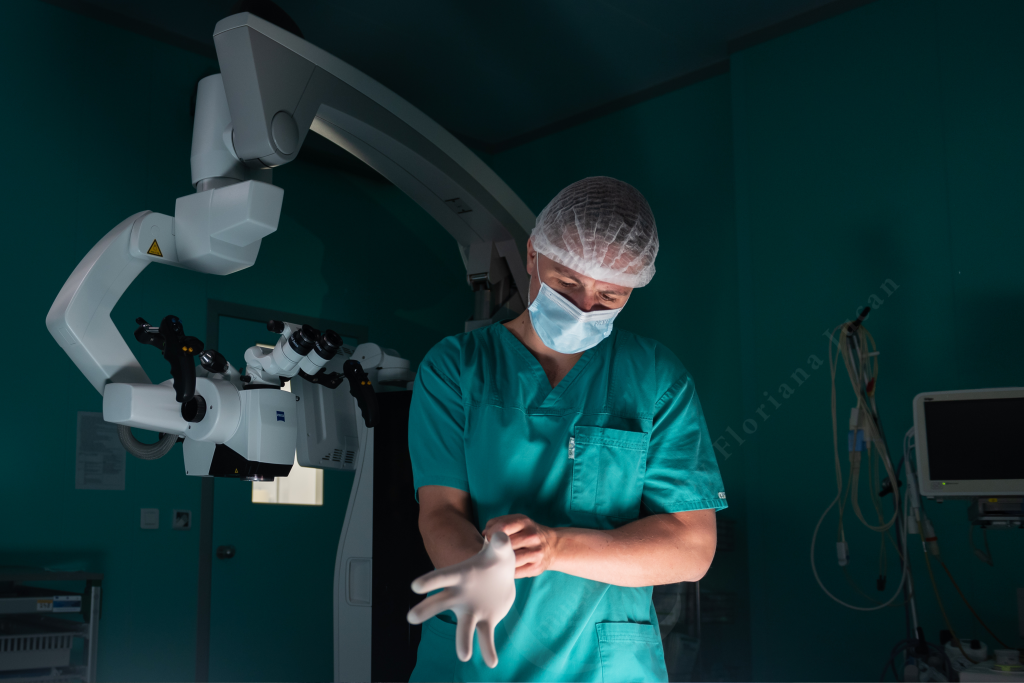
THE BRAVEST SURGEON I HAVE EVER MET
Why did you choose neurosurgery?
I have always been fascinated by the brain, but I made the decision to pursue neurosurgery in my second year of medical school when I took the Neuroanatomy course. Then, in my fifth year, I met the renowned Professor Dr. Leon Dănăilă.
At that time, I was the president of the Marisiensis International Congress, and I traveled to Bucharest to invite him to participate in the congress and to deliver a lecture on what neurosurgery entails and how we should prepare ourselves for a life dedicated to serving humanity. I confess that, for me, this was a providential meeting, one that profoundly shaped my vision, my path, and the decisions I made.
I personally drove to pick him up and brought him from Bucharest to Târgu Mureș. It was a several-hour journey that strengthened my desire to pursue neurosurgery more than I believe anything else could have.
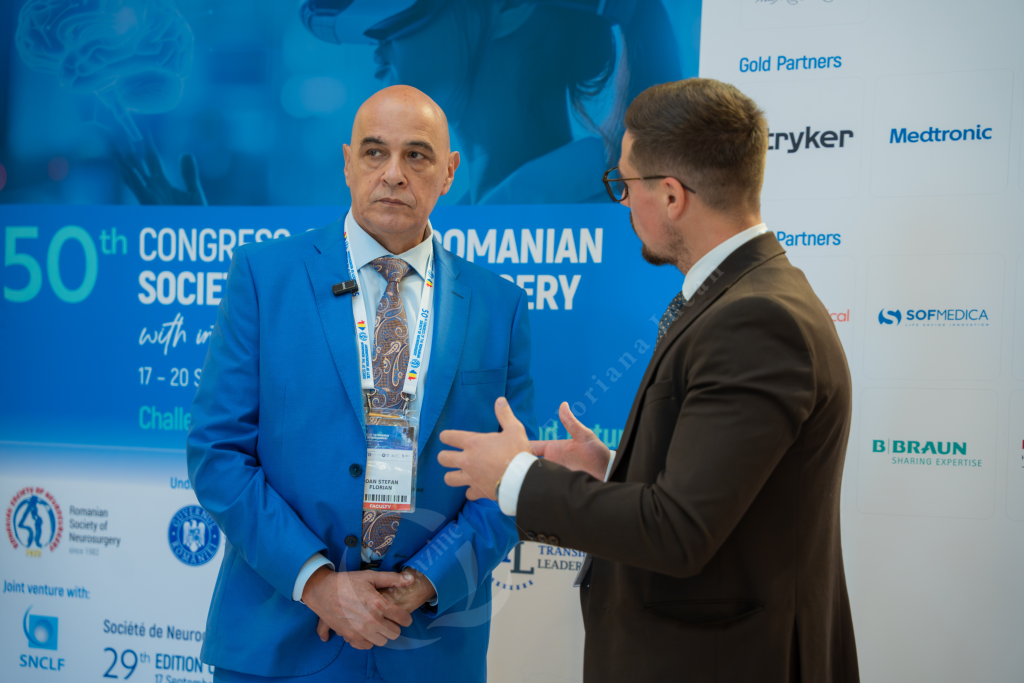
Together with Professor Ștefan Florian, President of the Romanian Society of Neurosurgery.
You completed your residency in Cluj and were mentored by another famous professor, Ioan Ștefan Florian. How was that experience?
Life gave me the chance to be close to some great medical personalities, especially pioneers and mentors of generations. Indeed, one of them is Professor Florian, from whom I must confess I learned courage.
You know, the difference between two surgeons who are both very well trained, theoretically and practically, is courage. The bravest will always be at least one step ahead. Practically, I can say that what I experienced during all my residency years alongside Professor Florian instilled this courage in me, which, I affirm with full responsibility, gave me wings and inspired me to rise. I would like to express my deepest gratitude to him here.
I have worked in many hospitals and neurosurgery departments around the world, but I have yet to meet a surgeon braver than Professor Florian.
Do you think Romanian medicine is feudalized, as I have often heard, and that it leaves little room for free spirits to stand out and build successful careers?
Every medical system has its strengths and weaknesses. The major problem arises when the weaknesses become dominant.
The Romanian medical system has been in collapse for several years now and needs to be rebuilt from the ground up. These shortcomings lead to feudal behaviors at almost every level.
We often ask why young doctors leave to work in other countries instead of staying in Romania, and the answer is usually the same: because they get paid more abroad. However, from my experience in Romania and my conversations with many doctors who have left, money is among the last reasons that push them to leave. Unfortunately, this feudal system greatly affects the psyche of the younger generations, who no longer have the same desire to achieve professional success as they did 20-30 years ago, and prefer to leave the country now that this option is more accessible than before.
To answer your question, YES! Unfortunately, it is very rare to find free spirits with unwavering moral values and solid medical knowledge being mentored and supported to rise and contribute to a better future for society as a whole. The great regret that should weigh on the conscience of all those who currently lead this medical system, and therefore should act, is that many talented individuals are lost. Some leave the country, while others are overcome by frustration until they give up, and the rest endure until they reach positions where they behave exactly like their predecessors, perpetuating the same patterns.
Not long ago, speaking with a renowned sociology professor in Romania, he told me it is clear that society needs a change of mentality, primarily in the medical field, but peacefully and through a natural transition.
We have all seen that whenever a conflict arises between generations, everyone suffers—especially the medical system—because it further weakens the public’s trust in it.
Why didn’t you leave the country?
I went abroad during university on study scholarships. I think that was the moment I realized I wouldn’t like to work anywhere else but Romania, and that made me set my mind to working here. Knowing what I wanted to do was decisive for the steps that followed. With a clear understanding of what I had to do, and realizing I simply didn’t belong abroad, I created the mental framework necessary for survival and professional fulfillment in this medical system, with all its pros and cons.
Another important factor was that I started my family while still a student, and all the more so, I wouldn’t have left since my wife also doesn’t see herself anywhere else, even though she lived and studied for 10 years in a foreign country.
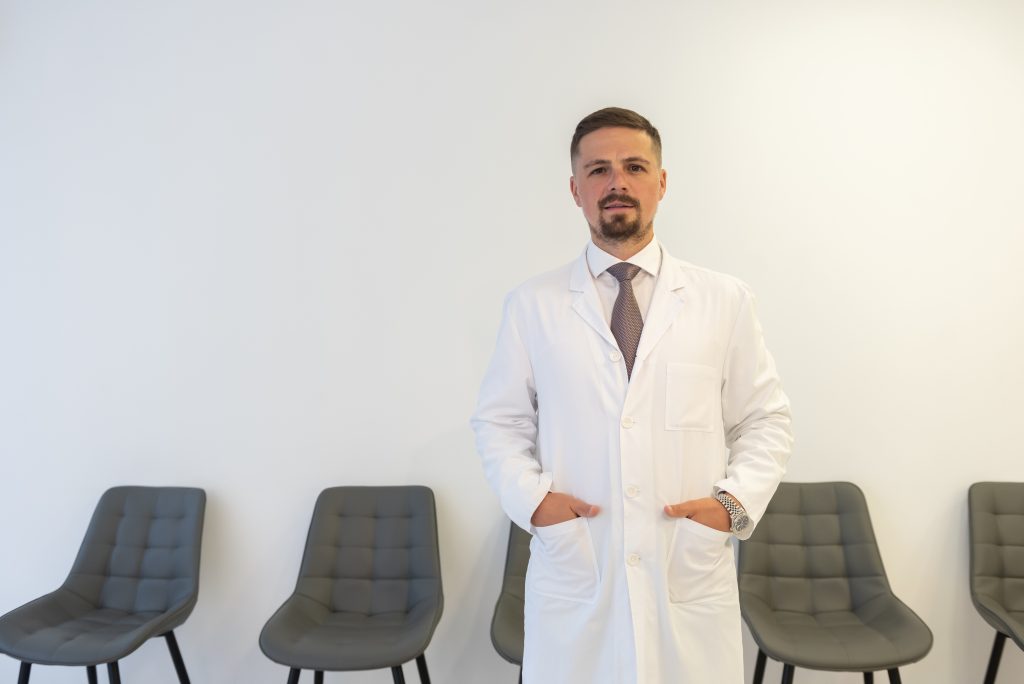
THE PANDEMIC AS AN OPPORTUNITY
During the pandemic, you opened the first clinic in the private Anastasios network. While hospitals were closing, you chose to open one. Is this part of the courage you developed with Professor Florian? How did you make that decision? And how has the business evolved?
Indeed, for some, the pandemic was a disaster, but for others, it was an opportunity.
For me, it was somewhat expected, as I had wanted for several years to open a medical clinic together with two of my brothers. However, this was quite difficult because the market was very stable, on an upward trend, and entering required a significant financial investment to gain market share. So, on March 15, 2020, when Romania instituted a lockdown, I called my brother Teodor and my brother-in-law Vlad and told them that by the end of the year, we needed to have two polyclinics open. We got to work, and in December 2020, we launched the Anastasios Clinic in Cluj-Napoca, followed by the Anastasios Clinic in Bacău in January 2021.
It was the right moment to start. While everyone else was closing, laying off employees, and facing instability, we were negotiating the best contracts and prices.
Since it was such a favourable moment, the business grew quickly, and today, less than five years later, we have built the Anastasios Medical network, which includes six locations across five counties and continues to expand annually into new cities.
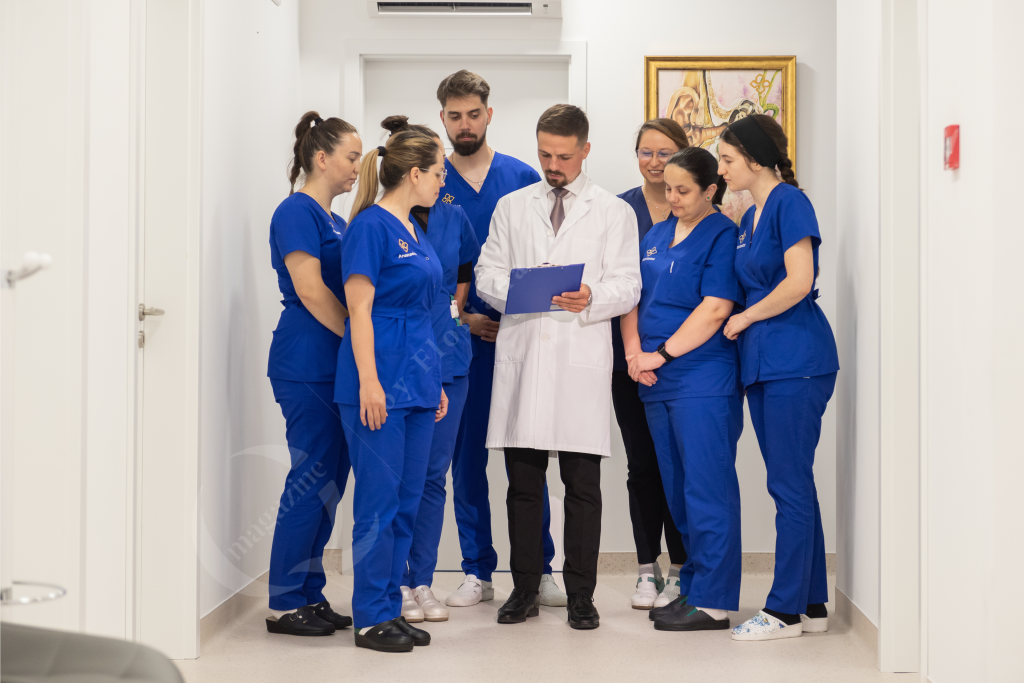
ANASTASIOS MEDICAL was my dream since my student days, which came to fruition in 2020.
The idea began after founding the Anastasios Byzantine Choir in 2012, which quickly attracted many members, most of whom were medical students and doctors. That’s when the idea took root in my mind that one day we would have our own hospital, staffed by doctors from the Anastasios family.
Together with my brother Teodor and my brother-in-law Vlad, we opened the first clinic in the Anastasios Medical Network in Cluj in December 2020, followed by the clinic in Bacău in January 2021. Since then, we have continued to expand, and today we have six clinics in five counties across the country, with three more clinics currently being opened in three additional counties.
Currently, the company employs approximately 100 people and collaborates with around 140 doctors. In the first half of 2025, the number of patients increased by 30% compared to the same period in 2024, with an average of about 5,500 new patients per month across the entire network.
Since you practice neurosurgery in both, what differences have you noticed between being a doctor in a private hospital like Transilvania and a public one like Militar, both in Cluj-Napoca?
My work is the same in both places. I am equally involved in each. I have taken the Hippocratic Oath, which does not consider where I work; it obliges me to treat every case with all the conscience and skill I possess.
Both systems, though theoretically similar as they treat patients, have their pros and cons.
The public system offers a major advantage to the Romanian population by providing very easy access to medical services. Additionally, in recent years, the leadership of Romania’s health sector has shown increased commitment to investing in medical technology and bringing infrastructure closer to the medical standards practiced today in Europe and worldwide. Because of this, we now have hospitals that could be placed on the global map as models, but we also have some that could be marked on maps of disaster.
What I criticize about this system is the politicization of hospital leadership and the unjustifiably large influence universities have in managing departments within university hospitals.
However, there are also examples worth following, where a very good synergy existed between county political leadership and hospital managers, who together developed extremely well-equipped and high-performing county hospitals. Unfortunately, these examples are too few relative to the total number.
To conclude, I believe that to further improve the public medical system, there is a need for competent management, vision, courage, and people with real expertise in hospital leadership roles.
In the private system, most hospitals have very competent management, mainly because all financial capital is private. Practically, competent management leads to better performance.
Since private funds are involved, the standards are higher. There are many advantages, such as much better hotel-like conditions and state-of-the-art equipment, but there are also disadvantages, such as the most difficult cases, especially those requiring long hospital stays in intensive care, which consume many resources that patients must pay for, being directed to public hospitals.
Another drawback, which I see and which is very real and practiced, is that unfortunately, with a focus on financial aspects, some private hospitals lose control over the medical necessity of care, and treatment or surgery decisions end up being dictated by the hospital’s financial needs rather than the actual needs of the patient, who might be treated differently.
We have a new Minister of Health, young and courageous, Alexandru Rogobete. Based on your experience, what would you recommend to him as a doctor?
First of all, I congratulate him for the courage to take on such a difficult portfolio, with multiple urgent problems that must be resolved. From his first speeches, I noticed his courageous spirit and desire to be the one to make the change. I can only be happy and hopeful that he will succeed.
I don’t know if I am in a position to give recommendations, but I am certain that if I can help, I will not hesitate. I have touched on some aspects that I have seen he also considers important.
Speaking of free spirits who want to rise: perhaps the minister is among the very few who have managed to break through, and judging by how things are moving, he seems to understand most of us who are “in the trenches.”
In one of my discussions with a great neurosurgery professor, he told me how the professor who was theoretically his mentor, when he realized he could no longer stop him because he had skillfully created a parallel system, called him over to give advice: “Always surround yourself with weaker people so you can be the best!” Contrary to that advice, I would recommend Minister Rogobete surround himself only with extraordinary people: moral, with integrity, unwavering principles and values, excellent professionals, but above all, loving toward their fellow humans. That way, he will surely have both the support and the strength to achieve what he has set out to do.
CHINA, THE LABORATORY OF THE MIND
You were accepted by the famous Chinese professor Bin Xu for a training internship in Shanghai alongside him. Can you tell us how that was?
My experience in China, specifically at Fudan University, Huashan Hospital in Shanghai, was extraordinarily rewarding and fruitful. I felt privileged and honored to have had this opportunity.
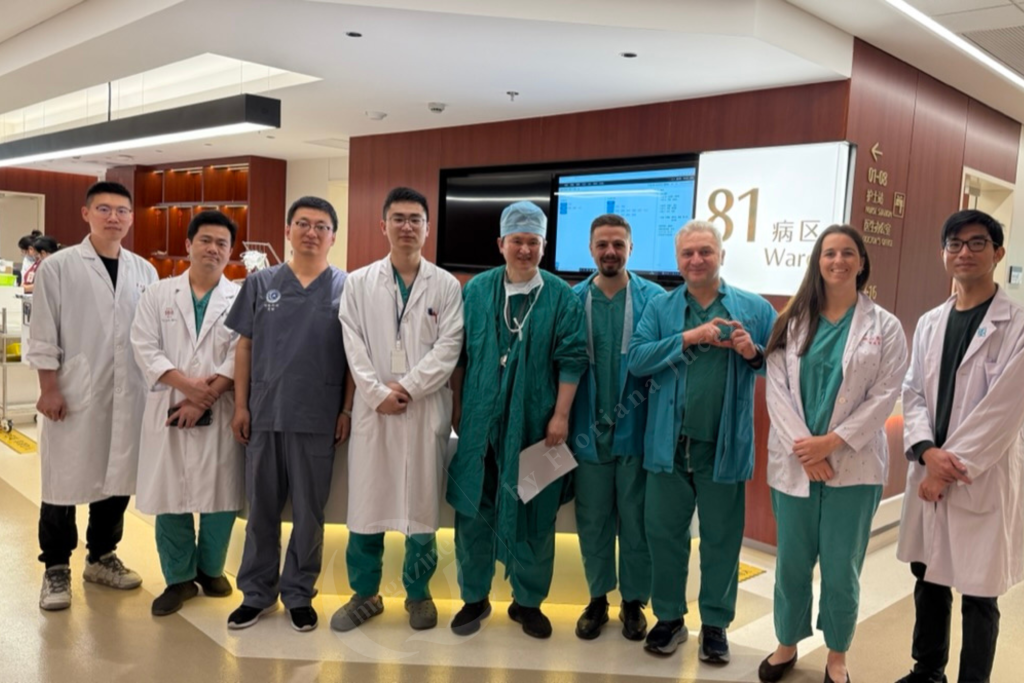
The neurosurgery team at Huashan Hospital, North Campus.
I had been following Professor Bin Xu at international congresses ever since I was a resident doctor. He was a very serious and warm person, close to the younger generation. In 2023, he attended the Congress of the Romanian Society of Neurosurgery held in Sinaia, where I approached him about the possibility of gaining experience at the centre in Shanghai. Both of us kept our word, and thus an older desire of mine came true: to visit some of the world’s leading neurosurgery centres, see the situation with my own eyes, and be able to implement everything that could add value here in Romania.
The specialization internship I completed in Shanghai was in Vascular Neurosurgery, with a focus on bypass techniques in cerebral vascular pathology. Starting the day after I arrived, I began participating in highly complex surgical procedures alongside Professor Bin Xu and his team, who guided and supported me as if I had been one of them for years.
In addition, I attended an impressive number of consultations daily with the professor—on average about 50 consultations per day.
The Huashan Hospital Center of Excellence in Vascular Neurosurgery is a leading reference center in China with a huge patient base. Across the four neurosurgery campuses in Shanghai, each with 38 operating rooms, they perform approximately 1,200 to 1,300 surgeries per day.
When I arrived on my first day, Professor Bin’s surgery waiting list had reached 6,121 patients, and by the time I left, it had grown to 6,314.
Had someone told me this, I wouldn’t have believed it. However, it seems that to truly understand the reality, you need to experience it firsthand.
For me, the experience in China made me fall in love with the country, from the people, with their profound simplicity and humanity, to a civilisation and culture thousands of years old that rigorously preserves its sacred values. Therefore, next year I plan to return, to deepen both the medical knowledge, which has enormously boosted my expertise and experience, and the human side, which, I would say, preserves simplicity and sacred values with great reverence.
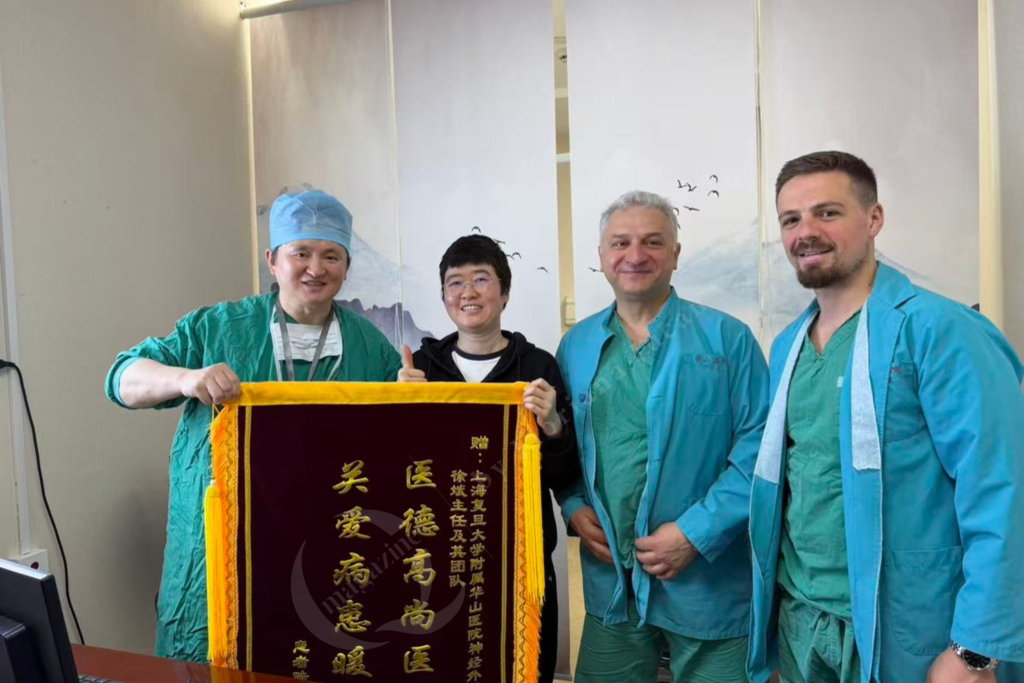
Prof. Bin Xu, a happy patient who brought this flag as a token of gratitude, Dr. Nicolaie Dobrin, Dr. Simion.
What special surgeries did you perform together?
Since it was a Centre of Excellence in Vascular Neurosurgery, most cases were exceptional, complex and requiring a high level of expertise. The main focus was on intra-extracranial bypass procedures, which constituted the majority of the surgeries I participated in. However, there were also many vascular neurosurgery interventions performed via endovascular treatment, ranging from complex cerebral aneurysms to vascular malformations. Additionally, there was an emphasis on combining techniques to provide the patient with the best possible outcome, hybrid techniques involving both microsurgical and endovascular treatments.
Throughout Europe, only a few neurosurgeons perform intra-extracranial bypass surgeries. There may be fewer than ten who do these operations regularly.
This difference is also due to pathology. In the Asian population, a vascular condition called Moyamoya disease, which affects the cerebral arteries, is very common. Its treatment in most cases is bypass surgery—connecting a blood vessel from outside the skull, mainly the superficial temporal artery, to a blood vessel inside the brain, usually the middle cerebral artery.
We also have many cases in Romania that could benefit from bypass surgery, so I hope to further develop this technique here in the future.
You mentioned there is a 100-year gap between China and the rest of the world. Why is that?
Their level of organization often exceeds our capacity to fully understand. The discipline and rigor they demonstrate place them at the very top.
I have been to many parts of the world, both highly developed and less developed countries, but observing how things operate in China, the speed at which they move, and especially the country’s strategy, leads me to say they are 100 years ahead of the rest of the world. Digging deeper, it all comes down to mentality. They have an unshakeable mindset, with deeply ingrained values and principles, combined with immense ambition. That is the key!

OPERATED ON THE BRAIN WHILE SINGING
You recently performed brain surgery on a famous tenor from the Cluj Opera, and I saw that you had him sing arias during the procedure. With his permission, we posted a video of the surgery on www.qmagazine.ro. Could you explain this procedure, which seems incredible to laypeople?
He is a good friend of mine for many years. I was in Brescia, attending an advanced course in endoscopic skull base surgery, when he called me. He told me he had undergone an MRI and sent me the images to review. I couldn’t believe my eyes. He had a large tumour located in the motor and speech areas of the brain. This meant the necessary surgery was extremely risky because there was a high chance he could lose movement in his hand and foot on the opposite side or lose the ability to speak.
Two days later, after returning from Brescia, I went straight from the airport to the clinic where he and his family were waiting for me. He looked me in the eye and said he wanted me to perform the surgery because he trusted me and knew I would do everything possible for him. You can imagine the pressure, I felt an enormous responsibility. But when you know a close friend’s life depends on you, you do everything in your power to save them.
I performed a rare procedure: during the tumor resection, we woke the patient and removed the tumor while he was awake. I had him sing opera arias and move his hand and foot so we could constantly monitor these functions and avoid damaging the brain tissue responsible for them. Thank God, everything went well with no complications, and my good friend had no deficits after surgery!
THE TOUGHEST SURGERY
There are basically two things that define the difficulty of a neurosurgical operation: mental stress and physical effort.
Some surgeries are mentally demanding, others physically exhausting. Sometimes both combine, and then we are dealing with a very difficult and complex surgery.
There were three cases that left me completely exhausted.
The first was during my first year as a resident, when I assisted Professor Florian in a surgery that started at 8 a.m. and finished at 7 p.m. I was physically drained.
The second was when I operated on a patient with a tumour located in the brainstem and the fourth ventricle. The tumour was adherent to surrounding tissues and very complex to remove surgically. This case tested me both mentally and physically until I was completely depleted. The surgery started at 8 a.m. and ended at 5 p.m.
The third case was recent—my friend and colleague from the Anastasios Choir. The psychological pressure was enormous. The tumour was infiltrative, pushing and invading the motor and speech areas. From the start, the risk that he would lose movement in his hand and foot on the opposite side or lose speech was huge. This surgery required very complex preparation and mobilisation of many professionals: fellow neurosurgeons, anesthesiologists, neurologists, psychologists, and oncologists. On top of that, the pressure of operating on a close friend added to the stress. I don’t even know how I would have felt if it hadn’t gone well. Thankfully, after eight hours of surgery, everything was fine! Post-op, Ștefan had no motor or speech deficits and returned to his normal life.
THE BEST SPORT FOR THE BRAIN
I don’t think there is a single sport considered the absolute best for brain health, but there are several that stimulate brain activity.
Chess is considered the “sport of the brain,” which is true, but I would rather focus on physical sports that also require intense brain training.
Martial arts improve reaction speed and reflexes, demanding total discipline, self-control, and concentration.
Team sports (soccer, basketball, etc.) stimulate the prefrontal cortex, which is responsible for strategy and decision-making, develop social and emotional skills, and involve tactical thinking, coordination, and adaptability.
Swimming improves blood circulation to the brain and involves rhythmic movement and bilateral coordination.
Dancing improves memory by learning complex steps and movements, stimulates coordination and attention, and studies show it may reduce the risk of dementia in older age.
Where will medicine go in the future?
It all depends on the ability of medical professionals to remain emotionally grounded and not shift completely toward pure technology.
We see robots everywhere today; this is a huge and wonderful progress. But the major problem arises when robots think more than doctors. We must remember that this activity, meant for human patients, is 98% human resource and only 2% machines and infrastructure.
There will certainly be huge advances, especially if we look at the last decade’s discoveries in treatments and technology. It remains to be seen how well doctors can maintain the balance between science, empathy, and technology.

HUMAN DOCTOR VERSUS MEDICAL ROBOT
How do you view the relationship between artificial intelligence and natural intelligence?
Like any new discovery, artificial intelligence initially seems fascinating. It’s incredible how it can instantly accelerate processes.
If we look only at speed, it’s clear that humans don’t stand a chance in a battle against artificial intelligence.
Personally, I see both pros and cons in everything happening today.
It’s clear that AI can be a valuable aid in certain medical situations, and I can give you an example. There are various devices in the field of gastroenterology—specifically gastroscopy and colonoscopy—that incorporate AI software. These are backed by huge imaging databases containing all kinds of pathologies. During an examination with such a device, the AI compares the live images it sees within one or two seconds to those in its database and provides a diagnosis with an extremely low margin of error. Obviously, it’s useful for ambiguous lesions, while clear cases don’t need this confirmation. Studies have shown that using this software increased the detection rate of early-stage gastric cancers by 15%. That’s a huge advancement. Here’s an example where AI is a very important aid!
However, there is also a downside: when we ask AI absolutely everything and become dependent on it. We stop using our own intelligence and immediately seek help from someone who knows everything and never gets upset. We need to be very careful!
There is a very fine line between productive and destructive use.

PHONE ADDICTION
It is well established by numerous large-scale studies conducted by leading universities worldwide that technology use from a young age leads to significant behavioral problems in the future.
I believe one extremely important aspect, when considering how the brain functions, is that these devices (phones, tablets) cause intense stimulation of the brain, which is not yet fully developed. This excessive stimulation will have harmful effects. These range from behavioral changes (anxious and depressed children), severe sleep disorders (the brain can no longer relax), major attention deficits due to brain hyperactivity, social isolation, alterations in the brain’s reward system (mediated by dopamine), to slowed cognitive development, which, in my opinion, is the most dangerous aspect both for the child and society as a whole.
“A neurosurgeon must be characterized by several essential qualities: punctuality, attention, precision, perseverance, endurance, and calm. All these qualities must be cultivated in order to improve.”
What are your future plans?
I work very hard to give back what God has given me. I have received so many gifts for which I don’t know if I will ever be able to fully express my gratitude.
I cannot say that I have a specific plan to achieve particular professional or business goals. I only know that in everything I do, I commit myself fully, with responsibility and skill, to help those who are suffering.
Also, I know that whenever I am needed and can contribute to making the world a better place, I will get involved without hesitation.
GOD IS IN THE OPERATING ROOM
I understand that besides medicine, you also sing in a choir. How did that come about?
In 2011, in Târgu Mureș, I founded the Psaltic Group Anastasios. At that time, I was a medical student. Soon, many people eager to learn this music gathered around me, mostly fellow students but also doctors. Pursuing this endeavor with great passion, the results came quickly, and the choir soon grew both in numbers and in quality.
What I can tell you is that even today, this choir continues to exist. I organize and conduct it alongside my brother, Dr. Teodor Simion, a dentist, with whom I sing every Sunday at the Holy Liturgy. The choir is made up mostly of doctors but also includes members from other fields unrelated to theology: architects, engineers, IT specialists, and more.
For me, singing is the breath of fresh air I need after days filled with stress and concentration. The peace and calm it brings give me strength for a new week full of surgeries, challenges, and trials.
How much of a difficult neurosurgical operation is human effort, and how much is divine power?
We must be aware and remain rational about the merits of a difficult operation. There is a very fine line that surgeons walk between staying rational and balanced, and elevating themselves to divine status.
It is human nature after all, but not everything we accomplish belongs to us.
Doctors are merely tools in this much larger work of healing others. The better these tools are honed, the greater the chance of healing.
I could not quantify how much of a neurosurgical operation is human effort and how much is divine power, but I know for sure that man without God can accomplish nothing. It is only self-deception to believe otherwise.
I have experienced scientifically inexplicable moments with certain medical cases I have operated on. One must not refuse to see divine work in these moments. But this depends on each person’s conscience.
How many times and when have you “met” God? And where?
I meet Him all the time. I see Him daily, everywhere. Everything around us is His creation. I especially see Him in the hospital, in the operating room. He is always there. I believe most people see Him when they encounter suffering. They remember He exists. It is sad that some only do so then, but better late than never.
I would remind everyone of what Blaise Pascal said: “If God does not exist and I have believed in Him, I have lost nothing. But if God exists and I have not believed in Him, I have lost everything.”
Thank you for this time, and I hope you continue alongside us in the mission that we journalists also consider important: promoting mental health. In this regard, not only have we been producing and publishing articles and interviews for 18 years that “train” the brain, as you said, giving hope to an increasingly desperate world, but we also bring together, in informal or publicized meetings, people who have the means to reduce collective neurosis.