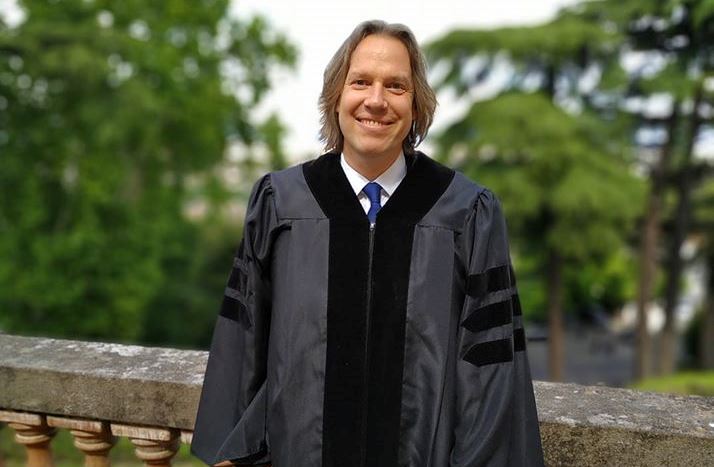

INTERVIEW WITH STEFAN LORENZ SORGNER, PROFESSOR AT JOHN CABOT UNIVERSITY, ROME
This year we celebrate 70 years of transhumanism. On the occasion of this anniversary, discussions on genetic improvements, digital surveillance and the moral limits of freedoms have been reactivated amid the pandemic. For Q Mgazine, Professor Stefan Lorenz Sorgner explained for the first time the role of transhumanism in pandemic management, as well as the future this field in which he is, without doubt, the best known researcher in the world at this moment.
“BETWEEN HEALTH AND PRIVACY, WE MUST CHOOSE FREEDOM”
Q. Long story short: for our readers, how should we define transhumanism and what are the most controversial aspects of its definition?
A. Stefan Lorenz Sorgner: The first general director of the UNESCO, Julian Huxley, who also involved in developing the Charta of human rights, (see https://en.unesco.org/courier/2018-4/editorial), coined the term transhumanism in 1951, and defined it in his article “Knowledge, morality, and destiny” (The William Alanson White Memorial Lectures, third series. Psychiatry, Vol. 14, Issue 2, 127-151) as follows: “Such a broad philosophy might perhaps best be called, not Humanism, because that has certain unsatisfactorily connotations, but Transhumanism. It is the idea of humanity attempting to overcome its limitations and to arrive at fuller fruition; it is the realization that both individual and social developments are processes of self-transformation” (Huxley 1951, 139). This year, we are celebrating the 70th anniversary of transhumanism, and I still regard this as an excellent definition.
What could be seen as controversial concerning this definition, is that it sounds banal. Is this not what we have always been doing? Hence, the following reformulation might clarify the concept further: “Transhumanism is the technical attempt to significantly transcend the current limitations of persons to increase their likelihood of living good lives.” What matters is that technical means are being used, that the current limitations are significantly being transcended, and that the goal is to transcend the limitations of all persons rather than the limitations of all humans, whereby the normative concept of personhood is not only applicable to human beings but includes non-human animals, too.

This way of thinking acknowledges that homo sapiens sapiens are animals, too. The last common ancestors of us and chimpanzees existed about 6 million years ago, and that we are in a continuous process of becoming. We have always used technical means to modify ourselves. Learning a language is a technical modification, which turned us into steered organisms. Hence, we have always been cyborgs, i.e. cybernetic organisms. Now, we have developed the technical capacity to significantly alter who we are, but doing so has been our central feature since we have become homo sapiens sapiens. This means that the latest digital, cyborg, and gene technologies are not something categorically new. They stand in the tradition of what we have always been doing. Hence, we have good reasons for employing them, too, as doing so has always increased the likelihood of us living good lives.
Q. This pandemic revealed that despite all the forms of technological progress that we achieved, we are still vulnerable and weak. How does it feel to have a society in which cyborgs are not utopic but a vaccine 100% safe still represents a work in progress? What would you name as a COVID-response coming from transhumanism?
A. Stefan Lorenz Sorgner:
SLS: Vaccines are might not be 100% safe. However, it has been possible to develop fairly safe and reliable vaccines within the time-period of less than a year, which is absolutely amazing. The mRNA vaccines are such that they can easily be adapted to mutants of the virus. This is a massive breakthrough.
Furthermore, it needs to be mentioned that vaccines are the best example of an enhancement technology. Vaccines are not a cure, but they provide people with a capacity they have not had before, and this is central for a technique to count as an enhancement.

There are companies, and institutions which demand that one needs to have been vaccinated for using their services, e.g. for booking a flight ticket, working in a hospital. Hence, these institutions render a biotechnological enhancement obligatory. This is an astonishing development.
Before COVID, there was a widely shared agreement that biotechnical therapies are legitimate, but when it comes to biotechnological enhancement technologies, it is getting morally problematic. Now, such technologies have become obligatory in many circumstances, and there is an implicit pressure and expectation upon people to get vaccinated. Thus, biotechnological enhancements have become more and more accepted in societies.
Digitalisation received a further boost as a consequence of the pandemic crisis. Remote working, remote meeting, and remote dinners have become the new norm. However, there is still room for further developments. Digital literary, divide, and infrastructure remains a challenge in many circumstances. The openness to use digital data to deal with the pandemic has been a main challenge in many parts of the world. Yet, it needs to be noted that the Eastern Asian countries who have used digital data to deal with the pandemic, have done significantly better than the countries which focussed on the right of privacy. This might be one reason which could make us rethink the meaning of digital data, and I hope that this will be the case in Europe, as otherwise many of our most cherished interests will get undermined.
“THERE ARE DIFFERENCES FORMIDABLES BETWEEN BIOTECHNICAL AND BIOTECHNOLOGICAL THERAPIES”
Q. You are the most reputed scholar on transhumanism. Thanks to your works, the critical issues that link transhumanism with digitalisation, gene technologies and ethics shaped the public debates on the nature and progress of our contemporary world, related to virtual society in continuous change. Have you ever felt fear instead of enthusiasm from different people abroad that conceive bioenhancement as a process that empowers technology more than we have ever expected in everything that concerns our existence and evolution? Does genome editing convert us in little, autonomous gods?
SLS: The developments in the fields of gene technologies and digitalisation lead to enormous challenges. By means of digitalisation, it is possible to create paternalistic totalitarian structures on an unprecedented scale. Given the known history of such political structures, this statement can make all of us shudder, and get scared. Gene technologies are risky, when they get applied to human beings. The less established a technology is, the more dangers are connected to it. However, there have always been some brave people who went astray, and who were proactive. Without taking the risks, change is impossible.
It is important to bear in mind the advantages which go along with these technologies. This might be done best by looking into the past, rather than by speculating upon the future. We do not know what the future will bring. However, we know that in the past two hundred years, we have managed to double our average life-expectancy. Even in the past fifty years, the life expectancy in Germany has increased by 15 years. This is an enormous number of years, which radically improves the quality of live on an individual basis. This alone should suffice to reveal the enormous potential connected with gene and digital technologies.
By the way, speculating on the future has also been incredibly influential in the past. There is a long line of examples of real live innovations which have been inspired by science fiction books, or films. If this was the case in the past, there is a high chance of this also applying to contemporary works of science fiction.
“ON TRANSHUMANISM”, SORGNER`S BESTSELLER
Q. Recently, you have published a book that is a bestseller in your field: We have always been cyborgs. How did it come to you such a title? What does it mean that we have always been cyborgs?
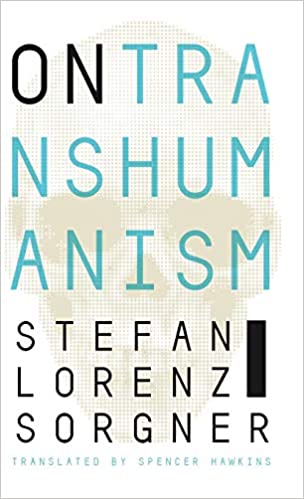
SLSS: Recently, I published a book “On Transhumanism” which has been successful in German (Herder 2016), and which consequently has been translated into the English by Penn State University Press (2020). It represents a primer to the field of transhumanism, and it reveals central reflections on enhancement, on the meaning of transhumanism in our cultural context, on the link between Nietzschean and transhumanist reflections, and on central debates in the field of transhumanism from bioethical challenges to implications to the field of contemporary arts and the future of education such that the humanities ought to get transformed into the metahumanities by including posthuman studies in their curriculum.
My next book, which will get published by Bristol University Press will be entitled “We have always been cyborgs. Digital data, gene technologies and an ethics of transhumanism”. In contrast to the former book, a comprehensive ethics of transhumanism has been developed in the book. Transhumanism used to be identified primarily with utilitarian ethical approaches in the past. I will present a liberal ethics of fictive autonomy in the monograph “We have always been cyborgs”. In contrast to the anthropologies which have been dominant in the Western context, it develops a non-dualistic anthropology and ethics. The term, cyborg means cybernetic organism. Cybernetic comes from the Ancient Greek “kybernetaes” (κυβερνήτης), which means helmsman. Cyborgs are therefore controlled organisms. In philosophy, human beings were usually defined by their ability to speak and reason. Acquiring language is our first upgrade, provided to us by our caregivers. The process of “cyborgization” continues through the acquisition of new skills, such as learning mathematics, history, etc. However, a new dynamic is currently emerging through modern scientific discoveries. Control is being exponentiated, for example through genome editing (gene modification) and brain-computer interfaces. I will deal with the implications of both technologies, on the basis of a liberal ethics of fictive autonomy. Digital technologies are related to a silicon-based transhumanism, whereas gene technologies are connected to a carbonate-based transhumanism.
“THE RELEVANCE OF TRANSHUMANISM IS SO ENORMOUS THAT IGNORING IT IS NO LONGER AN OPTION.”
Q. What is the most virulent opposition that you have ever met in what concerns your brave thesis, and what are the most enthusiastic aspects of your editorial project than insured such a success for your unconventional book?
SLS: Critical attitudes concerning my suggestion can be traced to the following four kinds of logic: 1. Religious scholars claim that transhumanists are playing God; 2. Left-wing scholars worry that descriptive as well as normative equality gets undermined by means of transhumanism, and that it is merely an ideology of libertarian capitalists to take over the world; 3. Ecological thinkers fear that our naturalness gets undermined given the application of emergent technologies to our being-in-the-world. 4. Experts in the field of colonial studies wonder whether transhumanism goes along with a new kind of neo-colonialism, racism, or some other discriminatory implications. All of these worries need to be taken seriously. Yet, I have explained in detail in various writings why none of these worries ought to be seen as crucial.
When addressing these worries, it comes out that transhumanism is a non-dualistic, non-anthropocentric, and a non-essentialist philosophy which aims to reduce violence, and to promote a plurality of personal flourishing while living in a world of permanent becoming in all respects at all times. In contrast to many former reflections put forward by transhumanists, my own take is based upon complex philosophical reflections which have been strongly informed by Heraclitus, Spinoza, and Nietzsche. It is not a simple-minded utilitarian approach by a young nerd who has spent too much time in front of a computer. Transhumanism has implications for all aspects of our lifeworld, from the arts via economics to war. No matter, which stand you have concerning transhumanism, its relevance is so enormous that ignoring it is no longer an option.
Q. How can we demithysize transhumanism, starting from the ethical implications of the so-called cyborgization process?

SLS: 2021 is the year of the 700th anniversary of Dante’s death as well as the 70th anniversary of the concept of transhumanism, as it was coined by Julian Huxley in an article published in 1951. At the first glance it seems that these two anniversaries do not have anything in common. However, there is one issue which needs to be noted. Dante counts as the father of Italian language, and he has coined a lot of words. The word “belpaese” was created by him, which is still being used to refer to Italy, as well as the word fertile, which comes from the latin ferre, and which means to carry, it carries an abundance of fruits. In addition, he also wrote the following lines in his text on the paradise:
“Trasumanar significar per verba
non si poria; però l’essemplo basti
a cui esperienza grazia serba.”
(Paradiso, Canto I)
Dante coined the word trasumanar, which means to move beyond the limitations of the human. However, this does not turn Dante into a transhumanist. The context in which he used the word make it clear that he did not have a this-worldly evolution in mind. However, this background of the word reveals the importance of dynamic evolving developments. In contrast to the past, where such developments were interpreted as a way of entering from the immanent towards a transcendent world, after the posthuman paradigm-shift, it has become more plausible to reinterpret these develops within the empirically accessible realm only. Hence, transhumanism is not a lofty, abstract and weird way of thinking about the world, but it is the attempt of taking the evolutionary turn with all its implications seriously, and this has implications on all aspects of our lifeworld.

“WE HAVE ALWAYS BEEN CYBORGS”
Q. Our contemporary world is highly impacted by a biopolitical context. The pandemic revealed that as we are rather focused on bios, our zoe, meaning our biological life, remains exposed and vulnerable. Has transhumanism the power to redefine biopolitics?
SLS: This is definitely the case. However, the above definition of transhumanism needs to be kept in mind: “Transhumanism is the technical attempt to significantly transcend the current limitations of persons to increase their likelihood of living good lives.” This definition is not immediately connected to any specific political attitude. Hence, it could in principle by applied to any political theory. However, in practice it is such that all serious transhumanists affirm a version of liberalism. In my forthcoming monograph, “We have always been cyborgs”, I have analysed in great detail the biopolitical implications of my transhumanist take. I also reveal selected central implications concerning the coronavirus crisis.
Q. I have heard that you are working on a monograph on the “Philosophy of Posthuman Art”. Could you tell us more about your project and how it will shape the future of contemporary art in terms of production, creativity and consumption?
SLS: In the case of posthuman artworks, aesthetics characteristics are no longer exclusive to the realm of art. It is possible to find parallel traces in all aspects of the lifeworld, which reveals an important aspect of posthuman artworks, i.e. posthuman artworks no longer count as autonomous, but they are seen as relational with respect to all other aspects of the lifeworld. A dialectic understanding of the term autonomous art, as it was prevalent in Adorno’s aesthetics, no longer applies to posthuman artworks. It is no longer the case that the relevance of autonomy ought to be stressed by creating autonomous artworks, whereby the ideal case would be that the artwork itself creates and represents a new artistic genre. By artworks being autonomous, the ethical relevance of autonomy gets revealed, too. However, this functions only in a dialectic manner. Adorno’s negative dialectics has been enormously influential in the art world of the second half of the 20th century. Posthuman artworks, on the other hand, have moved beyond the necessity of demonstrating such a fictive autonomy. This does not mean that autonomy becomes an artistically inappropriate concept, however, aesthetic autonomy which used to be the distinctive characteristic of an avantgarde artwork is no longer characteristic for posthuman artworks.
As part of the treatise on the philosophy of posthuman art, I will also be concerned with concepts of posthuman aesthetics. Hajime Sorayama’s “Sexy Robot” might embody the posthuman aesthetics of smoothness, which correlates with abstract minimalist geometric forms, lines and circles, and a type of shiny brightness. Parallel characteristics are also distinctive for a specific lifestyle which goes along with the aesthetics of Apple computers, and a smooth body of a fully waxed skin. Here, it already become obvious that there are correlations and interrelations between aesthetic preferences, and lifestyle choices. This might also be a further reason for possibilities of tensions between members of the various cultural movements. The following types of aesthetics play a central role when it comes to the wide range of posthuman artworks:
- the aesthetics of monsters, e.g. Patricia Piccinini’s “Graham”
- the aesthetics of hybridity, e.g. Eduardo Kac’s “Edunia”
- the aesthetics of the amorphous, e.g. Jaime del Val’s “Microdanzas”-video
- the aesthetics of becoming, e.g. Damien Hirst’s “A Thousand Years”
- the aesthetics of twisting, e.g. Stelarc’s “Second Life”
- the aesthetics of relationality, e.g. Random International’s “Rain Room”
- the aesthetics of bodily plurality, e.g. Orlan’s “Omniprésence. Sourire de Plaisir”
- the aesthetics of superheroines and superheroes, e.g. Jeff Koons’ “Hulk Elvis”
- the aesthetics of smoothness, e.g. Hajime Sorayama’s “Sexy Robot”
- the aesthetics of kawaii on Mr.s “Sweet” paintings
Besides distinguishing various types of aesthetics concepts, I also analyse the relevance of bioart, evolutionary accounts of beauty, and what mimesis can mean after the posthuman paradigm-shift.
Q: How does it look like for a tranhumanist the future of our postCovid world?
SLS: The public use of the internet has only been around since 1990, and it has already radically changed our lives. With us having been forced to go remote in many aspects of life, digitalisation will become even more important, as by now, everyone has realized its relevance. Due to the relevance of vaccinations, which are a bioenhancement technology, the acceptance and openness towards such technologies can be expected to increase significantly, too. Physicians will no longer be merely healer, but their role will be that of bioeducators, whose role is to modify the capacities of their clients. These expected modifications indicate already that the pandemic crisis has lead and will continue to lead the world’s population towards an increased affirmative stance concerning the most impactful technologies of or times, namely gene and digital technologies.
“WE COULD PROMOTE HEALTH AND FREEDOM, BUT WE WOULD HAVE TO LET GO OF PRIVACY”
Q: What do you think that it will be the role of digital surveillance in healthcare?
SLS: This is an important question indeed, and you will find a detailed reply to it in my forthcoming monograph “We have always been cyborgs”. I think that the meaning of privacy will have to be rethought dramatically, and digital surveillance needs to be embraced. The practical advantages which go along with it are too significant, despite the dangerous challenges which are potentially connected to it, too. In a system of total digital surveillance, it ought to be primarily algorithms which have access to the digital data which get collected. Algorithms should primarily be responsible for monitoring the digital data. Only in exceptional circumstances and emergencies humans should have the right to access the data. It is relevant to the preservation of the free rule of law that primary monitoring is carried out using algorithms and that human access must be strictly regulated, since the potential for abuse is undoubtedly enormous. If this was the case, we could promote health and freedom, but we would have to let go of privacy. When choosing between health and privacy we should go for freedom.
For Q Magazine, could you tell us….
- The biggest challenge of your career.
SLS: I wish there had only been one. Throughout my careers as a philosopher, I have encountered serious obstacles. The great variety of philosophies of the posthuman represent a twist away from a two-thousand-year long tradition, which has started from the premise that our essential human nature lies in our immaterial rationality, our free will, the divine spark in us, or our autonomous soul. Philosophy departments all over the world are still dominated by Academics with anthropocentric, essentialist, and dualist biases. It is important to never give up, and to be surrounded with people in whom you can trust, who care for you, and who cherish your capacities. I particularly wish to thank Julian Savulescu, Wolfgang Welsch and Gianni Vattimo, who have been enormously supportive of my career.
- How does it look like for you the future of transhumanism, as a field of study, in Romania and Eastern Europe?
I have given invited talks at several Romanian universities, and I must say the interest in these topics by students is enormous. Knowing the field of posthuman research, I am also aware of quite a few upcoming young Romanian scholars of the posthuman. I very much hope that they will find their way onto tenured professorships, which is the most challenging step in an Academic career.
- The most inspiring experience as a visiting professor abroad.
I have met many extraordinary people during my travels as a visiting professor. Meeting people has always been more important for me than being at spectacular locations…. I have had some incredibly intriguing conversations and I am already looking forward to being able to travel again….
- Your opinion on the role of a philosopher nowadays in society.
In “We have always been cyborgs”, I argue that leisure can no longer be identified solely with contemplation after the posthuman paradigm-shift. Posthuman leisure ought to be an interplay between vita contemplativa, vita activa, and vita creativa. Consequently, the role of the philosopher should no longer be identified with an armchair philosopher, but rather with a public intellectual, who cooperates with artists, and gets involved in political, cultural and social exchanges.
Stefan Lorenz Sorgner is Chair of the Department of History and Humanities and a philosophy professor at John Cabot University in Rome and is director and co-founder of the Beyond Humanism Network, Fellow at the Institute for Ethics and Emerging Technologies (IEET), Research Fellow at the Ewha Institute for the Humanities at Ewha Womans University in Seoul and Visiting Fellow at the Ethics Centre of the Friedrich-Schiller-University in Jena. He is editor of more than 10 essay collections, and author of the following monographs: Metaphysics without Truth (Marquette University Press 2007), Menschenwürde nach Nietzsche (WBG 2010), Transhumanismus (Herder 2016), Schöner neuer Mensch (Nicolai, 2018), Übermensch (Schwabe 2019), On Transhumanism (Penn State University Press 2020), We have always been cyborgs (Bristol University Press, 2021). In addition, he is Editor-in-Chief and Founding Editor of the “Journal of Posthuman Studies” (a double-blind peer review journal, published by Penn State University Press since 2017). Furthermore, he is in great demand as a speaker in all parts of the world (World Humanities Forum, Global Solutions Taipei Workshop, Biennale Arte Venezia, TEDx) and a regular contact person of national and international journalists and media representatives (Die Zeit, Cicero, Der Standard; Die Presse am Sonntag, Philosophy Now). www.sorgner.de & www.mousike.de