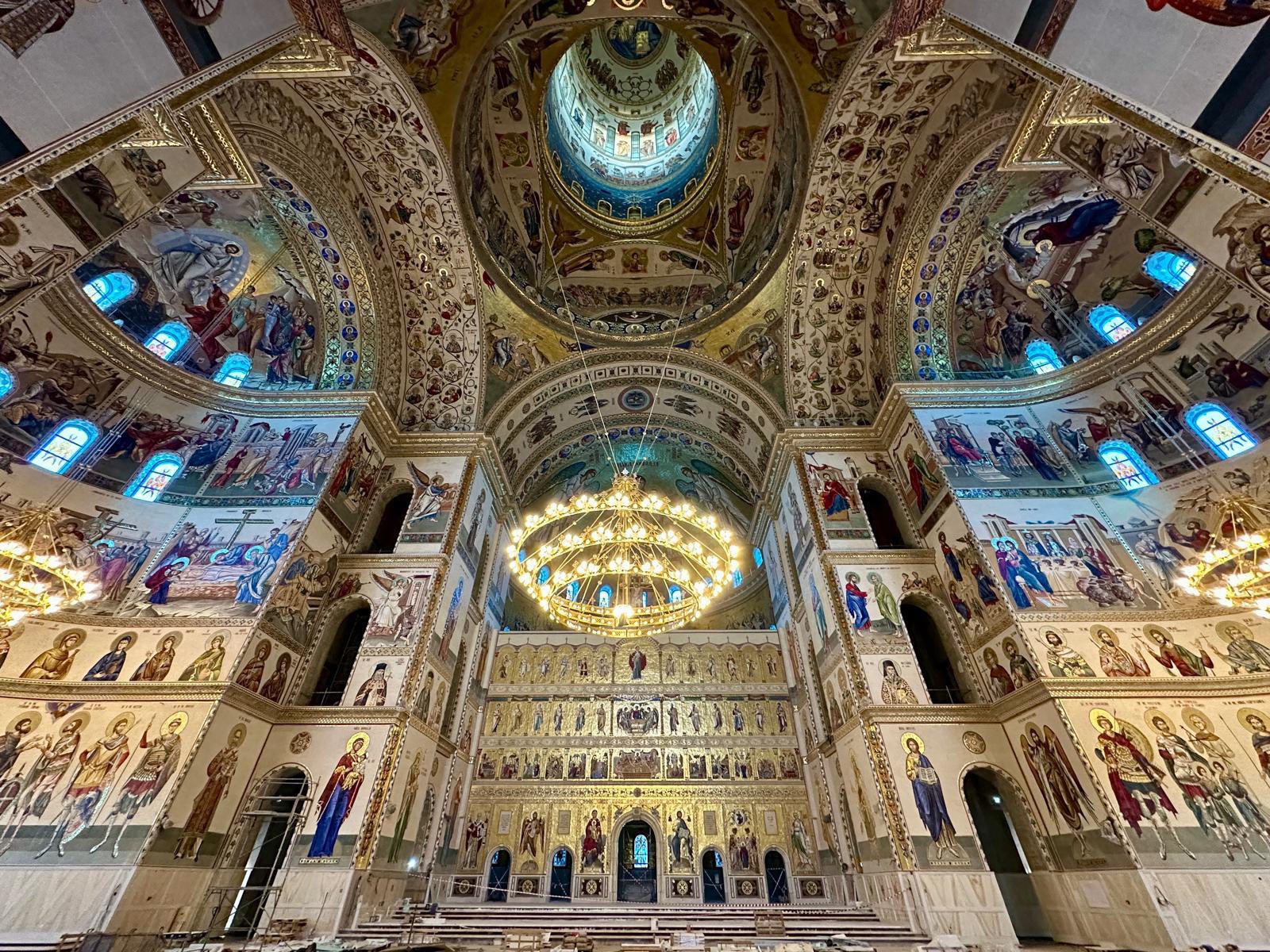

On Sunday, October 26, the Romanian Patriarchate celebrates its centennial with the consecration of the painting inside the People’s Salvation Cathedral, a landmark of Orthodox Christianity and a symbol of national ambition. The service will be officiated by Ecumenical Patriarch Bartholomew and Patriarch Daniel. Starting today, worshippers will be able to enter the Cathedral and venerate at the holy altar until the end of the month. Afterwards, the Cathedral will remain open according to the regular schedule of services.
- 20 de ani fără EA
- Înalta Curte trage un semnal de alarmă la CCR: Măsuri aberante care lasă românii de rând fără apărare
- ÎCCJ sesizează CCR în legătură cu ultimele modificări aduse Codului de procedură penală
- Bolojan atacă PSD și explică de ce proiectul reactoarelor modulare are probleme
- PSD, PNL, USR și UDMR au căzut de acord pe legea salarizării
The idea of a national cathedral—representing faith, unity, and a spiritual and historical cornerstone for the Romanian people—was once supported by cultural and historical figures such as Mihai Eminescu and King Ferdinand.
After 1989, the Romanian Orthodox Church took the initiative to launch the People’s Salvation Cathedral project. Patriarch Teoctist advocated for its construction, and his successor, Patriarch Daniel, oversaw the building of the main structure, dome, and bell tower.
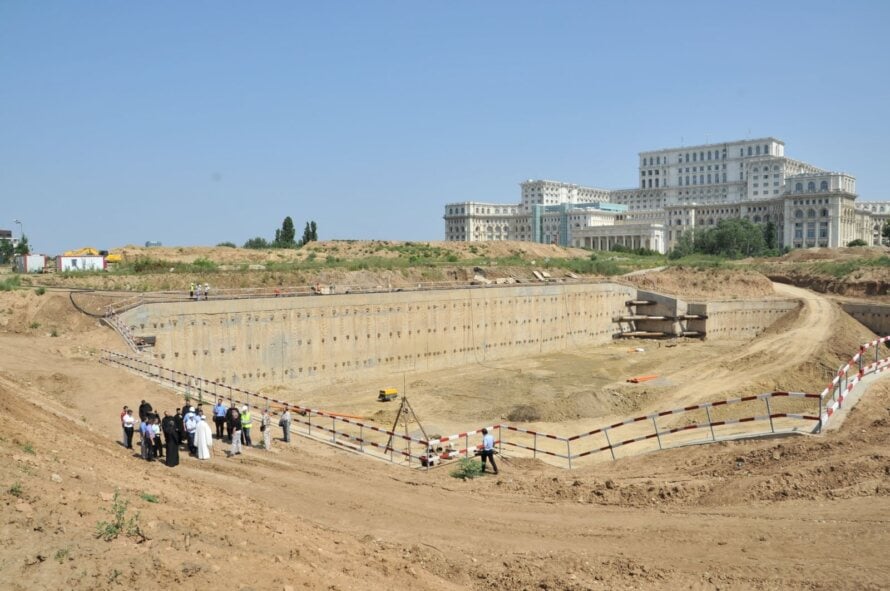
In February–March 2005, at the initiative of Patriarch Teoctist, the site for the National Cathedral was selected at the intersection of 13th September Avenue and Izvor Street. The land spans 110,000 square meters and has an almost rectangular shape. On March 17, 2005, the government issued Emergency Ordinance No. 19 to officially designate the architectural site for the construction of the People’s Salvation Cathedral. In 2007, Patriarch Daniel laid the foundation stone, marking the beginning of this monumental project. Photo: Ziarul Lumina

Today, on Arsenal Hill, stands the largest Orthodox cathedral in Romania—not just a place of worship, but a remarkable achievement in Romanian architecture and faith.
The Cathedral measures an impressive 120 meters in length and 60 meters in width. Its most striking feature is its height: over 120 meters in total, with a central dome reaching 135 meters, visible from nearly every part of the capital.

The large cross atop the cathedral weighs seven tons.
It features 28 bronze doors adorned with iconographic designs, operated by a computerised system that automatically opens them in the event of an emergency. The Cathedral also includes 392 windows.
It houses the largest iconostasis in the world, measuring 406.98 square meters, with a length of 23.8 meters and a height of 17.1 meters, a record confirmed by the Academy of World Records.
The interior is transformed into a monumental work of art, with 25,000 square meters of mosaic-painted surfaces.
Additionally, the bell tower contains the largest Orthodox bell in Romania, weighing over 25 tons.
The Bells of the National Cathedral: Specifications and Symbolism
A remarkable moment occurred when the largest bell of the National Cathedral rang in the desired musical note immediately after casting, without requiring any adjustments. This was a first in the centuries-old history of the Grassmayr Bell Foundry in Innsbruck, Austria, where the bell was made.

The cathedral’s bells have a combined weight of 33 tons and are positioned at a height of 60 meters. Photo: Basilica
Grassmayr Foundry has a rich tradition dating back to the 16th century, with technical and musical expertise passed down through 14 generations. The bells produced here are true musical instruments, capable of generating over 50 distinct tonalities.
The sound of a Grassmayr bell includes a lower octave, a fifth, a third, and an upper octave—all crafted with a precision of one-sixteenth of a semitone. The bronze alloy used in casting is heated to 1,150°C and consists of 78% electrolytic copper (99.99% purity), 22% electrolytic tin (99.99% purity), and less than 0.1% impurities (lead and zinc).

The largest bell of the People’s Salvation Cathedral is also the biggest free-swinging bell in Europe (top right photo, foreground). Photo: Basilica.ro Archive / Mircea Florescu
The Cathedral’s largest bell—measuring approximately 3 meters in height and diameter and weighing around 25 tons—was cast on Friday, November 11, 2016. It is one of the largest free-swinging bells in Europe and a remarkable achievement in bell-making.
The other five bells, weighing 3,450 kg, 1,700 kg, 1,000 kg, 750 kg, and 450 kg respectively, were cast on April 21, 2017. Together, the six bells weigh a total of 33 tons and are tuned as follows: DO♯ (scale 0) for the largest bell, followed by DO♯, MI♯, SOL♯, La♯ (scale 1), and DO♯ (scale 2).
The bells arrived in Romania on May 19, 2017, after being acoustically tested and tuned at the Grassmayr Foundry.
On Monday, September 3, 2018, His Beatitude Patriarch Daniel officiated the blessing ceremony for the six bells while they were still on the ground. The following day, Tuesday, September 4, 2018, the bells were lifted and installed in the bell tower on the western façade, at a height of 60 meters.
Their sound can be heard within a 15-kilometer radius, especially during major events and religious celebrations.
Each of the six bells is inscribed (from left to right) with the emblem of the Romanian Patriarchate, the effigy of the Patriarch of Romania, the patriarchal cross, and the inscription: “The Blessing of Patriarch Daniel of Romania for the National Cathedral – Centenary 1918–2018.”
The cost of the six bells was covered entirely by the Romanian Patriarchate.

Image from the installation of the bells at the People’s Salvation Cathedral.Photo: Basilica.ro
The bells of the National Cathedral are considered the “voice of God” and the “voice of the Church,” calling Christians to communion, prayer, peace, and joy.
“The bells represent the voice of the Lord, calling us to gather in His blessing and love. They summon us to prayer and help keep us spiritually alert and watchful. They combat spiritual laziness, because when we hear the sound of the bell calling us to prayer, it is the voice of God reminding us of His presence and inviting us to respond to His love with our own—expressed through prayer and good deeds.
The bells also serve to protect the people from storms, lightning, and thunder. As one of the consecration prayers says, they disperse heavy storm clouds, drive away lightning and thunder, and clear harmful fog. At the same time, they repel evil or unclean spirits, strengthening the faithful to remember God and seek His help in times of temptation.”
† DANIEL
Patriarch of the Romanian Orthodox Church
Before entering the Cathedral, visitors can admire the exterior elements of the architectural ensemble, including the porticos, the plaza, and the domes. These features help define the sacred space within Bucharest’s urban landscape, serving as a testament to Romanian history and spirituality.
One detail visible only from an aerial view is that the entire site of the National Cathedral is shaped like a chalice, a symbolic reference to the Holy Eucharist , the central mystery of the Church and the sacrament most frequently celebrated within the Cathedral.

The Porticos, Plaza, and Domes of the National Cathedral
Inspired by the Brâncovenesc-style porches, the porticos of the National Cathedral serve both aesthetic and functional purposes, helping define the esplanade space. The main entrance is accessed through two porticos—northwest and southwest—connected by an arched porch that marks the formal entry into the cathedral.
On the north and south sides of the plaza, the porticos frame the area designated for the outdoor altar, creating an appropriate setting for open-air religious services.
In front of the cathedral lies a spacious esplanade designed to accommodate large gatherings during worship. Covering 11,600 square meters, this open space not only highlights the monumental scale of the church but also has the capacity to host up to 23,200 people during outdoor liturgical events.
Beneath the esplanade is a vast underground space, larger than the cathedral’s footprint, symbolically named the “Urban Cave of Saint Andrew the Apostle.” With a total volume of 87,505.67 cubic meters and a capacity of 6,900 people, it is intended for cultural, catechetical, and social activities, as well as housing a museum.

The Cathedral’s silhouette is defined by its eight domes, which blend architectural elements from various regions of Romania—such as the slender towers of Transylvania—with the grandeur typical of Western cathedrals. The central structure features one main dome and four secondary domes, while the western side is crowned with three additional large domes.
The main dome, known as the Pantocrator, reaches a height of 120 meters up to the base of the cross. Inside, its cupola houses a mosaic icon of Christ Pantocrator (Ruler of All), a monumental representation with a diameter of 12 meters and a surface area of over 150 square meters. The cross atop the main dome stands 7 meters tall and weighs 7 tons.
The bell tower dome, located on the western side above the exonarthex, contains the Cathedral’s six bells, cast in Innsbruck by the renowned Grassmayr Foundry. Together, they weigh 33 tons and are installed at a height of 60 meters. The largest bell, which swings freely, weighs 25 tons.
“The exterior and interior artistry are two essential components in creating a climate of spiritual communication. Tradition will not be abandoned, but rather interpreted as a continuous deepening. Artistic expression must carry the canonical Orthodox message, so that nothing in the construction or interior decoration is accidental or devoid of spiritual meaning.”

The volume of the Cathedral is designed to reflect its sacred purpose: to house the Mystery of the Holy Eucharist. The land on which it stands is shaped like a chalice, symbolizing the central sacrament of the Church.
The entire structure reaches toward the heavens through eight gilded domes. The largest, the Pantocrator dome, represents Jesus Christ, the Head of the Church. It is surrounded by four smaller domes symbolizing the four Evangelists: Matthew, Mark, Luke, and John. On the western side, the bell tower dome represents the Mother of God, while the two adjacent domes honor Saints Andrew and Philip, who initiated the Christianization of the Romanian people (Geto-Dacian-Roman).
The Cathedral’s length,120 meters, is equal to the height of the Pantocrator dome, symbolising that Christ crucified and buried is the same Christ who rose and ascended into heaven.
“This architectural composition can be seen as a call to spiritual elevation—so that through Jesus Christ, we may become partakers in the eternal life and joy of the Holy Trinity,” explains Patriarch Daniel.
In the Altar, embedded in the base of the Holy Table, lies a list of over 350,000 known Romanian heroes, along with relics of the Holy Martyrs Brâncoveanu and the Martyrs of Niculițel.
The Cathedral’s capacity is equally impressive: more than 5,000 people can attend services, making it one of the largest places of worship in Eastern Europe.
Although the consecration is scheduled for October 26, 2025—marking the Cathedral’s official entry into liturgical use—construction will continue until the interior and exterior are fully completed.
This monumental achievement is the result of the collective effort of the Romanian people, guided especially by the leadership of His Beatitude Patriarch Daniel.
The Bronze Doors
Entrance to the National Cathedral is made through 27 bronze doors, adorned with images of Jesus Christ the Savior, the Mother of God, the Holy Apostles, and Romanian saints.
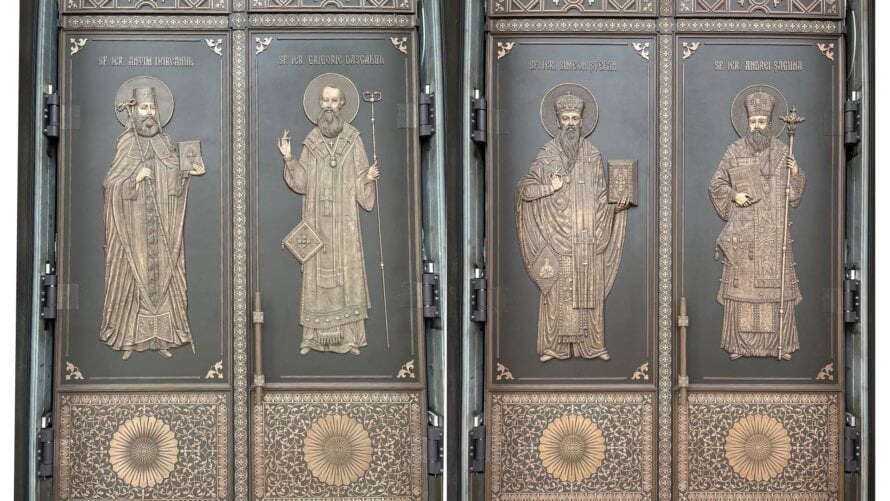
The bronze doors are a defining feature of the Cathedral. Each door weighs approximately 800 kilograms and is operated by an automated opening and closing system. These monumental entrances are more than functional—they symbolically mark the transition from the secular to the sacred, from earth to heaven.
As visitors ascend the steps toward the Cathedral’s entrance, they are greeted on the central doors by depictions of the Mother of God and Jesus Christ the Savior. Flanking these are three doors on each side, each featuring two of Christ’s twelve Apostles. Saint Andrew is placed closest to the Mother of God, reflecting his role as the patron saint of Romania and the Cathedral’s secondary dedication (the primary being the Ascension of the Lord).
The iconographic program continues along all sides of the Cathedral, featuring over 20 Romanian saints and 7 Daco-Roman saints—including hierarchs, martyrs, and monastics. This fulfills the vision of His Beatitude Patriarch Daniel, who stated in 2017 that the Cathedral is “dedicated to Romanian saints from all times and all regions of the country.”
The saints are arranged with Jesus Christ on the right and the Mother of God on the left.
Near the Main Doors (Façade)
Right: Saints Peter and Paul, Philip and Matthew, Thomas and Bartholomew
Left: Saints Andrew and John, Simeon and James, Jude Thaddeus and James son of Alphaeus
Narthex (Pronaos)
Right: Saint John Jacob of Neamț and Saint George the Martyr; Hierarchs Photius the Great and Niphon of Constantinople; Hierarchs Basil the Great, Gregory the Theologian, John Chrysostom, and Nicholas; Iachint of Vicina and Bretanion of Tomis
Left: Venerable Saints Theodora of Sihla and Parascheva of Iași; Hierarchs Calinic of Cernica and Joseph the New of Partoș; Hierarchs Anthim the Iberian and Gregory the Teacher; Simeon Ștefan and Andrei Șaguna; Varlaam and Dosoftei of Moldova
Nave (Naos)
Right: The Brâncoveanu Martyrs; Martyrs Montanus and Maxima; Venerable Saints Paisius of Neamț and Nicodemus of Tismana; Germanus of Dobrogea and John Cassian
Left: Hierarchs Teotimus and Ephrem of Tomis; Martyrs John the Wallachian and John the New of Suceava; Venerable Saints Parthenius and Raphael of Agapia; Martyr Sophronius of Cioara and Venerable Visarion Sarai
Altar
Right: Venerable Teoctist and Hierarch Petru Movilă
Left: Prince Saint Stephen the Great and Venerable Daniil the Hermit
Beyond their spiritual symbolism, the 27 bronze doors, crafted by the German company Strassacker, are equipped with a sophisticated safety system designed to protect the approximately 5,000 people the Cathedral can accommodate.
The system is monitored from three separate control rooms and is integrated into the building’s management system (BMS).
In the event of a fire, it is programmed to automatically open all 54 door panels simultaneously, allowing for the rapid evacuation of both people and smoke.
Each panel weighs around 800 kilograms. To prevent accidents, the opening process is continuously monitored, and a magnetic braking system controls any uncontrolled acceleration.
The doors are connected to both the main power grid and a backup generator. If the primary power source fails, the generator activates automatically, ensuring uninterrupted operation of the safety system.
More than 50 saints are sculpted onto the Cathedral’s bronze doors. Like silent guardians, they watch over the sacred space, bearing witness to its holiness—the Church of Christ, the house of the Holy Trinity.
The Mosaics of the Cathedral
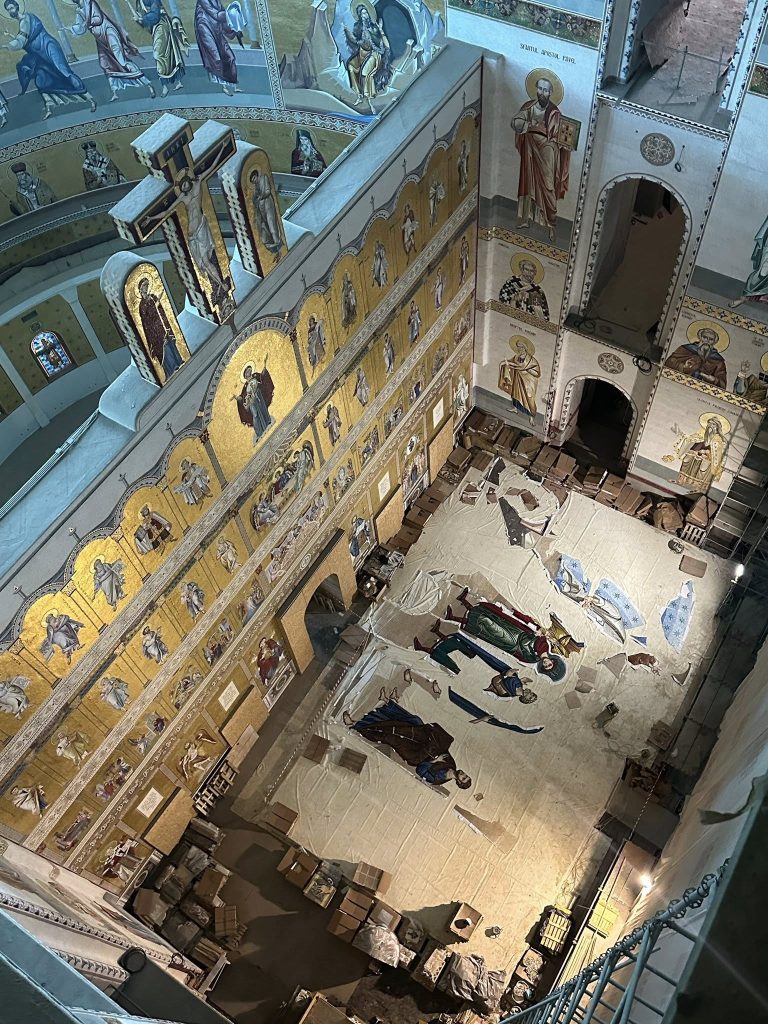
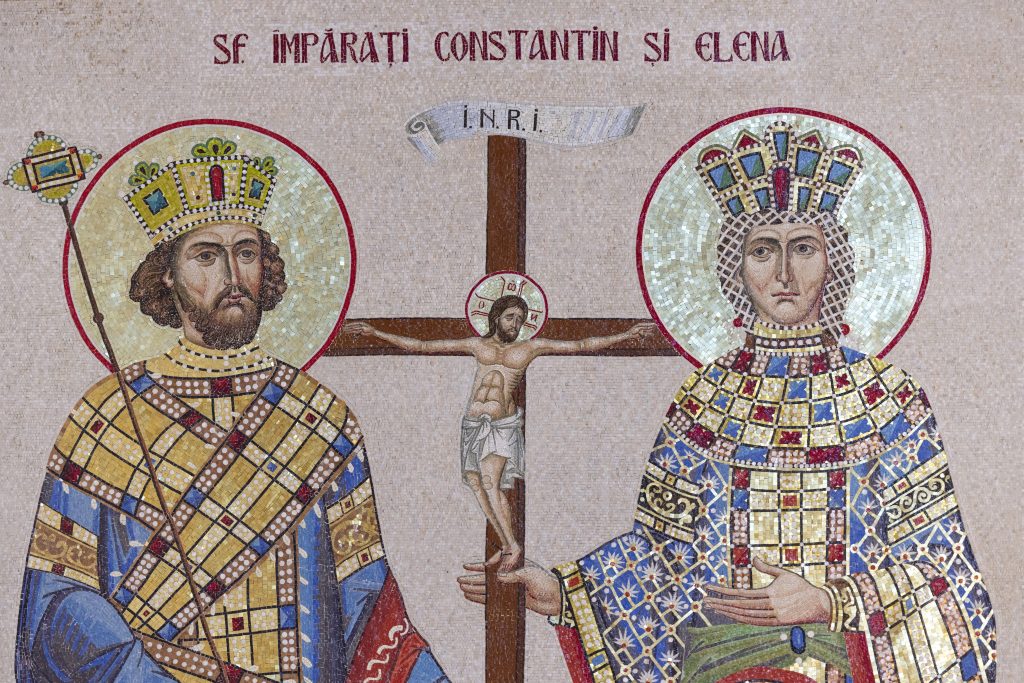
Created between 2019 and 2025, the mosaics form one of the most extensive and intricate decorative programs in Romania, covering approximately 25,000 square meters. Their iconographic design, stylistic execution, and ornamental motifs draw inspiration from both Byzantine art and medieval Romanian traditions.
According to the iconographic plan, the mosaics depict scenes from the Old and New Testaments, events from the life of Jesus Christ, the Holy Virgin Mary, and Saint Andrew—the patron saint of Romania. They also include icons of angels, prophets, and righteous figures from the Old Testament, as well as apostles, hierarchs, martyrs, and confessors from every era of Church history.
This iconographic program is the result of extensive research, aiming to reflect the spiritual zeal of those who sanctified their lives in devotion to God and service to others.
It also emphasises the Latin heritage of Romanian Orthodoxy.
Painter Alina Codrescu used 2.4 tons of mosaic pieces for the Christ Pantocrator icon in the main dome. The icon covers an area of 4.5 square meters. Photo: Basilica.ro
Alongside saints of the universal Church—venerated in Greek, Syriac, and Slavic traditions—the Cathedral also features Latin Fathers of the undivided Church. This iconographic choice highlights the Latin heritage of Romanian Orthodoxy and its role as a bridge between Eastern and Western Christianity.
The Cathedral’s walls also depict pillars of Romanian Orthodoxy from every era. Notably, certain interior spaces are dedicated to the iconographic portrayal of confessing saints who endured persecution in communist prisons.
Mosaics That Shift with the Light
The mosaic paintings, perceived differently depending on the time of day, were created by a large team led by painter Daniel Codrescu. Each icon was crafted with meticulous attention to detail, reflecting a deep spiritual focus and the desire to create a lasting work—a faithful offering to the saints depicted.
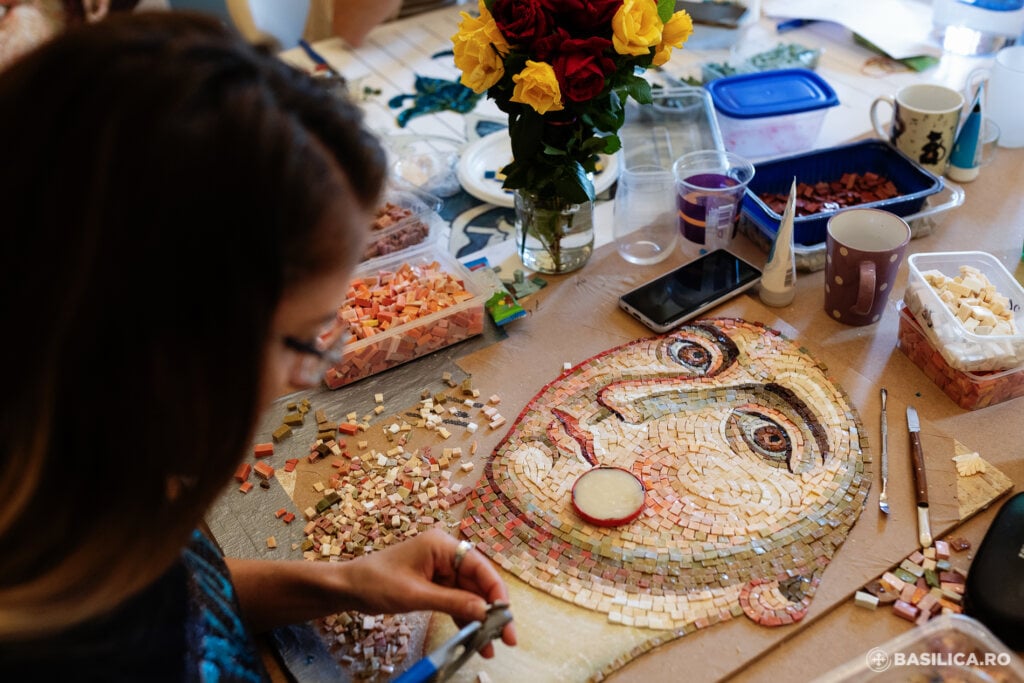
Image from the Painting Workshop of the National Cathedral, where over 200 church painters have worked on hundreds of square meters of mosaic each month over the past year. Photo: Basilica.ro
Thanks to its unique material properties, mosaic art brings a striking sense of movement to the imagery. The viewer’s perception shifts depending on the time of day and the way light flows across the surfaces, creating a vibrant interplay that draws the eye from one saintly figure to another. This visual rhythm—known as the girotondo effect—enhances the mystical atmosphere inside the Cathedral.
By the Numbers
Producing just one square meter of mosaic requires the precise placement of approximately 10,000 individual pieces, each applied using a special cement-based adhesive.
Crafted stone by stone in the workshop from a carefully curated palette of over 2,500 colours, the icons reach their final form once installed on the Cathedral walls. Final touch-ups are made on-site to seamlessly blend the individual sections.
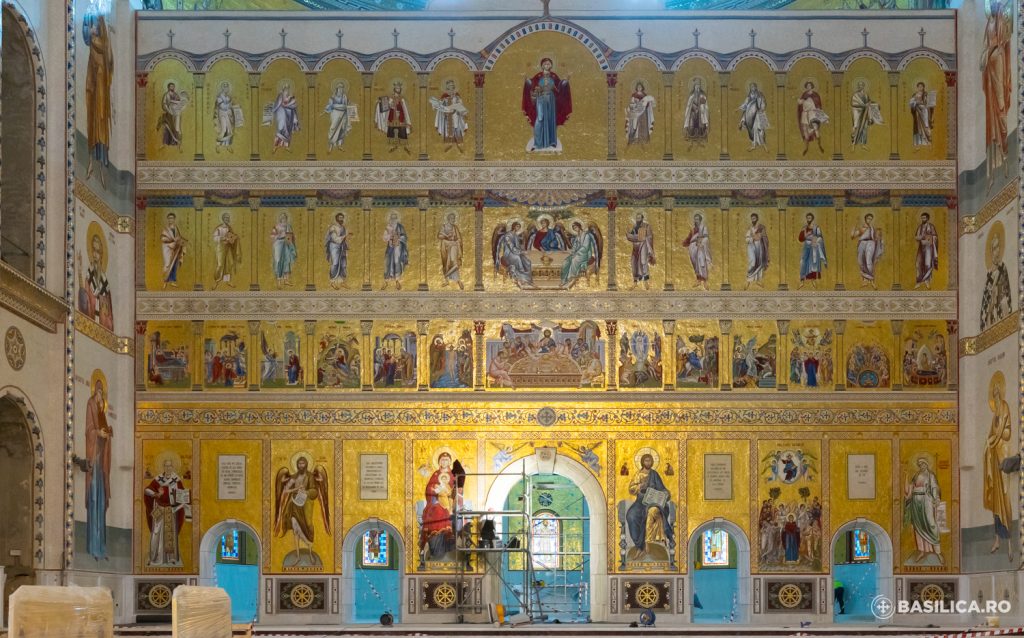
The iconostasis of the National Cathedral of the Salvation of the Nation, viewed from the nave where the faithful pray. It is the largest Orthodox iconostasis in the world. Photo: Basilica.ro Archive / Mircea Florescu
The materials used to create the icons in the National Cathedral were sourced from Venice and Carrara, supplied by Orsoni—one of the world’s most prestigious providers of stone and mosaic.
The iconostasis, the most extensive in the Orthodox world, spans 406.98 square meters, measuring 23.8 meters in length and 17.1 meters in height. It features 45 icons arranged in four tiers.
The icon of the Virgin Mary Platytera, located in the altar apse, stands 16 meters tall, making it the largest mosaic depiction of the Mother of God in Romania and one of the largest in the Orthodox world.
The Pantocrator icon in the Cathedral’s main dome measures 12 meters in diameter. The face of Christ alone is 4.5 meters tall and was crafted by artist Alina Codrescu using 2,400 kilograms of mosaic pieces.
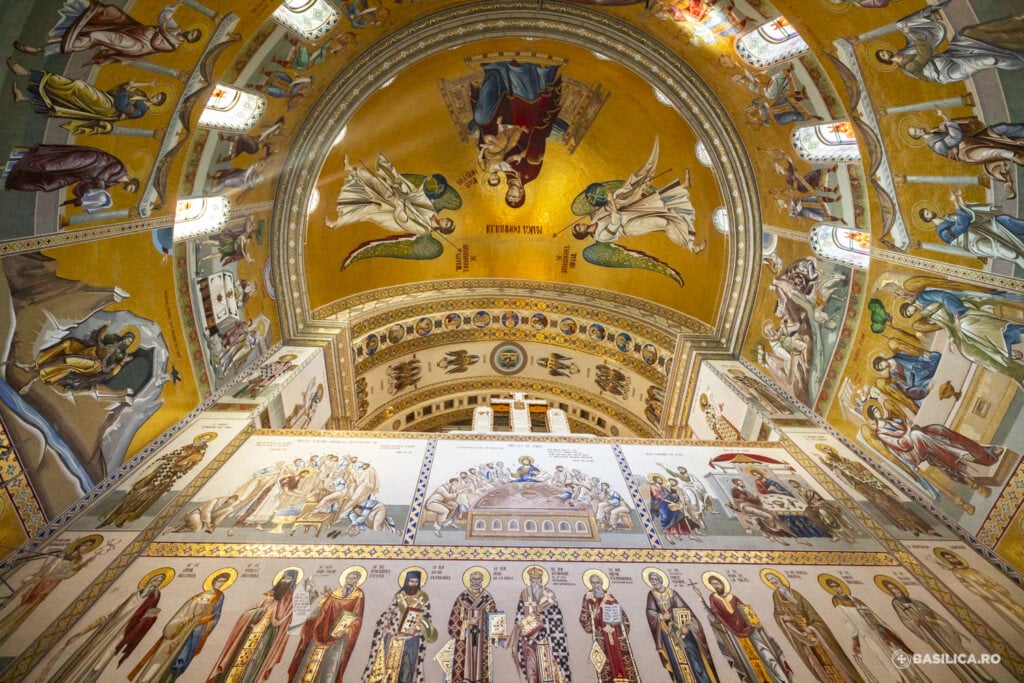
The altar-facing side of the iconostasis, where hierarchs and clergy officiate the service, is also adorned with mosaic artwork. Above, in the dome above the altar apse, the Virgin Mary Platytera watches over. Standing 16 meters tall, it is one of the largest mosaic representations of the Mother of God in the Orthodox world. Photo: Basilica.ro Archive / Mircea Florescu
Mosaic art is the most expressive and valuable form of interior decoration chosen for the National Cathedral. It embodies both spiritual depth and artistic excellence.
Stained Glass Windows
The stained glass windows of the National Cathedral are a standout achievement, crafted using a technique that blends traditional craftsmanship with high-quality modern materials. This fusion has resulted in a project of remarkable beauty and complexity.
These windows were created by Romanian artisans under the guidance of Lucian Butucariu, a professor at the National University of Arts and a specialist in glass and stained glass art.
One of the most impressive accomplishments is the monumental stained glass window on the façade of the Cathedral of National Salvation, depicting the Ascension of the Lord. Measuring 15 meters high and 5.5 meters wide, this masterpiece consists of 29 panels and was completed in a record time of just three months.
The Stained Glass Project
The creation of the Cathedral’s stained glass windows was a landmark endeavor led by Lucian Butucariu. His leadership helped revive a tradition that had been historically limited in Romania. While stained glass works were once primarily imported from Western workshops, the craft saw a revival in the 1970s and 1980s during the restoration of national monuments, forming the first generation of local specialists.
This spirit of innovation and self-reliance laid the groundwork for the entire stained glass project to be executed by Romanian artists and technicians. They undertook every aspect—from material processing to developing advanced execution techniques.
The project was a close collaboration between the artistic vision of painter Daniel Codrescu, who coordinated the cathedral’s iconographic ensemble, and the technical expertise of Lucian Butucariu.
Butucariu independently oversaw the stained glass execution, translating complex compositions into glass and lead.
The first completed windows were in the altar, depicting Jesus Christ surrounded by saintly hierarchs. These works required advanced technical solutions to faithfully reproduce the rich colors and intricate details.
The monumental façade window, illustrating the Ascension of the Lord, stands as a highlight of the project. Completed in just three months by a small but highly synchronised team, its rapid execution was driven by the approaching visit of Pope Francis to Romania (May 31 – June 2, 2019), showcasing the team’s extraordinary dedication.
The stained glass technique combines traditional methods with modern, high-quality materials—most of which were imported from Germany. The process begins with colored glass, precisely cut according to detailed execution drawings. Figurative elements—essential for depicting saints and symbolic scenes—are painted by hand using enamels and grisaille. Each piece is then fired in special kilns at temperatures between 580–610°C, permanently setting the artwork. The final stained glass is mounted in a metal framework.
Precision is key: portrait details and finishes are executed with such care that they remain vivid even when viewed up close.
The project extends far beyond the central pieces. It includes the entire suite of cathedral windows: the rose window on the western façade, 11-meter-high side windows, and both the interior and exterior dome windows. Artist Victor Săraru also contributed significantly, especially to the windows in the apses, helping complete a project of unprecedented scale in Romania.
The durability of these works is ensured by techniques similar to those used in Gothic cathedrals from the 14th to 16th centuries, many of which have survived to this day. The mass-colored glass does not degrade over time, and the painting becomes an integral part of the material. With proper care, these stained glass windows are designed to last for centuries, serving not only as artistic features but also as spiritual and cultural legacies for future generations.
Who Built the Cathedral
The construction of the National Cathedral was a collaborative effort involving designers, project managers, specialized consultants, construction firms, and coordinators from the Romanian Patriarchate.
His Beatitude Patriarch Daniel is the visionary founder who fulfilled the century-old aspiration of the Romanian people to build the Cathedral of National Salvation—a symbol of Orthodox faith and national identity. He decisively led the monumental effort to construct this sacred space, mobilizing resources and energy with remarkable tenacity.

- Coordination team from the Romanian Patriarchate:
Father Nicolae Crîngașu – Patriarchal Counselor and Coordinator of the Monuments and Church Construction Department within the Romanian Patriarchate. He holds a theology degree from the University-level Theological Institute in Bucharest (1987) and a PhD in Theology from Babeș-Bolyai University in Cluj-Napoca (2004). He currently serves as parish priest at Saint Visarion Parish, Capital Deanery II, and has previously overseen the construction of two smaller churches.
Petre Chiuță – Civil engineer and Patriarchal Counselor in the same department. A graduate of the Technical University of Civil Engineering Bucharest, Faculty of Hydrotechnical Constructions (1995), he has served as site supervisor and technical manager since August 2010.
Florin Popescu-Vlad – Civil engineer and Patriarchal Counselor, graduate of the Technical University of Civil Engineering Bucharest, Faculty of Installations (1992). He initially joined the Cathedral project as Site Manager for Bog’Art S.R.L. (2010–2013), overseeing the structural framework, and later became Technical Manager for the Romanian Patriarchate in April 2014.
2) Designers
Architect Nicolae Vlădescu (1927–2014) – Graduate of the Ion Mincu Institute of Architecture (1953), PhD in Architecture (1978), and member of the National Commission for Historical Monuments. He taught at I.A.I.M. and led major restoration projects including the Cotroceni Palace, Snagov Palace, National Art Museum, and Darvari Hermitage. He was awarded the National Order for Merit, Knight rank, for his contributions to Romanian architecture.
Architect Constantin Amâiei – Member of the Romanian Order of Architects (Bacău-Neamț branch), the Romanian Architects’ Union, and the Romanian Urban Planners Registry. He leads the design office Vanel Exim SRL, which won the competition to design the National Cathedral in June 2010. His portfolio includes prominent buildings in Bacău such as the Courthouse, County Hospital, George Bacovia University, and the Ascension of the Lord Cathedral.
Prof. Dr. Eng. Constantin Pavel (1935–2020) – Graduate of the Bucharest Institute of Civil Engineering (1959), PhD in Civil Engineering (1974), and professor of Reinforced Concrete Structures at the Technical University of Civil Engineering Bucharest (1959–2005). He served as doctoral advisor and Dean of the Faculty of Civil, Industrial, and Agricultural Constructions (1984–2000), and chaired expert certification commissions at the Ministry of Transport, Construction, and Tourism.
Prof. Eng. Ștefan Stănescu (1948–2020) – Graduate of the Faculty of Installations at the Bucharest Institute of Civil Engineering (1971), professor in the Department of Thermo-Hydraulic Installations (1971–2008), and PhD in Engineering (1988). A founding member of the Romanian Association of Installation Engineers, he designed and executed the Cathedral’s installations and authored over 50 technical studies and 40 scientific papers.
Prof. Eng. Dan Ionescu – A distinguished university professor whose expertise was vital in ensuring the durability and safety of the Cathedral’s installations.
3) Project Managers
Franco Sticher – Swiss engineer-architect, graduate of the University of Fine Arts in Hamburg, Department of Architecture and Urbanism (1973), with extensive international experience as a technical expert.
Andreas Hauschild – Graduate of the Technical College in Koblenz, Germany. He has managed large-scale construction projects in Romania, Germany, and the UK. From July 2012 to December 2013, he served as Project Director for the Romanian Patriarchate during the Cathedral’s construction.
4) Specialized Consultant
Engineer Eduard Antohie – PhD in Construction Production Systems Management (1996), university lecturer and Director of the Department of Concrete, Materials, Technology, and Management at the Gheorghe Asachi Technical University of Iași. He has authored numerous works on construction project economics and management and has extensive experience as a project manager and site supervisor.
5) Construction Companies
SC Bog’Art SRL – Founded in 1991, Bog’Art is one of Romania’s largest and most respected construction companies with 100% Romanian capital. Known for delivering complex and iconic infrastructure and building projects, the Bog’Art group includes divisions specializing in project management, facades, prefabricated and aluminum production. Bog’Art executed the Cathedral’s infrastructure, including the foundation slab and reinforced concrete structure up to ground level—a technically demanding achievement.
SC Strabag SRL – The Romanian branch of Strabag SE, a leading European construction company headquartered in Austria. A major player in Romania’s construction market, Strabag is known for its advanced technology and expertise in complex projects across transport infrastructure, civil and industrial buildings, and special constructions. Strabag built the Cathedral’s superstructure—the visible part of the building—including massive walls, vaults, domes, and the main tower, a remarkable engineering feat given the building’s scale and seismic requirements.
6) Historical Documentation
Prof. Eng. Nicolae Noica (b. 1943) – Graduate of the Faculty of Civil, Industrial, and Agricultural Constructions at the Bucharest Institute of Civil Engineering (1969). He worked as a design engineer, Chief State Inspector for Construction Quality (1990–1995), and Minister of Public Works and Territorial Planning (1996–2000). He is an associate professor at the Technical University of Civil Engineering Bucharest and Director of the Romanian Academy Library. An honorary member of the Romanian Academy, he serves on the National Commission for Historical Monuments and the Romanian Society for Construction Quality. He authored the volumes The Cathedral of National Salvation: The History of an Ideal(Basilica Publishing, 2011) and The Cathedral of National Salvation: The Beginning of Fulfillment (Basilica Publishing, 2012).