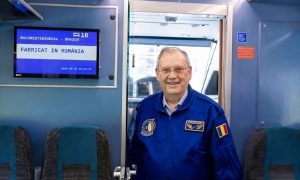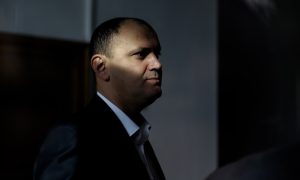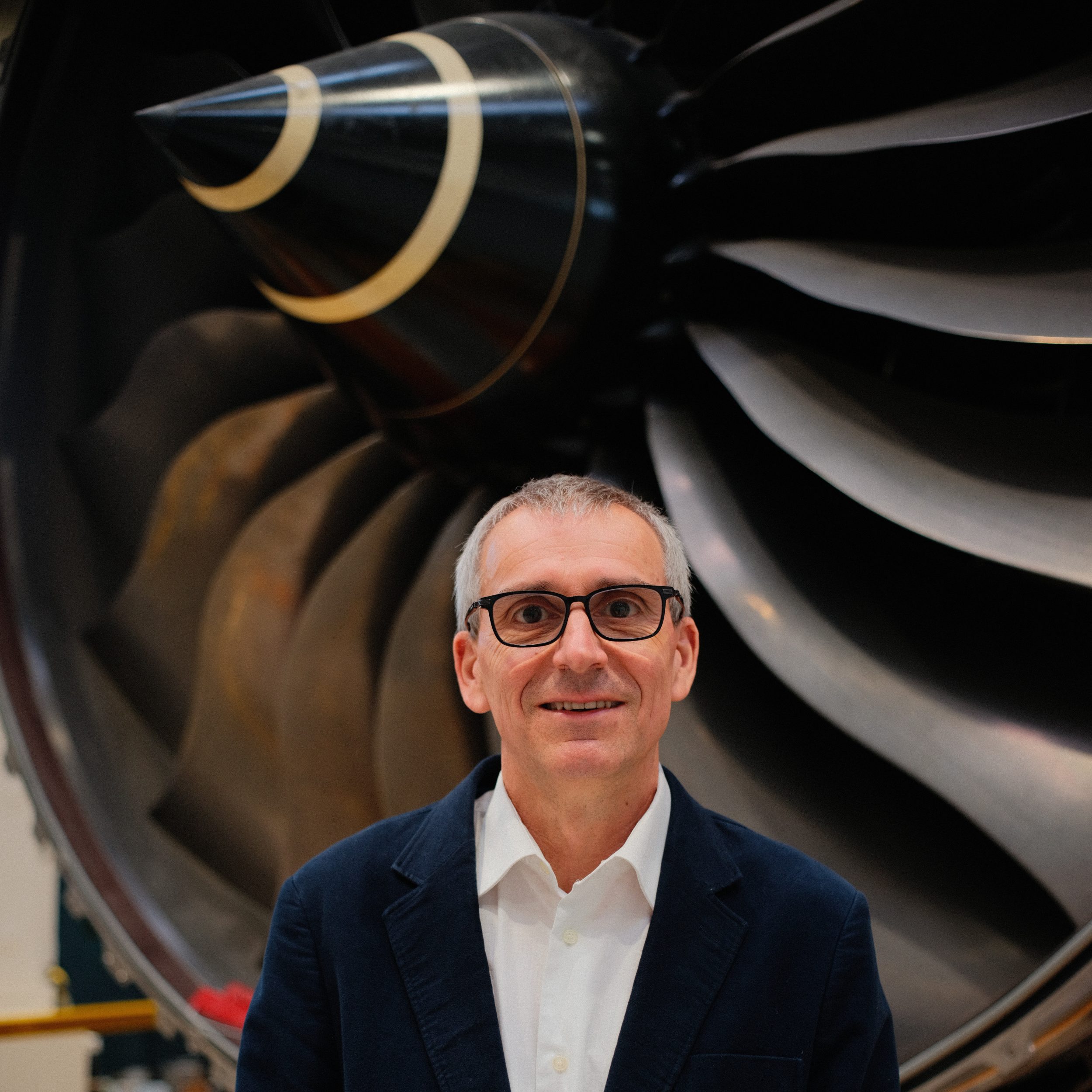

“For 25 years in the UK, I was simply called Dragoș. Being addressed as Professor Axinte makes me reflect on the journey I’ve taken, a path driven, above all, by curiosity.”
- La arme, soldați: Nicușor Dan trimite statul român pe TikTok să combată dezinformarea
- Miruță, învins de CNAIR la Curtea de Apel București
- Joe Biden a dat în judecată Departamentul de Justiție al SUA
- Patria Prima a făcut plângere penală, în baza Legii Vexler, împotriva Asociației Dexonline care a promovat online transformarea cuvântului „CREȘTIN” în „CRETIN”
- Deputații au votat interzicerea înstrăinării acțiunilor deținute de stat la companiile și societățile naționale
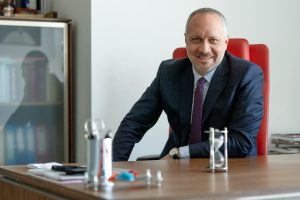
Unreal in its simplicity and modesty, yet profoundly meaningful. This is how Dragoș Axinte, university professor, PhD, engineer, began his message of gratitude upon receiving the prestigious Henri Coandă Award, presented by the Grand National Lodge in partnership with the Romanian Academy, the Ministry of Education and Research, and the Ministry of Culture.
His words didn’t sound like those of someone immersed daily in cutting-edge technological innovation alongside a global giant like Rolls-Royce. They felt more like the reflections of a man who has never forgotten his roots.
Though little known in Romania, Dragoș Axinte’s biography spans 30 pages. Thirty years of research, engineering, published works, trained specialists, innovations, inventions, vision, and passion—yet not a trace of arrogance.

I called him one afternoon to request an interview for the readers of Q Magazine. I was prepared to address him as Professor or Director, but he stopped me with disarming warmth: Call me Dragoș, please.
Perhaps that’s the essence of the entire story. When someone who leads research, oversees project delivery, and shapes long-term strategy at Rolls-Royce UTC on Manufacturing and On-Wing Technology, a center of excellence within a prestigious British university, asks you to simply use his first name, even though he edits an international technical journal and authors scientific papers cited around the world, you realize that true greatness isn’t measured in titles, but in the authenticity with which one expresses themselves.
This isn’t just an interview. It’s a journey into the mind and soul of a Romanian who has turned science into art, and excellence into a way of life.
Childhood Memories
You were born and raised in Romania. Tell me about the environment that first sparked your interest in technical things.
I grew up in Galați, on the very outskirts of the city, where one had the “privilege” of an unobstructed view of the SIDEX ironworks. From there, noise and dust made their way into our daily lives uninvited and without a passport. But strangely, no inspiration for engineering ever came from that industrial scene.
My father worked as an office clerk, so at home, it was my mother who took on the role of handyman although we had almost no tools. The only “tool” in the house was a meat tenderizer hammer, which, luckily, had a flat side. She used it to hammer nails whenever she decided to rearrange the paintings on our solid concrete walls. So, my interest in engineering didn’t originate from home either.
But the interest in technical things came when I met my physics teacher in secondary school, Școala Generală Nr. 11, now Mihail Sadoveanu. I had already heard of him from my brother, who was six years older. His nickname was “Tarzan” because of his blunt, no-nonsense way of dealing with students. Simply I cannot remember his real name as I would like to thank him for those two years of initiation in the “mother of engineering”, i.e. physics. He always wore a blue overcoat, more fitting for a craftsman than a teacher. He was extremely practical, and any grade in his class required both theoretical aspects and hands-on experimentation; a very different approach from that of other teachers. Because of this, many students disliked him. But I appreciated his method. It stood in stark contrast to what I experienced at home, and it made me fall in love with the subject.
From that point my entire formal educational period, and later by giving private tuitions for cash, gravitated around topics of (basic) physics, i.e. “mother of engineering”.
Your engineering career began with an admiration for Tarzan’s unconventional teaching tactics. Was there another moment that sparked your interest in science?
Like any pupil in those days, I had to read Jules Verne’s books, such as Twenty Thousand Leagues Under the Seas, and others. But my mind did not latch onto the technology in those stories. Although I read them as required, they failed to spark any real interest in technology. Neither did my home environment…
However, I spent my summers in my mother’s hometown, Râmnicu Sărat.
There, my uncle was a master shoemaker. I used to sit beside him, absorbing every step of the shoe-making and repair process. But what I enjoyed most was bringing him his warm lunch at noon, delivered to his workplace, a small shoe factory.
It was then that I curiously observed and inspected the sewing machines, fascinated by cams and their movements. Machineries everywhere. Hands, leather and mechanisms working in harmony. It was there that I got my first contact with technology, and I would say I did not feel like a stranger in that environment.
Romania has a strong engineering tradition. How did your studies at the University of Galati shape your technical mindset and curiosity?
The foundation of engineering thinking I owe to the physics teacher at the National College Vasile Alecsandri. Then, going through the first three years at the university was a kind of unexciting learning exercise; making sure that I scored decently, kept my scholarship, and had full holidays so I could spend as much time as possible in the mountains for hiking and climbing.
So, I would summarise my entire university experience as “Two Years and Two Floors – The Shaping of an Engineering Mind” referring to my last two academic years. For me, those two years, which classes were held on the two floors of the then-new TCM building, inspired maturity and respect. Here, the professors treated us as engineers in the making, and this inspired respect for myself as a future engineer and for the profession.
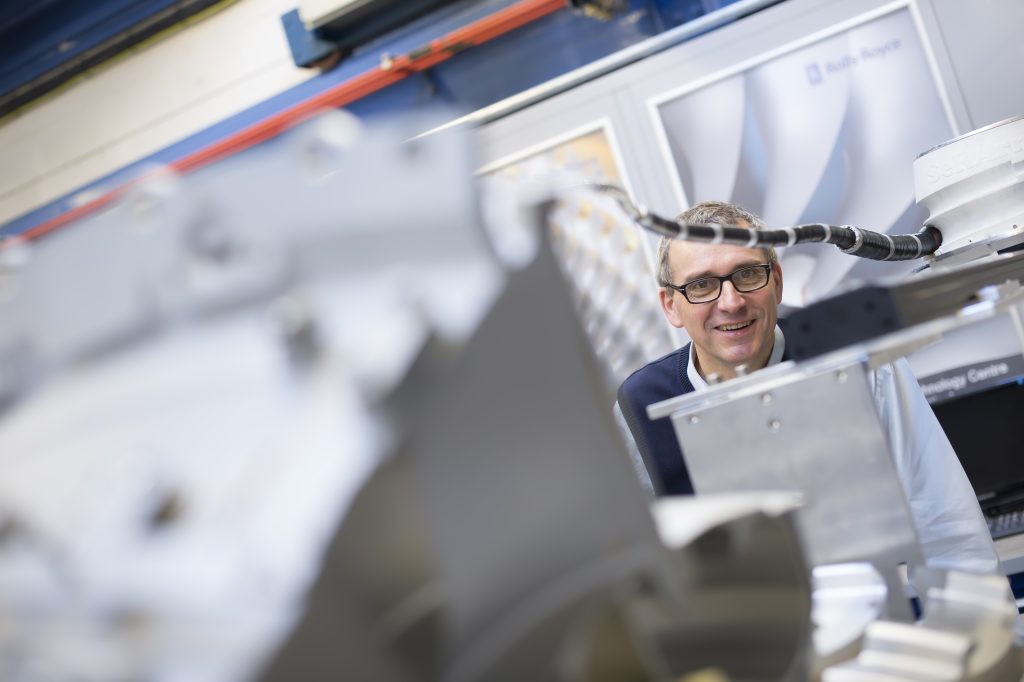
Photo: University of Nottingham
Curiosity about doing things differently was triggered by the final-year project: I wanted to exploit the piezoelectric effect for fine tool error compensation; a topic that my preferred academic supervisor, rightly, said was too complex (and, at that time, not explored?) for that early stage of my career.
As such, I picked a final-year project in designing a 4-degree-of-freedom robot; challenging, but not exciting. I never thought at that time that I would ever come back to the topic after many years with… motivation and genuine curiosity
Towards Excellence
What made you switch from working in the industry to doing international research with the NATO Fellowships?
In industry, I worked for two years at a tool factory in Pașcani. It was there that I developed a strong appetite for innovation, driven by curiosity and experimentation. I believe I filed two or three patents or innovations across different topics, ranging from machinery to powder metallurgy. It was a somewhat chaotic approach, but I was happy to be able to innovate.
After that came a few years at a research institute, then called ICPPAM, located on the SIDEX steelmaker platform. I was fortunate to be supervised by researchers with strong practical experience and to work on projects within (semi-)industrial environments. These offered interesting practical challenges but were, honestly, stressful and frustrating for someone longing to breathe some “fresh air” as there was not much freedom in choosing truly “free” research topics.
After completing my PhD on a SIDEX-related topic, I needed a step change. Opportunities for gaining research experience abroad were very limited for someone like me; an industry researcher outside of academia. By chance, I found out about NATO research fellowships available for researchers from countries aspiring to join NATO. Through my PhD supervisor from the University of Galați, I contacted a few professors from NATO countries to explore hosting opportunities.
To be honest, the NATO fellowship was the only realistic path that I was aware of being applicable to me as an industry researcher. There were no obligations related to teaching material development, student exchanges, or university partnerships. It was simply a chance to get the funding and do what I truly loved: research.
After completing my PhD on a SIDEX-related topic, I needed a step change.
Opportunities for gaining research experience abroad were very limited for someone like me; an industry researcher outside of academia. By chance, I found out about NATO research fellowships available for researchers from countries aspiring to join NATO. Through my PhD supervisor from the University of Galați, I contacted a few professors from NATO countries to explore hosting opportunities.
To be honest, the NATO fellowship was the only realistic path that I was aware of being applicable to me as an industry researcher. There were no obligations related to teaching material development, student exchanges, or university partnerships. It was simply a chance to get the funding and do what I truly loved: research.
As I said, fellowships for someone like me, coming from industrial research without access to academic networks, were few and far between. For me NATO fellowship offered a clean break from industry-driven topics while enabling a smooth transition to more academic investigations… but not entirely, because the timing and location of such fellowships can make a significant difference.
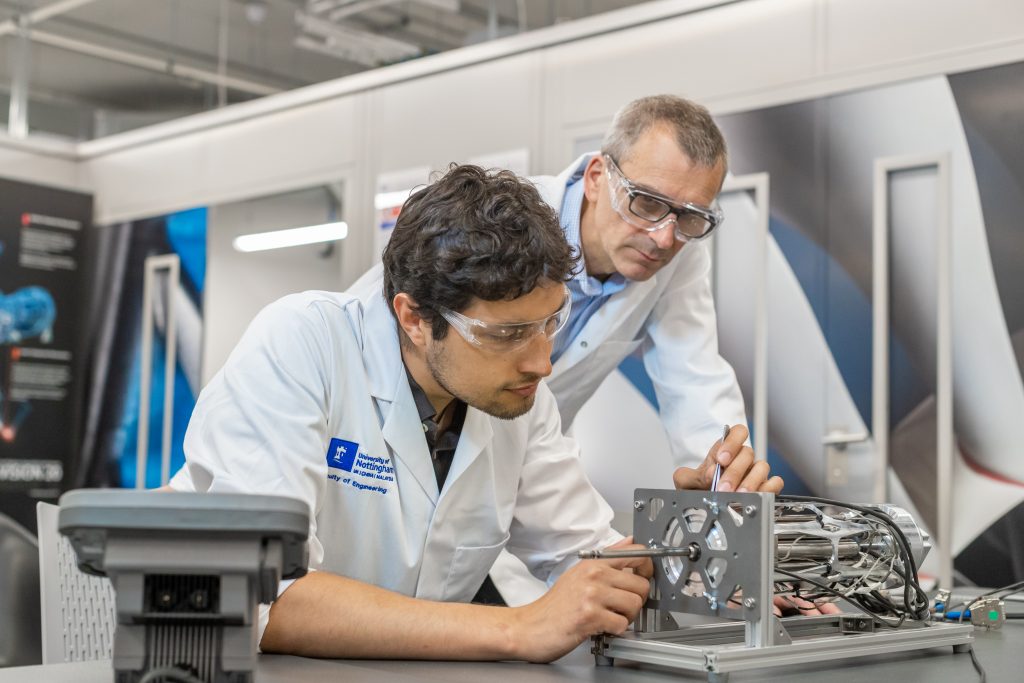
Rolls-Royce UTC (University Technology Centre) on Manufacturing and On-Wing Technology is a research centre based at the University of Nottingham, dedicated exclusively to aerospace applications. Although Rolls-Royce is best known for its luxury automobiles, this centre focuses on manufacturing technologies and direct aircraft intervention, with no connection to the automotive industry. It is part of a global network of UTCs established to give Rolls-Royce access to advanced academic research tailored to specific manufacturing and engineering needs. The Nottingham centre specialises in areas such as component fastening, mechatronics, and on-wing inspection and repair using robotic systems. Photo: University of Nottingham
You were awarded two NATO Fellowships—an impressive distinction. Please tell us about it. What was the application process like, and how competitive were these opportunities at the time?
Indeed, it might sound impressive, but even now I think it is not as glamorous or well-known as other fellowships. What I really appreciated, though, was the very clear application procedure, all summarized in a simple brochure: you needed a research proposal, a supervisor willing to host you, and nothing more.
First time I applied it was for four fellowships in Italy with a known professor from and failed. The following year, I applied again with the same professor, but this time for only three fellowships. I still remember someone from CNR, the Italian Research Council, contacted me to say that I had forgotten to sign the paperwork and that they could not consider my application unless I urgently sent the signed forms again. That was when I discovered DHL… Later, I also learned that I had been ranked second out of the three available fellowships.
Still, as far as I remember, the rule with NATO fellowships was one-time funding in one country, with no extensions. So, having had a first taste of academic research freedom, I had to move on.
I applied to Denmark and the UK, again with reputable academics who, as I later learned, had checked on my performance in Italy before agreeing to support my case. That was when I realised how small the academic world really is, and how dedication to your assigned work or project can build your credibility and make you employable internationally.
Italy was a short stint and a timid start, but I held on to that opportunity like a drowning person grabbing a piece of driftwood. So, embarking on a one-year research position in Denmark felt, for me, like stepping onto a more stable floating platform; one where I could finally begin, slowly, to paddle…
What were the biggest surprises when you first moved to Italy and Denmark for your fellowships — culturally and academically?
Many bicycles moving around, disciplined on dedicated lanes… Smiling and fair people. Good English everywhere. Order and cleanliness all around.
Actually, I did not see much outside the university; I was working non-stop, from 8 a.m. to 10–11 p.m. every day, including weekends.
I was driven by a relentless hunger to develop myself into a researcher of some credible profile.
At the university: a super-relaxed atmosphere that encouraged innovative thinking; knowledgeable, well-connected academics; lots of patience for a (not-so-young) researcher with limited international experience like me; solid facilities.
Most surprising: the absence of any hierarchy between academics, researchers, technicians, or administrative staff. Everyone was on a first-name basis. But do not mistake that for informality in technical discussions: conversations were sharp, focused, and to the point.
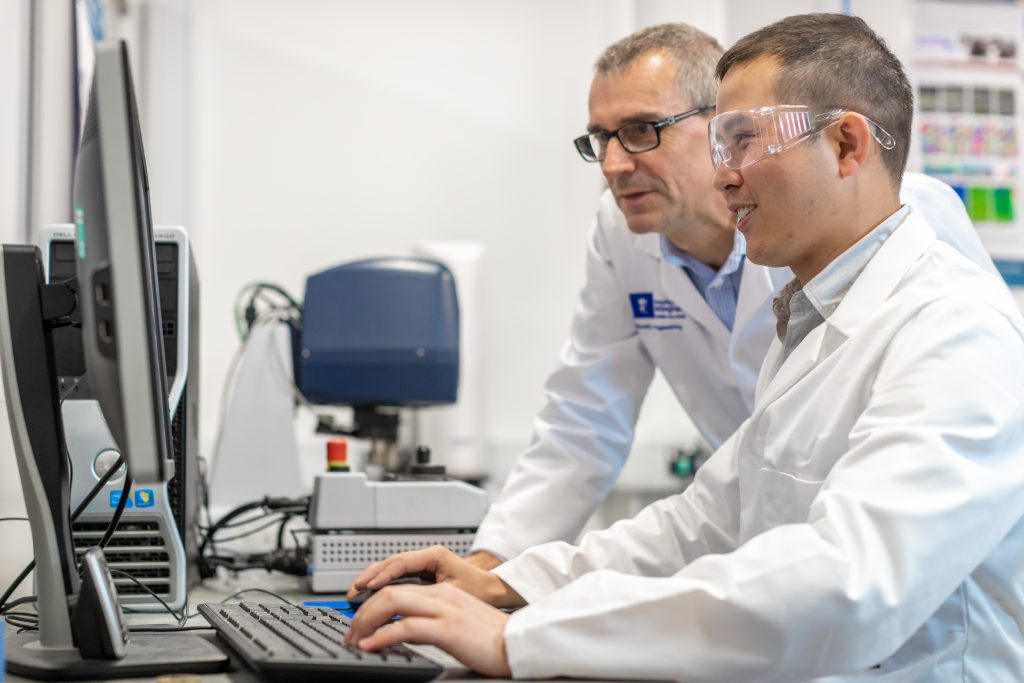
Photo: University of Nottingham
Can you tell me about the projects you worked on, their objectives and the roles you played?
In Italy: What can you really do in four months of research? I would say now: not much. But back then, I considered the work meaningful. I focused on analysing process monitoring setups for machining: selecting and evaluating sensors to detect different process outputs. It was also where I wrote my first research report in English, at the end of the fellowship.
In Denmark: The topic was somewhat repetitive: I tested a series of environmentally friendly cutting fluids in turning operations. Still, I had to set up my own experiments, calibrate equipment, run trials, and produce regular reports. In short: Scandinavian research discipline. It was instructive and beneficial. Once I learned the methods, the structure gave me enough “free time” to write papers for good academic journals, contribute to research proposals, and search for my next research position.
Post NATO
You moved to the UK more than 20 years ago. What attracted you to the University of Birmingham and then to Nottingham — was it a specific project, a mentor, or a new opportunity?
By reading academic papers and exploring the webpages of leading research groups in my field, machining, I discovered that the UK offers a highly dynamic research environment: internationally open-minded, with a transparent approach to recruiting researchers, and home to some of the most reputable groups in the field.
The machining group at the University of Birmingham offered me my first real research position; meaning, not a fellowship funded by a government scheme. It was only a one-year contract, a single opportunity that I, once again, grabbed with both desperation and hope. It turned out to be an excellent learning environment: demanding supervisors, weekly progress meetings, and direct interaction with an industrial partner, to whom I had to formally report every three months.
Next came the opportunity at the University of Nottingham, with its newly launched Rolls-Royce University Technology Centre (UTC) in Manufacturing Technology, which was seeking researchers in machining. This was a three-year position involving various industrial projects, where I also became the lead researcher on a new FP6 European project. It opened the door to a wealth of opportunities: entry into international academic and industrial networks, frequent industrial visits and reporting, student supervision, participation in international research and industry meetings, and freedom to pursue new ideas beyond the main project scope. Crucially, I had full support to publish academic papers, i.e. an essential part of any academic career.
Here, I want to make a point about our, i.e. the UK, academic system, as I have experienced it.
It offers true freedom to define your own research direction regardless of your academic rank.
You can choose to work solo to join, or even build a research group. There is no “boss” in the research sense: if you have ideas, initiative, and the willingness to work hard, there is virtually no limit to what you can achieve. I liked it then, and I appreciate it even more now that I have seen other academic systems. It worked for me: what started more than 20 years ago as a one-person effort has grown into a group of more than 40 people today, with substantial research facilities acquired through many nationally/internationally awarded projects. So, I always tell my younger academic/research colleagues: take the lead and propose new topics as the research landscape is changing very fast.
What does a typical day look like for you at the University of Nottingham? Is it mostly lab time, meetings, teaching, or something else entirely?
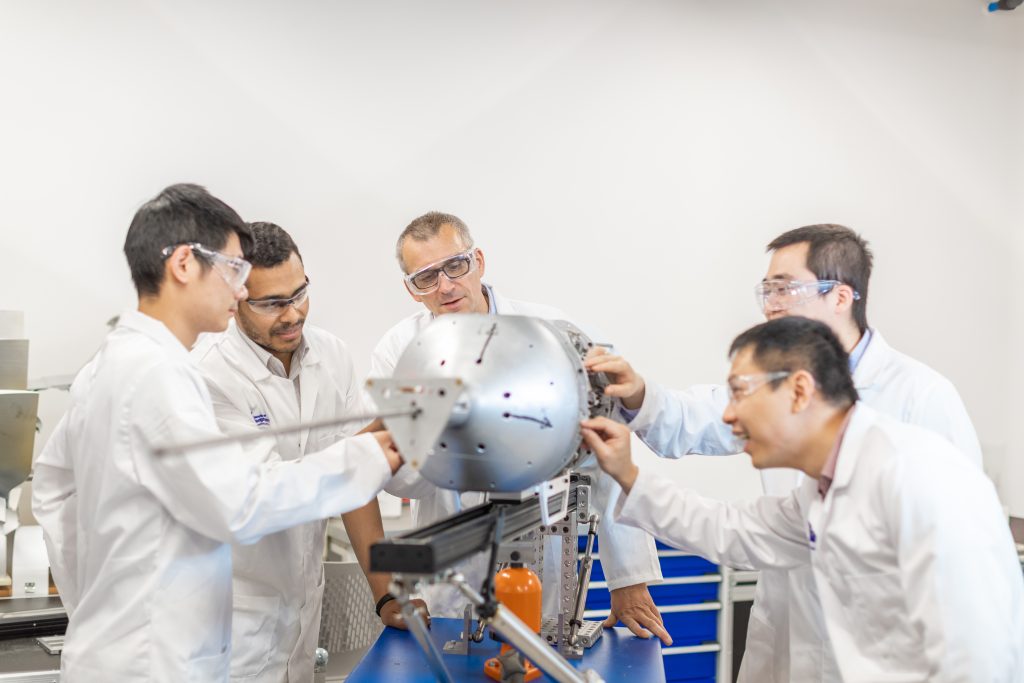
Photo: University of Nottingham
As the Sports Centre is part of the University, a typical day starts there at 6:15 a.m., waiting for the gates to open at 6:30
I spend 75 minutes in the gym, followed by 30 minutes of indoor climbing. I begin my actual workday around 9:00 a.m.
Since my main focus is research, I keep management meetings to a strict minimum. This is possible because I recruit research staff with great care, after several interview rounds. As a result, the members of my group are highly self-sufficient and capable of managing their own projects effectively. This frees up my time to do what I truly enjoy and where I can contribute most: research.
Three days a week are dedicated to active involvement in my students’ and researchers’ work. By “active,” I do not mean routine reporting meetings. These are focused, technical discussions centered on recent results and ideas. I allocate at least one hour per researcher every one or two weeks, depending on their project.
The remaining two days are blocked off for my own thinking: developing research ideas, writing proposals, and drafting papers.
The most exciting part of my week, though, happens at least three times when I co-write papers with my researchers standing side by side (as I have a standing desk ). The researcher presents the core argument and initial draft, and then, through intense discussion, questioning, and critiques, we rewrite the paper, often line by line, most of the time by me. It is an unusual method, but it works. Attentive reading of every word, challenging the assumptions and the results in person, and engaging in critical debate often sparks new insights, not just for academic output, but also for practical engineering solutions and new project ideas. These sessions easily take up 8+ hours a week, and I genuinely love every minute of it. It is adrenaline-pumping.
In fact, my current “job satisfaction” depends on these intellectually charged sessions. And, surprisingly, or perhaps not, the researchers seem just as eager and excited for them. It is intense, productive, and honestly, a lot of fun!
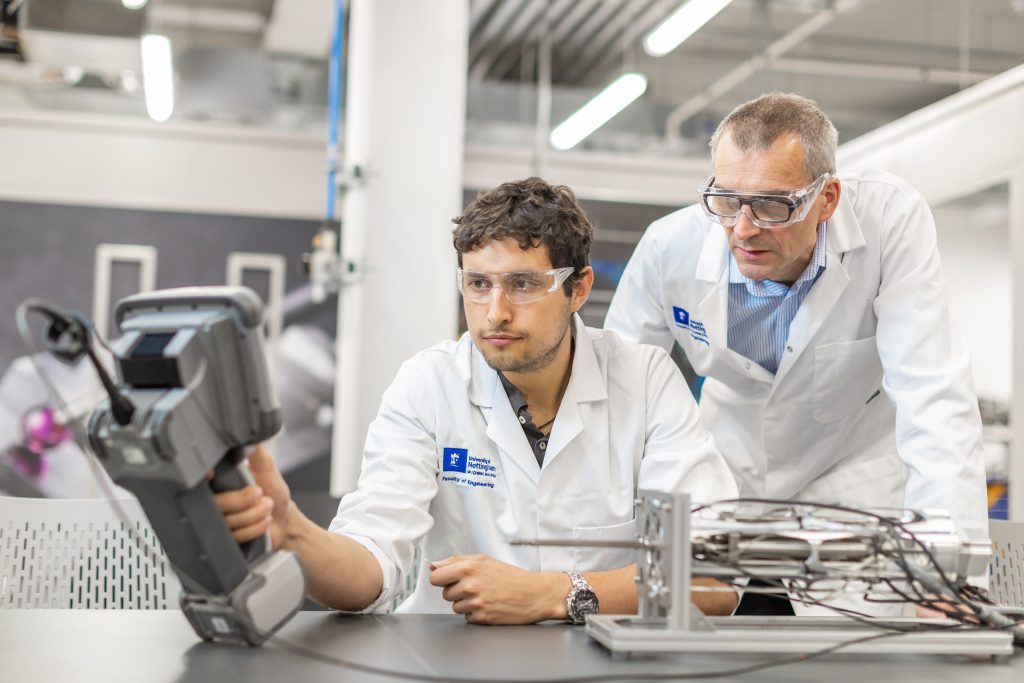
Photo: University of Nottingham
What is Rolls-Royce UTC in Manufacturing and On-Wing Technology?
Here, a clarification is needed. The UTC is not an institution on its own but a research centre that is an integral part of the University of Nottingham. It is a long-term partnership between the University of Nottingham and Rolls-Royce.
The UTC has four main research strands, each led by an academic colleague: manufacturing technologies; tooling and sensing; mechatronics; and specialist robotics. As can be guessed from these, the topics covered are quite broad, offering great flexibility in tackling various aspects related to the development of new methods for the manufacture, inspection, and repair of gas turbine engines.
What is your role there?
As Director of the Rolls-Royce UTC in Manufacturing and On-Wing Technology at University of Nottingham, I am responsible for research supervision and project delivery, the development of research strands and future strategic research directions, as well as interactions and communication with senior technical representatives of the company.
How do you split your time between academic responsibilities and your role as Director of the Rolls-Royce UTC?
Here, I have to say that I am very grateful to the University of Nottingham, as it has, for many years, recognised my contribution to the partnership with Rolls-Royce and has, to a large extent, relieved me of many administrative duties related to academic activities. As a result, my time is dedicated mainly to research, along with a reasonable quota of teaching for master’s students and supervision of finial year postgraduate students
Which courses do you most enjoy teaching, and are there any projects that energize and excite you?
While being a research-focused academic, I strongly believe there is a duty, doubled, in my case, by genuine pleasure, to share knowledge through teaching.
I teach a manufacturing-focused module for master’s students during the autumn semester. It is actually an exciting time for me, as it pulls me out of the usual research-focused routine while offering opportunities to inspire the next generation of engineers and identify potential PhD candidates for our group. The only inconvenience is that I have to cycle to the other campus, and in autumn and winter, heavy rain is the norm in the UK…
I also contribute to an aerospace manufacturing module by teaching machining technologies for gas turbine engines. It is quite fun, as I take the students into the labs for demonstrations and open discussions during the seminars. Not to mention their excitement when they see a full Rolls-Royce Trent 1000 engine in our lab!
Looking back at your decision to settle in the UK, how did that shift shape the course of your life both professionally and personally?
The UK, with its meritocratic academic system, made me realise that anything is possible if you work hard and take initiative. Compared with many other academics, I started my academic career quite late, but I believe those many years as a researcher built a solid foundation that accelerated the later stages of my career.
I always tell my younger academic colleagues: it does not matter when you get the promotion; what truly matters is whether you earn international recognition and are seen as a deserving occupant of that position.
In that sense, I would say that moving to the UK significantly accelerated my transition from researcher to academic, as there is a strong belief in academic meritocracy here.
As for my family, we are very proud parents of a first-class medicine graduate from the University of Cambridge and proud grandparents of a wonderful little boy. What more could we have hoped for?
Do you ever reflect on what your career might have looked like had you stayed in Romania?
I have asked myself many times how it would have been. Honestly, I do not have a clear vision of that scenario. I can hardly imagine that I would have worked at an university; nor do I think I would have started a company.
However, for many years after my desperate/stressful search for research positions in the early 2000s, I had a recurring dream: that if I returned to Romania, no one would want to employ me there…
Not sure if that is still not true now!
On Technology
What emerging trends in advanced machining and finishing technologies do you believe will have the most significant impact on the aerospace manufacturing industry in the next decade?
As there is an increasing need for ever more heat-resistant materials, such as advanced nickel-based superalloys and ceramic matrix composites, a major challenge is how to maintain high material removal rates (i.e. productivity) while ensuring the required workpiece surface integrity. This brings a set of very interesting research opportunities in exploring the phenomena that govern changes in material properties at the micron and sub-micron levels beneath the machined surface.
Looking ahead, I anticipate that the development of advanced aerospace materials will require greater use of grinding technologies rather than conventional cutting methods. In particular, I refer to grinding operations that employ novel grinding wheel designs and advanced cooling methods. Of course, this transition to smarter grinding technologies must be supported by rigorous certification of the workpiece surface integrity
Can you share some insights on your approach to collaborating with industry partners and translating your research on advanced manufacturing technologies into practical applications? How do you ensure that your innovations are effectively integrated into existing manufacturing processes and what challenges have you encountered in this process?
The route is quite well established: novel methods and procedures, whether patented or not, need to progress through the Technology Readiness Levels (TRL). As a research-focused unit, our group focuses on the generation of concepts (TRL 1) and develops them, most often to TRL 4 (lab demonstration), and sometimes to TRL 6 (demonstration in relevant environments).
For further progression toward full implementation at TRL 9, the industry follows specific internal and external routes.
Nevertheless, it is a significant achievement for us to work in collaboration with the industrial partners and to see ideas advance from TRL 1 to TRL 4 or 6, as someone might assume, there might be something on these to make the industrial partners invest in this exercise.
How do you see robotics evolving in the context of on-site repair and maintenance, particularly in dangerous or extreme environments?
While manufacturing technology developments may be incremental in the coming years, the field of in-situ inspection and repair opens doors to truly out-of-the-box thinking.
We are likely to see smaller, slender, thinner, squishier, and more agile robots, operating at a superlative level, capable of navigating into tiny spaces through teleoperation.
This is fantastic news for curious researchers eager to break free from the, I would say, somewhat boring conventional robots that are now common even in classrooms.
And it does not stop there. This challenge for robotic in-situ inspection and repair of high value assets (from power plants, off-shore platforms and mining to space exploration) drives the development of other exciting enabling technologies: miniaturised end-effectors that can perform manufacturing tasks in restricted or extreme environments; digital twins to support remote operations; autonomous navigation and cooperation between multiple robots. Exciting times lie ahead for anyone curious enough to explore!
What role do you think artificial intelligence and machine learning will play in enhancing manufacturing processes, and how can these technologies be integrated into existing processes?
Some manufacturing processes can be so complex that accurate models are difficult to develop. What about using AI to help derive physics-based models for these? Research on this topic is emerging, and there are some pioneering academic papers being published. From more practical aspects, we are now seeing AI-supported control systems and, I anticipate, it will not be too long before we see these implemented on common manufacturing processes.
What examples can you share of successful industry collaborations you’ve been involved in, and what made them effective?
When it comes to manufacturing technology, we are very proud to have played an important role in developing machining methods for the RR1000 Ni-based superalloy, now used in the hot-section components of Rolls-Royce aeroengines. What made this collaboration a success? A crystal-clear brief from the industrial lead of the research programme, seamless teamwork between material scientists and machining experts, and a passionate drive of the joint team to overcome tough technical challenges.
But where things get really exciting is in the realm of on-wing technologies. Together with Rolls-Royce, we developed one of the world’s most slender snake robots, COBRA (5 meters in length and just 8.5 mm in diameter), designed for the remote delivery and manipulation of various end-effectors (e.g. inspection and repair tools) in tightly confined environments such as gas turbine engines. This project received The Engineer Award in 2023 and was featured in media outlets including the BBC.
Looking back, I think the real win here was our decision, over a decade ago, to take a chance on an entirely new research strand focused on snake robots. It was a bold move, fuelled by curiosity, and it paid off in many aspects, from industrial impact to academic contributions.
Now, we are moving forward with other exciting concepts for specialist robots and who knows, we might just achieve a similar level of industrial impact as we did with the snake robots
In your opinion, what skills and knowledge are essential for the next generation of manufacturing engineers, and how can they be developed?
While a solid foundation in mechanical engineering remains essential, future manufacturing engineers will need to connect more closely with other branches of engineering, e.g. electrical, materials, control, mechatronics, automation, and even computer science and human factors. Few manufacturing technologies that rely solely on mechanical engineering are likely to survive in the future. Cross-disciplinary approaches will become the norm.
This shift will likely demand new methods of education, curriculum design, and training at various levels; and, I anticipate, that this will trigger significant changes in how we teach and prepare the next generation of engineers.
What potential applications do you see from advanced manufacturing technologies in aerospace that would benefit other industries, such as automotive or healthcare?
I see a strong commonality between the aerospace and medical industries. Both rely on advanced materials, require in-situ “inspection/repair” (whether in industrial systems or human surgery), demand miniaturized tooling to access hard-to-reach areas, depend on highly skilled operators, and share a critical focus on avoiding failure that could impact end users.
Our group benefits greatly from this research overlap, as we are actively engaged with world-leading industrial partners from both sectors.
THE GREAT LOVE
Looking back on your career, what advice would you give to researchers or engineers looking to make a meaningful impact in the field of manufacturing engineering?
Keep your basics, e.g. physics, maths, and chemistry, refreshed for as long as possible. Stay informed in your field not just by exploring commercial information on the internet, but also consulting technical/academic publications (there is plenty of free-access information).
Challenge conventional thinking and step outside your “cell” (whether that is a company or academic/research institution) to expose yourself to new ideas, practices, and methods. Failing when trying something new is not a shame. Have role models at different stages of your career to guide and inspire you.
Get closer to real-world applications and industrial needs; this not only will help you grow as an engineer, but it will also be an endless source of new scientific ideas and research opportunities.
Avoid diving into “management” too early in your career. Use those first years to accumulate deep technical knowledge; there will be plenty of time later to climb the “greasy rope” toward managerial roles!
What do you want to leave behind as a person, a teacher, and a scientist?
As a researcher: a legacy of curiosity and the ambition to explore. Without natural or nurtured curiosity, one cannot truly be called a researcher.
As a teacher: the passion for lifelong learning at any age, in any subject.
As a person: care and support for others in their personal growth and career development
What is your greatest love, whether professional or personal?
In equal measure (but not competing): family and mountaineering/climbing.
Was there a moment in your life when you felt you couldn’t go on, and God stepped in and became your strength?
Yes. Undergoing a cancer operation later in life, especially when compared to those who endure such challenges with quiet strength at a very young age, made me feel ashamed should I ever have lamented it.
That experience humbled me deeply and ultimately made me much stronger, both personally and professionally.
TECHNICAL POWER
Dragoș Axinte is Editor-in-Chief of the International Journal of Machine Tools and Manufacture, a leading publication in the field of manufacturing engineering, and the Journal of Materials Processing Technology, a top-tier journal in materials processing.
He has published over 200 articles in specialised journals and holds more than 30 international patents, developed in collaboration with industry partners.
He has served as a visiting professor at prestigious academic institutions across Asia and Europe, including GuangDong University of Technology, Harbin Institute of Technology, Shanghai Jiao Tong University, Northwestern Polytechnical University in Xi’an (China), and the Royal Institute of Technology (KTH) in Stockholm (Sweden).
Dragoș Axinte has received numerous awards recognizing his innovative contributions to engineering, including:
2023 – The Engineer: Manufacturing Technology Award, presented by The Engineer magazine for the COBRA robot
2021 – Impact Award from the EPSRC UK-RAS Network, for the COBRA robot
2021 – Third Place at the SPRINT Robotics Awards for “Revolutionary Collaboration in Advancing the Adoption of Inspection and Maintenance Robots”
2018 – The Engineer: Collaborate to Innovate Award for the REINER robot
2018 – Knowledge Exchange and Impact Award from the University of Nottingham – “Inspirational Winners” category, for the REINER robot