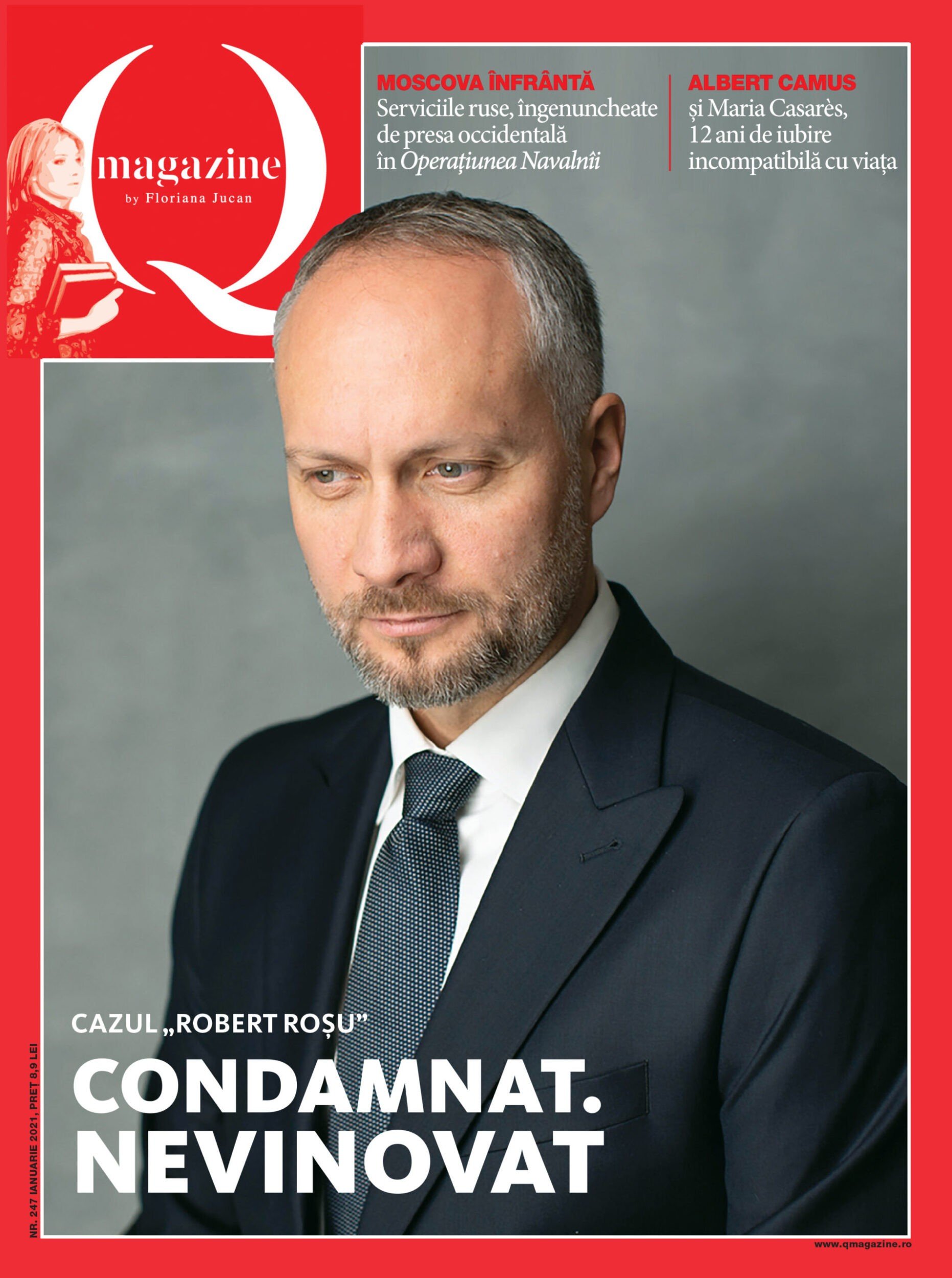

#alăturideRobert has become a national movement – Q Magazine investigates why.
- PSD l-ar putea accepta pe Eugen Tomac în funcția de premier
- ÎCCJ, atac fără precedent la guvernul Bolojan: Demonizează Justiția și transformă magistrații în ținte
- Budăi, despre Bolojan: Un om care a reușit ceea ce părea imposibil
- Primul pas către „împăcarea” sistemului de sănătate public cu cel privat
- Caz de AUR! Un obiectiv finanțat de români a fost inaugurat cu steagul Ținutului Secuiesc. Europarlamentar: Au lipsit cu desăvârșire însemnele statului român
On 17 December 2020, a panel of the High Court of Cassation and Justice consisting of Florentina Dragomir, Ioana Ilie and Ionuț Matei issued the final court decision in the Băneasa Royal Farm Case. The National Anticorruption Directorate (DNA) indicted businessman Remus Truică, Prince Paul-Philippe Al României, journalist Dan Andronic, as well as Israeli businessmen Tal Silberstein, Benyamin Steinmetz and Moshe Agavi for the illegal restitution of the Baneasa Royal Farm and the Snagov Forest on 18 May 2016.
The DNA prosecutors accused them of various acts perpetrated between 2006 to 2013 with a view to obtain highly valuable assets claimed by Prince Paul, including the Snagov Forest and the Băneasa Royal Farm.
The lawfulness of Prince Paul’s recovery of the assets had been validated by several judges, in first instance court as well as on appeal, but the prosecutors dismissed these civil court decisions as not good.
Two of these judges were in fact summoned to the DNA and inexplicably ended up declaring, years after they had rendered those decisions, that maybe they “wouldn’t take the same decision today”.

Asked by a lawyer why he changed his mind, one of the judges answered: “I am only human!”
These are the sentences:
• Remus Truică – 7 years imprisonment (no probation)
• Paul-Philippe al României – 3 years and 4 months imprisonment (no probation)
• Nela Ignatenko (ex-Păvăloiu) – 5 years imprisonment (no probation)
• Dan Andronic – 3 years imprisonment (probation) and unpaid community service for 60 days at Bucharest Integrated Assistance Centre or the General Directorate of Social Assistance and Child Protection of District 3
• Robert Mihăiță Roșu (lawyer) – 5 years imprisonment (no probation)
• Tal Silberstein (Israeli businessman) – 5 years imprisonment (no probation)
• Benyamin Steinmetz (Israeli businessman) – 5 years imprisonment (no probation)
• Apostol Muşat (former mayor of Snagov) – 4 years imprisonment (no probation)
• Marius Andrei Marcovici – 3 years imprisonment (probation)
• Lucian Claudiu Mateescu – 3 years imprisonment (probation)
• Gheorghiță Dragomira – 4 years imprisonment (probation)
• Corina Teodora Dicu – 4 years imprisonment (probation)
• Ioan Stoian – 4 years imprisonment (probation)
• Niculae Dima – 4 years imprisonment (no probation)
• Nicolae Jecu (former Ilfov prefect) – 4 years imprisonment (no probation)
• Caterina Popa – 4 years imprisonment (no probation)
• Gheorghe Olteanu – 4 years imprisonment (no probation)
• Valentin Delcea – 4 years imprisonment (no probation )
In June 2019, the Brașov Court of Appeal as first instance court in the case sentenced Remus Truică to 4 years imprisonment, Paul-Philippe Al României and Nela Păvăloiu to 3 years imprisonment, all on probation, and S.C. RECIPLIA S.R.L. to a criminal fine of RON 200,000. Nineteen other defendants in the case, (i.e. Israeli businessmen Tal Silberstein, Benny Steinmetz, Moshe Agavi, journalist Dan Andronic, lawyers Robert Roșu and Corina Teodora Dicu, Marius Andrei Marcovici, company director and former adviser to Călin Popescu Tăriceanu, Lucian Mateescu, as well as Theodor Chiriac, Gheorghiță Dragomira, Gheorghe Sin, Ioan Stoian, Apostol Mușat, Niculae Dima, Nicolae Jecu, Caterina Popa, Gheorghe Olteanu, Valentin Delcea, Marin Gostin), were acquitted.
As far as Robert Roșu is concerned, the Brașov Court of Appeal found that for some of the charges “the crime does not exist”, and for the others “the crime is not provided by the criminal law”.
FROM “THE CRIME DOES NOT EXIST” TO A 5-YEAR PRISON SENTENCE
The case of Robert Roșu, recently sentenced by the High Court of Cassation and Justice to five years in prison for activities that are specific to his profession as lawyer, has caused uproar in the legal world and in the Romanian society at large.
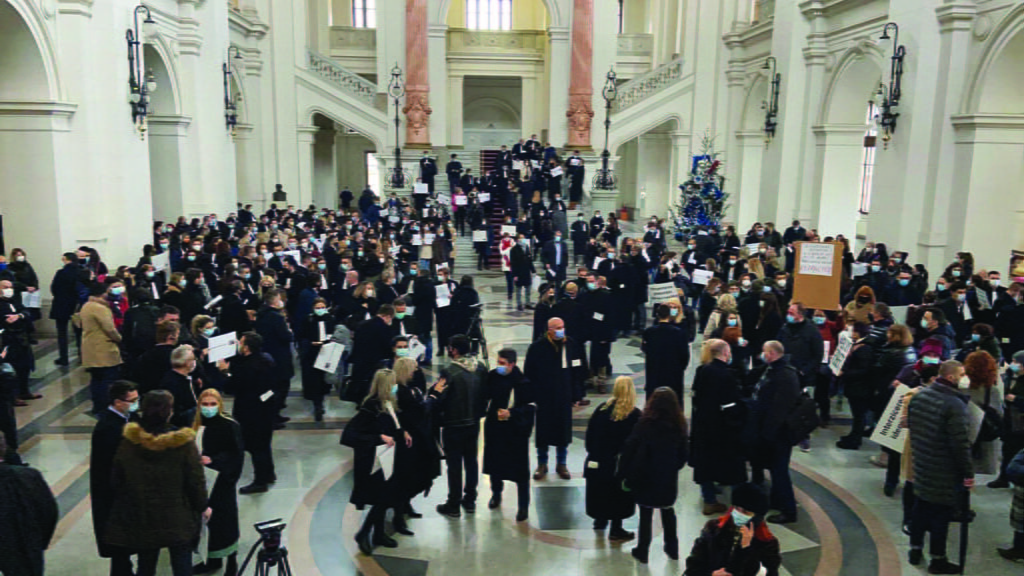
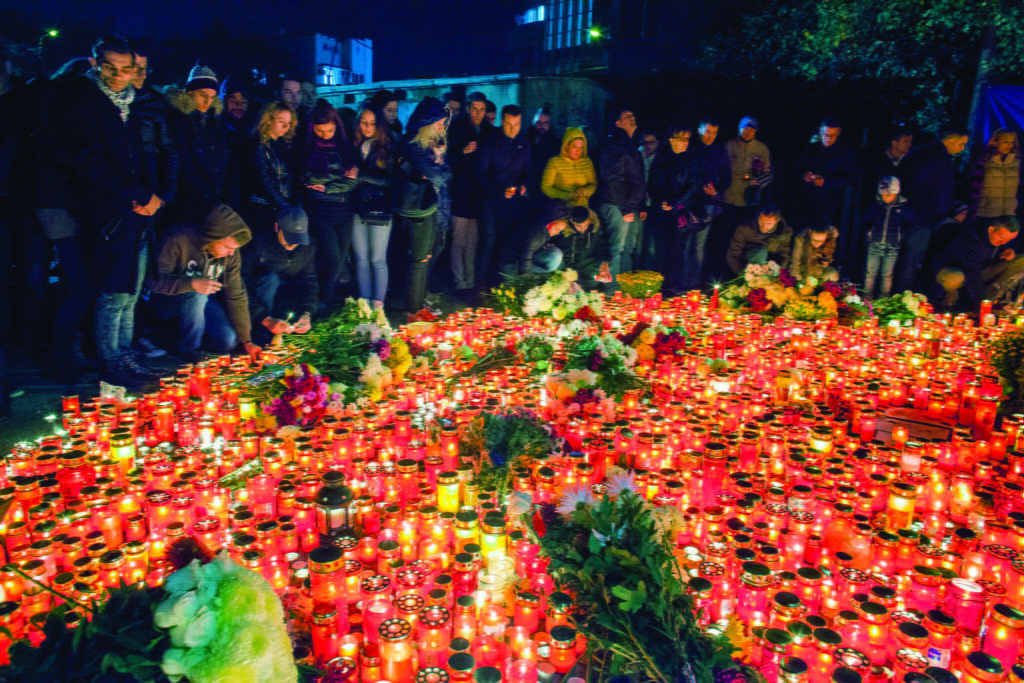
Immediately after the decision of the infamous “black panel” of the HCCJ, consisting of Florentina Dragomir, Ioana Ilie and Ionuț Matei, a huge wave of revolt and solidarity with lawyer Roșu surged on the social media networks and among lawyers, who organized protests throughout the country under the #alaturideRobert slogan.
The National Union of Romanian Bar Associations, as well as over 20 local bar associations throughout the country have strongly protested against this unprecedented abuse, objecting that a lawyer can never be identified with his client and that performing professional activities in the name and on behalf of a client based on and within the limits of the law and of the normal and proper exercise of the profession can never be qualified as crime.
Indeed, the case stirred reactions among magistrates as well. Numerous judges and prosecutors expressed concern about the breaches, pressures and possible new abuses in the judiciary.
This is because, in this criminal case, the prosecutors called as witnesses the very judges who had rendered the final court decisions (one of the pillars of the rule of law) that Robert Rosu, as lawyer in the name and on behalf of his clients, acted to lawfully enforce. These judges were made to retract their own decisions by mere witness statements. Such prosecutorial “approaches” not only hinder the courts’ ability to deliver justice in the name of the law, but also undermine the unadulterated confidence in the act of justice that judges and courts should inspire in society.
However, in order to better understand this case and, especially, the unprecedented solidarity it created among lawyers, we should start with… the search.
Robert Roșu’s ordeal began, ironically enough, in another month of December – December 2015 – with an abusive search at the headquarters of his law firm.
In less than 24 hours, an overzealous prosecutor of the famous “elite unit” of DNA Brașov turned Robert Roșu from a dedicated lawyer with a flawless professional conduct, into suspect, defendant, detained for a day in prison and thereafter placed under house arrest. To complete the public spectacle of abuse and humiliation, the lawyer was dragged from Bucharest to Brașov and paraded in front of the TV cameras in handcuffs.
This, while European law (Directive (EU) 2016/343 on the strengthening of certain aspects of the presumption of innocence) demands Member States’ public authorities NOT to apply physical restraint (handcuffs, ankle cuffs, glass boxes, cages) in court or in public unless such measures are required by special security circumstances and in order to prevent the suspect/defendant from evading criminal prosecution or trial.
It was obvious however that in the eyes of some Robert was NOT presumed innocent. Instead, a presumption of guilt was cast deliberately on him, meant to create a perception, or certainty among the public that he was guilty as charged by the DNA.
Why would DNA Brașov investigate a case concerning lands located in Bucharest and Ilfov, is certainly one of the many questions without answer in this case. But Justice works in mysterious ways, so we’d better stick to our story.
In the indictment, the overzealous case prosecutor brought preposterous accusations against lawyer Roșu, among which that he was far too convincing in his pleadings and thus intimidated the restitution commission, or that he drafted the sale-purchase contract between the parties, or that he based all the claims filed for his clients on final and irrevocable court decisions. Nothing about money, kickbacks or suitcases, as one would expect for such a harsh conviction.
In short, the prosecutor indicted Roșu because he did his lawyer’s job too well. Had he been a mediocre lawyer, he might have gotten away with it, but he was too good …
Fortunately, throughout the five-year trial there were judges who saw the absurdity of the charges.
In March 2016, a judge of rights and freedoms of the HCCJ found that Robert Roșu had only performed activities usual for any lawyer and released him from house arrest, and then, in June 2019, the court of first instance (Brașov Court of Appeal) acquitted Robert Roșu of all charges on the grounds that “the crime does not exist”.
However, the nightmare began in the appeal stage, where the case was not so randomly (that is, rather not randomly at all, as a number of legal experts have already pointed out publicly) assigned to the so-called “black panel”. Based on the very same evidence as presented at the first instance court, this panel (led by Florentina Dragomir, recently revealed by LUJU to have never taken her oath of office as judge, and thus still a prosecutor at heart and mind) moved from “the crime does not exist” to the completely opposite conclusion, found Robert Roșu guilty, and sentenced him to five years in prison.
How is it possible, based on the same evidence and the same laws, for someone to be acquitted in first instance because the crime he was charged with does not exist, only to be sentenced to five years in prison on appeal? Another question left unanswered, which should not be permitted where a man’s fate is at stake.
To complete the absurdity and make Kafka turn in his grave in envy, sometime between the two court decisions, the acquittal and the conviction, lawyer Robert Roșu sued DNA and the Romanian State for abusive detention measures and won, both in first instance and on appeal.
However, beyond questions and answers, absurdity and abuse, one thing is certain: an innocent man sits now in prison, away from his family. A man who trusted the Romanian judiciary is waiting for justice to be done, even at the eleventh hour.
Pastor Martin Niemöller’s warning comes to mind, more apt today than ever:
“First they came for the Communists and I did not speak out because I was not a Communist. Then they came for the Socialists and I did not speak out because I was not a Socialist. Then they came for the trade unionists and I did not speak out because I was not a trade unionist. Then they came for the Jews and I did not speak out because I was not a Jew. Then they came for me and I wanted to speak out and to protest, but there was no one left to hear me and to speak out for me.”
After coming for so many, now it’s time for them to come for the lawyers. That is, it’s time for them to take away everybody’s right of defence.
In an attempt to bring light to this case as soon as possible, Q Magazine publishes excerpts from the statement given by lawyer Robert Roșu as defendant before the first instance court on 2 November 2018, and obtained exclusively by our magazine.
So far, only prosecutors and judges have spoken.
It’s time for lawyer Robert Roșu to speak now!
WHO IS ROBERT ROȘU
“I have been a lawyer since 2000, and since 2005 I am a Partner at Țuca, Zbârcea & Asociatii law firm. Ever since the establishment of the law firm, I’ve dealt with the administrative and organizational management of the litigation department, which now has 45 lawyers.
I practiced as a lawyer in litigation and arbitrations, I represented the Romanian State in international arbitrations as member of the legal team in cases such as EDF v. Romania or Noble Ventures v. Romania, where we obtained that the Romanian State was spared damages of approx. half a billion euros.
I am the author of several articles published in various specialized publications; in 2015 I published a book on insolvency and bankruptcy at the Monitorul Oficial publishing house (the Official Journal of Romania). I was also a member of the legal team assisting the Ministry of Justice in the project analysing the impact of the New Civil Code and the New Code of Civil Procedure.
I have represented clients in hundreds of litigations and arbitrations and my work in pro bono cases is well-known, e.g. I provided legal assistance in support of the victims of the Montenegrin accident, and for the families of the victims of the Colectiv Club fire.
I am married and I have two children.
I consider myself innocent. Absolutely innocent.
I acted in the service of my clients, in accordance with the principles of the legal profession, in full compliance with the law and the professional ethics.
The activities I carried out, even as they are described in the indictment report, are specific to the legal profession; in essence, I am being accused of having certified a contract, of having drafting legal documents, of having drafted and filed two notifications to public institutions, based on legal powers of attorney, and of having assisted or represented the client before courts, public authorities or the notary public.
The DNA specialists prepared an accounting and financial report for the period 2006-2015 which shows that I did not carry out any professional or financial activity other than that of lawyer, that I earned income exclusively from my legal profession, that I paid my taxes, that I have no financial or contractual relationship with the other persons in this case or with companies owned by my clients. I would like to emphasize that all my activities were carried out as a lawyer of Țuca, Zbârcea & Asociatii law firm, I did not enter into any private legal assistance contracts with any of the parties, and it was the law firm which was authorised to act by the clients.
I acted in these cases as a lawyer, alongside many colleagues from the law firm. More than 60 lawyers worked in these cases for the client Al României Paul Philippe and for Reciplia SRL, and most of the legal assistance contracts or powers of attorney can be found in the case file.
I am confident that the court investigation will reveal the truth and I would like to remind that the HCCJ’s judge of rights and freedoms held in his 11 March 2016 resolution that none of the evidence produced by the prosecution by that date indicates that I would have perpetrated any crime, and that all my activities were carried out in full compliance with Law No. 51/1995 on the legal profession, and with the Lawyers’ Statutes.
I would underline at this point that from that date of 11 March 2016 and up to 21 May 2016, when the indictment report was issued, no new evidence was produced as far as I am concerned, therefore I deem that all the conclusions of the judge of rights and freedoms who released me without any restrictive measure are still correct today.
Having studied the approx. 25,500 pages that accompanied the indictment report, having reviewed all the legal arguments used over the years by me and my colleagues in defending the clients, I am still certain that those legal arguments are correct and I am firmly convinced that I would proceed today in the same manner as far as my arguments are concerned, according to my conscience and my professional skills.
THE FACTS AND, ESPECIALLY, THE LAW
Since it is being alleged that some of the arguments that my colleagues or I used were incorrect, I would like in addition to describing the facts as known to me to make a few brief considerations of civil law in direct rebuttal of the charges brought against me.
Surely no one can say today that Al României Paul Philippe is not the grandson of Carol II, that he has no right to inherit him or other members of the royal family with whom he is tied by kinship. These matters have been ruled upon by numerous court decisions, especially by the Court of Appeal and the High Court of Cassation and Justice.
I was interested to study the court decisions existing in the case file, as well as other final and irrevocable court decisions regarding Al României Paul’s claims both in cases on which I worked with my colleagues and in other cases, in connection to which I did not carry out any legal work.
There are over 20 court decisions, over 45 judges who determined on the rights that the indictment report now considers non-existent.
All these court decisions show, on the one hand, that Paul Philippe is an inheritor of Carol Mircea Grigore, his father, of Carol II, his grandfather, but also of his aunts and uncles on his grandfather’s side: Nicolae, Elisabeta, Maria, Ileana. At the same time, it has been determined that the assets of the royal family of which he is a member were seized by the Romanian State abusively, most of them under Decree No. 38/1948, which has already been found absolutely null and void by the Romanian courts.
I recall here that HCCJ Decision No. 954 of 14 February 2012 completed the exequatur procedure of the Lisbon 1955 decision. I also recall that the Lisbon decision ruled that Mircea Grigore is a son of Carol II with all the rights deriving from this capacity, and that this decision was subsequently recognized in France. In 1957 and 1991, an exequatur was initiated in Romania to recognize this decision.
In essence, the prosecution’s argument is that Paul Philippe could not have been regarded as Carol II’s heir prior to 2012, when the exequatur procedure was completed in Romania. This opinion, which is fundamental for the prosecution, is profoundly wrong for two reasons.
First of all, because we are dealing with a decision on matters of civil status, which is always declarative, rather than constitutive of rights. In a paternity lawsuit, when it is found that the defendant is the father of the plaintiff’s child, the father acquires said parenthood status from the child’s birth and, as far as certain rights are concerned, even from the very moment of conception, not from the date that court decision is passed.
It is juridically incorrect to say that Paul Philippe became Carol Mircea Grigore’s son and Carol II’s grandson at the age of 54. In addition, we have court decisions that looked into these arguments. I refer here to the very decisions taken in connection to the Snagov property, where the courts ruled that the Lisbon decision is a legal fact that cannot be ignored, and that the completion of the exequatur procedure cannot establish rights for the claimants but rather, at the most, consolidate such rights.
Indeed, I have noticed that the prosecution in support of its charges criticizes the lawfulness of all the notarial documents that Paul Phillippe used in the procedures.
These documents are inheritance certificates, certificates attesting to his capacity as heir, donation offer and acceptance, or rights assignment agreements. These documents have been concluded by 8 Romanian notaries public and 5 foreign notaries public and lawyers.
The prosecution considers absolutely each and every one of these documents to be fabricated, forged or otherwise unlawful, even though not a single one of these notaries public was heard, and in violation of the legal provisions which set forth that authenticated documents enjoy a presumption of lawfulness and can only be found null by a civil law court (given that under Romanian law there is no ipso jure nullity or conventional nullity).
As lawyers, and in compliance with the law, my colleagues and I started from the presumption that these documents are lawful and to this day I have no doubt as to their lawfulness. Moreover, the HCCJ stated that lawyer Robert Roșu has no right to even question their lawfulness.
I will now describe the facts as I know them, in hopes of helping to establish the truth in this case, because, in my opinion, the description of the facts put forth by the prosecution is either erroneous, or fails to take into account events that are extremely important, or misinterprets events or activities.
The first contact that my colleagues and I had with the client Reciplia SRL was on 20 September 2006, when we were presented with a rights assignment agreement that had already been drawn up and we were told that previous negotiations for an assignment of these litigious or patrimonial rights had been conducted between OL, who was Prince Paul’s lawyer, IS, and Reciplia SRL.
On 21 September 2006, the first agreement for assignment of litigious rights was signed. I met Paul Philippe 5 minutes before the signing of the agreement and the signing was also attended by OL, as Prince Paul’s lawyer.
Therefore, my colleagues and I had zero input in the negotiations, in the actual contents of the agreement, in the pecuniary values established as obligations, etc. I certified this agreement under number 277 of 21 September 2006, in accordance with Article 3 of Law 51 – a professional activity that is absolutely normal and consists in certifying the parties’ identity, their signatures and the contents of the document.
On 2 October 2006, a legal assistance contract was concluded with Reciplia in accordance with the laws and regulations, which contract also covered the certification of the first agreement and all subsequent legal work related to the due diligence report and what followed.
An interdisciplinary team of 15 lawyers prepared the due diligence report, solely based on the documents made available by lawyer OL, who had managed all Prince Paul’s files between November 2005 and September 2006 and had all these documents.
After approximately 3 weeks of legal work, a report of over 500 pages was drawn up, which analysed 15 assets out of the over 40 assets indicated in Decree 38/1948. This was a complex and difficult work for the law firm that had only been established a year and a half before, and which at that point did not enjoy the reputation that the prosecution unjustifiably claims.
The findings of the due diligence report were positive; nothing in the report indicated that Prince Paul did not have the rights he claimed and, most relevant for the case at hand, the chapter concerning the Snagov Forest provided that the risk for Prince Paul not to take possession of the Fundul Sacului property was minimal, considering the court decisions which had been rendered up to that point and the county commission decisions already issued under the law.
As for the Băneasa Farm, the report indicated that the asset had undoubtedly been part of Carol II’s estate and that administrative procedures were required, while at that time the file was with the entity that held the asset, i.e. Bucharest Mayor’s Office.
Throughout this period, neither my colleagues nor I had any lawyer-client professional relations with Prince Paul. He was assisted or represented at all times by Mr. OL.
Under the agreement concluded on 1 November 2006, Prince Paul undertook to grant powers of attorney to the law firm for representation purposes exclusively in connection with the restitution proceedings, because under their agreement the parties owned percentages of those rights.
I never had any doubts as to the lawfulness of that agreement. At the time, many lawyers participated to the drafting or signing of such agreements and the agreements, per se, do not raise any issues of lawfulness.
I never witnessed any discussion of illicit character, any promise made to Prince Paul, any question from the latter about the concrete manner in which certain restitutions were carried out; at the time of the signing, I was not aware of the specific stage of the litigation for very many files.
After 15 January 2009, when Prince Paul sold to Reciplia SRL the part of the Băneasa Farm that had been recovered, the two parties, Reciplia SRL, represented by Țuca Zbârcea & Asociații, and Prince Paul, represented by P.R. & Asociații, became involved in court disputes against one another, that materialised in dozens of notifications and lawsuits (this can be verified on the courts portal), which implied mutual accusations between the parties as to how the rights and obligations under the 2006 agreement had been fulfilled and observed.
Never throughout these proceedings or in any of these documents did any of the parties mention that any unlawful acts would have been committed during the restitution proceedings, or that the 2006 agreement or the subsequent addenda would have been fraudulent arrangements, or merely a method to create an appearance of lawfulness.
Both parties, with more or less grounds, claimed violations of contractual rights, which in and of itself confirms that those agreements were lawful and valid.
Although I was asked about these lawsuits during the criminal investigation, and they are mentioned in the prosecutors’ procedural documents, the indictment report makes no mention of these disputes, which misrepresents the facts.
Another important event was the resolution not to prosecute, issued by DNA in connection with the restitution of the Snagov Forest, a matter that I was not aware of at that point. I was not aware of any investigations related to either the Snagov Forest or the Băneasa Farm, where another resolution not to prosecute was issued in 2013.
Importantly, after I left the project, my colleague GT obtained a favourable decision from the Bucharest Tribunal, namely Decision 2146 of 6 December 2013, which is now final, and which implicitly declares the partial restitution of the Băneasa Farm as lawful. I had no contribution to the handling of that case whatsoever.
To summarise, these are the facts as I knew them.
During the 7 years in which I was part of the Țuca, Zbârcea & Asociații legal team that was professionally involved in those cases, I never had any doubt or uncertainty as to the lawfulness of the procedures that my colleagues or I carried out, and my professional belief was repeatedly reinforced by the dozens of favourable court decisions.
I always believed that the arguments I used are correct and I do so to this day.
I believe that there is no ground to move a commercial dispute among the signatories of certain contracts to the realm of criminal law.
I will briefly discuss now the repossession of the Snagov asset. In essence, I am accused of having sent two written notifications asking the competent authority to grant possession to the client, while it is known that the law expressly imposes on the authority an obligation to grant possession of the asset.
Neither I, nor my colleagues had any contribution to the preparation of the administrative file, I did not submit any papers to that file, I never went to the headquarters of the public authority, I never met any public official from Snagov Townhall, the Forest Range or Romsilva.
At the time when I sent the two notifications, which were in fact drafted by lawyer ME, the Ilfov County Commission had issued decisions, the Buftea District Court had also issued Decision No. 1872/2003 – that is, then, 4 years before I even had any contact with this case – which decision ascertained the existence of Paul Philippe’s rights with respect to an area of 10 ha of the Snagov Fundul Sacului Forest and, at the same time, Romsilva’s motion to annul Decision No. 7/2004 of Ilfov County Commission had been finalised on the merits, appeal and final appeal.
Subsequently, Romsilva applied for a revision, which was also dismissed. I shall also submit this decision to the case file. I therefore knew that, overall, 5 courts of law and 11 judges had established that Paul Philippe’s claims in relation to this real estate were lawful.
I did not have, and I still do not have any doubt on the lawfulness of this proceeding and the lawfulness of the repossession, and I mean here exclusively the legal matters in the administrative or litigious restitution case file. I am not aware of any other matter outside the legal matters.
I will not analyse those court decisions here.
I shall, nevertheless, give just one example in relation to decision No. 1872/2003 of the Buftea District Court. During the trial, I saw certain judges were heard as witnesses, and questions being asked whether it is lawful for a court decision to be given in a motion seeking to have a right ascertained where, as per the prosecution, a motion to realize the right is always available in such matters.
This analysis is profoundly wrong. A constant jurisprudence was formed in 2003-2006 according to which, once the special restitution laws were passed, an ordinary claim of property based on Articles Nos. 480-481 of the Civil Code became inadmissible. Consequently, a motion for ascertainment was perfectly grounded.
Moreover, starting from 2006, an inconsistent jurisprudence appeared in relation to this matter, which caused the General Prosecutor to submit a final appeal in the interest of law on 4 October 2007; in that final appeal in the interest of law the General Prosecutor stated that the motion to realize the right is inadmissible.
The very same person who signed that final appeal in the interest of law as General Prosecutor is now the prosecutor who signed this indictment as lawful and grounded, and I cannot understand why the Prosecutor’s Office held one view in 2007, and a different view in 2015.
It has been argued that the two notifications would have constituted a justification for the authority to grant possession. But the granting of possession was in reality an obligation imposed by law with an expressly provided term of 60 days, so I do not believe that any public official needed any justification to meet his obligations.
In this context, I have to say a few words about the prosecution’s argument in relation to Decision No. 1/1941 of the High Court of Cassation and Justice. This document was brought to the knowledge of the Țuca, Zbârcea & Asociații lawyers after August 2007, as a result of it being submitted by AV in an ongoing dispute.
I remember that several lawyers from Țuca, Zbârcea & Asociații briefly analysed this document and concluded that several possibilities existed: either to raise, by way of objection in an ongoing trial, the unlawfulness of the abusive takeover act issued by the Legionary State of Antonescu, or to file a separate motion to have the nullity of this act established by the court.
The conclusion reached by our team of lawyers was that any type of endeavour would be dismissed as inadmissible, because the document had no stamps, no signatures, and was not even an original. Otherwise put, it was a document void of any legal relevance.
Apart from these brief considerations, which I shall further expand upon in writing, I emphasise that this so-called decision has absolutely no connection to the Băneasa Farm asset, as it referred exclusively to the Snagov Forest and, even so, there is no document subsequent to this decision to show that the State would have managed or possessed this asset prior to Decree No. 38/1948, which is the true takeover act, and which, as I said before, was found null by the Arad Tribunal in a court case of Mr. V.
Although this document has no legal relevance, I emphasise so as to be exhaustive on this matter that I was not aware of its existence when I sent the notifications, or at any time prior to the completion of the repossession, in which I was not involved anyway.
Turning now to the Băneasa Farm. As to the restitution of an area of the Băneasa Farm, I am accused of sending letters and notifications to the ICDPP, and of participating, in my capacity as lawyer, in the two meetings of the board of directors of 2 September 2008 and 26 September 2008.
First, I personally did not send any letter, memorandum or notification to the ICDPP in connection to Paul Philippe. Several memoranda accompanied by documents were indeed sent by Prince Paul’s lawyers prior to 2007 and, subsequently, by fellow lawyers from Țuca, Zbârcea & Asociații.
I only sent one letter including the development site plan, provided by Mr. AB, and I attended the two meetings of the board of directors.
The prosecution puts forward many legal arguments in an attempt to demonstrate the unlawfulness of this restitution. Allow me to reply to all these arguments in writing. Paul Philippe demonstrated his capacity as heir by civil status documents and by certificates attesting his capacity as heir, the entire documentation kept on the administrative file being submitted by the ICDPP to the case file. There are no doubts that the asset was the property of Carol II.
Băneasa Farm is listed in Decree No. 38/1948, which was found null by Romanian courts of law. At the same time, there are over 15 documents in the case file that indicate that the asset was the property of Carol II. Not even the Communist State denied this matter.
Another argument used by the prosecution refers to the legal nature of the land and its location, in an attempt to demonstrate that the asset would be outside the built-up area and/or agricultural land and, consequently, the applicable law would be Law No. 18. Besides the constant jurisprudence from the High Court of Cassation and Justice showing that, where Law No. 18 is applicable instead of Law No. 10, the solution is to redirect the case to the competent court, not to dismiss it, I personally counted 7 or 8 documents dated prior to 1948 which show that the asset was located within the Băneasa Township. The documents mention “belonging to the Băneasa Township”.
At the same time, there are two town planning certificates in the case file showing that the lands are located inside the built-up area. I do not understand why Certificate No. 1031/27/1/27.03.2008, found on pages 237 to 239 of Volume 8, is being ignored and allegations are still being made that the land might have been located outside the built-up area.
Also, agricultural assets located inside the built-up area are subject to Law No. 10/2001, not to Law No. 18, as Law No. 10 provides at Article 8(I) that “agricultural lands already claimed under Law No. 18 fall outside the scope of this law”, which obviously does not apply to the case at hand. Moreover, applicants possessing such a town planning certificate are not bound to produce additional evidence because, according to Law No. 350/2001, the town planning certificate is a mandatory administrative act.
At the same time, it is argued that the asset would have been public property and as such not available for restitution, unless first transferred to the State’s private property under the procedure set forth in Law No. 213/2008.
There is a vast jurisprudence from the High Court and from the ECHR which shows that the assets abusively taken over by the State, such as those listed under Decree No. 38/1948, which was found null by the courts of law, are to be returned to the rightful owner, irrespective of their legal status: public property, private property, any other legal status, by virtue of the restitutio in integrum principle.
To think otherwise is to accept that the State may abusively expropriate the private property of an entity or person by means of an administrative act, and then transfer that private property to the public property of the State, to the effect that the person concerned would never be able to reclaim it.
I met the representatives of the ICDPP exclusively during the meetings of the board of directors of 2 September 2008 and 21 September 2008, which I attended on the basis of powers of attorney.
I have never met with any public official, any employee of the ICDPP outside these formal meetings of the board of directors.
During the meeting of the board of directors of 2 September, I had two limited verbal interventions: I said that the land was located inside the built-up areaon the takeover date, because it belonged to the Băneasa Township, which is fully evidenced by the documents in the case file, and I also said that the identification by way of GPS is not necessarily conclusive, since I knew from previous judicial experiences that it could provide erroneous data and I deemed that an expert report for the identification of the land would be useful.
These were my only verbal interventions during this meeting of the board of directors, as is in fact recorded in the minutes of the meeting.
I attended this meeting of the board of directors based on Article 25(2) of Law No. 10, which clearly provides that the authority is under an obligation to invite the applicant to assert his viewpoint.
Therefore, I firmly reject the accusation that I would have attended the meeting with a view to influencing with my own, or my client’s arguments, the members of the board of directors, and that I had no place at that meeting. In this respect, please note that Article 38(2) of the law provides that the public institution commits a misdemeanour punishable by a fine of up to RON 5,000 if it fails to invite the applicant and hear his viewpoint, therefore the applicant’s presence, assisted by his lawyer, was an obligation for the institution.
During the meeting of the board of directors of 21 September 2008, I had one single verbal intervention, after I had consulted with my client over the telephone, when Mr. O requested that certain experiments that were in progress according to the ICDPP’s current activity be completed.
The client agreed, to the extent the decision was favourable, to allow for such experiments to be completed. This is also recorded in the minutes of the meeting.
This is my analysis of the facts and events of which I was aware.
As a lawyer, alongside many other colleagues, I have exercised my profession freely, independently, according to my professional expertise and my professional conscience.
I have not committed any crime. I shall never change this position. I had the obligation and the right to protect the client, the obligation and the right to put forward his legal viewpoint, to protect his legitimate interests, to use strategies, arguments in order to coherently present his rights according to the interpretations which I assigned to the law.
I am obligated under the law to subject the law and the jurisprudence to radical criticism, on the understanding that sometimes the courts of law and even the Constitutional Court in their practice undergo jurisprudential shifts, and this often happens at the lawyers’ insistence to lay out the truth before the judge.
The deontological accusations laid against me are primarily aimed at the lawyer-client relationship and, implicitly they fall within the remit of the bar association of which I am a member.
I have not breached any statutory, legal or deontological rule, and not all deontological breaches trigger criminal liability; there exist disciplinary liability, administrative liability, etc. I have never been subject to any disciplinary investigation, not to mention any other kind of investigation.
The independence of the lawyer and of his/her reasoning are necessary conditions for the exercise of the client’s right of defence and the ex post factum scrutiny from any authority can only have discouraging effects on how lawyers exercise their profession.
These are also the conclusions of many ECHR judgments, which even state that the lawyer is under the obligation to defend his/her client zealously (Radobuljac v. Croatia) and, also, that the lawyer’s arguments must not be subject to such critical scrutiny as long as they are not offensive and are pertinent to the case (to this effect, Nikula v. Finland).
#alăturideRobert

“The National Union of Romanian Bar Associations (UNBR) deems unacceptable that lawyers be subject to criminal repression for the advice given and pleadings made in their capacity as representatives. The huge discrepancy between the two court decisions concerning lawyer Robert-Mihăiță Roșu reveals the weaknesses of the system, with serious consequences on the credibility of justice.
The Permanent Commission supports any measure that the Bucharest Bar Association will take with a view to actively protesting, by any means, including by refusing to participate in the court sessions of the panel that ordered the conviction of the lawyer for the advice and representation he gave in the exercise of his profession.” –The National Union of Romanian Bar Associations

“In observance of the independence of justice and reaffirming that all citizens are equal before the law, the Council of the Bucharest Bar Association maintains its position […] that the exercise of the legal profession within the limits of the law is not, and cannot be qualified as a violation of the law.” – Bucharest Bar Association

“The darkest day of my life was the day when Robert was convicted. That day has passed… And with it, the furious cries, the tears of despair and the unanswered questions. Christmas has passed too. Bleak, bare, without light or peace. As will pass the final days of a horrible year, a year thrown in the Rahova prison with him. As hopefully will pass the recent threats and warnings to stop making such a fuss. What will not pass, however, is the need for justice. And the hope that justice will be done. And the determination that we shall walk with Robert all the way to have this justice done.” – Lawyer Florentin Țuca
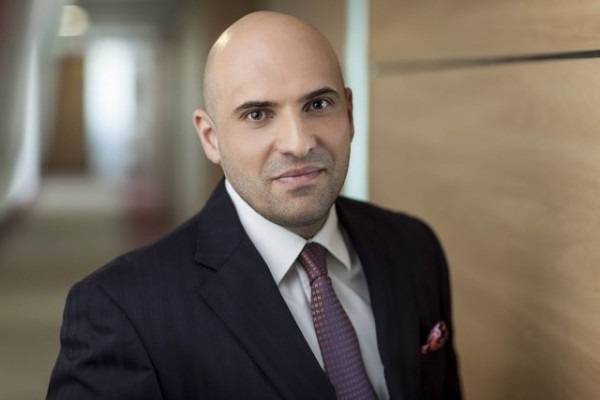
“Our enemies are the abuse and the injustice, not the prosecutors, of whom I am certain many are outraged and ashamed after reviewing the documents in this case, our enemies are not the judges, since they have been humiliated in this case, brought to their knees, coerced to abjure their own reasonings. As far as I am concerned, I shall go to the HCCJ, on 18 January, to await the observance of the law, of the legal time limits, and the written reasoning of the decision handed down by the HCCJ on 17 December.” – Lawyer Gabriel Zbârcea
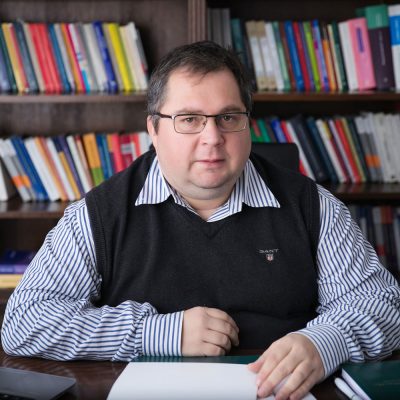
“Beyond the consternation, surprise and outrage, everybody’s message was: What can I do to help?! Something snapped this time. Maybe it is the days of the end of December that make the Romanian people become sympathetic and fight for principles and ideals.” – Lawyer Radu Chiriță

“A citizen of my country, a country pretending to have the rule of law, eminent in his profession (which profession happens to be that of a lawyer), has been sentenced to prison for doing his job! What can we do? Carry our cross in hopes that the next Romanian citizen to be indicted by some prosecutors and convicted by the judges for doing his job will not be us?” –Lawyer Gabriel Biriș
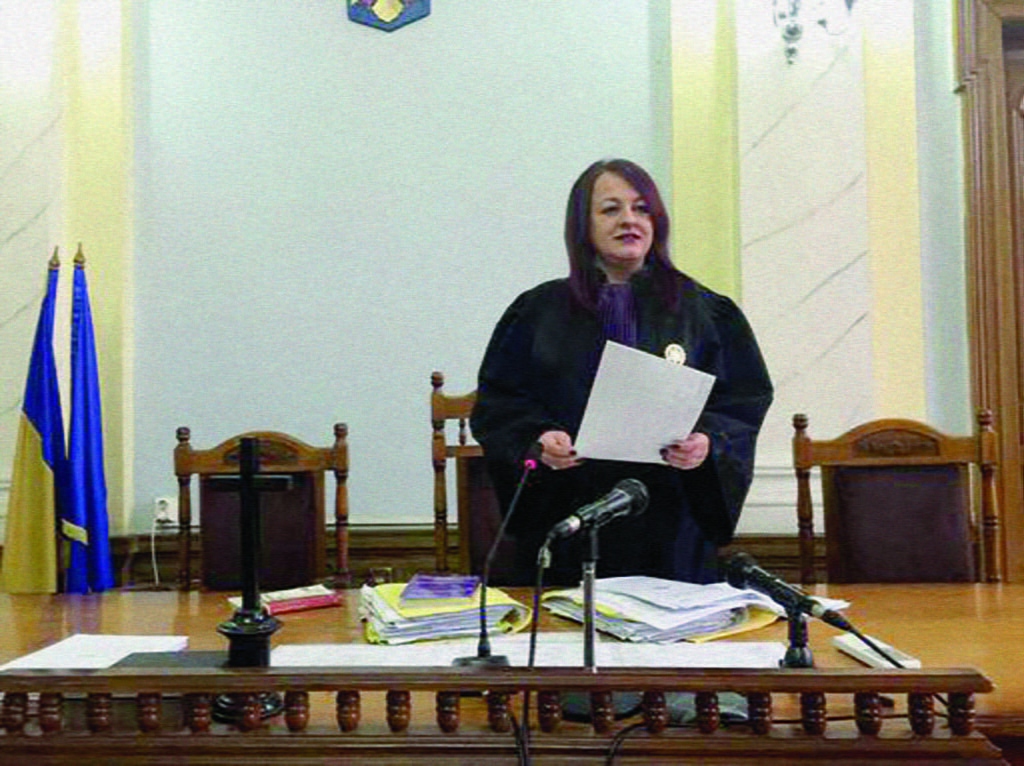
“Sitting around and watching this manoeuvre in silence would mean for us not to realize that our bubble, as roomy as it may be, may be sitting on a powder keg… I do not understand the deafening silence of the magistrates’ associations faced with the fact that two judges were summoned by DNA to be told by the prosecutor that the court decisions they had given were wrong. Furthermore, I do not understand why, following the same logic, the judges who ruled in the appeal and maintained those court decisions were not summoned as well. Was it because they would have said that the first instance court decision, which they maintained, was indeed grounded and lawful?” – Adina Daria Lupea, a judge with Cluj Court of Appeal
“The pressures put on the lawyers over time, the breach of the legal provisions governing the right of defence, as well as minimising the lawyer’s role in the Justice System to the point of humiliation are likely to completely annihilate any Romanian citizen’s right to a fair trial.” – Romanian Lawyers’ Association for Dialogue and Solidarity
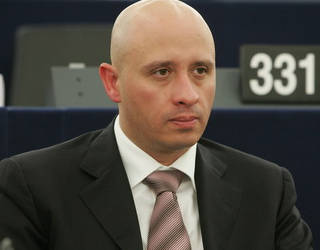
“This is utterly absurd. A lawyer defending his indicted client can at any time be considered to be his client’s accomplice or a coparticipant in an organized crime group. This is exactly what happened, for instance, to Marshal Ion Antonescu’s lawyer. But that happened at the peak of the Soviet Communist era. Now we supposedly have the rule of law. Or so they say… He did not take any bribe, he did not give any bribe, he did not commit any influence peddling, he did not forge any documents, he did not use any forged documents. He just exercised his profession and charged a fee.” – Sebastian Bodu