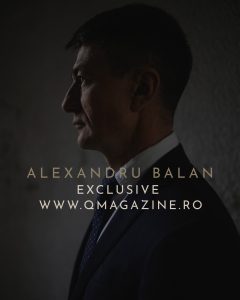
Among us are born gifted Romanians who amaze the world through their accomplishments. Q Magazine has made a selection of some of these people and presents to you a number of students who consult for the World Bank, are young experts in “war studies” or work on treatments for curing cancer. They miss Romania, but their return could mean the end of a successful international career. It is very difficult to reach a decision! What kind of destiny could these smart Romanians have in their own country?
SEBASTIAN BURDUJA: OUR GENERATION MUST TAKE RESPONSIBILITY
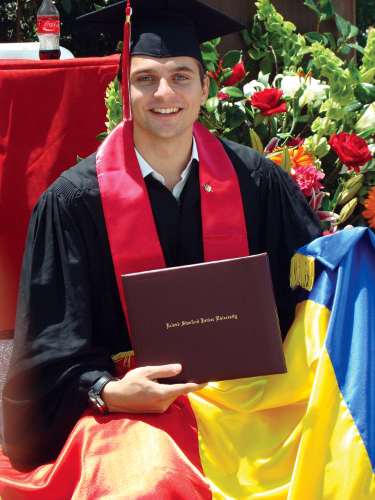
He manages the League of Romanian Students Abroad, majored in Political Studies, with Economics and Sociology minors at Stanford University in 2008, and was also a joint master’s student at the Harvard Kennedy School of Government and the Harvard Business School.
Sebastian Burduja is inspired by Romania’s „forty eighters’ generation,” whose main representatives studied abroad and returned home in the mid 1800s, building the modern Romanian State and paving the way to the most enlightened era of Romania’s history: the union of 1859, the national independence of 1877, the great union of 1918, and the inter-war period.

sebastian burduja
I can’t forget the trial of the Ceausescus
“The example of their actions, adapted to the current context, global and democratic, can motivate efforts of Romanians inside and outside the country, Romanians who want to bring to Romania a deep and authentic change.”
A short while after Sebastian was born in Bucharest, his parents decided to move to Piatra Neamt, together with his grandparents. These were the most difficult years of the communist regime, a time when raising two young children in Bucharest, without party connections and a small income, became almost impossible. At Piatra Neamt they had more opportunities to survive those years, especially thanks to his grandparents’ help – his grandfather was a priest, his grandmother a teacher – and the support of the relatives who lived in the countryside and could send them food.
“I only later realized the sacrifices that my family made during those years – together with millions of Romanian families – in order to ensure that we, the children, could live a life without daily concerns like what we could afford to have for dinner.”
As a child, Sebastian was also deeply moved by the Romanian Revolution of 1989, the miners’ revolts in the early 1990s, and the typical social and political turmoil of the transition years. “I can’t forget the days of Christmas in 1989 and the mix of hope and fear that everybody felt. I can’t forget the film with the trial of Nicolae and Elena Ceausescu, which I watched with the mind of a four-year-old child, unable to understand how the people we were asked to idolize since kindergarten could disappear from history in such a bloody manner.
I am convinced that these experiences are shared to some extent by all generations born in the 70’s and80’s. Today, we are in a unique position: in our childhood, we became accustomed to the shortages and injustices of the communist period; then we lived through the transition delusions and the transformation of a national feeling of hope into a never-ending series of disappointments; we also had the opportunity to get to know, especially after 2000, a global and different world, in which we could continue our studies or our professional careers in competitive and meritocratic environments. We now have the potential to communicate the feeling of hope from the Revolution days, concentrating our energy, our knowledge, and our experience in a joint effort aimed at the real consolidation of the Romanian democracy.”
Sebastian first came to the United States of America in 2004, when he was accepted at Stanford University, where he specialized in comparative politics, economics, and sociology. Afterwards he was admitted with a scholarship at the joint master’s in business administration and public policy at the Harvard Business School and the Harvard Kennedy School of Government. He can hardly describe the seven wonderful years at Stanford and Harvard in few words…
“I know that I had access to some unique opportunities. First, I was the student of some extraordinary teachers. At Stanford, I collaborated with the most reputable American expert in democratic systems, professor Larry Diamond, and contributed to the research on East Europe and the Central Asia for his book, The Spirit of Democracy,. At Harvard, I was a Teaching Assistant for professor David Gergen’s leadership course. Professor Gergen served as advisor to four American presidents, including Ronald Reagan and Bill Clinton. In my sophomore year at Stanford, my roommate was Mike Krieger, a good friend who recently became world famous after the application he created, Instagram, was bought by Facebook for around 1 billion dollars. Such examples of unique opportunities I have had can go on and on…”
He consults for the World Bank and the UN
After he graduated from the joint master’s program at Harvard, he found out about a professional opportunity at Dalberg Global Development Advisors, a prestigious strategic advisory company and the market leader in the international development consulting segment. After he sent in his application, he was, as Americans say it, on his own. “Diplomas are only simple pieces of paper if you cannot prove through five-six successive interviews that you can be a successful consultant”. He was recruited by the Dalberg team in Washington, D.C., where he is active since 2011, as a consultant on projects that aim to improve living standards in the developing world.
“Our clients are multilateral organizations like the World Bank, the United Nations (UN), but also corporations and national and local governments. I am proud that at Dalberg we can help people who have few opportunities, people who fight every day to survive and overcome hunger, disease, war, and many times the ignorance of those who could save their lives.”
Romania is seen differently from afar
I ask him what direction are we heading in? “Well, first, we have to know where we come from and how we got to where we are today. History inspires us, motivates us, teaches us, and unites us. Unfortunately, the false patriotism and personality cult promoted by the communist regime alienated us somehow from the accurate, unbiased perception of our history’s value and importance.
Today we are somewhat ashamed to talk about Michael the Brave, Alexander the Good, Stephan the Great, or the martyrdom of Constantin Brâncoveanu. There were and there will be attempts to undermine the importance of these national heroes and to discredit their role. But those who understand and really know our history in its entire complexity will appreciate it at its true value.
It is not a romantic interpretation of our past as a nation, as some may argue, but an objective one, in which we take responsibility, as individuals and collectively as a people, for both glorious times and unforgivable errors. After over two decades from the communist regime’s fall, we should get over the past forms of an extreme and obtuse nationalism. Ignoring history, we will lose the unique opportunity to learn from our mistakes – the Nazi Holocaust and the communist repression – and more recently, the partial failure of the post-1989 transition”.
As Romanians who now living abroad know – and there are many of them studying and working abroad – Romania is seen differently from afar. Sebastian Burduja is an optimist, always searching for positive signs that announce a better future, from the inauguration of the new National Library of Bucharest to the punishment of several flagrant corruption cases. “Even the protests from the beginning of the year, the authentic ones, are a signal that Romania’s democracy has begun functioning at the grassroots level.”
This doesn’t mean that Romania is seen in a fully positive light from across the border, as even the recent progress must be compared to our country’s huge potential . From this point of view, the situation remains grim: with few exceptions, we continue to fail in almost all sectors vital for Romania’s development, from infrastructure to tourism, agriculture, industry, education, etc. Until when…?
“Thinking about my colleagues from Stanford and Harvard, I am so proud to find out about their latest accomplishments, from starting a successful business in China, to interviews about Wall Street on CNN, or being appointed Minister in Georgia’s cabinet. Learning about their amazing success stories makes me wonder if I have accomplished enough so far. I will keep trying, inspired by their example.”
Here, everything is to be done
The project he is very proud of is the League of Romanian Students Abroad (LSRS). The story of LSRS began in 2008, with two inseparable colleagues, best friends since middle school in Bucharest. “I was about to finish my studies at Stanford and I was admitted at Harvard, while my colleague, Costin Elefteriu, had just graduated top of his class at the Academy of Theater and Film, the Image Department, and was preparing to attend the famous War Studies program at King’s College London. We realized that we were only two case points in a numerous “army” of Romanian students and young specialists who were starting their academic or professional career abroad. Thus began a dream that we followed with confidence and consistency.”
Their efforts did pan out and nothing was in vain. Today, three years after setting it up, the League has over 7,000 members, Romanian students and graduates from over 50 countries. “Our mission is to help consolidate this valuable community and to facilitate its contribution to the development of Romania– through an open, independent, and apolitical organization.”
The league has 30 branches, covering almost all countries in which there are important communities of Romanian students, but also strategic countries like Egypt, China, Russia, and Turkey. “We always want to be a home away from home for Romanians who study abroad, but also a connection point between them and their colleagues back home who want to pursue their studies abroad in the future.”
The LSRS example demonstrates that Romanians can be united, that they support each other at the universities where they study, that they want to maintain a connection to Romania as their home country. If you don’t believe in miracles that last over three years you are invited to visit the LSRS forum , Wiki LSRS, the platform Go Study LSRS, the groups on Facebook and their other online blogs. Numbers speak for themselves, questions always find answers, friendships are built and projects are initiated and coordinated by League members. LSRS measures its performance by relentlessly focusing on impact: the number of beneficiaries of their projects and the quality of the assistance it provides.
Sebastian Burduja believes that the League’s success and what it represents today is due to a rare and precious force: UNITY. “In the same way, we believe that positive changes depend on regaining the feeling of national unity. Unity of each generation and unity between generations. Unity in purpose and means. Unity in the desire to put the collective interest above individual egos. Unity in the feeling that we have a responsibility toward one another. And one more thing: confidence in our potential to be better, knowing that we will accomplish what we set out to accomplish.
“These things do not have to last a decade, or two, or ten. Romania’s change can begin today, starting with each of us, no matter where we are. Through LSRS, we took some important steps in that direction, especially through the Young Romania Forum, which was organized in Bucharest, between 12-14 august 2011, with the support of Romania’s National Bank. Young Romania united over 300 students and young professionals educated at home and abroad. Over three full days, their mission was to define the main directions of Romania’s development until 2030 and beyond. The event marked 140 years from the first Congress of Romanian Students, maintaining the central premise of the historical event organized in 1871 by Mihai Eminescu, Ioan Slavici, Ciprian Porumbescu and others: our generation must take responsibility for building its own future.
In other words, it is a fact that at some point this generation will be in charge of Romania’s development and modernization, in a not-so-distant future. What will be our contribution to the country’s history and how can we leave behind, to those coming after us, a country they can be proud of? The preliminary answers to these questions are included in a substantial work, the Young Romania Program: Romania in 3Decades, available online at www.romania-juna.eu. This volume, in fact an open platform of ideas, already shapes certain public policies and political campaign platforms, including for the general elections scheduled for later this year:
Personally, I want to return home at some point in the future, because, as Constantin Noica used to say, “here, everything is to be done.” If I will have the opportunity to contribute with my experience and with my knowledge to Romania development, in its civil society, private sector, or public administration, I will do it with all my heart and with the constant desire to give something back to my country and to my people, to the best of my abilities, following a simple creed: “to whom much is given, much shall be required.”
CRISTINA GHENOIU AND THE PRICE OF SCIENTIFIC SUCCESS
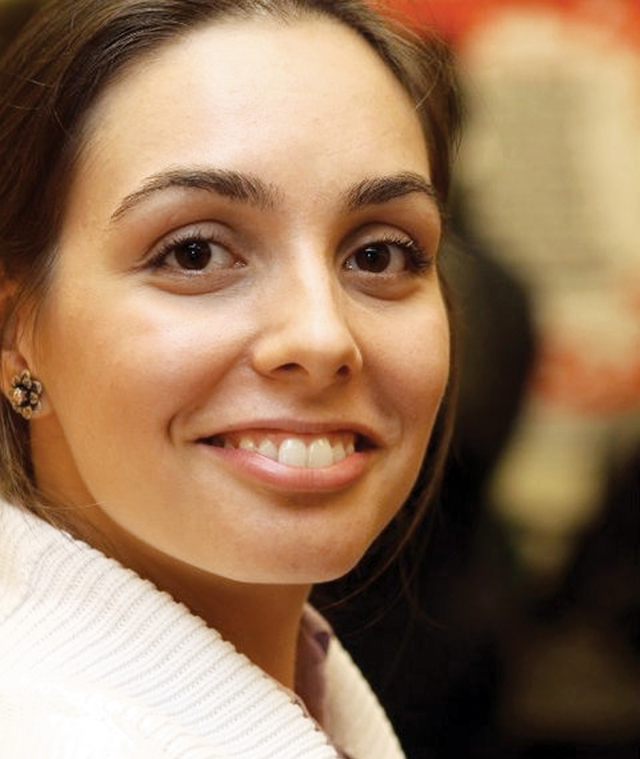
When I asked Cristina about her work and achievements little did I know how amazing and inspiring her response would be. Here is an excerpt from that conversation: “My graduate work advanced our scientific understanding of fundamental mechanisms, which protect the genome and prevent cancer development. For instance, while working at Cornell and The Rockefeller University, I identified Haspin protein as a target of Polo-like kinase I, one of the most promising anti-cancer drug targets. Prior to that, my work at UNIKLINIKUM FREIBURG furthered our understanding of the molecular basis of cystic kidney disease and kidney cancer. While pursuing undergraduate education at MOUNT HOLYOKE COLLEGE, I was able to contribute to studies regarding proton conduction mechanisms in perovskites, which are minerals used in fuel cells.
About a year ago, I was awarded the Rockefeller Anderson Cancer Center best poster prize and the du Vigneaud Award of Excellence – in recognition of my graduate work’s significance and for my presentation skills. More recently, I was awarded my PhD degree from Cornell University for my dissertation studies in chromosome and cell biology..” I am deciding to stop here because just listing her accomplishments would have taken all of our available space. Indeed, this is not all of it. In addition to her research accomplishments, she coordinated a mentorship program for dozens of Romanian teenagers intending to study abroad. She also participated in 14 famous national and international scientific meetings as a platform speaker or a project presenter. And she even found time to practice Capoeira, a Brazilian martial art form. This inspiring, accomplished, and incredibly humble person, Cristina Ghenoiu, is a Romanian citizen.
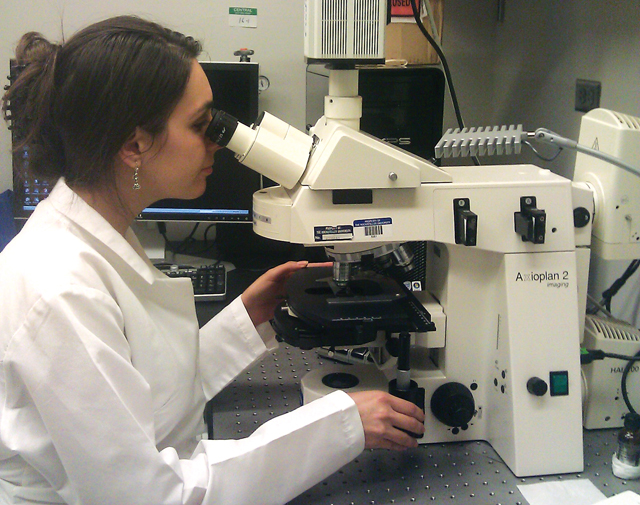

Cristina left Romania 14 years ago and has lived abroad ever since. While the distance from the country was hard to bear at times, it enabled her to pursue a scientific career. She wrote her high school diploma thesis in astrophysics, her college senior thesis in computational quantum chemistry and her doctorate study on histone modifications in mitosis. Today, Cristina Ghenoiu’s work is published in Science, one of the most prestigious scientific journals.
Leaving behind an educational system where she was regularly reminded that: “Girls studying social sciences are too stupid to understand ’real’ science”, Cristina Ghenoiu was pleasantly surprised to discover that the educational system abroad encouraged her to express her own ideas and explore different areas of knowledge, thus unleashing her full potential. She represented her country at Lester B. Pearson United World College of the Pacific (Canada), then she pursued her undergraduate education at Mount Holyoke College (USA), a leader in women’s education, known for its excellent preparation of students in exact and experimental sciences.
This marked the beginning of Cristina’s journey towards a doctorate in chromosome and cell biology performed in collaboration with Cornell and Rockefeller universities. This journey she undertook was both long and arduous, but by the end of it, she implemented and published her research as a co-author on seven scientific articles, one of which was published in Science.
Cristina credits her grandma for encouraging and nurturing her inquisitive mind, as she patiently read books to her, and took her to explore all the parks and museums around Bucharest. She also credits her mother for her academic success, for instilling in her a love for learning, and for doing everything possible to ensure Cristina could focus her efforts on academic work.
“Unfortunately, everything comes at a cost: I missed 13 birthdays of each of my family members, and I had to mourn the death of my grandma and my father from far away, not to mention the many other important family events that I could not attend due to the lack of time, finances or beacuse of VISA concerns. However, on a bright note, an event that I am looking forward to in the near future is the wedding of my little sister. I will not miss it for anything in this world and I can’t wait to see my family and friends this summer.”
The Romanian community abroad lacks solidarity
Cristina thinks each of us has the power to choose our mission on this planet. Of course, not all of us have the privilege to see this mission to the end as unexpected life events can derail our plans. But when that happens, we can and should choose again! At the moment, her mission is to use her education in order to help talented kids from underprivileged backgrounds reach their full potential. For this purpose she joined a group of UWC (United World Colleges) alumni, who are putting the basis of a private equity fund aiming not only to have a positive social impact in developing countries, but also to make successful financial investments that will enable the group to sponsor scholarships.
Because she had the opportunity to study alongside students from over 80 countries, I asked her if Romanians are smarter than other nationalities. “It is clear that each country has its talented people.”, she said. “In my view, a child’s intelligence level is significantly influenced by the socio-economic context in which he/she is raised, and not directly by ethnicity or race. It pains me to see that Romanians value education less and less. Furthermore, when we talk about intelligence, we should not only discuss that of individuals, but also that of the community. While living in New York City, I have the opportunity to observe various communities of immigrants and I noticed that some are more prosperous. This was directly proportional with the level of solidarity displayed by that community. Unfortunately the Romanian community in NYC is lagging behind when it comes to solidarity.”
As for Romanians living in Romania, she is convinced that they would very much welcome home their fellow Romanians, who left home to pursue careers abroad. Instead, she thinks that the problem lies with the poor financial resources available to compensate these experts and the way in which these resources are managed. “The problem is that Romania, nowadays, lacks not only resources, but also politicians able to govern these resources in the country‘s best interest.”
I mourned the death of my father from abroad
The nearly 14 years spent away from the country have been interspersed with extraordinary milestones, but also painful events. “I am filled with joy when I remember the first galaxy that I observed and photographed through a telescope, while studying astronomy in Canada. Equally exciting was the first publication of my scientific experiments. One of my greatest personal accomplishments was the scholarship that I received for studying Egyptology in Egypt. There is a hotel in Cairo (Le Meridien Pyramids Hotel) that has a pool from which you can see the pyramids… A dream come true! Unfortunately, everything comes at a cost: I missed 13 birthdays of each of my family members, and I had to mourn the death of my grandma and my father from far away, not to mention the many other important family events that I could not attend due to the lack of time, finances or because of VISA concerns. However, on a bright note, an event that I am looking forward to in the near future is the wedding of my little sister, Raluca. I will not miss it for anything in this world and I can’t wait to see my family and friends this summer.”
Our current lifestyle is unsustainable
As a scientist, what can she tell us about our future? It is very hard for her to answer this question without sounding pessimistic. “It seems to me that we are trapped in a vicious circle: on one hand the lifestyle we practice at a global scale destroys and pollutes the planet; while on the other, we spend our resources to produce drugs meant to treat the diseases caused by this very lifestyle. If those who govern our planet’s resources don’t redirect them in order to stop environmental destruction; if they don’t address urgent problems such as researching scalable alternative energy sources, then we are not looking at a bright future. However, let’s remember that this is not only the government’s fault. We should contribute to the well being of the planet, at the very least by staying informed and passing the message. This is why education is so important! A well-informed individual makes generally better decisions for himself and his family, and also for the society as a whole, including when he exercises his right to vote and thus helps choose those who govern these valuable resources. Lastly, all of us should make a sincere effort to adopt a healthier and a more responsible and sustainable lifestyle from all points of view, including financial.”
Even though the future may be uncertain, she hopes to use her scientific knowledge to positively impact the society she lives in, perhaps even by collaborating with humanitarian organizations. I am certain I can speak for all of us when I say that Cristina Ghenoiu is one of the Romanians we are proud of!
RADU BELECA: I SHALL REMAIN A DREAMER OF THE DAY!

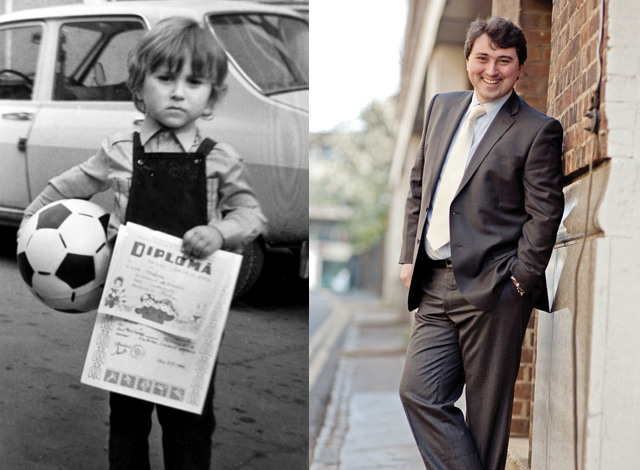 Radu Beleca left Romania in 2007, after graduating the Technical University of Cluj Napoca, specializing in Medical Engineering. For a year, he followed a master 2 – research program in electrical engineering and fluid mechanics at P’prime Institute, Laboratory of Aerodynamic studies, University of Poitiers with a scholarship from the French government.
In 2012 he completed his PhD studies at Brunel University, London, UK with the thesis: “Investigation of Bipolar Charge Distribution of Pharmaceutical Dry Powder Aerosols using the Phase Doppler Anemometry system”. The PhD program was fully sponsored by the Engineering and Physical Sciences Research Council and Pfizer Inc., UK and TEVA Pharmaceuticals, Ireland.
In 2011 he was awarded the 2010 Romanian student of the year in Europe, PhD level at The League of Romanian Students Abroad Gala in Bucharest. He was awarded best paper award prize four years in a row at the Electrostatic Society of America Annual Meetings in Boston – Massachusetts (2009), Charlotte – North Carolina (2010), Cleveland – Ohio (2011), Cambridge – Ontario, Canada (2012) also at the Institute of Physics UK conference in Bangor University, Wales (2011).
Dr. Beleca is a member of The Institute of Electrical and Electronics Engineers, USA, The Institute of Engineering and Technology and Institute of Physics, UK, Electrostatic Society of America and part of several committees and think tanks for worldwide cooperation and development. Even if we believe that he is a rigorous scientific person, opaque at the live passions, Radu Beleca is passionate about fine arts especially oil and acrylic painting, being member of Tate Galleries. London, UK, of the Argentinian tango, learned during several years, photography, philanthropy, leadership and knowledge transfer to the young generation.
I wouldn’t change anything in my life
“My childhood has been a stellar nucleosynthesis: a tough reality of life, away from my mother, without a father, balanced by the unconditioned love of my grandmother, a drop of magic typical to such age illuminated by a prism which reflected always the large and marvelous spectrum of knowledge from my mother’s library that with each book I red advised me: dreams become reality only through common sense, strong character, hard work, commitment and ambition. It was there in my grandmother house that the seeds of love for knowledge, respect towards family and humility have been planted, while my teachers from the primary school grew up these values first by example and then by advice.
As Iorga used to say they were: “The best school, the one you learn above all to learn”. It followed the Romanian transition from the communist era – the 90s – a vortex of fear, uncertainty and too much aggressiveness. As time passed, I saw all around me how the values I was educated and grew up with are slowly “forgotten” with such a hate and thirst for material benefits that was hard to comprehend. There where the high school years – nothing had any value if it couldn’t be translated in something from the material trend. Romanians were discovering the world of “fancy” clothes, brands, cars, clubs, supermarket products…..while my mother….always at the clinic, always on duty in late night shifts at the hospital, always at work, in a Romanian medical system without horizon. It was in that time when I chose to continue the path of values and education I received without any compromise, first from respect and love towards the example I had every day in front of my eyes: the sacrifice of my mother for her son.
If I were to change something in my life, I wouldn’t change anything. The harsh reality of life has been with me each moment of my existence, showing me the world the way it is, from the most enlightened and warm peaks down to the most cold and dark depths.
The mission of each of us is to give a meaning to our life, as we feel. True, education and life experience helps us understand various things, but the power of the human soul stands in the action of the moment. There are no right moments! Either you do something now, if not, you will never do it! We must always value the gift of life and never let ignorance prevail, no matter how we choose to define the source of life: God, The Great Architect, Big Bang or the Theory of Evolution.
“All men dream: but not equally. Those who dream by night in the dusty recesses of their minds wake in the day to find that it was vanity: but the dreamers of the day are dangerous men, for they may act their dreams with open eyes, to make it possible. This is the path I chose!”
(T.E. Lawrence in Seven pillars of wisdom)
Romania is always there waiting for us, but not by common means
I always hear: “Romanians are smart!” While travelling the world, I encountered various smart people, from all nations worldwide. I always say Romanians are wise, and our wisdom is measured in millenniums of existence – for example, the oldest prehistoric rupestral paintings in the world have been discovered in Romania, in the cave of Caliboaia, 35.000 years- wisdom that now lays within our genetic code.
The return home of valuable Romanian young professionals is conditioned by the scale of values and priorities of the nowadays Romanian society. I believe that each of us succeeded to accomplishing his dreams following a simple set of values: self respect, respect towards family and the world we live in, hard work, seriousness, modesty, ambition and passion for its craft. Of course, the high level performance is not obtained without an adequate social and material environment. Today’s Romanian society can’t afford anymore to ignore the exponential curve and the imperative necessity to implement a sustainable development and strategies, both in the population ecology and for national resources exploitation.
The most beautiful moments of my life, away from home, have been when foreigners from all over the world spoke with appreciation and respect about Romania. One of these moments has been in 2011 during the most important international conference in my field of knowledge of the famous Institute of Physics, UK where the activity of the professor Ion Inculet – son of the great Ion C. Inculet, witch on the 9th of April 1918 signed, as president of Moldavia, the union of Basarabia with the Mother Country Romania – was recognized once more at worldwide level.
What higher ambition can be out there for us than to overcome our existing life condition? I can’t predict the future and I am too young for this universe! In all these years of hard work and sacrifices, together with the reality of life, I built a foundation with a strong faith and a set of solid principles which I know I can always count on. I shall always be a dreamer of the day, living my dreams with my eyes opened, putting them into practice, respecting and giving value to the time I got in this world, always looking for simplicity and elegance, as our great artist Brâncuși.
Today, unfortunately for the Romanian people the reality is as a boat on rough seas, steered by amateurs and improvisations, while the anchor is lost. Romania is always there waiting for us, but not by common means. We have to find the anchor of our dignity and self respect, the anchor of our national values that define us as a nation. Then by hard work, education, common sense, dignity, ambition, with patience, we will find again our place back in the concert of nations, as Iorga used to say, with a vision towards a sustainable Romania, to be proud of. We have a just moment in the speed of generations to accomplish something.”
ŞTEFAN ANDREI ANGHEL: I DON’T KNOW WHERE I WILL BE, BUT I KNOW WHAT I WILL BE!
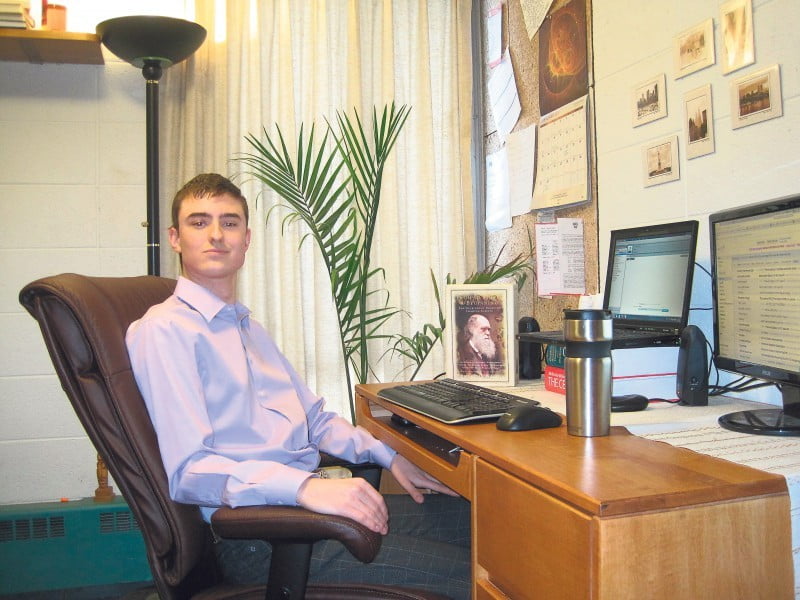
He thought he would have a common life, that he had assured himself a comfortable place in the herd, but it wasn’t going to be at all like that. He qualified for the International Biology Olympiad from the hospital bed and does molecular biology research at Harvard Medical School in the United States. The story of a 23 year old Romanian boy who admits that probably, unfortunately, he and Romania shall observe each other from distance.”
“My first years of life were excessively common, or at least so they seem. I won first prize with crown in grades 1 thorugh 4. I was considered “the best” of my class, but I had awful caligraphy. In 3rd grade I became ambitioned and began to write so beautifully that the teacher set my notebook as an example. The transition was very strange! My parents never criticized my calligraphy, and later I found out that my mother actually lobbied the “lady” not to say anything about my writing. I don’t think my mother had the vision to realize that soon all of us will be writing using the keyboard and not the pen. However, she understood that a rule shouldn’t be followed only because it exists, especially in a society oversaturated with rules.
Qualified for the Olympiad from the hospital bed
After the “calligraphic” incident, my life became very normal. My first success in life was the entrance in the English class at the «Mihai Viteazul» National College in Ploiești, performance which was probably accidental. I believe my middle school years weren’t wasted because it was in those years when I learned how to play tennis. I credit to this activity the lucidity with which I began to think later. Also in middle school I discovered I liked biology, but had no notable performances. Academically speaking, I assured for myself a place in the middle of the herd which very comfortable, but made me destined to be forgotten. Later on, in 10th grade, I got more ambitious. I can’t tell for sure what the reason was, only that, as with calligraphy, it was internal. This time, the odds were on my side, and in three years, from a nobody that almost failed math, I became “somebody” (who also almost failed math). Under the guidance of the extraordinary madam Florina Miricel, I made the national phase of the Biology Olympiad for the first time. In the following years I won various prizes, some more important than others. In 11th grade I needed an emergency appendectomy right before the qualification exam for the international phase of the Olympiad. This showed me how indiferent the universe is towards my goals and dreams! When I took the exam in the hospital and passed, I realized I can do anything as long as I have the support of my loved ones. This was the most important experience I had in high school, even though the medals I received at the International Olympiad were a nice confirmation that effort is (sometimes) rewarded.
After spending a short time at the University of Bucharest, a time which convinced me of the absence of science in our country, and, I am sorry to say, of the weak preparation of some faculty members, I decided to go abroad. I began my studies at Harvard the following year, where I majored in molecular biology. Like all my peers, I attended courses in various fields, everything from physics to philosophy. If I could change something in Romanian higher education, I would introduce this mixt system. In all four years of college, I did research under supervision of Prof. Tom Rapoport, with whom I wrote my honors thesis (which was awarded highest honors).
I now know how valuable freedom was for me. Our “full of gaps” education system, together with my parents which knew how to raise me, let me concentrate on what I enjoyed. I believe few people have the opportunity of such a mix. Moreover, I was also lucky to discover my passion for nature (and my family did a lot in order to support this strange disposition). Probably the fundamental problem of Romanian education is that it doesn’t encourage children to find their passions. Therefore, the internal motivation is absent, and the external one is generally not very useful.
The years spent at Harvard also made me a more polished academic person. Not only did I (finally) learn mathematics, but I believe now I can have a conversation about almost any important matter. Finally, the years I spent in the US and at Harvard taught me how to be a better person. They taught me to respect plurality of opinion and people with which I don’t agree.
Unfortunately, this way of living for ideas and tolerance makes it more clear to me that almost for sure I will not be calling Romania my permanent domicile very soon. I don’t have any kind of disrespect for the country. Even if I don’t believe that Romanians are smarter than others (this seems to me nationalism of the worst kind), I believe that the young generation has great intellectual potential, almost entirely unexplored. I know this because now I am considered “smart”, “intelligent”, or even “bright”, even though I personally know many Romanians of my age who surpass me in this category.
Among the academic distinctions received by Ştefan Andrei Anghel we mention the John Harvard Scholarship, the Harvard College Scholarship, the Detur Book Prize and election to the Phi Beta Kappa honors society. Over the years, his research has been financed by the Herchel Smith Summer Undergraduate Research Fellowship, the Harvard College PRISE, and the Harvard College Research Program.
Since I wrote the first article, I graduated Summa Cum Laude from Harvard College, an honor bestowed on 5% of the class and which takes into account the grade point average and my honors thesis grade.
Romania and I shall observe each other… from a distance
The main problem of Romania is cultural. We are if I may use the 1st person plural a people that hasn’t yet gone through the transition to “European” values of tolerance, multiculturalism and mutual respect (not that Western countries always follow those principles). It is a fact all too often ignored that in 21st century Romania, the institutions with the highest confidence level are the church and the army. A great part of our country’s population believes that Ion Antonescu was a hero (the truth is that he was directly responsible for the death of hundreds of thousands of Romanians). Unfortunately Romania, instead of marching towards European values, seems to be returning to the values of the 1940s.
In 2000 I heard a description of Romania as “the country that, after the revolution, built a thousand churches and not one hospital”. Well, now we are actively closing down hospitals and building a big cathedral in the courtyard of Parliament. Maybe it is a selfish attitude: a Christian – nationalist society (as Romania seems bent on becoming) will not receive with open arms somebody like me, who is neither a nationalist, nor Christian. Maybe this wouldn’t bother me as much if Romania allowed me to carry out high quality research. Unfortunately, somebody “high up” decided that research is not a national priority. Probably these two aspects are connected: until Romania has a more “open” attitude, it won’t emphasize ideas in general, and academia in particular.
As a consequence, Romania and I shall observe each other (or, more probably, unidirectionally) from a distance. In the fall, I will begin my doctorate in Molecular Biology at the University of Chicago. In the future, I hope to become a professor which can combine good teaching with high quality research. For some years, as a joke, those who help me in life have been registering for a spot in the Acknowledgements list of my Nobel prize acceptance speech. As of now, this list contains over 30 persons.
In the short term, my goal in life is to learn to drive, objective facilitated by American cars with automatic transmission. I don’t know where I will be in 10, 20, or 30 years. Probably in the US, though perhaps not. But I know what I will be. I want to continue my research career and inspire others to have the respect I have for science, ideas and argument. I shall see how much success I will have. I have come to know that science is so unpredictable that you can never make predictions. Albert Einstein said, only partly joking, that if we knew what are were doing, it wouldn’t be called research. So far, acting upon passion seems to be a good strategy. As for my country of origin, I consider it as unpredictable as science itself. Some of the most capable individuals I have ever met are young Romanians. I have no doubt that Romania can become a quality society, comparable to any other European country. If and when this will happen remains to be seen.”
COSTIN ELEFTERIU: MERITOCRACY IS MISSING FROM OUR SOCIETY
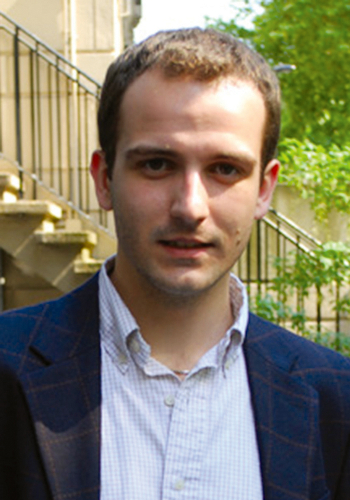

Costin Elefteriu attended the courses of the highschool „Cantemir Vodă” in Bucharest and graduated the maturity exam with the grade 10, without several hundredths. After he graduated from UNATC, he left for London for a second degree in War Studies at King’s College. Together with Sebastian Burduja, he set up League of Romanian Students Abroad. He manages more than 200 volunteers, every day, he is a Chatham House member and he is passionate by the space security, strategy, diplomacy and secret intelligence.
Costin Elefteriu doesn’t like talking about himself, or about the way in which he became an eminent student abroad. He considers himself to be an introverted person and he likes to be read or listened for what he believes, not for the manner in which he became what he is today.
“Romanians are not smarter than the others. I haven’t promised individual success to anyone but me. There was a period when I believed that it was an extraordinary virtue in the unconditioned altruism, to dedicate your life, carrier, success, to a certain idea or cause. Now I am not so sure about that; I am more realistic, but, at the same time, I understand better that non-altruism doesn’t mean egoism. I believe that it is not good to fix rigid definitions. I believe that each of us has to try first to develop himself – it is a way by which the entire world, society, will have something to win; we don’t need promises.
I wouldn’t change anything in my life until now. Especially errors. I consider this imagination effort to be useless. Life cannot be changed!
I haven’t had any revelation regarding my role on the earth yet. Who says that somebody gave him a mission, is either really touched by the Divinity or he lies. People have principles and interests. Some eccentrics have fervent faiths in some visions, ideas; but also these, in essence, are founded on principles and/or interests. A fundamental principle which guides me personally, it is to have a honest and professional approach towards anything I do.
Romanians are not smarter than the others. We cannot generalize. There are no smarter people and other more stupid. Indeed, there exists the impression that everywhere they go, especially in academic contexts, Romanians have a higher success rate, results-wise, proportionally, than the students’ communities from other countries. What it is not mentioned is that Romanians got there generally through scholarships – so they represent from the best of Romania. We don’t speak about Romanians in general. So, it is correct to say that “the smartest Romanians are smarter than the others”, a fact that doesn’t reflect an individual merit. The results of these Romanians are not representative for the entire country. The test? Should we imagine that the smartest English, French, German people come to study in Romania? Our “smart“ people would shame them? Not really.
Two aspects must be highlighted here. The first is that this myth is eroding, due to the strong exodus of Romanian students toward foreign universities. Now many students have the possibility to leave, due to various reasons. The possibility to study abroad it is not necessarily a proof of academic excellence anymore, as it used to be several years ago.
The second aspect is this specific Romanian obsession regarding the distinction between the two characterizations of “smart vs. stupid”. It is something traditional and very harmful for the character and moral health of the Romanian people. In civilized countries, or at least in Great Britain, this kind of concept doesn’t exist. All opinions are heard and respected. Nobody laughs when somebody says or asks something that Romanians would immediately mark down as “stupid”. It is a fundamental aspect of reciprocal respect and of confidence in the good aspects and in the capacity of the others. In Romania, immediately after classing a person as smart or stupid, the attitude toward them is is contoured as such. Unfortunately, we lose and we continue to loose enormously, as nation, for this reason.
The Romanian System is a web of corrupt relations and nepotism
When Sebastian Burduja (like me, also, since we set up the League together), is asking to be left to return home, he addresses firstly the “system”, not normal Romanians. He is referring to the fundamental value of meritocracy, which is missing from our society and which represented the main factor that caused the majority of us to go abroad; for this, the system is responsible – the primary and secondary structures, that guide the country affairs.
The Romanian system is only a web of relationships built on corruption and nepotism, which bathe mediocrity and, again, in very traditional Romanian moral reflexes, , such as acute envy.When you see what kind of people become Romanian Members of the European Parliament, or the way in which posts are allocated in ministries or in state companies, etc., or how opaque the entire system is, you can understand how big are the obstacles in front of Romania’s meritocracy – and, beyond that, in the return home of Romanian teenagers, after graduating from their foreign universities. Because it is the meritocracy’s absence, more than the smaller salaries than abroad, that represents the main problem for us.
In this context, it is normal and necessary to raise the alarm and to say clearly to the political class that they have the solution: to open the system up to meritocracy, at least gradually, and to let us return. If not, Romania will succumb in the future in its own mediocrity, because step by step the country shall eliminate its most valuable capital: the human one. It is a matter of time and it is a vital issue.
Regarding my future, I prefer to build it, than to speak about it. In the immediate future I will be completing my education with a Masters in Intelligence and International Security, at King’s College London, Department of War Studies, specializing in Strategy.
Regarding Romania’s future, I am convinced that the only salvation for country is to renew its elites with people firstly of character, secondly which have a vision and thirdly, intelligent. Otherwise, Romania shall become more and more non-competitive and vulnerable, with ever more aggravating internal, in an increasingly dangerous and merciless world.
When key people in Romania, who are not only in politics, but also in business and in the academic/civil environment, will reach an agreement for reforming the elites, based on meritocratic principles, then from that moment on the real recovery of the country will begin. Meanwhile, all the various new political formations, or miracle-individuals, or projects and even quality (but isolated) policies, are not less than smoke screens and illusory hopes. We need fundamental changes in Romania, not just another national face-lift.
RUXANDRA PAUL: SUCCESS COULD CONFUSE US IN MANY SITUATIONS

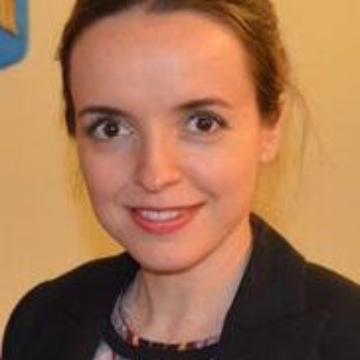
Ruxandra Paul, Q Magazine
Ruxandra Paul is a Ph.D. candidate studying on a full scholarship in the Government Department at Harvard University. She received her Master’s Degree as a part of the Ph.D. Program. For her dissertation, Ruxandra studies international migratory flows and the relationship between migration and socio-political life. At Harvard, Ruxandra teaches courses in comparative politics, comparative institutional design, European integration, capitalism and democracy in Central and Eastern Europe etc.
An eminent student that became a teacher at Harvard
After graduating from high school in Bucharest, Ruxandra Paul left Romania to pursue her undergraduate studies in the United States. “I applied for admission and financial aid. I received admission offers with full scholarships from several top-tier American universities and liberal arts colleges The comprehensive financial aid packages covered education, room and board, money for books and installation costs at the beginning of each semester, reimbursements for plane tickets for traveling home each year… I chose Williams College, from Massachusetts, for their collaboration program with Oxford University, of which I also beneficiated (I took the third year of university studies at Oxford, in Great Britain, with integral scholarship offered by Williams College). I graduated university summa cum laude, with «highest honors» in political sciences and double major in Political Sciences and French language. This spring, I also taught a didactic course for Ph.D. candidates from Harvard”.
She also serves as a thesis adviser to Harvard fourth-year students, who work on writing their honors theses in the Government or Social Studies departments. She advises first year students who are considering majoring in Government at Harvard. This year she received the Hoopes excellence prize for the art of teaching, conferred by Harvard University. She is a member of Harvard Academy, and, in the research activity, obtained from the France Government the Scholarship Chateaubriand, that allowed her to study for a year in Sciences Po – Centre d’Etudes et de Recherches Internationales, Paris, a scholarship at Weatherhead Center for International Affairs and one at the European Studies Center from Harvard, etc. She enjoys contributing to the life of Harvard’s vibrant academic community, a community she describes as “extraordinary.” She participates actively in a wide range of leadership activities, for instance, as elected vice-president of Harvard’s Graduate Student Council. Last year she organized Harvard Leadership Conference, an event for the anniversary of 375 years since the founding of Harvard University. She organized the Ivy Summit that Harvard hosted (a work reunion of MA and Ph.D. student representatives of Ivy League schools and MIT).
She would change only the death of her grandparents
She says that she owes to the childhood the piano her passion for music. “If I could change anything about my life, I wish my grandparents Nicolae-Mihail and Stefan were still alive. In order to find out what the mission is, we have to fulfill it. We shouldn’t be obsessed with success per se, but rather with our concrete activity. If our mission on earth is to obtain immortality, success could confuse us in many situations. I look towards the future with optimism and hope, since this future depends – in part – on us. I missed a lot of important moments in my family’s life, being lived away from the country. But what’s most interesting is yet to come”.
Does she want to return to the country? “There are Romanians which came back i and they can tell if they are pleased or not. The financial aspect doesn’t have to be the prize for our performance in instruction, but the reflect our expertise and utility.”
When she doesn’t read or write in Harvard’s Widener Library, Ruxandra likes to practice music (vocal, piano, guitar), travel, and practice sports. She enjoys long-distance running and goes swimming. She loves literature, film, theater, art in its various forms.