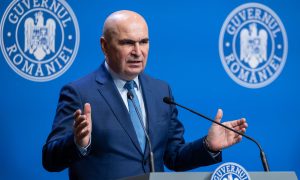
While the whole world is looking at Ukraine, on whose front the U.S. has once again made Russia its equal, far more important events for the fate of the world are unfolding in Asia.
- Acordul Mercosur a intrat în vigoare
- Bolojan: Pensia specială nu va mai putea fi cumulată cu salariul în sectorul public. CSM arată că proiectul adoptat de Guvern e neconstituțional
- Topul libertății presei: România, locul 49 mondial. Ce state africane o depășesc
- Q Magazine face-to-face with Alexandru Balan. Pawn. Spy. Traitor.
- Din fabrica Philip Morris România de la Otopeni spre 54 de țări, pe 5 continente
In Beijing, U.S. Ambassador to China Nicholas Burns said that “the U.S. is the leader of the region” (i.e. of Asia, or at least East Asia) and that Chinese leaders will have to accept this, meaning that America is determined to stay in the region for the long haul. However, this is not the news. The real news is that Iran and Saudi Arabia have agreed to normalize relations, with the agreement to reopen embassies mediated by China. Beijing announced the event by stressing that, through its contribution, Chinese diplomacy has given expression to a conception of international relations that places “dialogue” and “peace” at the centre. A speech worthy of a world leader. Q Magazine asked some of Romania’s ex-Foreign Ministers to comment on these developments.
A SURPRISE AGREEMENT?
Most analysts said the Saudi-Iranian agreement was a surprise. That it took Romanian diplomacy by surprise is no wonder. For those who frequent the embassies of states ignored by the Romanian MFA, as well as for those who do not just keep their ear to the ground to hear the arrival of the transatlantic mail carrier with instructions, the news did not exactly come as a shock.

Doha agreement. U.S. representative Zalmay Khalilzad and Taliban representative Abdul Ghani BaradarPhoto by Ron Przysucha
The first move heralding a major shift in inter-state relations in the wider Middle East took place on 29 February 2020 in Doha, when, during the Trump administration, a “historic agreement” was signed between the Taliban and the U.S. on the withdrawal of all foreign troops from Afghanistan after an eighteen-year conflict. (The actual withdrawal took place under the Biden administration.)

The second move was made between 13 August 2020 and 15 September 2020 and consisted in the implementation of the “Abrahamic Agreements” aiming at normalising relations between Israel and the United Arab Emirates, as well as between Israel and Bahrain. These agreements were facilitated by the U.S., also during the Trump administration, and everyone has assessed them as paving the way for rapprochement between Israel and Saudi Arabia.
Both moves reflected the U.S. desire, under Donald Trump’s leadership, to disengage from the Middle East, where America’s strategic ally Israel had reached the capacity to defend itself, in order to focus on competing with its main strategic rival China.
The “Abrahamic Agreements” were made possible by the understanding reached by the Gulf Arab states that Israel is an unavoidable reality and that cooperation with it, both economically and commercially, and in the field of security and access to advanced technology, is more profitable than war with it. Equally true is that Israel has found peaceful cooperation with the Gulf Arab states, following the conclusion of peace with Egypt and Jordan, more beneficial to its security than maintaining a permanent state of tension.
Beyond this reasoning, it must be said that the first move also had an influence on the second move. This aspect went less noticed by those who are surprised today by the Iranian-Saudi agreement.
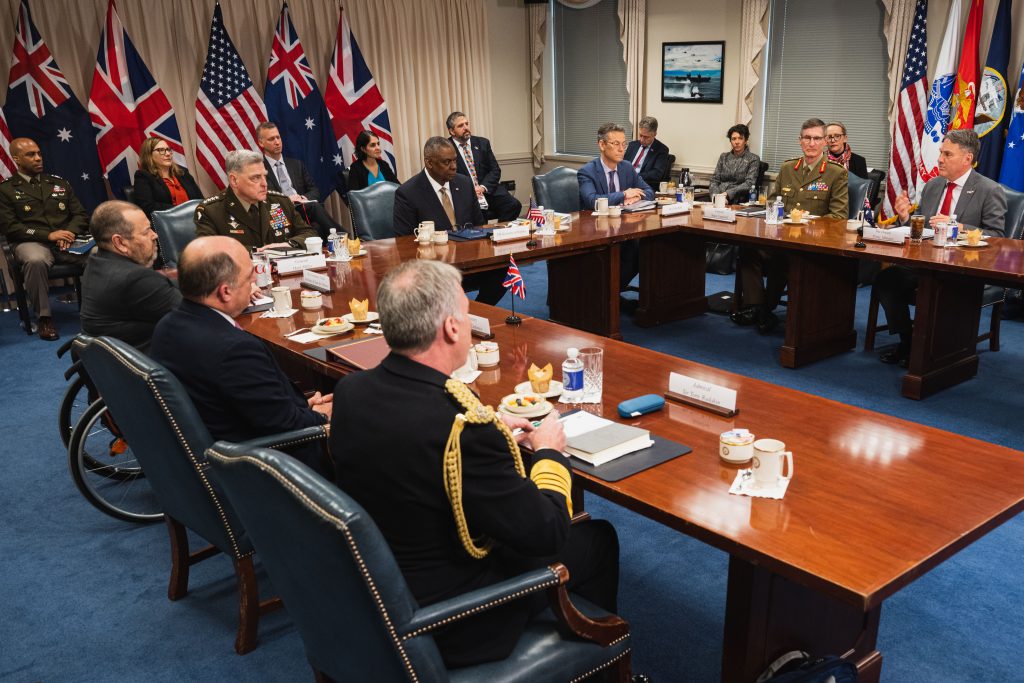
U.S. Secretary of Defense Lloyd J. Austin III during a meeting hosted at the Pentagon with his British and Australian counterparts, Ben Wallace and Richard Marles, Dec. 7, 2022. Photo by U.S. Navy Petty Officer 2nd Class Alexander Kubitza
Both Israel and the Gulf Arab states have noticed that critical U.S. interests are shifting elsewhere in the world, and that United States’ power to engage decisively on multiple fronts has declined dramatically. Moreover, it has become increasingly clear that even if, for a while, America will still be able to win the wars in which it engages, it is already incapable of winning the peace following victory in war. In such circumstances, far from leading to the establishment of order in the region, the American presence brings nothing but disorder, after which the Americans make their exit, leaving the states in the area to clean up, at enormous cost, the mess they have made.
The fact that they can no longer count on American support, since, even if it wants to offer it, the U.S. is no longer able to provide it, has prompted both Israel and the aforementioned Arab states to seek regional solutions to achieve peaceful coexistence.
After the abandonment of Afghanistan in particular, the Arab Emirates and Bahrain openly, as well as Saudi Arabia or Qatar, have come to the conclusion that they can count more on Israel than on the U.S. This feeling was reinforced after the outbreak of war in Ukraine, when America’s Arab allies confirmed their view that Washington will always defend its interests in various parts of the world by fighting to their last…local ally. An ally whose sacrifice will put it in a more favourable negotiating position with its local adversary.
This is why the Arab states have taken the step of meeting with Israel, leaving the Palestinian cause offside, certainly to Israel’s satisfaction and as a bonus for Israel accepting the new partnership.
This has resulted in the concentration of significant power to oppose the Iranian threat. A power that could not leave Iran indifferent. Iran, with political skills honed over centuries of imperial practice, remembered that if friends must be kept close, opponents must be kept even closer, and that when you can’t defeat your opponents, it’s best to join them. Saudi Arabia also understood these subtleties.
Therefore, rather than remain only at the mercy of its former enemy Israel, Riyadh has preferred to ensure peace of mind by also shaking hands with Israel’s sworn adversary, Iran.
These were all logical moves on the Middle Eastern chessboard that only dogmatic observers, driven by the prejudices of the collective Euro-Atlantic West, failed to anticipate.
CHINA’S EMERGENCE AS A GLOBAL POWER
The dilution of the American presence in the Middle East, all the more noticeable as Washington has become bogged down in the Russian-Ukrainian wasps’ nest, has allowed the states in the region, and even more so, forced them to take their fate into their own hands and to orient their foreign policy by resorting to the compass of their own interests rather than that of American interests.
As everyone’s problem was their own security, not expansion, the common goal was identified in preserving the status quo, thanks to a regional balance of power system. The establishment and viability of such a system depended on a guarantor. In this context, the optimal guarantor appeared to be China, which had a critical interest in maintaining such status quo as part of the global status quo. China stepped up to the plate. Discreetly, but resolutely.

Xi Jinping and Saudi Crown Prince Mohammed bin Salman Photo by Chinese MFA
The status of regional or global leader is not acquired by self-identification or self-proclamation, or by the ability to impose sanctions on those who do not comply with your orders, but by the power to spread your ideas on the order of inter-state relations, in the wake of the ability to solve the problems of those you integrate into your privileged sphere of action, either directly or by helping them to solve such problems themselves. At least this is the conception of leadership that China projects, in line with its Confucian mindset and in contrast to the U.S., which is influenced by Judeo-Christian ideas of ‘promised land’, salvation and damnation.
Along similar lines, just these days, the U.S. has decided to terminate the double-taxation agreement with Hungary, obviously as a sanctioning reaction to Budapest’s distancing from Washington’s Russophobic policy, while officially communist China has made peace between Shiite Iran and Sunni Saudi Arabia, contributing to the de-ideologisation of international relations and the replacement of a vertical international order resembling a pyramid with a leader at the top, by a horizontal one, like a circle with a leader at the centre as the source of inspiration and centripetal force. Of course, China also prioritises its interests, but it does so in its own way, as a Goplayer, not as a cowboygunfighter.
If the Arab-Israeli treaties included in the group of Abrahamic Agreements were signed on the White House lawn in Washington as a symbol of the U.S. prevalence in the world order, the Iranian-Saudi agreement was formalised in Beijing in the presence of China’s ex-Foreign Minister, symbolising China’s rise to global superpower status, as well as a shift of the baton of world order from Washington to Beijing, from America to Asia.
In this context, it is noteworthy that, while states of the Asian East, sponsored by and allied with the U.S. – a Western superpower located on the American continent, were parties to the Abrahamic Agreements, the Iranian-Saudi agreement also had Asian states as parties, while the political sponsor was itself Asian. The message is that the “Asian century” is becoming a political reality with at least two consequences:
i. the order of the East is the responsibility of the nations of the East, which thus break completely free from their colonial past and from the influence of the old Western metropolises – Asia belongs to the Asians;
ii. the order of the East standardises and calibrates the world order, excluding American unipolarism and cultural Eurocentrism.
Perhaps that is why, like Caligula in the last line of Albert Camus’ play of the same name, “I am still alive!”, Ambassador Burns was keen to affirm that the U.S. is still Asia’s leader. However, he cautiously added “in some respects” without specifying which. Certainly, it holds the first place in rhetoric.
This, while the State Department spokesperson tried to make the best of a bad situation by declaring that the U.S. welcomed any effort to promote peace.

President of Iran, Ebrahim Raisi Photo by President.ir
THE IRANIAN GAME…
China’s accomplishment is all the greater because the agreement it brokered brings together one of the United States’ staunchest traditional Arab allies, Saudi Arabia, and one of the United States’ hereditary adversaries, Iran. Both have refused (the latter relatively logically, the former totally unexpectedly) to support Washington in its war against Russia waged through Ukraine. Moreover, while Saudi Arabia reduced oil extraction at the very moment when European NATO members were in dire need of replacing Russian oil, to which they had lost access as a result of economic sanctions imposed on Russia as part of their economic war with it, Iran continued to supply surveillance drones to Russia, turning a blind eye to violations of the contractual ban on their use for military purposes and outside Russian territory.
So, at first glance at least, the U.S., but also Israel, is losing a partner, which is shifting its strategic focus away from the West and towards the East (and North), and is simultaneously forced to deal with the increased room for manoeuvre of its Iranian adversary.

Former Israeli Prime Minister Naftali Bennett, perhaps expressing a cross-party view, voiced Jerusalem’s dissatisfaction and concern over such a development, assessing that it would intensify the Iranian threat in the Middle East and increase Iran’s appetite to expand its dominance in the Persian Gulf.
Israel’s loss is actually much smaller than that of the U.S. By moving closer to Iran, Saudi Arabia is breaking away from America, but it is not moving away from Israel, which it is bound to see as a more reliable substitute for the U.S., and as a potential counterweight, complementary to its own power, to Iran’s potential hegemonic tendencies. If Saudi Arabia has China as an explicit guarantor of the status quo, it may have Israel as a de facto guarantor, in a complex system of balance of Asian powers, independent of the American presence. Thus, Riyadh’s rapprochement with Tehran is likely to also stimulate Jerusalem’s further rapprochement with Riyadh.
As for Iran’s policy, it is now presented to the world in a completely different light from that shaped by Euro-Atlantic prejudices. Tehran has realised that the Abrahamic Agreements, treated sympathetically by Saudi Arabia, are catalysed by the Gulf states’ sense that Iran poses a threat to them, not least amplified by the traditional religious controversies between Shia and Sunni Islam. Thus, the strategic objective of Iranian diplomacy has become to prove to these states that Iran, on the one hand, does not have an expansionist agenda that threatens their sovereignty and, on the other hand, it does not have a foreign policy guided by ideological or religious considerations, but an agenda that is solely subject to geo-political reasoning.
The choice of China to broker the relationship with Saudi Arabia (and certainly not only with Saudi Arabia) has been likely to lend credibility to such theories and approaches.
China is not an Islamic state. What’s more, it has problems with the Uighur Muslims (as a side note, we should mention that the U.S. has constantly tried to turn the inflammation of these problems into a geo-strategic asset). This has not, however, turned into Sino-Iranian tensions. China is not Saudi Arabia’s sworn adversary, as the U.S. is in its relations with Iran, which has obviously excluded Washington from assuming the role of “honest broker” in Riyadh’s relationship with Tehran. On the contrary, China, without imposing any political or ideological conditions, has developed good relations with both the Iranian and the Saudi regimes, on the geopolitical side showing an interest in preserving the territorial status quo without getting militarily involved in the region and without assuming the role of regional policeman, and on the geo-economic side, helping Iran to avoid the economic sanctions imposed by the U.S. and the EU, and helping Saudi Arabia to bear the adverse consequences of the unrealistic Brussels policy of replacing fossil fuels with renewable energy sources (green energy). (China is in a position to save the Saudi economy from the consequences of the European “green policy” by buying the oil that EU members will no longer buy.)
… AND POSSIBLE ISRAELI RESPONSES
Thus, in the contest between the American hard strategy and the Chinese soft strategy, Iran, by relaxing its foreign policy, has tipped the balance in favour of the latter. This is a challenge to Israel. How will Jerusalem respond?
The most logical response will be to review the relationship between force and friendly policies, subsumed under the critical objective of strengthening its national security, while its strategic firmness is to be maintained and coupled with massive increases in tactical flexibility. This is a necessary approach in a context in which Israel can count less and less on American support, after the U.S. has plunged into the Black Sea and China Sea confrontations, and, in the not so distant future, in the Baltic Sea and Barents Sea. It is also a feasible approach thanks to China’s involvement as a soft power with geo-economic and political assets in stabilising and calming adverse reactions in the region.
In this context, it is also necessary to strengthen Israel’s cooperation, both economically and in the field of military technology, with the Gulf States, and to include Saudi Arabia de jure in the system of Abrahamic Agreements.
By doing so, Israel will cease to be or be perceived as a mere U.S. puppet in the Middle East and will become a fully-fledged regional actor capable of contributing to the organisation of the Middle East as a multicultural (including multi-religious) space where the motto “all different and all equal, all free and all together, all for one and one for all” can be applied. Such a framework will also allow the resolution, in one way or another, of the Palestinian problem.
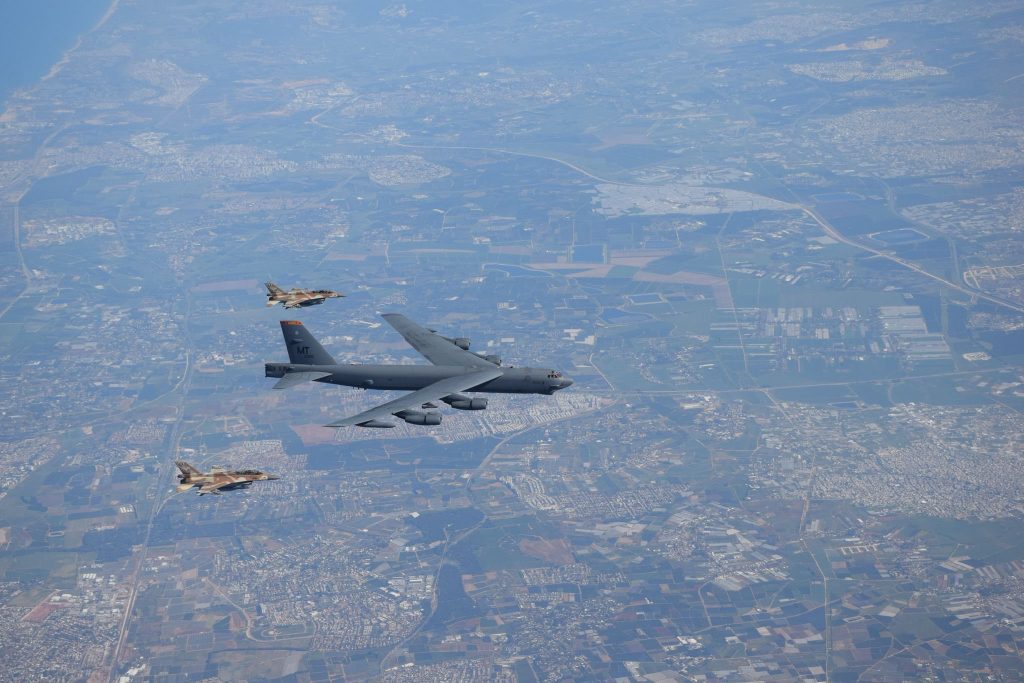
Israeli fighter jet 2 IAF F 16 Barak accompanied by American B 52 bombers Photo by IDF
For such an approach to be realistic and to avoid the Persian Gulf becoming another battleground between Israel and Iran, Jerusalem will be determined to strengthen relations with Beijing and Moscow. It is already doing so, cautiously but consistently. The proof is its reluctance to copy the United States’ policy on Ukraine. In the Russo-American war, which is really about resetting the world order, Israel’s position can be described as neutral, rather benevolent towards Moscow.
Like China, Israel has tried to mediate or facilitate peace between Ukraine and Russia, which shows a coincidence of vision between the two not only in terms of their relationship with Moscow, but also in their approach to the process of defining a new global order. At the same time, Russia’s choice, under pressure from NATO and the EU, to reinvent itself as an Asian or Euro-Asian actor with an emphasis on the latter word, may coincide with and possibly lead to a similar shift by Israel towards assuming an Eastern identity, leaving behind the dream of Euro-Atlantic membership (which, inevitably, is often crossed by nightmarish memories).
With China, Russia and Iran forming an increasingly obvious and more coherent triangle in correlation with such a course adopted by the Israeli government, Tehran will have to stop denying Israel’s right to exist and change both its Constitution and its actual policy in the region. This, even if only as an assumed prospect, would create the necessary preconditions for reaching a globally acceptable agreement on the nuclear issue.
Saudi Arabia’s association with the BRICS group and Turkey’s strategic autonomization in relation to NATO (a process which, like neo-Ottomanism, no longer depends on President Erdogan’s electoral victories, except at the level of nuance) will encourage Israel and Iran to move along the paths outlined above.
WHAT romania’s ex-FOREIGN MINISTERS SAY
We asked questions to several former Foreign Ministers of Romania, and we received answers from Teodor Baconschi, Cristian Diaconescu, Teodor Meleșcanu and Adrian Severin (listed here in alphabetical order).
Faithful to the U.S.-triggered crusade between “democratic states” and “authoritarian” states, Teodor Baconschi believes that “with the Joint Declaration obtained in Beijing, China is emerging as the leader of the new coalition of states with authoritarian regimes, beyond their specific ideology“. Therefore, China does not appear to him as a global and/or regional leader, but merely as the head of the group of states with authoritarian regimes, although authoritarianism coexists with a variety of ideologies, unlike, apparently, democracy, which is inspired by a single ideology.

Obviously, he deems that opposition to democratic states is strengthening as authoritarian regimes coalesce. They are becoming increasingly hostile elements and the global ideological struggle is becoming more acute.
Although he believes that, despite the agreement with Shiite Iran, “Riyadh will not alienate itself from Washington”, Teodor Baconschi is convinced that the desirable failure to institutionalise the “dreamed-of anti-Western alliance” depends only on “Euro-Atlantic cohesion, which is under increasing strategic pressure“. He also believes that the agreement between Iran and Saudi Arabia, achieved with the involvement of China, cannot be seen as a “resuscitation of BRICS, which has capsized, failing to outperform the G7 economically“. (We remind you that, according to the latest statistics published in the U.S. and EU, the BRICS contribution to global GDP is 31.5%, while the G7 contribution is only 30.7%.) Under such conditions and taking into account that “it is internationally isolated – as shown by the score of successive votes in the UN General Assembly“, the Russian Federation is “eager or even doomed to achieve a new format” of BRICS. From this prognosis, it can be deduced that the normalisation of Iranian-Saudi relations, in which Russia is also known to have cooperated, would be a step towards the expansion of BRICS by integrating the two states, making it an “anti-democratic bloc“, a “new informal league” whose “lowest common denominator seems to be the presence of immovable leaders who have already concentrated all executive power“.
Finally, former Minister Baconschi anticipates that “the anti-democratic bloc will act under the demagogic umbrella of pacifist, social justice and post-colonial ‘emancipation‘ motivations, thus finding a paradoxical point of convergence with radical-progressive political forces in the West, which support an almost identical agenda“. It remains for us to identify these ‘radical-progressive’ Western forces with a pacifist, social and post-colonial agenda. Until then, we understand that advocating peace during the war between the U.S.-led democratic coalition and the Chinese-led anti-democratic bloc is the hallmark of authoritarian regimes. Dictatorships are pro-peace and democracies are pro-war. Here is an important step towards defining and differentiating them.
Former Minister Cristian Diaconescu notes that “China’s approach as a neutral mediator in the highly polarised context of the Middle East, whereby Saudi Arabia and Iran have resumed diplomatic relations, came as a surprise at the global level.” This observation simultaneously highlights the difficulty of the endeavour (measured by the difficulty of the problem and the context in which it arose) and the importance of the achievement of a China characterised as a neutral mediator, rather than a plotter concerned with organising an “anti-Western league”.

“Ever since the Iranian Revolution in 1979, the rivalry between the two states has generated geopolitical fault lines with extremely complicated reverberations, regional leadership developments, sectarian rivalries and even military confrontation.” – Diaconescu adds, noting that China’s success also lies in creating prospects for overcoming conflicts generated by the absence of regional leadership or rivalries in asserting it, by bringing in an actor which is both from the outside (i.e., outside the Middle East) and from the inside (i.e., from within Asia, not from outside such as the U.S. or the EU).
The former Minister believes, however, that not all conclusions can yet be drawn and that, given the tense past of Saudi-Iranian relations, their evolution in a fluid regional and international context will have to pass a difficult test of time.
“Allegedly substantial U.S. support is an issue under discussion for Saudi Arabia amid U.S. concerns about the crisis in Ukraine and tensions in the Indo-Pacific region. For Iran the benefits are obvious and are related to emerging from international economic and political isolation.
For its part, China wants to position itself as a responsible peace broker, responding to criticism of its support for Russia. It remains to be seen to what extent China will be able to maintain its neutrality in the face of the extremely complicated politics and the highly unpredictable developments in the region.” – Cristian Diaconescu points out, and he concludes in cautious terms: “One not really knows who will really gain from the Saudi-Iranian deal.” In any case, former minister Diaconescu’s analysis is placed in a regional context, without touching in any way on the issue of the U.S.-led war between “democracies” and “autocracies”.
Teodor Melescanu deems that “the agreement to normalise relations between Iran and Saudi Arabia plays a particularly important role for the situation in the Arab region, and has an impact for international geopolitics. Both countries are major producers of energy, oil and gas, with economic and military capabilities, which will make the Arab region very important, but also open the door to relations with the European Union.“
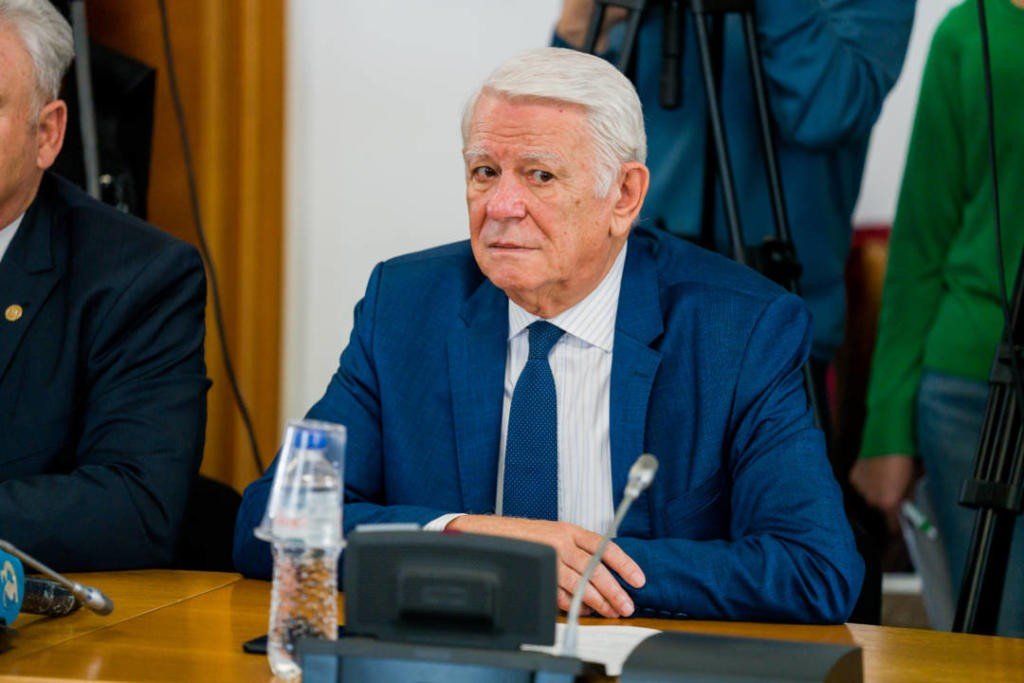
Therefore, far from seeing the Iranian-Saudi agreement as an act of consolidation of an “anti-Western and anti-democratic bloc“, Teodor Meleșcanu identifies an opportunity for the development of a cooperative relationship between the EU and the Middle East region. In addition, he insists on the need to understand that China “will be one of the States interested and involved in this area, in the context of a competition between the U.S. and China“.
How should Romania relate to this regional opening and global competition? Former Minister Meleșcanu points out that “at present, Romania is the most important country in the Black Sea, through the port of Constanta and continuing along the Danube to the centre of Europe. Romania’s position must be one of economic openness to the countries of the Arab region, to all countries, including Iran and Saudi Arabia. This very interesting diplomatic move by Iran and Saudi Arabia also marks a very important political development at international level. The normalisation of Iran’s relations with Saudi Arabia should be a very good opportunity for Romanian diplomacy if we have the intelligence to capitalise on it… including by developing relations with other states in the region and Israel. Romania, a member of the European Union, is the eastern border of the EU. In the current circumstances, our country can become an open gateway for Europe to the Arab countries and Israel, which play an important role for peace and economic development not only in the Middle East, but also in international security. We have this opportunity and we should not miss it. It would be a shame to lose it in the quagmire of Romanian politics.“
We could not say that Teodor Meleșcanu is part of the “radical-progressive Western forces” that “act under the demagogic umbrella of pacifist motivations“; however, it is certain that his position is that the agreement announced in Beijing offers Romania the chance to pursue a policy oriented towards peace and development, without leaving the “bloc of democratic forces”, but, on the contrary, by exploiting its membership in this bloc.
Ex-Foreign Minister and former President of the OSCE Parliamentary Assembly, Adrian Severin says that “the Iranian-Saudi agreements in Beijing are a sign of change of locomotive on the global train heading to the new world order. The locomotive is made in China and the train has several carriages designed by Asian political engineers. The train’s timetable is set according to Asian time. If the passengers of the collective West don’t get on this train quickly, leaving aside their silly controversies about who should be the director of the museum of Euro-Atlantic history, they risk being left on the platform of history, waiting for the next train, which no one knows when it comes.“

According to Severin, “the war between democracy and autocracy is a demagogic narrative designed to hide the absurd struggle for survival of the unipolar world system, which, as everyone knows, is dead. However, we risk a war of civilisations if we persist in defining those who are not like us according to our own criteria, and not according to the criteria by which they define their way of living and thinking in line with their cultural traditions and history, circumscribed by geographical and demographic variables.“
“The agreement between Shias and Sunnis, between Persians and Arabs, mediated and facilitated by ‘Confucian communists‘, shows that cultural barriers are not insurmountable and that what appear to be hereditary conflicts and enmities can be transformed into ingredients of peaceful coexistence. What separates us can also unite us, when relations between the people who inhabit a given space are allowed to develop according to their interests, not under the domination of third powers’ interests.” – Severin said. He added: “Romania must be a champion of peace that awakens its allies and partners to reality, making them understand that just as the Asian order, whose progress is now facilitated by the weakening of the Euro-Atlantic powers’ interference, can be a way of standardising the global order, so too a reborn order of the Euro-Atlantic northern hemisphere can give its nations the ability to sit down at the negotiating table with representatives of other geographical regions and cultures to build together a synthetic order capable of ensuring peaceful coexistence and sustainable development for all and everyone. The U.S. is not, cannot be and must not be Asia’s leader; instead, as China emerges as a top leader of a multipolar post-American world, the definition of the world order cannot be left to Asia alone, but should be the outcome of a synthesis reflecting the contribution of all the world’s great cultures and resulting from negotiations with the participation of representatives of all such cultures.“
There is nothing more to add to these comments.