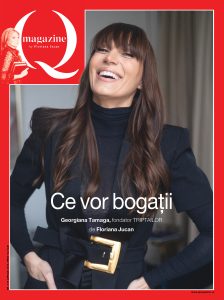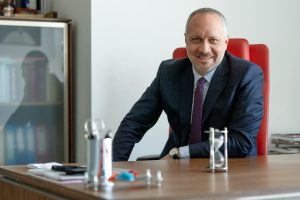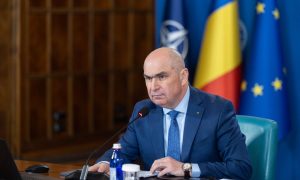
Romanian Foreign Minister Teodor Meleşcanu explained in an interview with Q Magazine why we have not closed our embassy in Damascus and why we did not have a nomination for UN leadership. What do we want from China, how can we recover the impoliteness to Japanese Prime Minister and how did the concept of national sovereignty change in today’s world? These are some of the questions that Teodor Meleşcanu answered … diplomatically.
Citeşte AICI INTERVIUL în limba română.
PORTRAIT OF A DIPLOMATE: FROM KISSINGER TO MELEŞCANU
In an interview with Oriana Fallaci, Henry Kissinger, a diplomat par excellence and a man who has inspired at least the last four or five generations of diplomats, told her that he was neither the tormented and mysterious character that some people think, nor that cheerful man who always smiles, as others describe him. How would Kissinger describe himself? “I will not tell you. I will not tell anyone! ”
The experience I have had as a journalist during the meeting with Romanian Foreign Minister Teodor Meleşcanu was similar. He did not want to say how he was or maybe my “professional infirmity” was to blame for not being able to find out.
The diplomat itself is a hermetic universe. Studying in school and perfecting a whole life not only to be always circumspect, but especially how to code in a saving manner whatever could be used against him later on. Because a diplomat lives most of his professional life among strangers and has the guillotine over his head that a single word (for example, “opponent”), which for anybody else can represent only a certain term or even a metaphor, if it is spoken by him in public circumstances, may give rise to a diplomatic conflict that transcends his person and affects the interests of a country.

That’s why my expectations to get those truths that could become news the next day for fellow colleagues were minimal. So I avoided disappointment. But I did not resign in front of the speculative character in front of me and I searched in the memory of some people who knew him, seconded him or completed him in different periods of his 50-years diplomatic carrier.
LIVIU BOTA: A STRONG NEGOCIATOR
Liviu Bota worked for almost three decades for the United Nations, being one of the Romanians who have reached the highest levels in international diplomacy. Superior Political Advisor at the United Nations Centre for Disarmament in New York (1973-1980), Liviu Bota became the first director of the United Nations Institute for Disarmament Research (UNIDIR) in Geneva in 1980, remaining here for seven years.
In 1988 he was appointed senior advisor to the UN Deputy Secretary-General for Human Rights until 1992, and later headed several UN-led missions in Somalia, Tajikistan, Georgia. Currently resident in Geneva, he answered my questions during a telephone conversation.
Read here: Lessons learned from war
“On my departure from the MFA as an international official at the UN Secretariat in New York, I handed over to my eminent colleague and friend Teodor Meleşcanu the files I was in charge with. Two of them were extremely important. One concerned the UN Committee for the peaceful use of extra-atmospheric space, with two subcommittees – legal and technical-scientific. Several legal instruments have been developed in this framework, most notably the Treaty on the Principles Governing the Activities of States in Exploration and Use of Extra-atmospheric Space. The second was the UN Committee on the bottom of the Seas and Oceans outside of the national jurisdiction of the States.
In this framework, inter alia, what became later Law of the Sea was developed. I do not know how long he has worked on these files, but undoubtedly, among Teodor Meleşcanu’s activities as a diplomat is also the participation in the Geneva Disarmament Committee and the UN Commission on International Law, where he was a personal member”, says Ambassador Bota. We both agree that Meleşcanu can arrogate, without mistaking himself, the merit of being one of the main artisans of obtaining the most favoured nation clause.
“After all, what he later did as a diplomat and as a holder of various dignities showed that Meleşcanu was a balance factor and a strong negotiator. History will especially note what he did as a political man,” Liviu Bota confesses to me.
ACAD. MIRCEA MALIȚA: HE IS, ABOVE ALL, A CULTIVATED MAN
Academician Mircea Malița was Romania’s Ambassador to the UN and Geneva between 1981 and 1982. We are right around his 91st anniversary. He is increasingly discreet in recent times, but I exploit the good relationship we have to ask him to accept a meeting for the sake of Teodor Meleşcanu. I feel from the phone that he is cheering up and exclaiming with joy: “Aaa, Teo! Sure! I’m waiting for you! ”
Years ago, Academician Maliţa told me in an interview with Q Magazine that “Romania has given up its sovereignty.” The declaration has created a furore in the political environments, but especially in the diplomatic fields. We recall the moment and the academician admits “he had courage, saying that!”
If he chose a single attribute to describe Meleşcanu, the academician says it would be “CULTIVATED”: “I would give a general culture test to all who want to occupy the position of minister or high dignitary in the state. I and Meleşcanu used to talk for hours about paintings, what I read about, books, and classics. That’s what I have always appreciated most about him. He knew everything about everything. ”

“Teo attended the courses of the Institute of International High Studies in Geneva (1967-1970 – n. red.). It was one of the most important schools in the world. Even the king of Saudi Arabia, I believe (I do not remember exactly), had to send a letter to the principal asking for some Saudi diplomats to be accepted. They were very exclusive. We had a very good relationship with the principal and we managed to get for Romania the acceptance of ten diplomats to attend the Institute’s courses. Meleşcanu was one of them. He entered the MFA just one year before, “says my interlocutor.
Three years later, in 1973, Teodor Meleşcanu was awarded the scientific title of Doctor of Political Science and International Law at the University of Geneva.
Maliţa evokes the moment when he meets again Meleşcanu, not in Central from Bucharest, but in Geneva: “He had been posted as Secretary II to the Permanent Mission of Romania to the United Nations and other international organizations in Geneva since 1978. I was appointed Ambassador to the United Nations in February 1981, and, because Elena Ceausescu came up with the idea of making savings, not paying two ambassadors, I practically covered both the Geneva and Bern offices. On Monday morning I was going to Bern, where I was staying for two days, and on Wednesday I came to Geneva. However, I have to confess that all my diplomatic performances, for a year as I have done this commute and coordinated practically two embassies, are due to the team I made with Teodor Meleşcanu.
He was preparing all the papers, all the documents, all the diplomatic protocols, he set up my schedule, my score, he set up not only the meetings, but also their prioritization. We did not change anything, because everything was perfect. Not even a comma. I can say he was an ambassador for me and that I had more of a representation function. He paid a lot of attention to detail, a professional rigor I had to recall for all my life. He was me.
In 1982 I was appointed as Romania’s ambassador to the United States and only to get the most favoured nation clause granted by Americans, which was only valid for one year, but which could be granted again, I had to make a tour to at least 50 diplomats, congressmen and senators, who were part of the committee deciding who was granted the clause.
I wondered a hundred times, after the Geneva years: Where would Teo be, to solve this? Where is Teo, to prepare this meeting? Where would Teo be, to draft this Protocol? I missed him enormously. I have never met a diplomatic professional relationship like the one between me and Teodor Meleşcanu. ”
I leave Mircea Maliţa, whom I leave with the joy of evoking this relationship of Siamese diplomats, and I turn to Ambassador Sergiu Celac, another diplomat whom I invite to tell me about Melescanu.
SERGIU CELAC: HE IS A SURVIVOR
Foreign Minister in Petre Roman government, Celac entered Central five years before Meleşcanu and was ambassador to the UK, having various missions in the Balkan-Adriatic region, Central Asia and the Caucasus. One of the memorable moments of his career as official interpreter of the President of Romania remains the one in which he ascended to the royal carriage near the Queen of England and Nicolae Ceausescu. The two would not have understood one with each other without him.
Read here: Predictions at times of war
I wonder how the return of Meleşcanu to the head of the MFA after the elections in 2016 was seen. Three times Foreign Minister of Romania, once Minister of Defence and once Director of the Foreign Intelligence Service, we can say that Meleşcanu, with five mandates and an arch for more than a quarter of a century at the head of Romanian diplomacy, marks a record we can only meet with Dimitrie A. Sturdza, also with five mandates, between 1881-1908.
“Almost paradoxical, but not surprising for specialists, his appointment and re-appointment were received with a sigh of relief in the world’s chancelleries, large or small, allied or not. Finally, a well-known entity, a man with whom to work, a strong negotiator but always fair, well-knowing of the sensitive files”, Sergiu Celac tells me.

For diplomats, predictability accompanied by flexibility is a virtue honoured in diplomacy, perhaps even more than in politics. At the same time, management of the unexpected is always a basic function of foreign policy. He tells me that in both chapters – predictability in strategic options and anticipation power in the tactical zone – Teodor Meleşcanu has proved his full qualities out of common, during a brilliant career.
“Besides the experience gained at the school of life in complicated missions of great responsibility, Meleşcanu distinguishes himself as one of the best Romanian scholar diplomats, with a serious Ph.D. awarded by the Institute of High International Studies in Geneva under the leadership of the famous professor Jacques Freymond. Solid theoretical foundation merges in his case with an in-depth knowledge of international law and relevant historical precedents, reflecting organically in everything he says and does.
To this is added a fine sense of humour, slow, Transylvanian humour, with frequent accents of subtle self-irony, which helps him to defuse through smiles even the tensest situations. As a leader of the people, Meleşcanu exerts a gentle but firm authority, imposed by persuasion, not by rage,” says Ambassador Celac. In a way, it is what Mircea Malița told me, who began Meleşcanu’s portrayal, shaping his intellectual quality almost before the diplomatic one.
Maliţa went with the exercise to the point where we both imagined a political class where leaders should first give a general culture test. But we both succumb to the question: “Who to be those evaluators agreed by politicians like the supreme court?”
Celac sees in Melescanu a SURVIVOR of the small-scale battles that decimated the Romanian political elite in the last almost three decades. “In the troubled times that we are living and still waiting for, he is a tonic presence, inspiring trust and security,” is the conclusion of Ambassador Sergiu Celac, who has, for his part, nearly 60 years of diplomatic activity.
ANDREEA PĂSTÂRNAC: HE KNEW EVERYTHING
On one of the days of February I meet on the Government halls with the Andreea Păstarnac, former Minister of Romanians Abroad, currently the Foreign Policy Adviser of the Prime Minister Viorica Dăncilă. I took advantage of this accidental meeting to ask her about Meleşcanu. Although she worked a little with the minister of foreign affairs, she remembers one of the encounters with him, even at the beginning of her career:
“I had just taken in the MFA, I think I was 25-26 years old. I was with Doris Mircea, and so she was just taken in the Central. And one day, Meleşcanu passes by to us. I froze. He was Foreign Minister in his first mandate. Though he was not a man to be afraid of, his personality was overwhelming. When you saw him, he simply dominated with the stature, even if he did not says a word. You realize, we, two young women just taken in the ministry, we barely managed to scream a “Good Afternoon, Minister!”
To my surprise, Mr. Meleşcanu answered “Good afternoon, Andreea! Hello, Doris!” The minister knew us by name, though he did not think he had seen us before, or had done it anyway in passing. This was Meleşcanu: the man who knew the smallest detail that others completely ignored. That’s how he stayed the entire life, the diplomat who knew everything in every negotiation, not just about the topic, but also about his dialogue partner! ”
SIMONA MICULESCU: HE WROTE HISTORY
In her turn, Simona Miculescu, who has been for many years the Ambassador of Romania to the United Nations and who is now the representative of UN Secretary General Antonio Guterres in Belgrade – the highest international diplomatic dignity owned by a Romanian – tells me about Meleşcanu in details, especially as his former spokesman, a quality in which I have known her. It has been many years since then, and we have consolidated a sublime friendship that has not taken into account topography.
She’s been a few days in Bucharest. It is our first meeting in 2018 and we are preparing to go to a play at the Jewish Theatre. We have kept the good habit of sharing the joy of an artistic act, whether we see an opera at Metropolitan, whether we’re going to a Broadway musical or a theatre play in Bucharest.
We are talking about Belgrade, about the exceptional Romanians that represent us abroad and we return to Meleşcanu. Simona speaks with great gratitude about him: “He was the person who, in the 1993, a reference year gave me the chance to be the first woman spokeswoman in the history of the MFA! An unforgettable experience that has formed me in a profound, comprehensive and sustainable manner! It was a real chance, not only professionally, but also at the human level, because I had to deal with a charismatic minister who understood the need for transparency of the institution, whom he liked to communicate, he did it generously and patiently, so everything was an intense, exhausting exercise sometimes, but full of positive tensions. ”
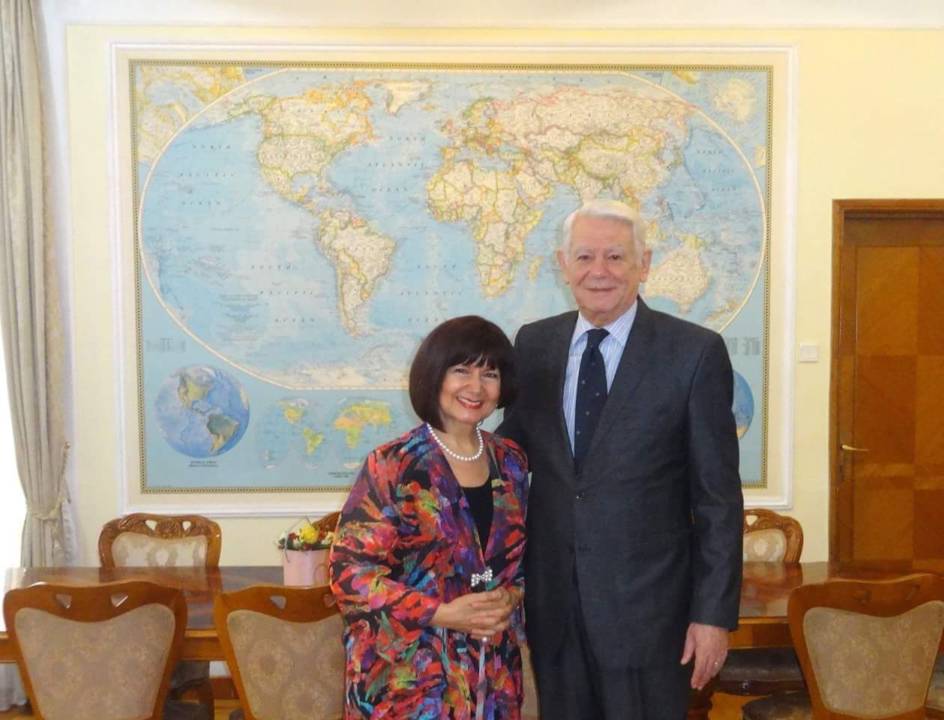
He is one of the memorable landmarks, one of the most respected mentors in her diplomatic career. “Professionalism, the huge amount of accumulated knowledge, the elegance, the charm, the intellectual grace, the subtle humour, the fine and constructive irony that has always characterized his diplomatic performance and dignity have contaminated me forever. Being a true career diplomat with a great experience and expertise – two distinct notions, of which he was very fond of and often quoted them – was an absolute model for us, the young diplomats he supported and formed with affection, patience and diligence.
He had a very sympathetic way to keep us alert, interested and attentive: in every bilateral meeting he had, regardless of the interlocutor, he always found an opportunity to test our diplomatic knowledge as well as the quality and promptness of the reply. He was always pretending to forget a word, a name, or a notion, and he turned toward us with a slightly amused glint in his eyes, calling for help. It was, in fact, a diplomatic and intellectual training that I appreciated a lot over the years,” tell me Simona.
Simona Miculescu tells me nostalgically what the honour it was for her to second him in the field of public communication – either as a spokesman or director of the MFA Press Department – in a year that included, among other things, the victories and real-time demarches for us as a country: a year in which Romania signed the Association Agreement with the European Communities and their Member States; the year in which Romania was received in the Council of Europe; the year in which our country obtained the status of Francophonie member, at the 5th Summit; the year when, in talks with the General Secretary of those times, Manfred Wörner, Teodor Meleşcanu first stated that Romania is in favour of joining the Euro-Atlantic structures and the year when he has contributed substantially to the negotiation of the bilateral treaty with Hungary – which meant so much for the perspective of Romania’s integration into European structures.
Teodor Meleşcanu taught those with whom he worked that the diplomat must build the future without forgetting the past, that he must always remain within the limits of his mandate, but having the creativity to choose the most appropriate means to convince. He taught them that a diplomat must know how to turn a failure into success and defend the success of failure.
“From Teodor Melescanu I have kept in mind that from the writing of a country position, from the negotiation of a treaty to the organization of a summit, the diplomat writes, to a lesser or greater degree, the history of our country. As Teodor Meleşcanu did it for decades of diplomatic and political career! ”
She remembers that the current Foreign Minister often evokes Nicolae Titulescu, the Romanian diplomat who was twice elected secretary-general of the United Nations (when the institution was still based in Geneva). “I think that Teodor Meleşcanu is perfectly fitting what even Titulescu said: “And even if I am not a light, but a candle, it is enough. And even though I will not be a candle, it is still enough, for I have endeavoured to light the light. “
DIPLOMATIC VICTORIES
If I were to summarize in a few lines the professional superlatives of Teodor Meleşcanu on several occasions, I would recall that he is the artisan of the Treaty of Understanding, Cooperation and Good Neighbourhood between Romania and Hungary, which he signed in Timisoara on September 16, 1996, together with his counterpart László Kovács.
On January 26, 1994, he signed the Framework Partnership Document for Peace at the headquarters of NATO, urging this signature to be his personal initiative. Romania has thus become the first Central and Eastern European country to join the Partnership for Peace. The same year followed Poland (2 February 1994), Hungary (8 February 1994) and the Czech Republic (10 March 1994).

Also, Meleşcanu filed on June 22, 1995, in Paris (the French Foreign Ministry held then the six-month presidency of the EU), to his counterpart Hervé de Charette, the official request for Romania’s accession to the European Union.
The current Foreign Minister thus binds his name and personal contribution to the launch and implementation of the most important strategic objectives Romania has had since 1989.
We have put in a secondary plan his mandate as Defence Minister or Director of the Foreign Intelligence Service, considering that they complete the complex portrait of Teodor Meleşcanu, but he remains in the public consciousness as a DIPLOMAT.
USA AND DONALD TRUMP
The most important election took place a year ago in the United States, which overthrew an old political order. Do you see President Donald Trump as a factor of political instability for the world?

The United States is the oldest and largest democracy in the world, a global stability factor. That’s how they stayed after the last election. President Trump has been democratically elected by the American people and, as a strategic partner of the US and NATO ally, we have full confidence in this choice.
EST VERSUS WEST IN EUROPE
Europe seems divided in two between East and West. Brussels does not look with friendship the Eastern countries. Why has this schism evolved and how do we recover it?
We cannot talk about a lack of friendship between the European Union and Western European countries as opposed to the Eastern European countries.
Read here: Romanians are leading the psychological war in Afghanistan
I will give you one example. Last September, Jean-Claude Juncker presented the report on the state of the European Union. His speech contained a number of positive references to Romania, which demonstrate once again that our country has an important role in the plans of the European Union Reform Commission. Romania has a unique chance to be among the Member States that will take the next step towards deeper European integration.
Beyond technical support for joining the Eurozone, President Jean-Claude Juncker urged European politicians to make a positive decision so that Romania and Bulgaria join the Schengen area.
His message was clear: if we want the EU to have stronger external borders, Romania and Bulgaria must join the Schengen area immediately.
The speech of the President of the European Commission clearly shows the intention of having a single united Europe, contrary to opinions that speak of a two-speed Union.
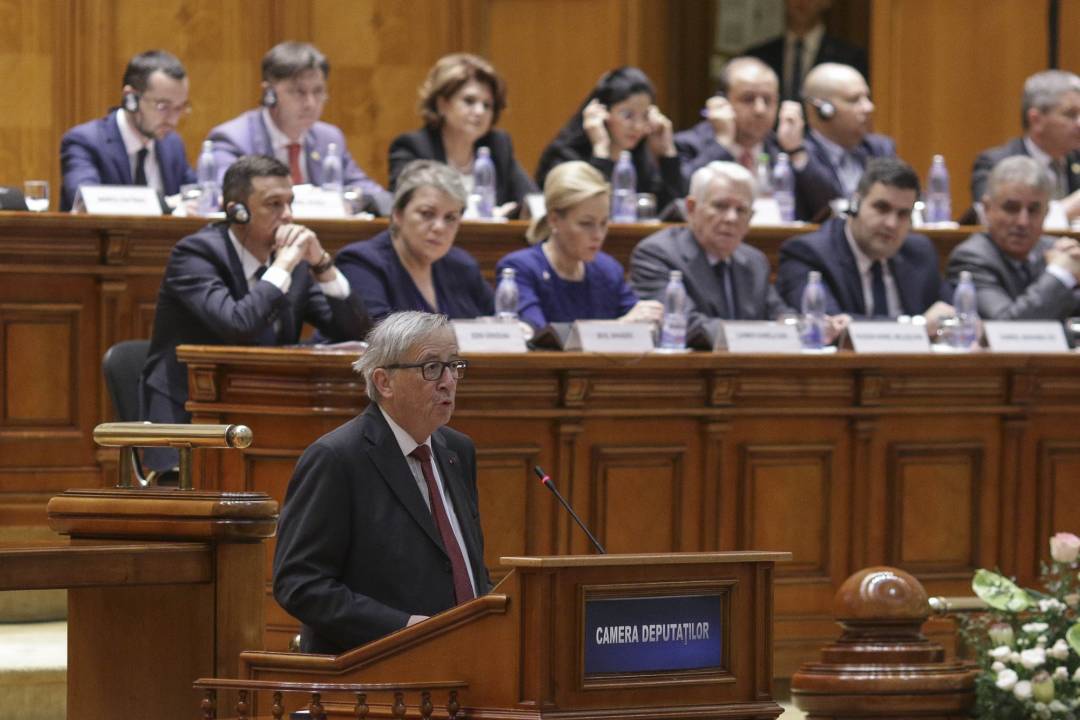
Our country has a real chance to actively participate in all stages of European reform and integration. The European Union is a successful project that has overcome and solved many problems over time and brought peace and prosperity to the European continent. Through its institutional structure and its rule of law, it provides sufficient means to resolve disputes through dialogue and negotiation. This has often occurred in the history of this organization.
It is important to focus our efforts on actions and objectives that unite us and avoid creating new divisions at European level. Euro-scepticism, division, fragmentation are trends contrary to the spirit of the European project. For Romania, it is an opportunity to reposition itself in the Union as a pro-active actor, an actor who comes up with solutions to the European project and the region it belongs to.
THE SITUATION OF ROMANIANS IN THE UNITED KINGDOM AFTER BREXIT
I know you negotiated with the British Foreign Minister about the situation of Romanians working in the UK. What is the situation today when we talk?
Throughout the negotiations between the European Union and the UK on Brexit, the Romanian authorities had as a priority zero the guarantee of the rights of Romanians living, working and studying in this state. A number of inter-institutional mechanisms have been established that have permanently monitored the progress of the negotiations and have maintained an active role in the dialogue with the UK, in constant consultations with the negotiating team led by the European Union’s chief negotiator, Michel Barnier.
At the end of this effort, Romania’s goal was reached, the outcome of the first phase of the negotiations with the UK confirming that European citizens, including Romanians, have as guaranteed all rights won or in the process of being acquired. In addition, reaching a second phase of the negotiations can only be achieved if the UK complies with its citizens’ rights commitments.
ABOUT RUSSIA
Putin’s concerns about NATO “which is at the Russian border” as being a “challenge” resemble the presence of the Soviet missile in Cuba in 1962 that would generate a crisis in relation to the United States, just as worried at the time. Is there a kind of paranoia from both countries? And I continue … why don’t we consider Russia a partner?
Romania wants pragmatic and predictable relations with the Russian Federation, taking into account the interests of both states, to be based on the norms and general principles of international law and on reciprocity. However, this desire cannot be materialized by making abstraction of the illegal annexation of Crimea or the situation in Eastern Ukraine.
We are preoccupied with the very serious accumulation of armed forces and Russian armaments at our Eastern border and at the Black Sea. The EU has responded to these developments by adopting sanctions, that our country has been associated with and supports.
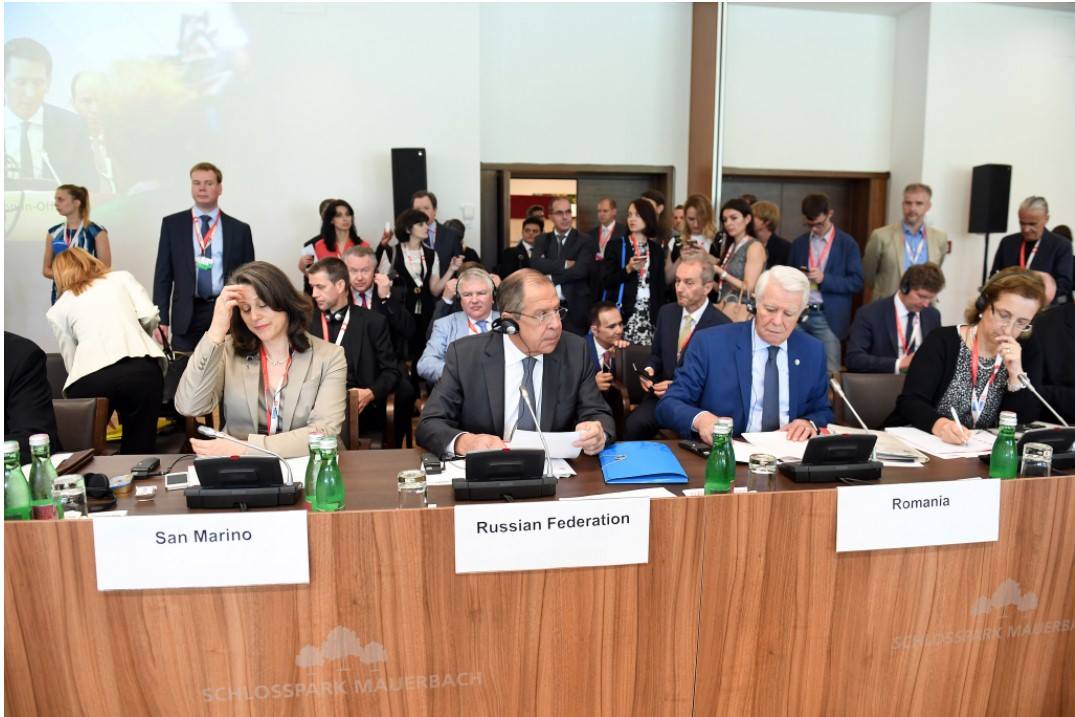
On the NATO line, we continue to support the dual approach promoted at the Allied level with regard to Russia, based on strong defence and deterrence, and, on the other hand, on the availability of pragmatic dialogue on the basis of reciprocity. It is a principled approach, adopted at Allied level in 2014 and reconfirmed at the Warsaw Summit in 2016, which reflects the overall parameters of the Alliance’s position, taking into account that the security climate on the Eastern flank has worryingly deteriorated in recent years.
We want a dialogue with Russia on those areas that are not subject to the sanctioning regime. In the first place, we pursue that our dialogue with Russia respects our interests and facilitates a predictable climate.
The RELATIONSHIP WITH CHINA
Why do we not exploit the relationship with China – which has an exceptional history – that is making increasing investments in our region?
We pursue deepening relations with P.R. China on a pragmatic basis and in the spirit of the values of mutual friendship and understanding that have consistently defined the Romanian-Chinese ties. The capital accumulated in bilateral relations is also capitalized in Romania’s input to the EU’s internal dialogue aimed at materializing the 2020 Agenda of EU-China Strategic Cooperation.
We have a special interest in the development of economic relations. China has become the second economic power of the world, with openness to international economic cooperation and a great potential, in terms of not only trade, but also investment. Romania is interested in capitalizing the multiple opportunities offered by the expansion of Chinese economic presence globally, respecting the principles of transparency, open competition and mutual benefits.
There is potential for Romanian-Chinese collaboration in the fields of energy and transport infrastructu

re. In addition, tourism has a significant expansion capacity, by increasing the number of Chinese tourists in Romania, facilitated by the prospect of reopening direct flights between Romania and China, on both sides.
Recent contacts confirm Romania’s commitment to one of the objectives of our foreign policy – to substantiate the Ample Partnership for Friendship and Cooperation with China. At the end of last year, Romania was the host of the Ministerial Conference on Energy Cooperation of the China – Central and Eastern European Countries format (“16 + 1”) and the 16 + 1 Energy Fair.
Complementary to the 16 + 1 format, we are also interested in capitalizing the potential of the Black Sea and Danube’s geographical position by participating in projects featured in China’s new silk road initiative – One belt, One road.
JAPAN
How will we recover the unforgivable impoliteness towards Japan?
The Japanese Prime Minister’s visit to Romania coincided with a moment of change in the Romanian executive. On the other hand, the government meeting, though not conducted at Prime Minister level, has achieved its goal, facilitating a consistent dialogue on the development of bilateral economic relations, appreciated by the Japanese side.
It was a result-oriented meeting where representatives of important Japanese companies that accompanied Prime Minister Abe in Romania highlighted the real interest in business development in our country. At the same time, Romanian ministers with economic portfolios presented the main economic opportunities currently offered by our country, as well as the commitment of the authorities in Bucharest to strengthen an attractive economic environment.
Concrete projects have been set out, such as the sixth Metro Line, from “Henri Coanda” International Airport at North Railway Station.
Following Prime Minister Abe’s visit, we are currently working on new actions regarding our relationship with Japan, paying special attention to expanding economic cooperation by organizing economic missions in both directions. Moreover, we are also thinking about organizing a visit of Romania’s Prime Minister to Japan, to continue the dialogue that began in Bucharest with the Romanian authorities.
TURKEY IS OUR FIRST PARTNER FROM OUT OF THE EU
How is our relationship with Turkey, our NATO ally, which plays an extremely important role in the migration crisis?
Turkey is our first trading partner outside the EU and our fifth global partner.
Turkey remains a key partner for the European Union and an important NATO member state, whose stability is essential for the effective management of regional challenges, including combating terrorism, migration, energy, mobility or economic issues.
Romania will continue to support Turkey’s European path, which we believe is both to its advantage and to the EU’s. Our common objective is to strengthen Euro-Atlantic security by strengthening NATO’s deterrence and defence capability in a coherent and unitary approach that will allow the management of all security threats, no matter where they come from.

We are also constantly assessing security developments at regional and international level, paying particular attention to Allied stability planning projects in the Western Balkans and Black Sea partner countries.
Unfortunately, the security situation in the Black Sea region remains very complicated, being marked not only by the lack of significant progress in resolving existing crises, but also by an escalation of violence in eastern Ukraine. The conflict in Ukraine has a negative impact on the whole Black Sea region and beyond.
THE WAR IN SYRIA
Romania has kept its embassy in Damascus and yet has no role in the Syrian crisis. Why?
Romania supports the unity, sovereignty, territorial integrity and independence of the Syrian state, as well as the fact that the only option to avoid generating a vacuum of power in Syria is the political and inclusive solution that allows all Syrian moderate groups and forces to participate in negotiations and governance of the country, during the transition period.
Over time, our country has ruled for the resolution of the Syrian crisis on the basis of the Geneva Communiqué (2012) and the UN Security Council resolutions, expressed support for the EU-UN emergency humanitarian plan, for the International Support Group for Syria (GISS) and the Special Representative of the UN SG, Staffan Mistura, as well as for the continuation of the Geneva and Vienna meetings, based on UN resolution 2254 of 18 December 2015.
Also, the materialization of Romanian support is reflected by contributions to Syrian refugees, including neighbouring Syrian countries, which house a significant number of refugees (Turkey, Lebanon, Jordan).
Considering the size of the Romanian community in Syria, Romania decided in 2011 that the of Romanian Embassy Damascus should remain operational, thus assuring consular assistance and protection for the benefit of Romanian citizens still living in Syrian territory. The Romanian diplomatic mission is the only EU representation in Damascus that provides the full range of consular services.

As recognition of the Romanian MFA’s capacity to manage consular crises, a number of states (France, Portugal, Canada, Australia, and Republic of Moldova) have entrusted Romania with the protection and consular assistance of their own citizens in Syria.
Romania has been appointed at EU level to coordinate the implementation of joint crisis management plans on the Syrian space, consolidating its profile of state providing consular assistance for the benefit of EU citizens. Therefore, our country’s role in this regard is relevant.
Why did not Romania use the chance to nominate a UN Secretary-General? We did not even have a proposal?
At that time, our assessment took into account all available options to promote Romania’s image and we consider that the choice to focus on building a strong campaign for a non-permanent seat in the UN Security Council was the best opportunity for Romania.
The candidacy for a new non-permanent seat in the UN Security Council (UNSC) for 2020-2021 represents, together with the rotating presidency of the EU Council, one of Romania’s most ambitious medium term foreign policy objectives.
Membership of the UN SC is the highest confirmation of Romania’s status as a responsible actor in the global community, fully connected to the dynamics of international relations, able to promote solutions to the contemporary world’s challenges.
Moreover, at the end of January for one year, Romania took over the chairmanship of the UN Peacebuilding Commission (PBC).
Romania’s participation in the Peacebuilding Commission, the decision to run for this title, as well as obtaining the presidency reflect the national goal of diversifying our country’s contribution to UN’s efforts in the field of international peace and security, being for the first time since the Commission was founded (in 2005) when our country has this important task.
POOR VERSUS RICH IN THE WORLD
In Davos, recently, business profits seemed to be the main concern. And yet … how do we reduce major differences between the rich and the poor? Who are responsible: governments, companies?
In terms of responsibility, it is important to note that in a world of multiple interdependencies we are dealing with a complex system of interactions and links between states as well as between states and non-state actors such as multinational corporations / companies or transnational, non-governmental organizations, etc., links aimed at contributing to economic growth, prosperity and the welfare of citizens.
In the context, I would even exemplify the European Union, which has been created to bring prosperity and has already done so over the past seven decades. There is a real political concern to solve the problem of poverty and economic disparities within the EU.
In the Lisbon Treaty clearly states this social dimension, this desire to ensure adequate social protection for Union citizens.
As in the case of societies, where there are economic gaps, so is the case of the gaps between development regions at EU’s level, but Structural Funds are tools to reduce them. One of the objectives of the Union’s 2020 Agenda is precisely the reduction of poverty and social exclusion.
At UN level, Romania has adopted the 2030 Agenda for Sustainable Development, which aims, inter alia, to eradicate poverty and combat inequalities.
From my point of view, poverty can only be reduced by economic growth, ensuring access to quality education and encouraging entrepreneurship. The latter is essential to ensure a healthy economy, based on small and medium-sized enterprises, to stop the extreme accumulation of capital in the possession of a small proportion of the population and to strengthen the middle class.
In any market economy, the private sector must be the engine of economic growth, capital allocation, and natural poverty reduction, but the state can intervene through support and encouragement policies and social measures when absolutely necessary. There is, therefore, a need for collective action by the market and the states.
In Romania, through our Governmental Strategy we included the increase in wages precisely because, for the majority of the workforce, they were at a very low level. Economic growth must be reflected in rising living standards. Romania ranks first in economic growth within the European Union in 2017, so we can say that we are on the upward path and, personally, I am confident that we will manage to reduce the economic gaps in the Romanian society.
As far as diplomacy is concerned, it can, of course, support Romanian companies to grow by supporting the expansion of the presence and adaptation of their businesses in sectors and geographical areas with opportunities. We want to stimulate Romanian companies to develop operations abroad, especially as the number of companies with such activities is lower in our country compared to other European countries.
I also want to highlight the government’s measures to support the business environment – for example, export support programs and start-ups. The development of Romanian capital is essential for raising the standard of living, reducing the economic gaps in society and continuing sustainable economic growth.
BALKANS
Is there almost no concrete talk- I am talking about investments, economic, cultural, diplomatic-building projects with the Balkan countries? Why?
In February, the Bulgarian EU Council Presidency held a Gymnich meeting, where EU foreign affairs ministers attended. Topics on the European agenda were addressed, but the issues of the Western Balkans covered a longer part of the discussion.
We also used this opportunity to reiterate our country’s interest in continuing the enlargement policy, an objective that will be pursued with persistence in the coming period, given that it is one of the priorities to be promoted by Romania in the first half of 2019, when we take over the rotating presidency of the EU Council.
Our attention to the development of relations with the Western Balkan states is also underlined by recent bilateral contacts; I will mention here my visit to Montenegro last November, where I had meetings with the President, the Prime Minister and the Minister of foreign affairs.
Also, in the coming period, I will be visiting Croatia and Serbia. I am considering a tripartite visit with Greek and Bulgarian counterparts in Bosnia and Herzegovina. On the other hand, it is important to mention the frequent participation of Romania in multilateral formats where the European perspective of the Western Balkans states is discussed.
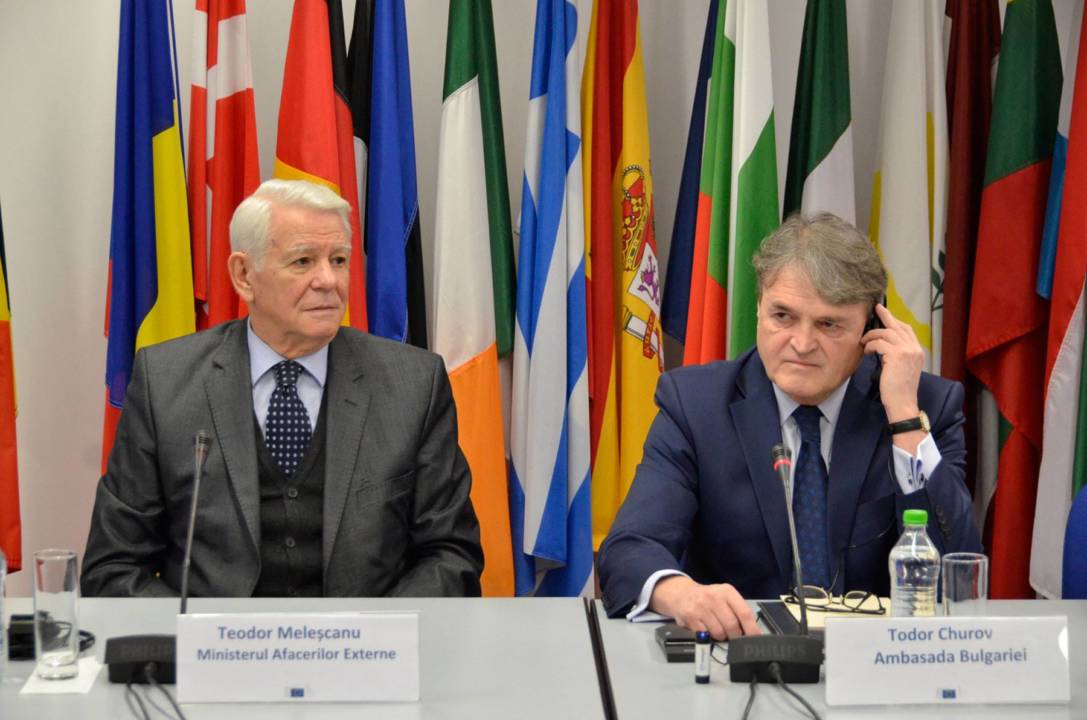
All these discussions also deal with economic themes, perspectives for development of economic, cultural, investment cooperation between Romania and these states. Specifically, we have a cross-border cooperation program with Serbia – IPA Cross-Border Cooperation Program Romania- Republic of Serbia 2014-2020, coordinated by the Ministry of Regional Development and Public Administration, as Managing Authority.
It is a program funded by the European Union with a budget of 88 million euros. As regards cooperation with Montenegro, we have provided technical assistance to Podgorica for reform efforts, through the Romanian Government Mobility Fund for governmental experts. We are cooperating with Bosnia-Herzegovina, Montenegro and Serbia in the implementation of the EU Strategy for the Danube Region.
Of course, in the relationship with Western Balkan states, it is necessary to mention our concern for regional security, given the diverse challenges faced by these states, in the context of a changing world affected by risks and challenges of diverse origins, from the effects of migration to those of radicalization or terrorism, the revival of nationalist rhetoric.
ROMANIA’S SOVEREIGNTY
Academician Mircea Malița, in his turn a diplomat of great importance, declares in an interview that “Romania has given up its sovereignty.” Is it so?
The contemporary international system of state actors retains the concept of sovereignty as a defining element of the state, but what is to be noticed is how this sovereignty manifests itself in the context of increasing global interdependencies.
The evolution of the states, and, of course, the evolution of Romania on the international scene has received a number of peculiarities given the increasingly complex changes of the international environment. I also refer here to supporting national interest in a context of growing challenges and, moreover, to the case of the European Union, a group of states that have resorted to the sharing of sovereignty in order to manage as effectively as possible the common problems they are facing with.
So we are not talking about a loss of sovereignty, but about sharing it. We can all see that, in the context of a globalized world acting individually, states are unable to achieve their governance goals, so a process of cooperation and coordination is needed.
And, in order to create this framework of cooperation, the EU states chose accession, integration into the EU, an option reflected in the awareness of the Member States that, in a challenging globalized panorama, one can only survive by sharing resources and ideas.
CENTENNIAL
What does the Foreign Ministry do, notably, abroad for the Centennial of Romania?
The marking of the First World War Centennial is a very complex action, which the Ministry of Foreign Affairs has assumed as a priority of public and cultural diplomacy.
The Great Union Centennial will be marked abroad through actions of historical and cultural profile, dedicated to a wide range of audiences and with an emphasis on interaction with young people.
Among the most important actions we propose, with emphasis on the involvement of young people, is the participation of Romanian diplomats as guests at history lessons held in schools or high schools abroad. Such visits will give our diplomats the opportunity to explain the history of Romania to young people from the states in which they operate. Also for young people, we plan to organize project, essay and photo contests about the history of Romania, the Great Union or testimonies of the common history during the First World War.
The Foreign Ministry wishes to organize abroad exhibitions, conferences with the participation of Romanian and foreign historians, commemorative ceremonies at the monuments of Romanian heroes abroad. We will have an approach adapted to the modern means of expression, demonstrating Romania’s creative potential.
In this regard, we intend to conduct an online campaign to promote successful Romanian projects in all fields, including education, research, civil society and culture, as well as tourism and investment opportunities that our country offers.
IN SHORT PHRASES, I WOULD ASK YOU TO REFER TO:
POLITICS
I am the vice-president of ALDE, the former vice-president of PNL and the creator, together with other colleagues, of the Alliances for Romania Party, which in one year scored 4.7% in the 2000 elections. I do not think I have to look into politics with anything but hope for the better.
MARINA MELEȘCANU
Marina Meleşcanu is the happiest event in my life, especially since she has offered me only moments of joy so far.
PROTESTS
Freedom of association and expression of opinions is part of the basis of Romanian and Western democracy.
AUTONOMY OF SZEKLERLAND
The decentralization and de-bureaucratization of the Romanian administration is one of the main directions of the Romanian Government, and its implementation answers the aspirations of all Romanian citizens, regardless of ethnicity or religion.
LACK OF DIALOGUE
It is a sadness amplified over time and leading to the inability to have broadly supported national goals.