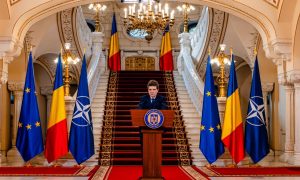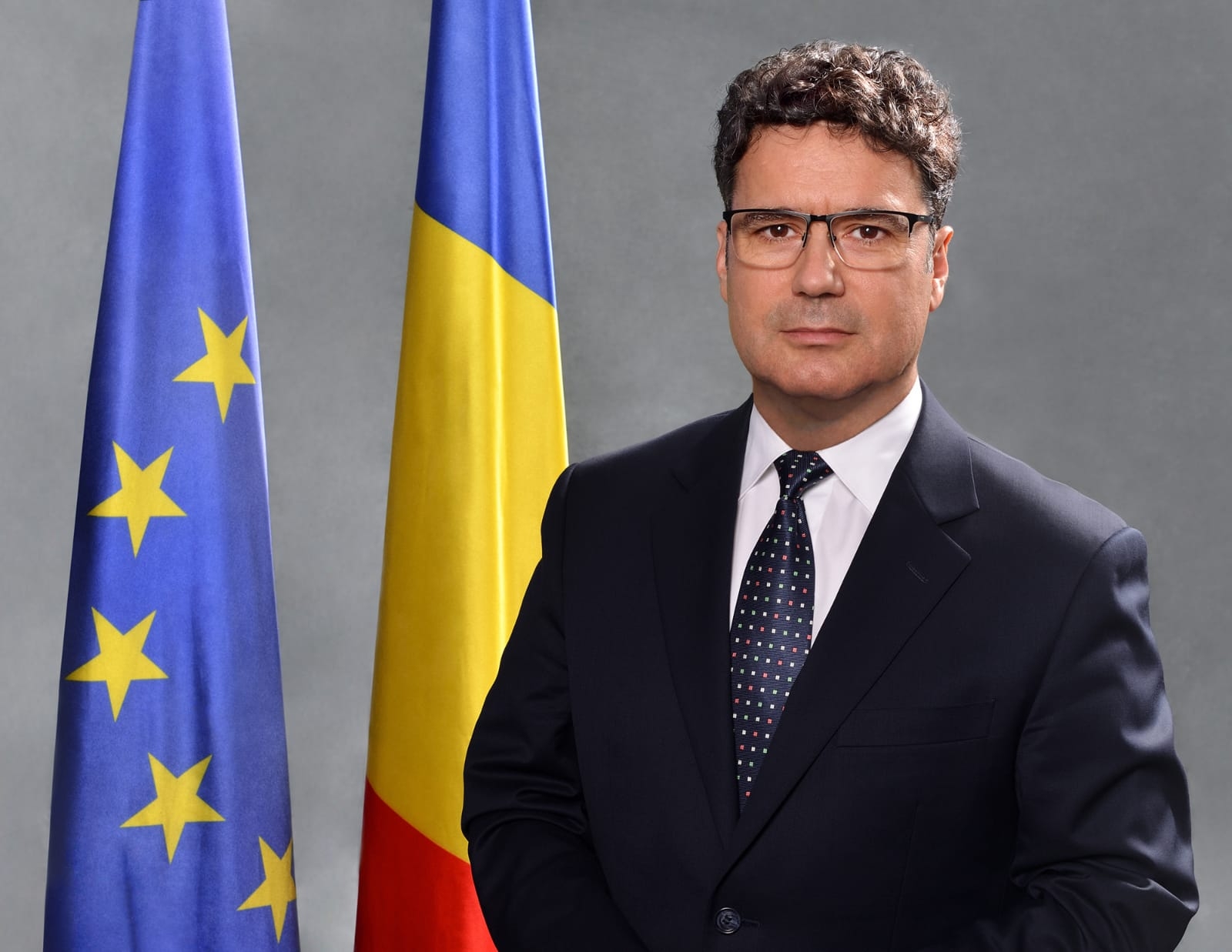
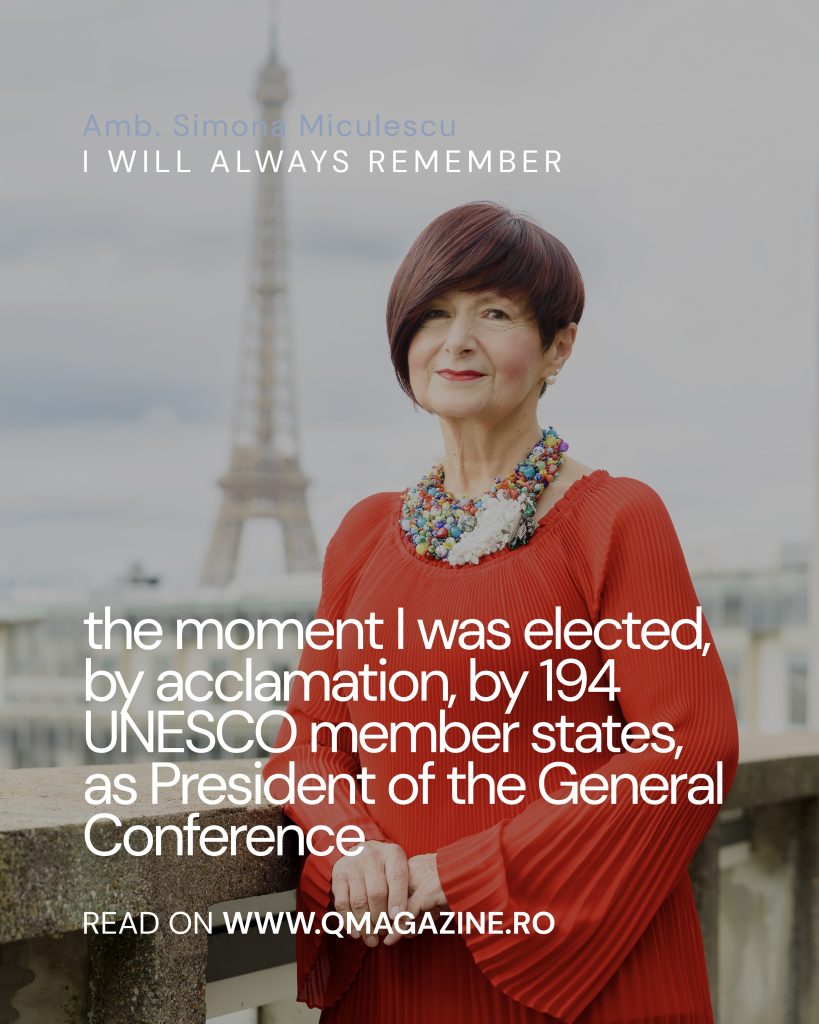
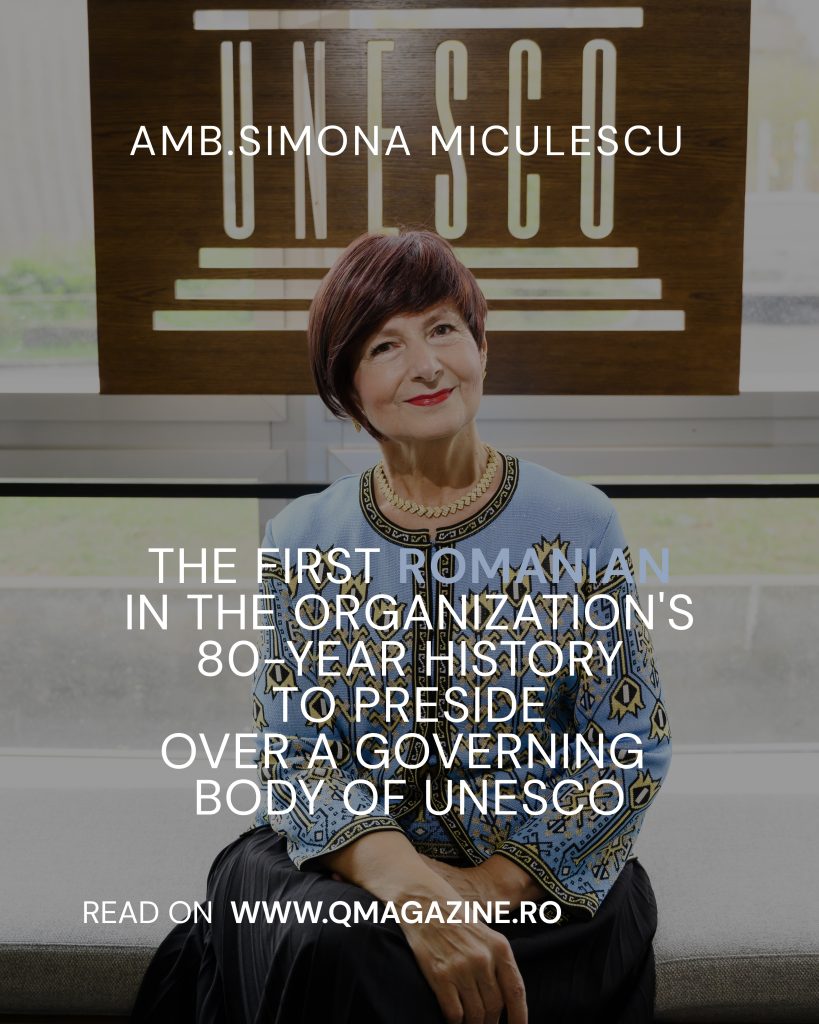
On November 7, 2023, in Paris, at the opening of the 42nd session of the UNESCO General Conference, all 194 member states uttered the same name. Simona Miculescu, Romania’s ambassador, was unanimously elected President of the organization’s supreme forum for a two-year term (2023–2025).
- Înalta Curte trage un semnal de alarmă la CCR: Măsuri aberante care lasă românii de rând fără apărare
- ÎCCJ sesizează CCR în legătură cu ultimele modificări aduse Codului de procedură penală
- Bolojan atacă PSD și explică de ce proiectul reactoarelor modulare are probleme
- PSD, PNL, USR și UDMR au căzut de acord pe legea salarizării
- Nicușor Dan intervine în scandalul transparentizării finanțării ONG-urilor



RESPECT EARNED THROUGH COMPETENCE
It was a historic moment: for the first time in almost seven decades of Romania’s membership in UNESCO, our country presided over a governing body of the organization. At the same time, Simona Miculescu became the first Romanian female diplomat and the fifth woman in UNESCO’s history to take on this position.

Ambassador Simona Miculescu initiated a large-scale project to digitize UNESCO archives with the aim of preserving humanity’s intellectual heritage and making these resources accessible online (only 5% of the archives have been digitized so far). Following significant advocacy efforts with a number of prominent figures from the diplomatic, intellectual, and private sectors, Ambassador Miculescu succeeded in convincing the United Arab Emirates to allocate a voluntary contribution of $6 million for the preservation of UNESCO’s intellectual heritage.
It must be said, without hesitation, that this vote was both a personal achievement for Simona Miculescu—for and on behalf of Romania—and a demonstration of professionalism, respect, and credibility, which honored our country more than any festive speech could have done.
In a world where diplomacy is increasingly confused with image, a Romanian diplomat brought balance, competence, and intellectual elegance back to the forefront.
It was a choice that speaks to something essential about the dignity of representation. Simona Miculescu showed that one can have authority and be heard without seeking the center of the stage.
Ambassador Miculescu practices neither the diplomacy of silence nor that of stridency, but rather the diplomacy of moderation—that rare art of speaking clearly, listening carefully, acting with discernment, and building bridges instead of walls. This is, in fact, the essence of his profession and the hallmark of a career that has traversed, with equal elegance, all the stages of representation: spokesperson for the Ministry of Foreign Affairs, presidential advisor, Romanian ambassador to the UN and UNESCO, senior United Nations official, and diplomat of balance in the Western Balkans.
I recall a scene that speaks more eloquently than any official portrait. After a meeting of the General Conference, I accompanied Simona Miculescu through the long corridors of the UNESCO headquarters. The building is vast, but on that day the walk to the exit seemed longer than usual. At every step, someone greeted her: ambassadors, officials, members of the UNESCO Secretariat, administrative staff. Everyone wanted to say a word of appreciation for her interventions that day or for a recent success. And she, with the same composed courtesy, would stop, listen, and respond—often with a precise, personalised comment. There, in those corridors, I witnessed what prestige truly means: one built on competence and respect, not on formal power.

On September 13, 2024, Ambassador Simona Miculescu initiated the International Conference “Celebrating a Century of International Intellectual Cooperation,” dedicated to the centenary of the International Institute for Intellectual Cooperation (IICI), the precursor to UNESCO.
Over time, Romania has had exceptional ambassadors to UNESCO. Nicolae Manolescu, the great literary critic and historian, brought the elegance of the humanist spirit and promoted the idea of culture as a living heritage. Adrian Cioroianu, historian and professor, continued this line through a modern intellectual presence, connected to younger generations. Simona Miculescu carried on this tradition, transforming it into a unique opportunity for Romania—taking over the presidency of the UNESCO General Conference, the highest position representing our country in this global institution.
During these two years (2023–2025), UNESCO has been led by three remarkable women—Audrey Azoulay, Director-General; Vera El-Khoury Lacoeuilhe, Chair of the Executive Board; and Simona Miculescu, President of the General Conference.
This triad did not start from scratch, but continued a tradition of female leadership inaugurated by Irina Bokova, Director-General between 2009 and 2017 – a friend of Romania and one of the most respected figures in the history of UNESCO. Under this succession of visions, the organization has maintained its coherence and demonstrated that it can be, through dialogue and lucidity, a space of global balance in a world where imbalance has become the norm.
THE MEMORY OF THE WORLD
But what sets Simona Miculescu’s mandate apart is her concrete and generative vision. She understood that an institution lives not only through decisions, but also through memory, and she made possible, by mobilising international partners, the most extensive digitisation program in UNESCO’s history—a $6 million contribution from the Sharjah Book Authority (United Arab Emirates) to transform the organization’s archive into a digital heritage accessible to the whole world.
At a time when only 5% of UNESCO’s archives had been digitised, this project became an act of rescuing humanity’s intellectual memory. More than 2.5 million pages of documents, 165,000 photographs, and thousands of hours of audio and video recordings will be restored and digitised.
These include the famous correspondence between Albert Einstein and Sigmund Freud, conducted in 1932 under the auspices of the League of Nations, a reflection of rare intellectual power on the causes of war and the possibility of lasting peace.
Einstein invoked the power of reason and education as an antidote to the instinct for violence, and Freud replied that only civilisation can transform destructive impulses into creation.
UNESCO would later consider this exchange of ideas as a founding act of its own mission: peace through knowledge and culture.
Martha Bibescu was also part of the same intellectual circles of the 1920s and 1930s, serving on the League of Nations’ International Committee for Intellectual Cooperation alongside Henri Bergson, Albert Einstein, and Paul Valéry, advocating even then for peace through education and culture. Alongside her, there will certainly be other Romanian names that we in Bucharest often forget too easily.
Through this project—or, more precisely, through Simona Miculescu’s vision and efforts—Romania has become an active participant in the restoration of humanity’s memory. What had been an inaccessible archive for decades is now being transformed into a laboratory of universal knowledge, where the past and the present engage in dialogue under the banner of reason and culture. It is both a gesture of modernity and a form of gratitude towards history, through which a global institution such as UNESCO rediscovers its own founding identity.
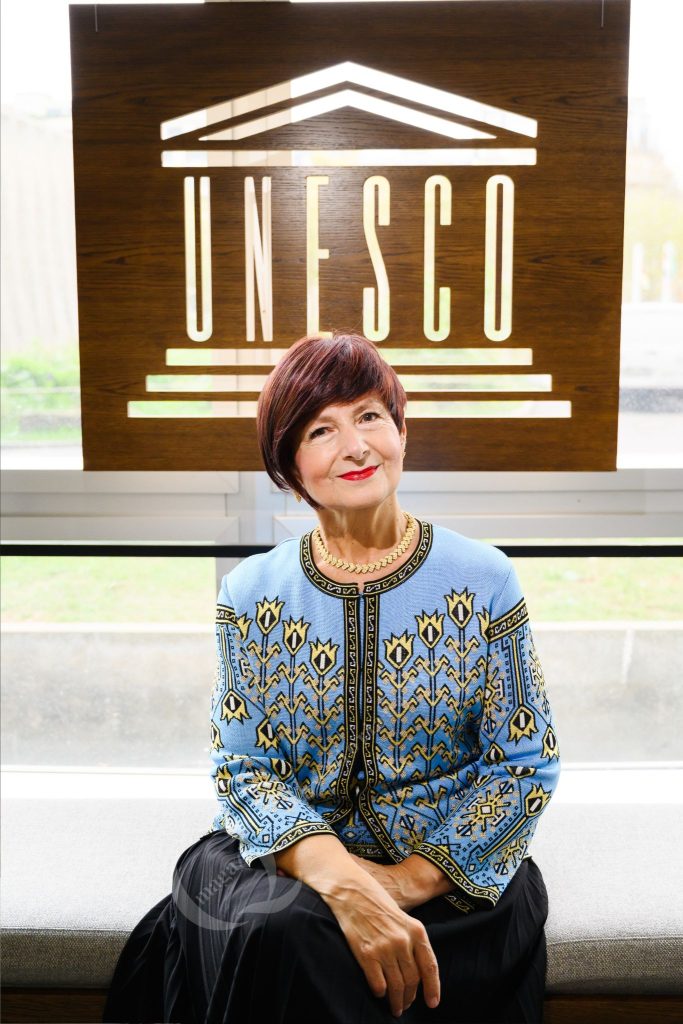
She launched the platform “Mentors on Multilateralism,” a project connecting female diplomats and leaders to support younger generations aspiring to a career in diplomacy.
As Simona Miculescu herself said: “Nature and our intellectual heritage are humanity’s most valuable assets. They are our passports to a sustainable future. If they disappear, we disappear too.” And on International Education Day in 2025, she added—evoking Aristotle—that “educating the mind without educating the heart is no education at all.” These words encapsulate her entire vision: a call for an alliance between reason and conscience, between science, ethics, and culture.
A LIVING SYMBOL
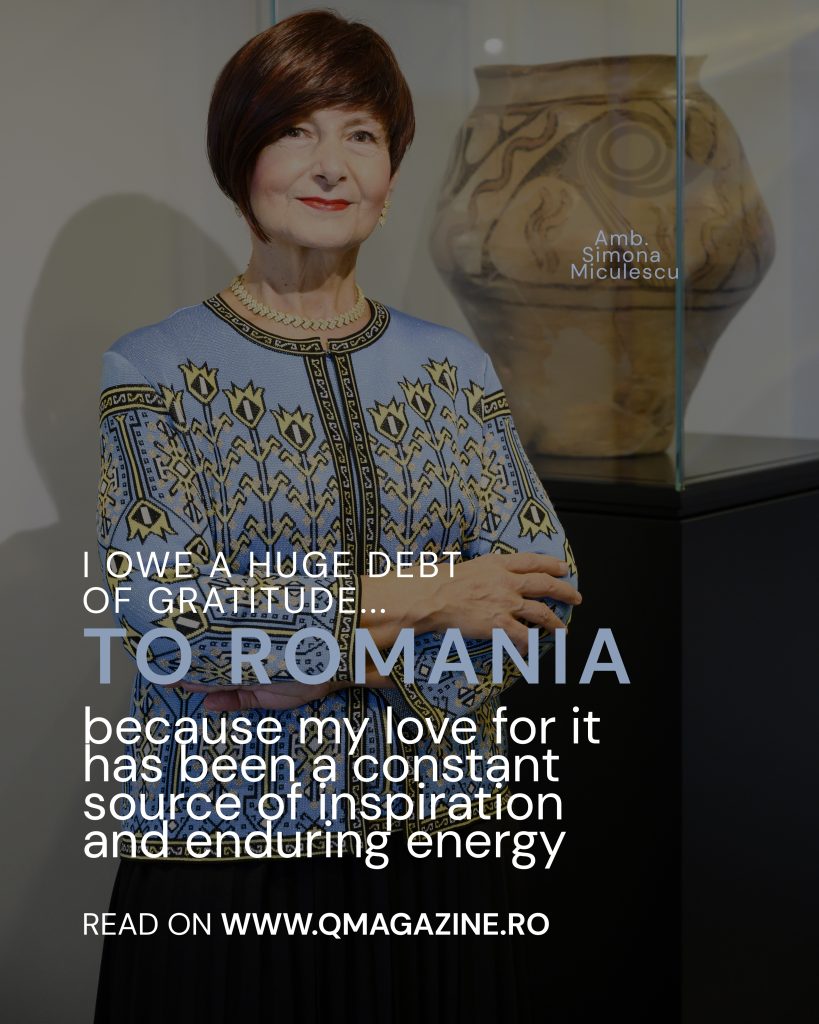
On another note, I remember another symbol of this Romanian cultural participation on the global diplomatic stage: the Cucuteni vase, one of the oldest pieces in the UNESCO collection, dating back over five millennia and donated by Romania in 1971—the year when the Ministry of Education was headed by the great professor and diplomat Mircea Malița. I first saw the Cucuteni vase in 2007, displayed on the 6th floor near the office of the then Director-General, Koïchiro Matsuura. I later found it again in the office of the President of the General Conference, restored with care and through the direct involvement of Simona Miculescu and other remarkable Romanians—people whom neither the media nor politicians take the time to acknowledge.That pot is no longer just an artifact, but a metaphor: civilisations disappear, but the spirit of creation remains, if someone brings it back to light. Around that object—viewed by hundreds of ambassadors and delegates from around the world—Romania became, without ostentation, present through culture.
None of this would have been possible without a special kind of understanding of diplomacy.

On the initiative of the President of the General Conference, together with the Presidents of three other UN institutions – the President of the General Assembly, the President of ECOSOC, and the President of the Human Rights Court – two joint declarations were signed in 2024, entitled “A Press for the Planet: Journalism in the Face of the Environmental Crisis,” and in 2025, “Reporting in the Brave New World: The Impact of AI on the Press and the Media,” emphasizing the essential role of free, independent, and pluralistic journalism in the climate crisis and in the era of new technologies.
Simona Miculescu belongs to a rare, almost forgotten school of diplomacy as an art of the senses: historical, cultural, legal, moral, aesthetic, and, above all, human.
Knowing how to listen is a sense. Knowing when to speak is another. Knowing how to act, to delay a gesture or to hasten it, is also a special quality. Knowing how to recognize in another’s culture a form of dignity equal to your own is yet another sense that few have understood how to cultivate through education and tolerance. This mastery of the senses is what distinguishes a “civil servant” diplomat from an exceptional diplomat.
DIPLOMACY AS AN ART
Simona Miculescu – obviously – possesses and uses all these “diplomatic senses” with ease. Over time, numerous heads of state and government, ministers, ambassadors, and world-renowned intellectuals have addressed the plenary session of the UNESCO General Conference, lending symbolic and cultural weight to their presence. Romania, in turn, has had opportunities to make this gesture with special significance; unfortunately, these have sometimes been missed. Instead, Simona Miculescu’s voice has been heard clearly, with remarkable intellectual depth and ethical force.
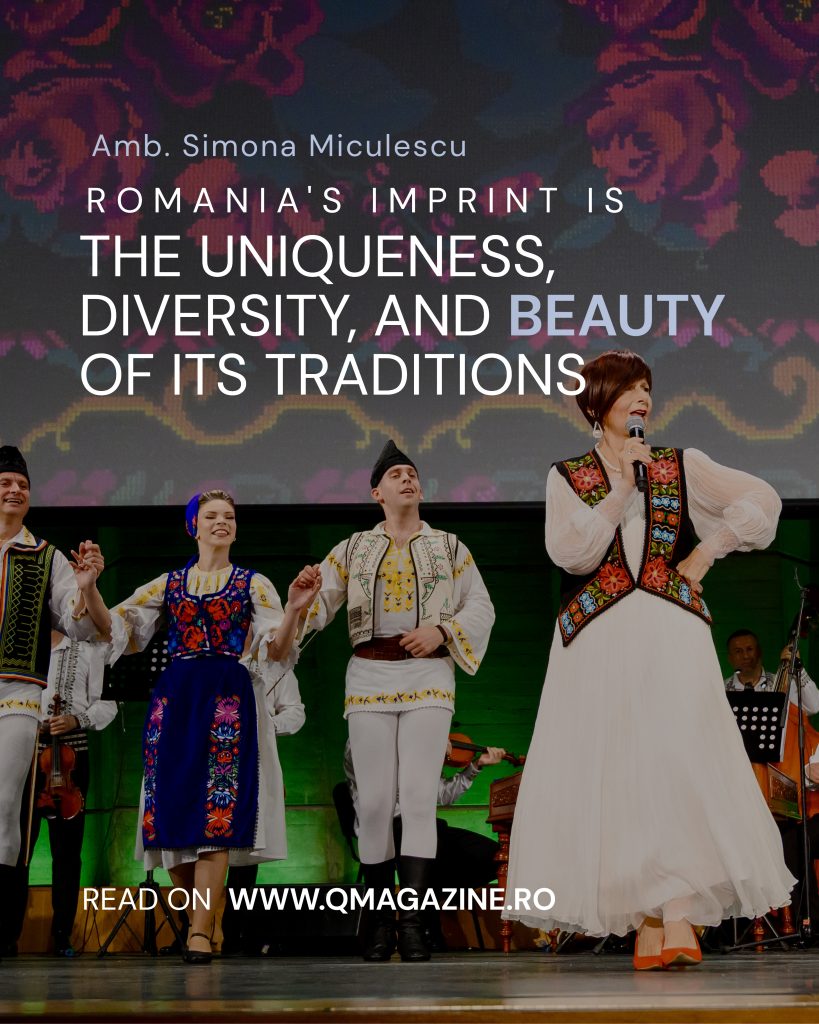
On October 23, 2025, in Paris, in UNESCO Hall 1, the concert “The Soul of Romania: Celebrating Together the Cultural Heritage” took place, an event organised under the auspices of the Presidency of the General Conference. It was a Romanian evening in the heart of the world, a synthesis between art and diplomacy, between identity and universality.
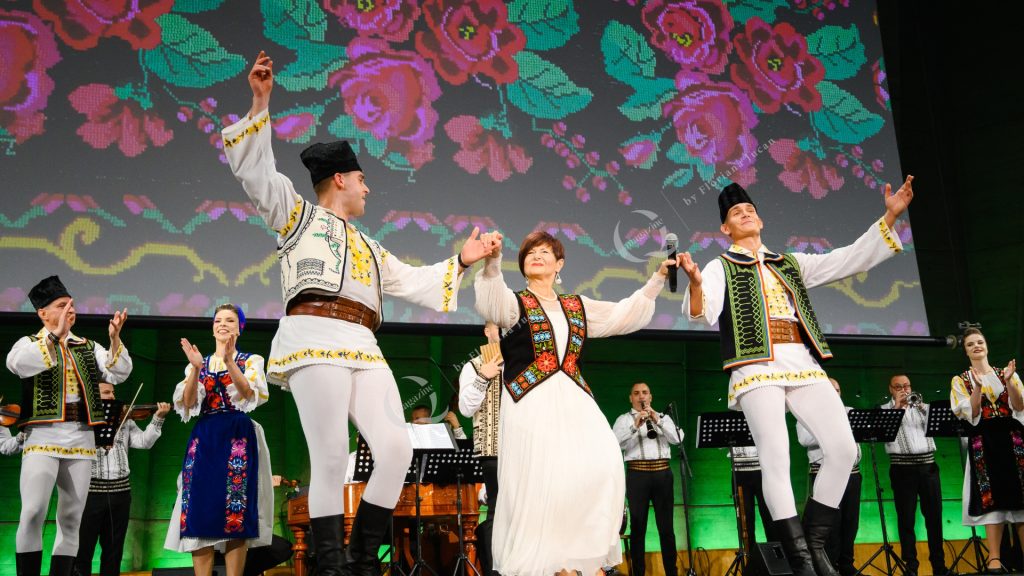
Ambassador Simona Miculescu ended her term as President with a gala titled “The Soul of Romania,” where the country’s folklore and traditions were celebrated on the stage of UNESCO’s headquarters in Paris.
For Romania, this moment is not only a symbolic culmination of two years at the helm of UNESCO, but also proof that when you represent your country with intelligence, the world listens to you. I know that many warm-hearted Romanians, young and not so young, attended this event, vibrating with every musical note that echoed authentic Romanian spirit—one that is expressed not through slogans, but through sensitivity, intelligence, and respect for the world—and who played the role of “good hosts” for guests from all over the world.
In the end, perhaps this is the real lesson of Simona Miculescu’s mandate: that diplomacy is not just a profession, but a form of culture of the spirit. It does not mean the absence of conflict, but the mastery of balance. It does not mean silence, but the power to speak with meaning. It does not mean imposing oneself, but convincing through clarity and calm. In these two years, through Simona Miculescu, Romania has shown that it can be present where the future of culture, education, and peace is decided—not through noise, but through the refinement of conviction. And this refinement, once proven, is never lost.
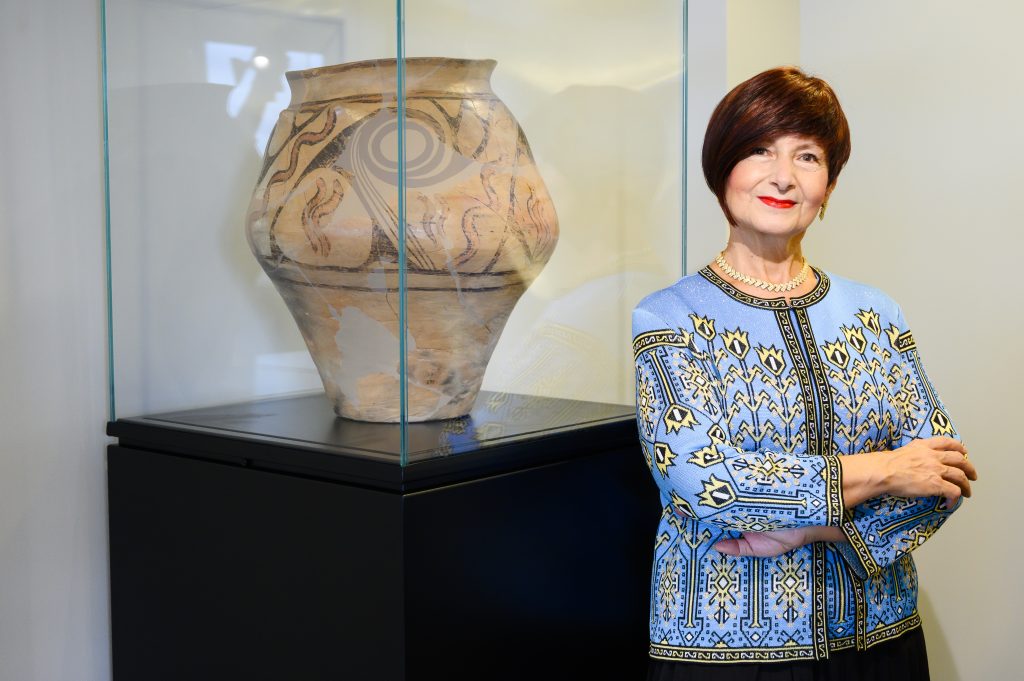
During a round table discussion dedicated to the UNESCO art collection, Ambassador Miculescu emphasized its importance, from monumental frescoes to abstract art and traditional calligraphy, as “a living expression of global cultural diversity.” Miculescu emphasized its importance, from monumental frescoes to abstract art and traditional calligraphy, as “a vivid expression of global cultural diversity” and highlighted the restoration of a Cucuteni vessel (Eastern European Neolithic) as a symbol of Romanian cultural diplomacy and the value of preserving collective memory through art.
A COMPLEX MODEL
Clearly, Ambassador Simona Miculescu’s two-year term at the helm of UNESCO was far richer and more complex than I could capture in a single editorial.
In Samarkand, Uzbekistan, where the 43rd session of the UNESCO General Conference took place (October 30 – November 13, 2025), Simona Miculescu passed the baton to her successor – Ambassador Khondker M. Talha, representing Bangladesh – in a moment that was symbolic not only of institutional transition but also of the continuity of a noble mission: building peace in the minds of people through education, science, and culture.
I hope that this achievement of Romanian diplomacy will be more widely recognised – in the months and years ahead – not only to honour an exceptional moment, but also to give new generations of diplomats and politicians the opportunity to learn from those who have truly excelled in this field.
I am also confident that Her Excellency, Ambassador Simona Miculescu, will, at the appropriate time, publish a series of reflections and documents that will further enrich the intellectual and symbolic legacy of Romanian diplomacy, enhancing our archive of institutional and human memory.
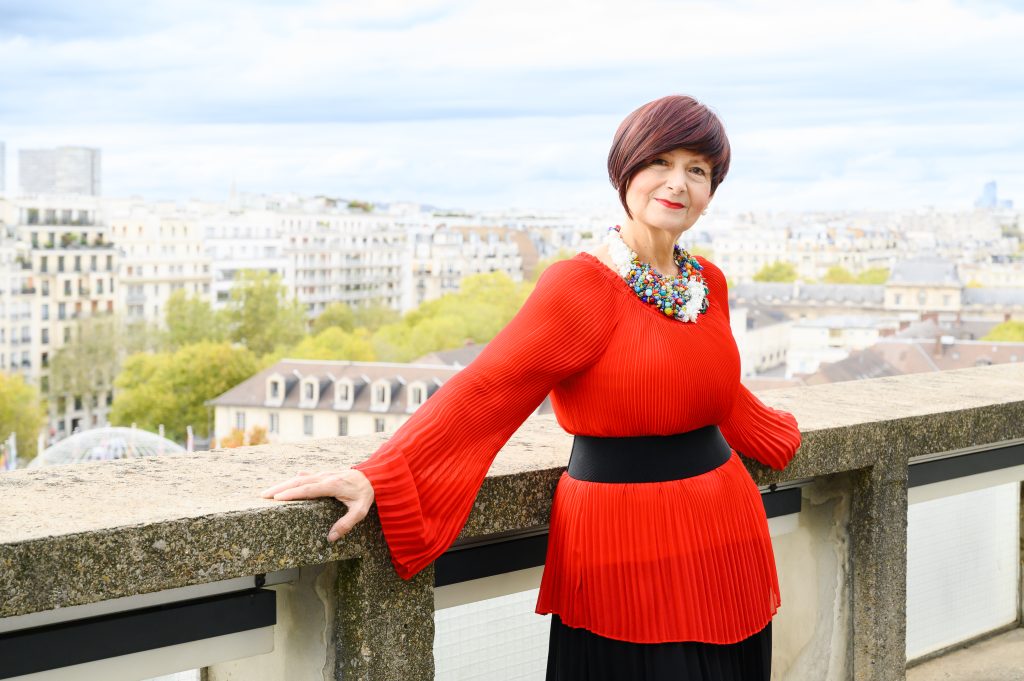
SIMONA MICULESCU FOR Q MAGAZINE
I will always remember… the moment when I was elected, by acclamation, by 194 UNESCO member states, as president of the General Conference, the supreme decision-making body, becoming the first Romanian in the organisation’s 80-year history to chair a UNESCO governing body, and only the fifth woman in this position.
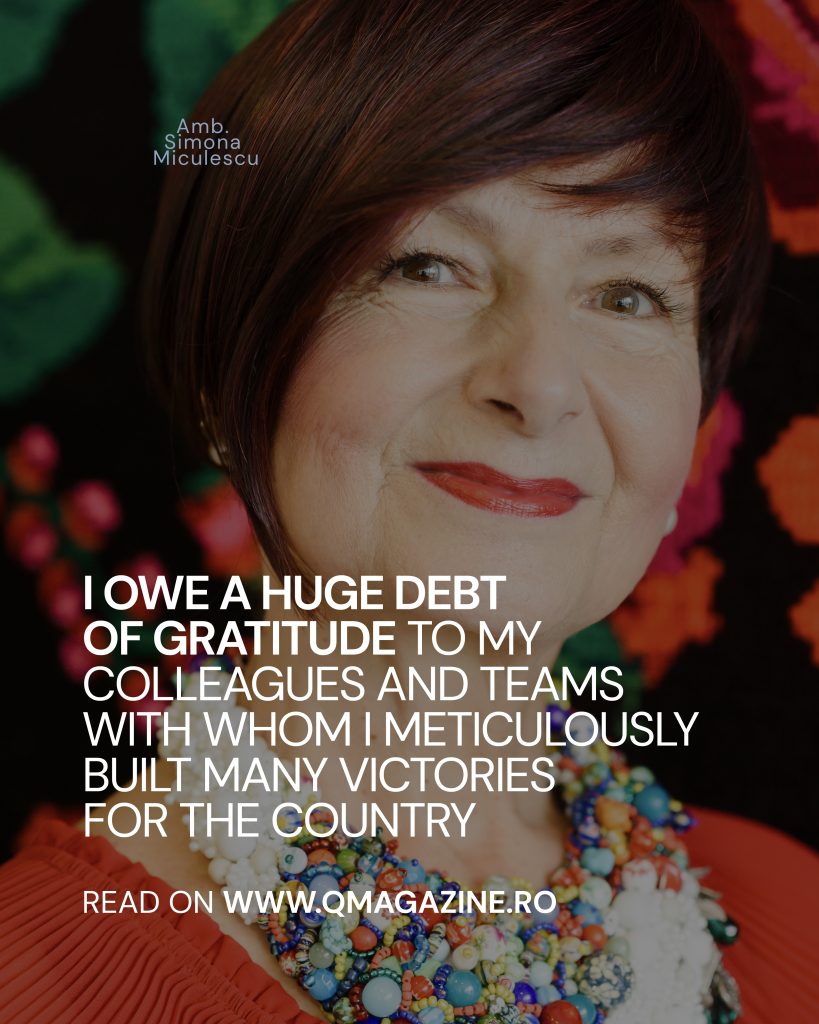
I owe a huge debt of gratitude… to my family and friends for their unconditional love, wisdom, balance, and support; to my mentors who guided my steps on this fascinating professional journey; to my colleagues and teams with whom I meticulously built many victories for the country and… Romania because, loving it so much, it has been a source of inspiration and perennial energy for me.
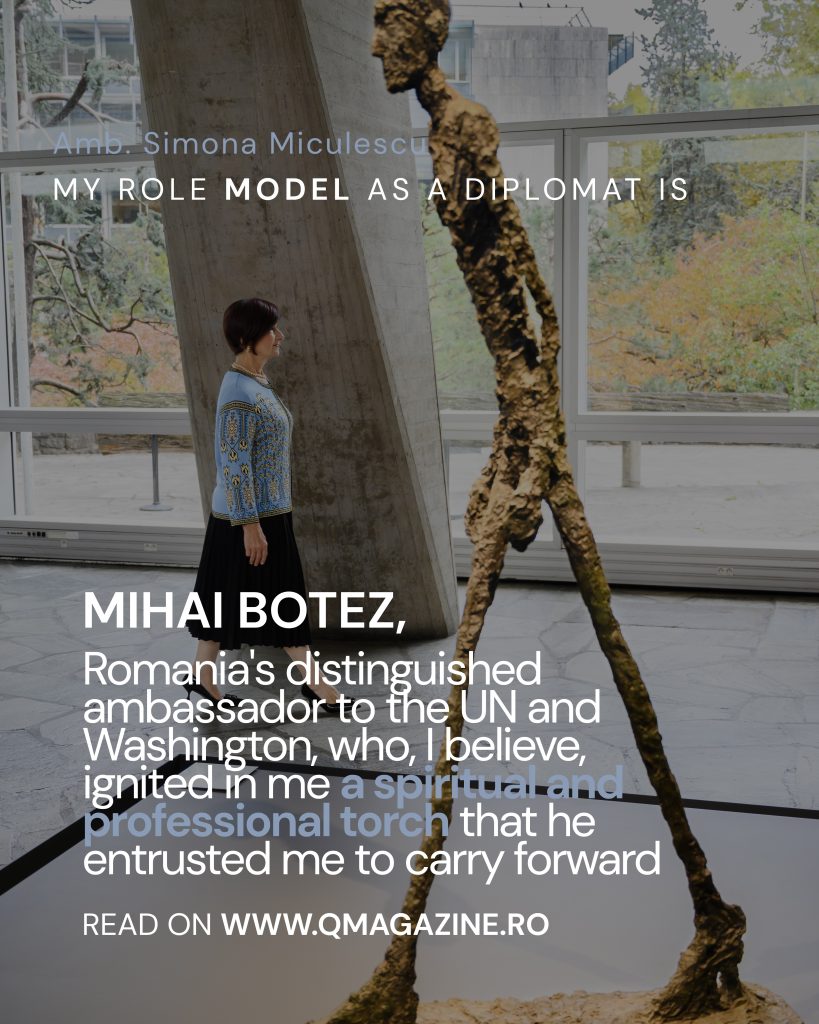
My role model as a diplomat is… Mihai Botez, Romania’s eminent ambassador to the UN and Washington, who I feel planted a spiritual and professional torch in me that he gave me to carry forward. And I try to honor his trust every day.
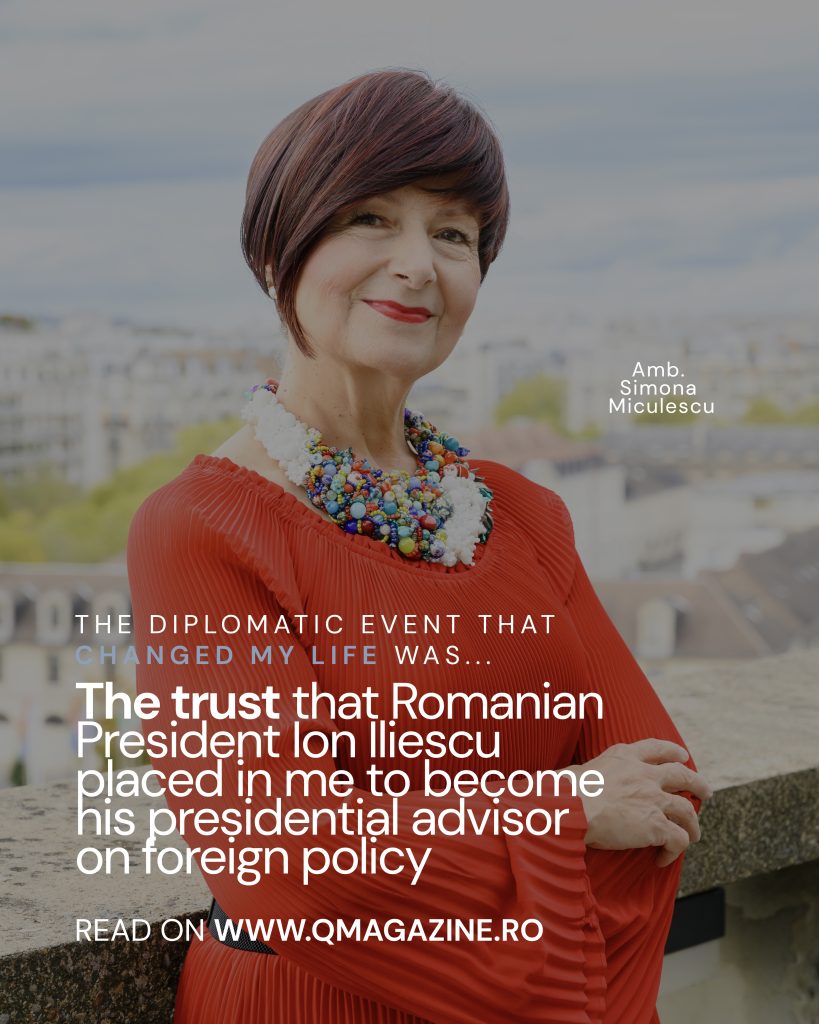
The diplomatic event that changed my life was… The trust that Romanian President Ion Iliescu placed in me, a simple career diplomat—and therefore an apolitical professional—to become his presidential advisor on foreign policy.
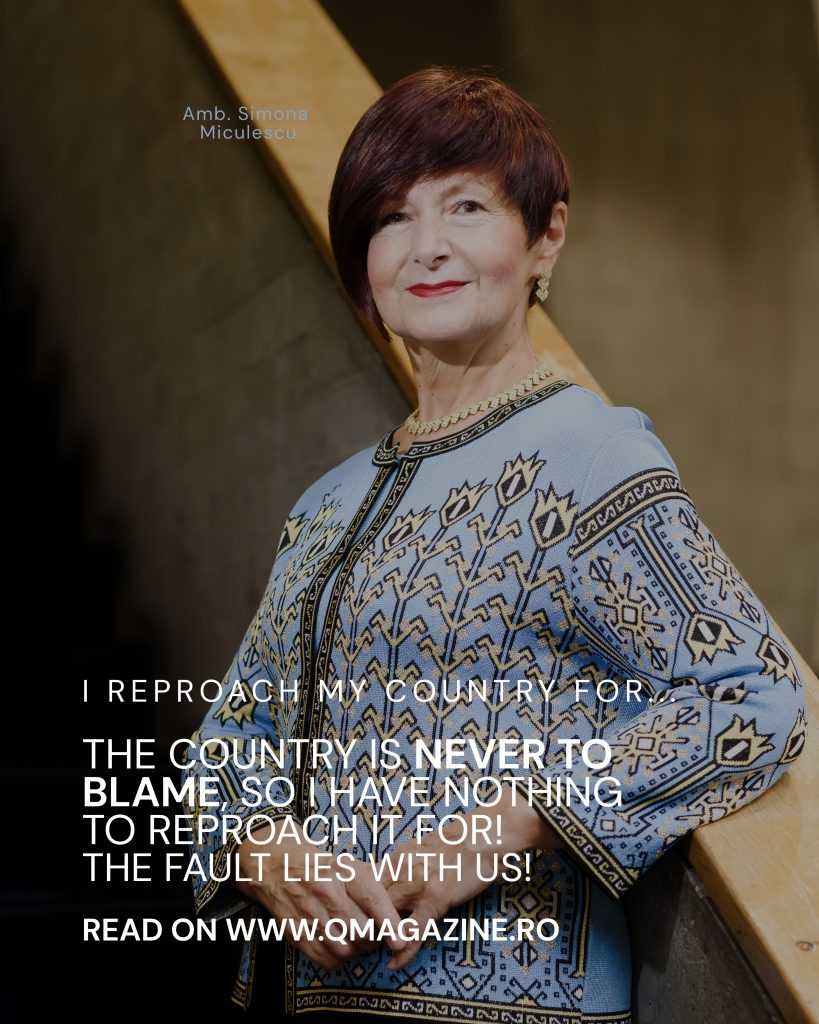
I reproach my country for… The country is never to blame, so I have nothing to reproach it for! The fault lies with us! We must love it even more, serve it with even greater devotion and passion, carry it in our hearts and promote it wherever our wings take us, defend it with even greater ardor and wisdom…
I appreciate Romania for… the simple fact that it means HOME, and that’s all that matters!
A good diplomat knows how to… turn angles into curves.
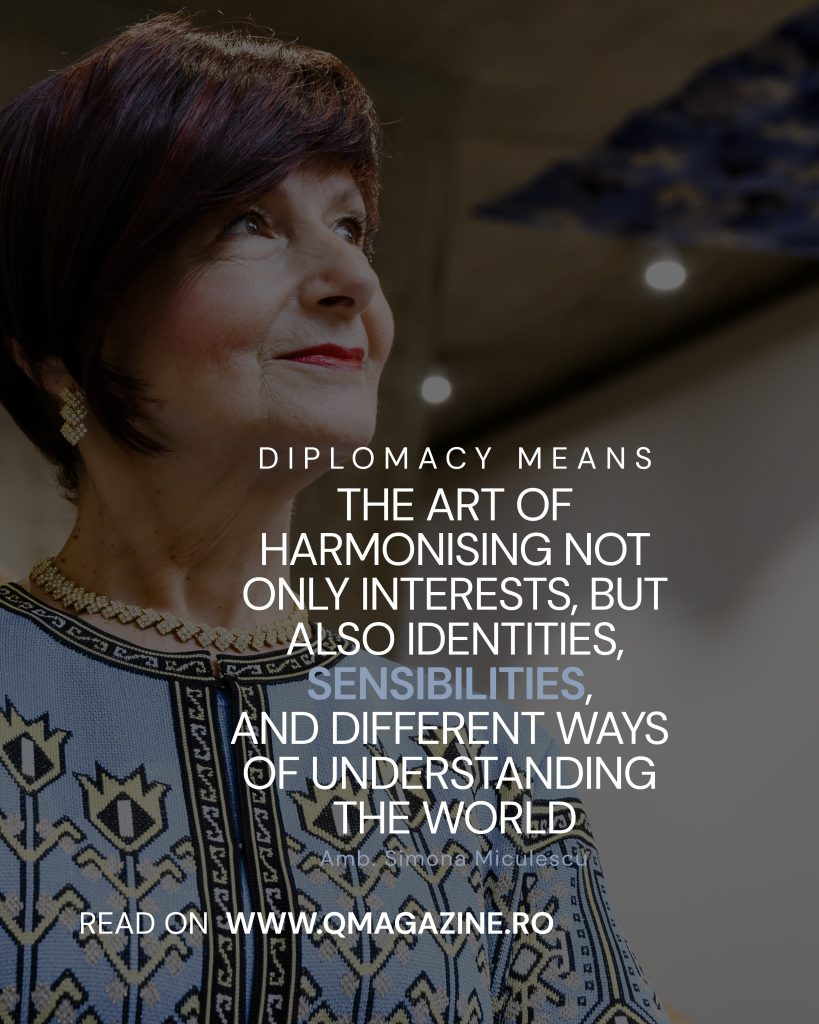
Diplomacy means…Multilateral diplomacy—because it’s my favorite—requires deep multicultural experience and a demand for knowledge and anthropological respect for cultural diversity. It is the art of harmonising not only interests, but also identities, sensibilities, and different ways of understanding the world.
Romania’s imprint is… the uniqueness, diversity, and beauty of its traditions.