In 2013, when I accompanied Victor Ponta on his visit to Washington—the first such visit in many years by a Romanian prime minister or president —I chose to skip the White House and use the little time I had to visit the National Archives, the Spy Museum, the Press Museum, the Lincoln Memorial, and, above all, the Library of Congress. Those close to me know that, on most of my travels, I seek out libraries because they represent not only the uniqueness and richness of a collection of manuscripts, but also the beauty of the paintings or architecture that these places offer to those who cross their threshold. The libraries of the world are true monuments and expressions of a people’s identity.
- Falimentul politicii externe. Președinția României plătește 3,4 milioane de dolari unei firme de lobby pentru „aprofundarea relației cu SUA”
- În numele Annei Sava, această fată deșteaptă…
- Florin Jianu: Antreprenorii români „sufocați de taxe și impozite” vor scăderea impozitării pe forța de muncă, reducerea impozitului pe dividende, reducerea TVA
- Ministrul Culturii, Demeter Andras Istvan, a demisionat
- Air China ar putea lansa ruta Beijing – Otopeni
CANTEMIR, IN JEFFERSON’S LIBRARY
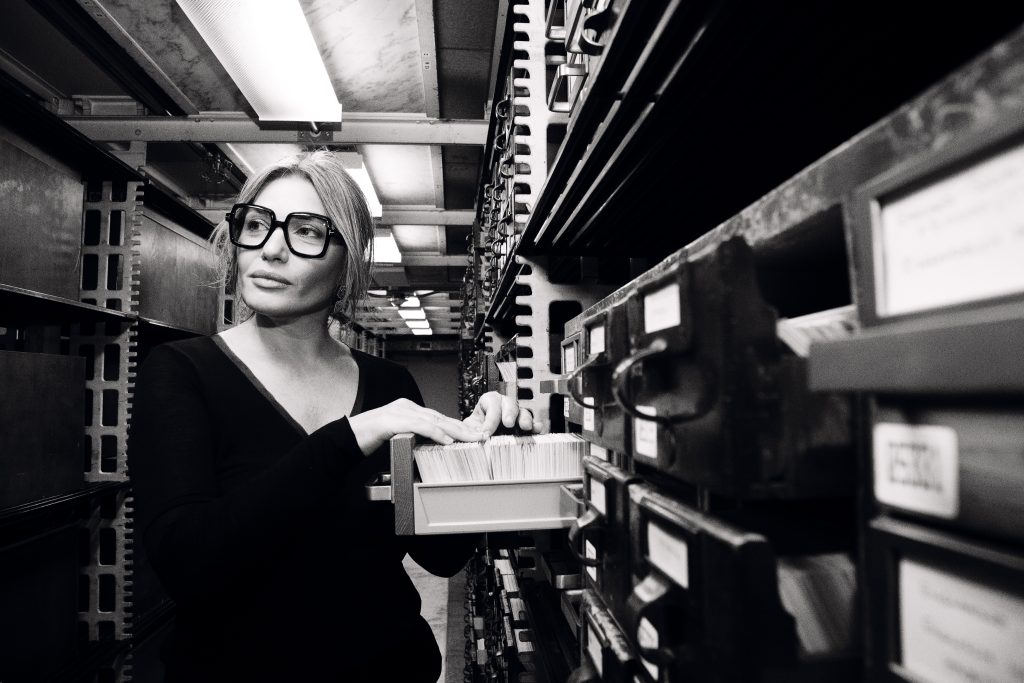
I started this year in the world’s largest library, beneath the magical dome of the Main Reading Room, and was fortunate enough to then descend into its “inner workings”, the unseen underground levels, where millions of cards, arranged alphabetically across kilometres of shelves, filing cabinets, and drawers, guide you to the book you are looking for.
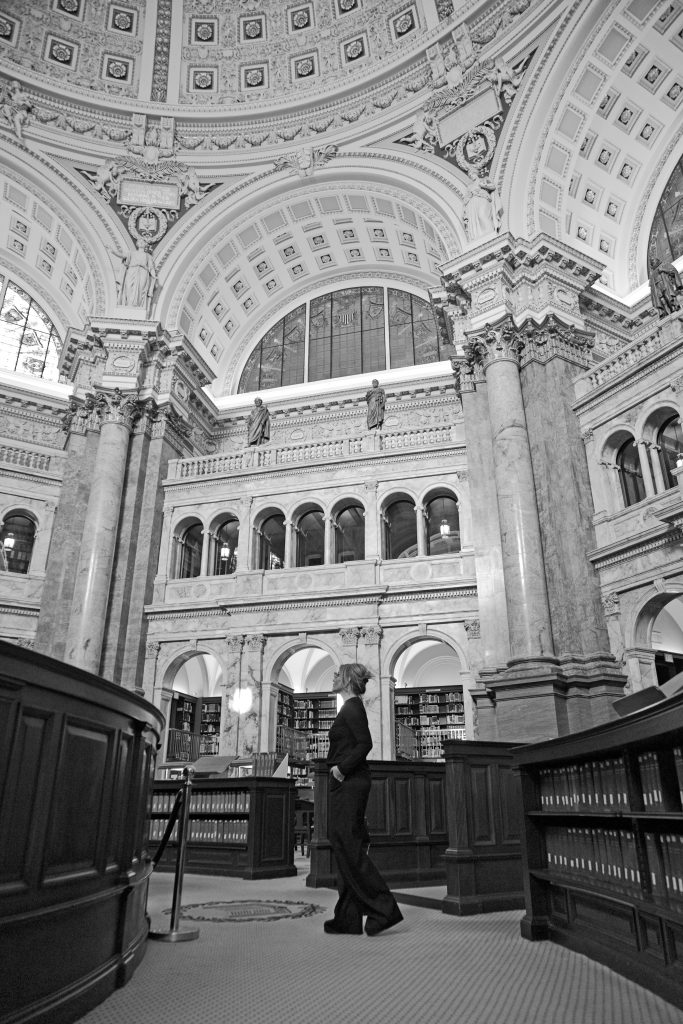
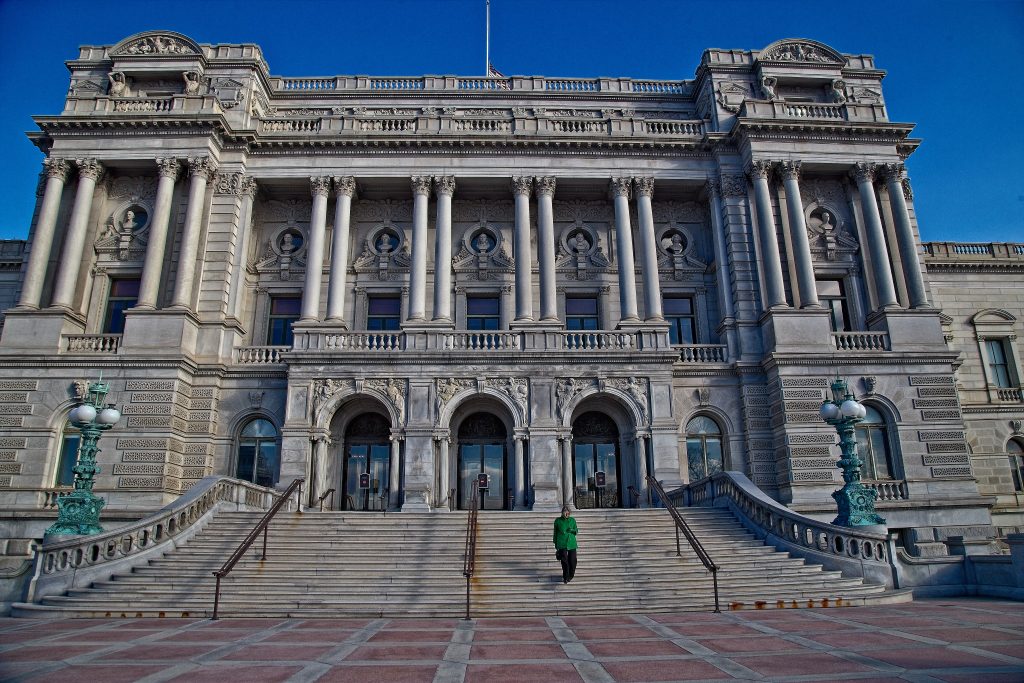
What was originally intended in 1800 to support the people’s elected representatives in drafting laws and policies has become the most important and vibrant place for books in the world, not only for the American people, but for anyone, whether student, researcher, teacher, writer, or simply a reader from any corner of the planet.
Founded in 1800, it is also the oldest federal cultural institution.

On August 24, 1814, British troops set fire to the Capitol building—which housed the library—and destroyed the main collection of 3,000 volumes. On January 30, 1815, Congress approved the purchase of Thomas Jefferson’s personal library, which contained 6,487 books, for $23,950, in an attempt to compensate for the collection destroyed in the fire.
When you think that Romanian presidents seem to have only kitchens!
Every working day, the Library receives approximately 15,000 items and adds over 10,000 new items to its collections.
The materials are acquired as copyright deposits.
It also receives donated works, makes acquisitions through other government agencies (state, local, and federal), signs pre-publication agreements with publishers, and organizes exchanges with libraries in the United States and abroad.
Items not selected for the collections or other internal purposes are used in national and international exchange programs.
The Library thus acquires materials that would otherwise not be available. Remaining items are made available to other federal agencies and subsequently become available for donation to educational institutions, public bodies, and non-profit organizations.
LARGEST RUSSIAN-LANGUAGE COLLECTION OUTSIDE RUSSIA
Since 1962, the Library of Congress has maintained overseas offices to acquire, catalog, and preserve library and research materials from countries where they are not available through conventional acquisition methods.
The overseas offices in New Delhi (India), Cairo (Egypt), Rio de Janeiro (Brazil), Jakarta (Indonesia), Nairobi (Kenya), and Islamabad (Pakistan) collectively acquire materials from more than 60 countries and on behalf of libraries in the United States.
Approximately half of the Library’s collections are in 470 languages, with the other half in English.
The Africa and Middle East Division holds several thousand volumes in languages of the region that do not use the Latin alphabet.
The Asian Division has the largest collection of Chinese, Japanese, and Korean materials outside of Asia and one of the largest Tibetan collections in the world.
The library has the largest collection of Russian-language materials in the United States and the largest outside Russia.
The Iberian, Latin American, and Caribbean collections, which include millions of books, magazines, newspapers, maps, manuscripts, photographs, posters, recordings, sheet music, and other materials, are the largest and most comprehensive in the world.
The Congressional Legal Division is the largest repository in the world, including one of the finest collections of legal works and the most comprehensive collection of foreign law journals in the United States. It contains publications of the United States Congress dating back to the founding of the nation.
It also houses the largest collection of rare books in North America, including the largest archive of 15th-century prints in the Western Hemisphere. Here you will find the first book in the US, “The Bay Psalm Book” (1640), 100 extremely rare children’s books, including “The Children’s New Play-Thing” (Philadelphia, 1763) and “The Children’s Bible” (Philadelphia, 1763).
ROMANIANS IN THE LIBRARY
Maria Pena, from the Public Relations Department, and Peter Armenti were my hosts and guides through this labyrinth, where we walked down entire corridors and crossed rooms until we reached our beloved… Eminescu.
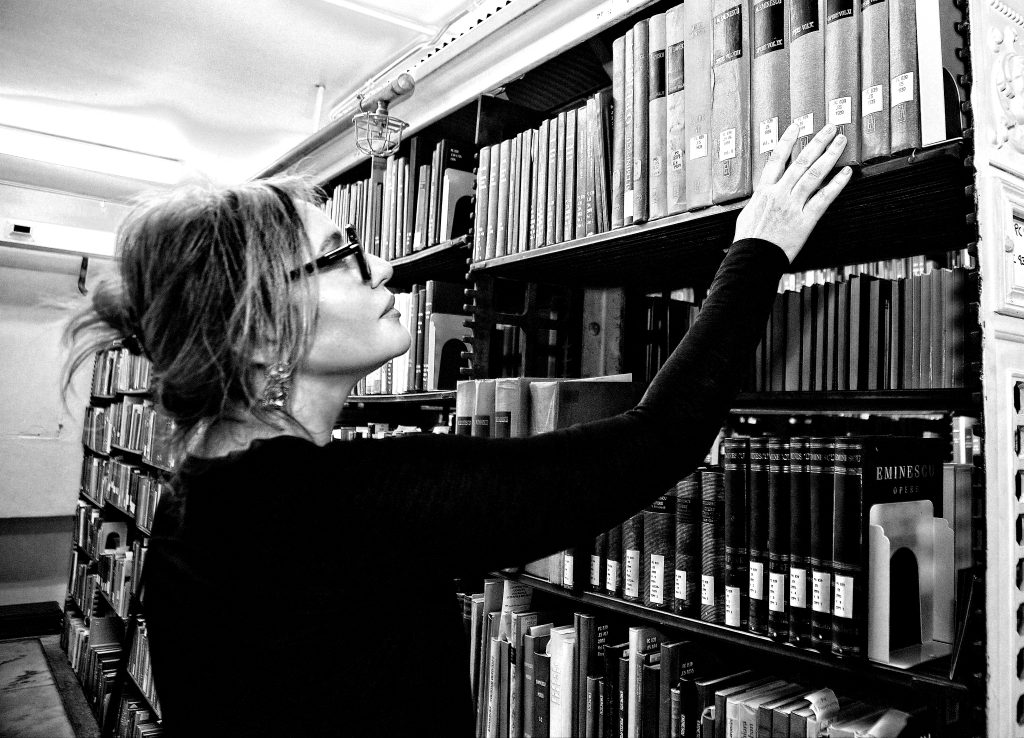
Dozens of volumes bearing the names of Romanian writers were neatly arranged on the shelves, waiting to be requested by a reader.
Slavici, Ioan Budai-Deleanu, Sadoveanu, Lucian Blaga, Rodica Ojog-Brașoveanu, Caragiale, Mircea Eliade, Vasile Alecsandri, Ion Heliade Rădulescu, George Călinescu, Titu Maiorescu, Alexandru Macedonski, and many others had their names placed one after the other on the spines of the vertically stacked volumes.
I felt joy, excitement, and pride at the same time that, although it is not a major culture nor a country supported by a well‑established and consistent lobby, my country was there, and its significance was recognised, standing alongside everything in this world that is essential to preserve and to know.
I randomly picked up one of our Emin’s volumes, which took us into universal culture, and opened it to one of the poems from the drama “Steaua mării” (The Star of the Sea).
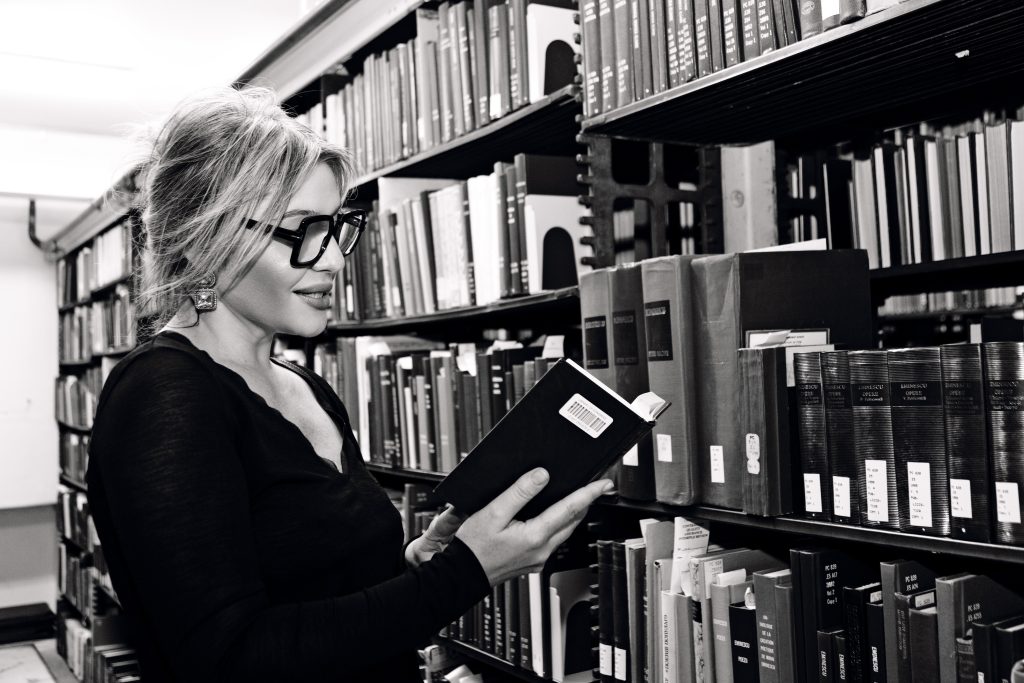
There, in the basement of the largest library in the world, I began to ask, aloud and full of emotion:
“Who is the angel on the shores,
Who dreams in the castle,
When the rebellious dream of the sea
Breaks its worlds of waves
From the eternal earth?
Who is the pale wonder,
Who seems to gaze forever
Among the dry stone cliffs,
As they shake off the foam
Of the sea’s cold waves?”
Although they did not understand anything, my hosts, surprised and touched by the tears in my eyes, immortalized the moment with their phones and kindly told me, “How beautiful the Romanian language sounds when you recite it!”
I posted this moment on my Facebook account and here:
At thousands of miles away, across countries, seas, and oceans, in the grandeur and significance of the building where I was, Eminescu found me and embraced me indescribably.
I closed the book and put it back on the shelf. I noticed my hands were damp, my eyes filled with tears, and I felt overwhelmed. It was a moment which, although I was accompanied by others, I experienced in a profound inner solitude.
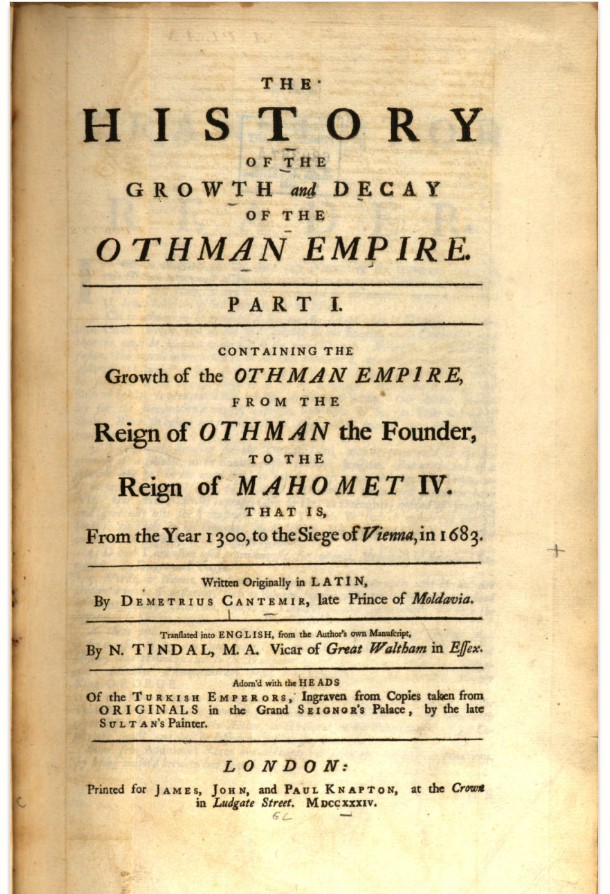
Thomas Jefferson’s personal library, acquired by the US Congress in 1815, included a monumental work by Dimitrie Cantemir, titled “Histoire de l’Empire Othoman” (Paris, 1743). Unfortunately, that copy was among the many volumes in Jefferson’s original collection destroyed in a devastating fire in the US Capitol on Christmas Eve 1851. The Library later succeeded in obtaining a copy of the English edition, “The History of the Growth and Decay of the Othman Empire” (London, 1734). Cantemir wrote this history in Latin between 1714 and 1716, while in exile as an advisor to Peter the Great. It was published posthumously, first in English, because his son took the manuscript to London. It is the first substantial history of the Ottoman Empire in any European language and remained the standard reference for the following century.
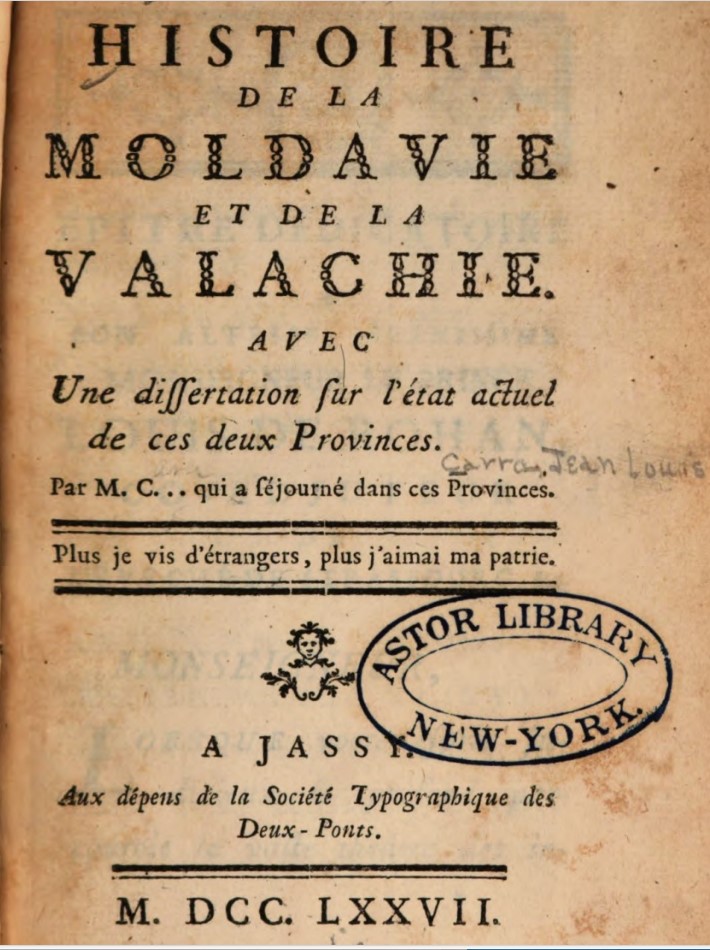
Among the rare Romanian books in the Library are also, by Cantemir, “Divanul sau Gâlceava înţeleptului cu lumea sau Giudeţul sufletului cu trupul” (The Divan or The Wise Man’s Quarrel with the World or The Judgment of the Soul with the Body), “Hronicul Romano-Moldo-Vlahilor” (The Chronicle of the Romanian-Moldavian-Wallachian People), “Histoire de la Moldavie et de la Valachie. Avec une dissertation sur l’état actuel de ces deux provinces,” as well as “Pravila lui Vasile Lupu” – “Romanian Book of Learning from the Imperial Laws and Other Judgments,” published by the Church of the Three Hierarchs in Iași in 1646, or “Historia della Transilvania” raccolta dal cavalier Ciro Spontoni. in 1646, or “Historia della Transilvania” collected by Cavalier Ciro Spontoni.
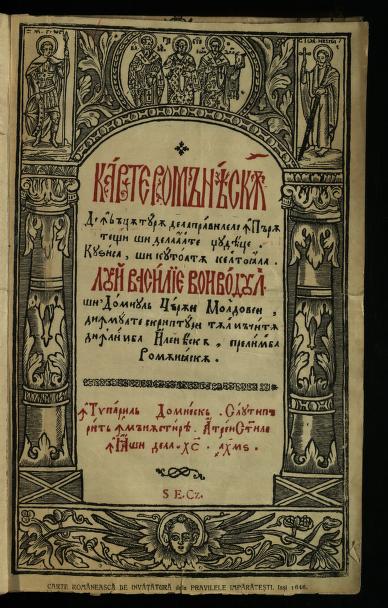
“Pravila” is the first official codification of civil law in Moldova, the oldest legal code printed in Romanian, which established aspects of agricultural and criminal law, while recognizing local customary law.
Among the Romanian works, the Library also holds letters written by Queen Marie, as well as correspondence from foreign diplomats who carried out political or diplomatic missions over time on Romanian territory. It preserves a collection regarded as one of the most precious: recordings of Jewish folk music from Maramureș, gathered before the Second World War, only a few years before that community was destroyed by the Nazis.
The Library of Congress manuscript collection also houses and makes available to researchers other music-related materials, such as the estate of Alma Gluck, with annotated piano and vocal scores, correspondence, and more.
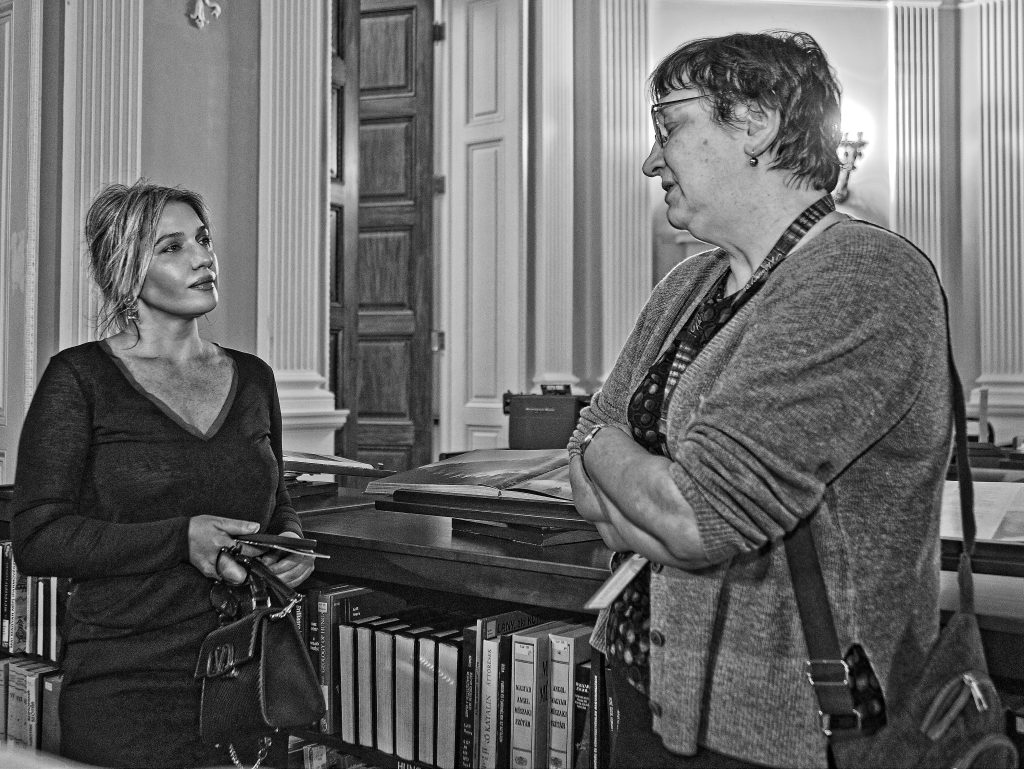
I was then delighted to meet Zsuzsa Daczo, the only librarian of Romanian origin working in the Library’s Latin American, Caribbean & European Division/European Reading Room.
Originally from Transylvania, she emigrated to the United States many years ago, “when she fell in love with an American.”
“Five years ago, the Library of Congress advertised a position for a librarian for the Romanian and Hungarian collections. I don’t know how many candidates there were, but they chose me. I’ve been working here ever since and I love what I do.
I have helped many researchers, professors, students, and readers who have asked for my assistance with works in Romanian. From the moment I receive a request by email until we make the work available to the applicant, it takes no more than 24 hours, in very rare cases 48 hours, because we also have collections in other storage buildings belonging to the Library of Congress,” Mrs. Daczo told me.
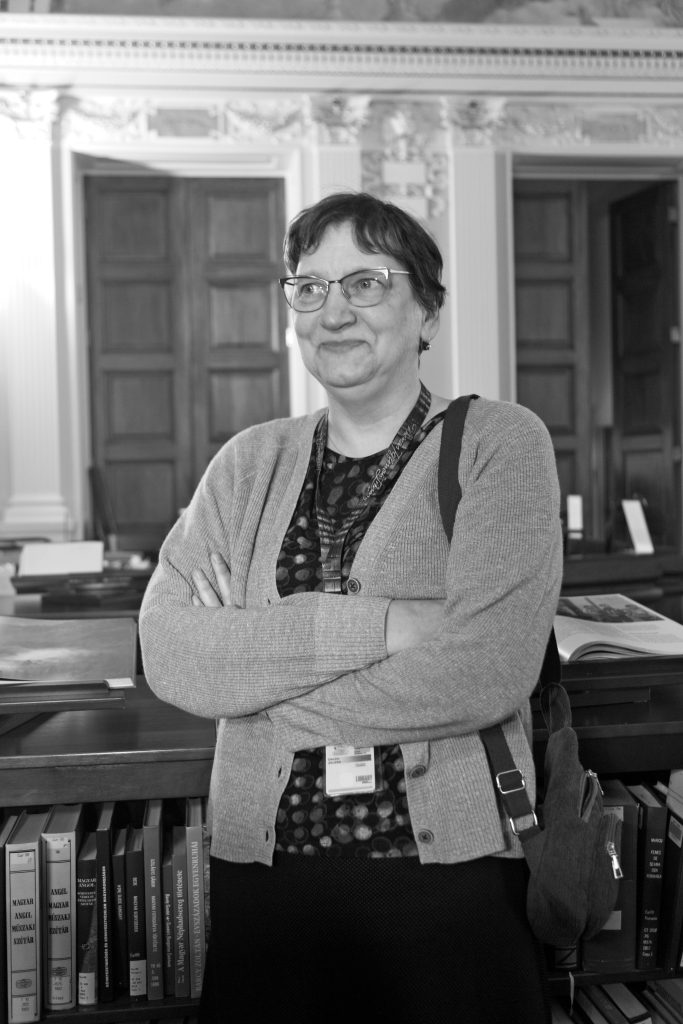
Zsuzsa Daczo coordinates the Romanian and Hungarian collections
She acknowledged that Hungary has more works than Romania and that Romanian publishers have often told her that shipping costs are too high to send published books. Instead, she mentioned the exceptional collaboration she had with Babeș-Bolyai University in Cluj and generously invited anyone, through me as well, to contact the Library of Congress, assuring them of her support.
“There are over 70,000 works in Romanian or referring to Romania.
We receive books and periodicals through a company that purchases them for us. We also receive materials through exchanges with several university libraries in Romania and the Romanian National Library.
We have collaborated with the Romanian Ministry of Culture because they requested assistance from our department, which is responsible for the restoration and conservation of books,” my interlocutor informed me.
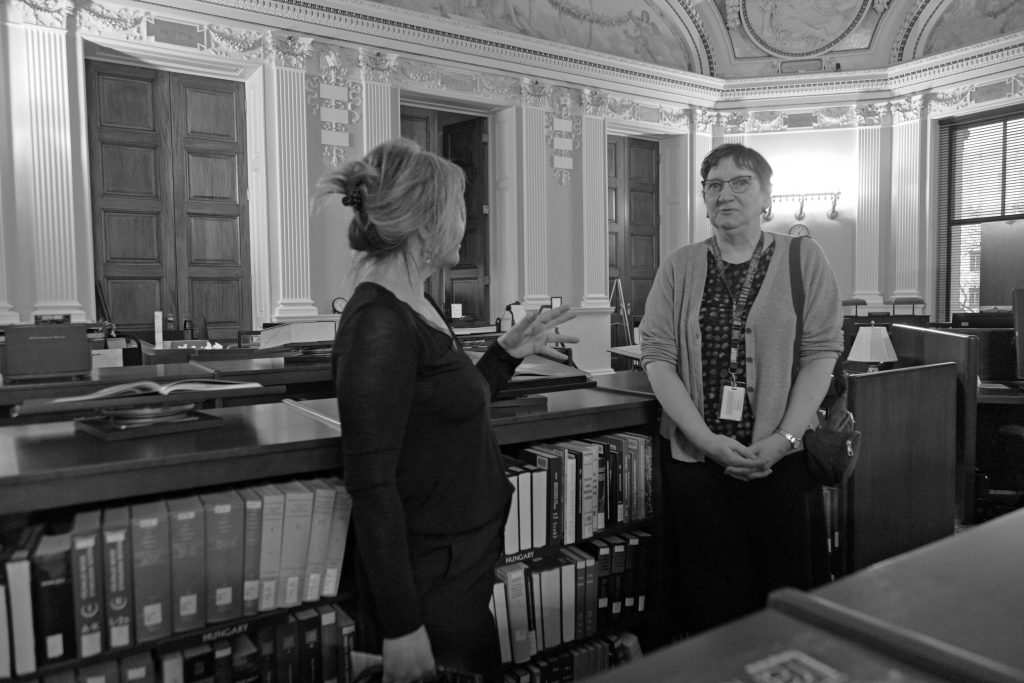
“The Library of Congress is open to everyone. Local libraries may be able to respond to your request more quickly than the Library of Congress, but if you have exhausted their resources, don’t hesitate to ask the Library of Congress for assistance. The fastest way is to use our online service Ask a Librarian at ask.loc.gov, where you can send us questions in Romanian. If you are unable to visit the Library of Congress in person and the materials you need are not available online, you may be able to use them at your university or local library.
Although the Library of Congress does not lend materials to individuals, it can send them to libraries in Romania through interlibrary loan,” Zsuzsa Daczo told me.
We returned beneath the dome of the Main Reading Room and, through the faces of the human figures depicted there, I saw the evolution of civilisation: Judea brought Religion to the world, Greece brought Philosophy, Rome brought Administration, Islam brought Physics, the Middle Ages brought Modern Languages, Egypt brought Written Records, America brought Science, France brought Emancipation, England brought Literature, Spain brought Discoveries, Germany brought Printing, and Italy brought the Fine Arts.
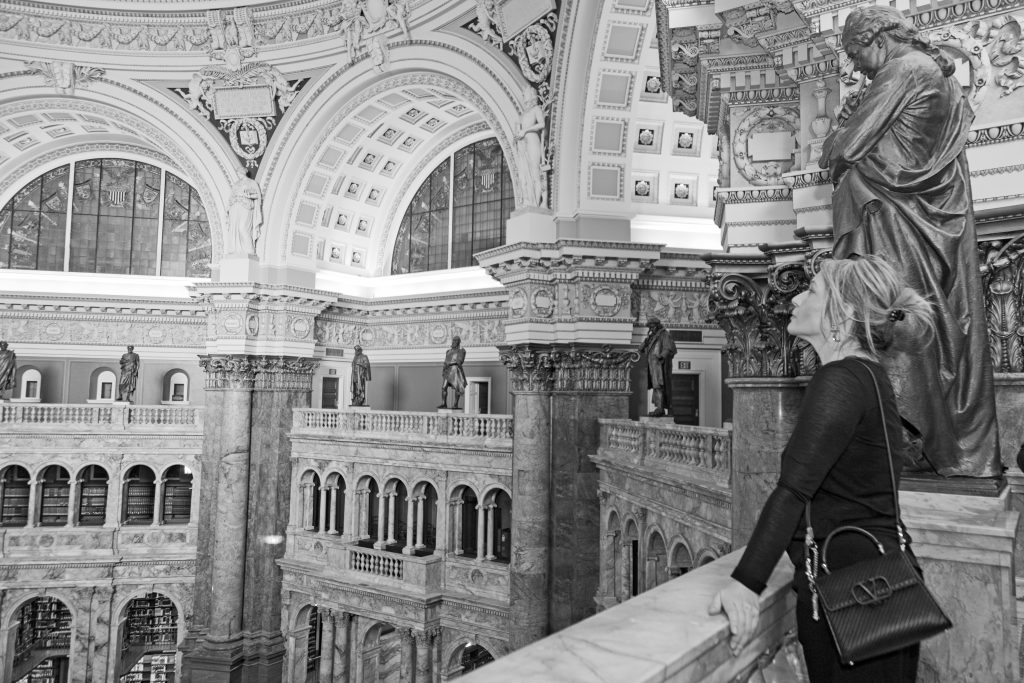
Statues depicting Isaac Newton, Solomon, Shakespeare, Plato, Michelangelo, Herodotus, Christopher Columbus, Saint Peter, Joseph Henry, James Kent, Homer, Francis Bacon, Beethoven, Edward Gibbon, Robert Fulton, and Moses gaze down from immortality upon the readers below.
They are landmarks to which humanity relates in all that is most important: Religion, Science, Commerce, History, Art, Philosophy, Poetry, and Law.
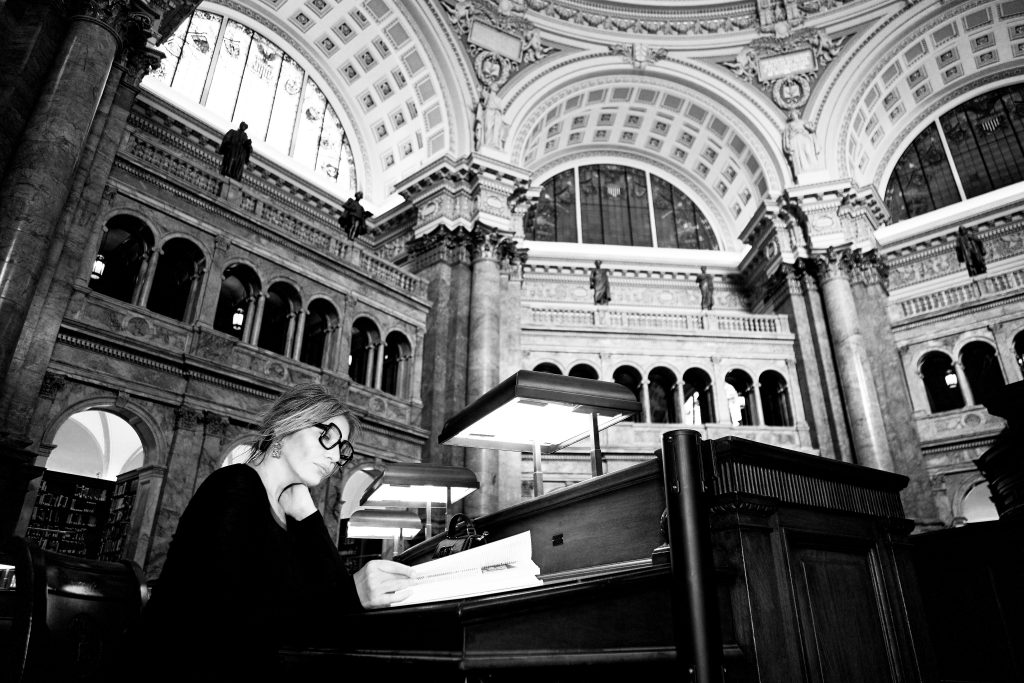
I sat down on a chair, under the light of a reading lamp, with a book about extinct languages and rare dialects, and remained there until a custodian reminded me that it was time for the library to close. But my heart remained open, forever, within it!
FIGURES TO REMEMBER
The Library of Congress has over 181 million items in its collections.
These include:
– 26 million books catalogued in the Library of Congress classification system
-16.2 million items in unclassified printed collections
-138.9 million items in unclassified (special) collections, consisting of:
– 4.3 million audio materials (including audiobooks)
– 80.6 million manuscripts
– 5.9 million maps
– 17.5 million microforms
– 882,500 posters, engravings, and drawings
– 1.5 million other materials (brochures, photocopies, etc.)
– 8.3 million items of sheet music
– 1.9 million moving images
– 15.9 million photographs
– 2 million machine-readable materials
In 2024, the last year for which we have centralized information and statistics, librarians responded to more than 764,000 reference requests from Congress, the public, and other federal agencies.
The Library of Congress recorded 149.3 million visits and 505.3 million page views on the Library’s websites.
It distributed over 22.2 million copies in Braille, audio, and large print to users through the National Library Service for the Blind and Visually Impaired and its network of state and local libraries.
It issued 424,200 copyright registrations and registered 17,000 documents containing 1.7 million works.
It distributed 402,000 items for use inside and outside the Library.
It issued 68,800 reader cards.
It registered over 9.7 million items under inventory control at Fort Meade or Cabin Branch.
During 2024, volunteers transcribed 166, 718 pages from the library’s collections, added 345,927 individual transcriptions to the loc.gov domain, completing the total number of transcriptions created by volunteers and making them available to improve search and accessibility to over 866,000 curious minds.
Extremes
The smallest book in the Library of Congress is “Old King Cole.” It measures 1/25″ x 1/25″, which is about the size of the period at the end of this sentence.
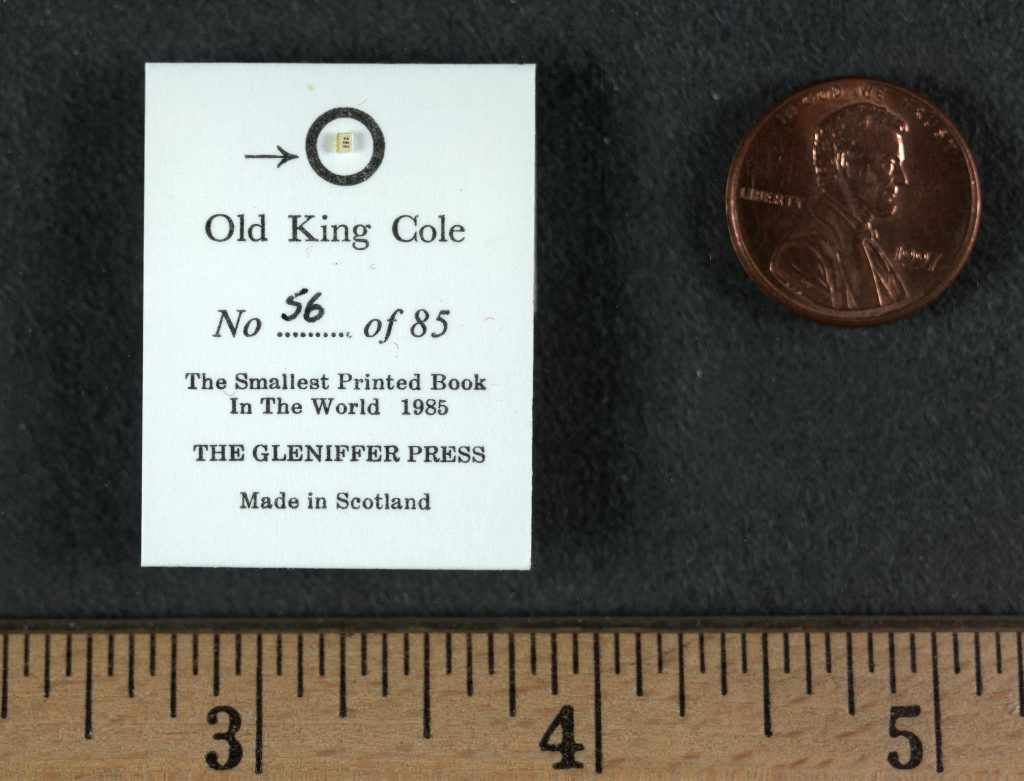
Old King Cole is preserved under strict protective measures. The book is mounted on a backing sheet and sealed in a transparent plastic enclosure, which is then stored in a custom-made conservation box. Whenever the item is displayed or shown to visitors, it remains inside its clear enclosure to eliminate any risk of loss or damage. According to staff, the book has not been leafed through since its digitisation, as its fragile condition makes handling unsafe.
The largest book in the Library of Congress is a 5 x 7 foot book with color images from Bhutan.
With support from Microsoft, a team of students from the Massachusetts Institute of Technology recorded the ancient life and culture of this South Asian country and made 40,000 digital images available to the National Archives of Bhutan. A copy of the illustrated book was donated to the Library of Congress.
Long ago…
One of the world’s oldest examples of printing—passages from a Buddhist sutra or discourse, printed in 770 AD—is in the Library’s Asian Division. The oldest written material in the Library is a cuneiform tablet dating from 2040 BC.
Presidential documents
Among the most important documents in the Manuscript Division are the originals of 23 presidents, from George Washington to Calvin Coolidge.
Engravings and photographs
The division contains millions of visual images, including the world’s most comprehensive international poster collection, the most detailed visual record of the Civil War, and the premier documentation of historic American architecture. Many of these are accessible in the online catalog.
Films, broadcasts, and audio recordings
Opened in 2007, the Library’s Packard Campus for Audiovisual Preservation in Culpeper, Virginia, was designed to acquire, catalog, store, and preserve the nation’s collection of moving images and audio recordings. In partnership with the Packard Humanities Institute, the US Congress, and the Architect of the Capitol, the Library’s state-of-the-art cultural offering houses the largest and most comprehensive collection of films, television programs, and sound recordings produced in America and abroad. There are millions of sound and video recordings, television programs, and other materials, representing more than a century of audiovisual production.
Music
The Library has an impressive collection of American music, the largest in the world, with an extensive archive of original manuscripts by musical theater composers and the world’s largest repository of wind instruments (flutes). The Library sponsors a series of chamber music concerts, which have been broadcast for many years.
Traditions and Heroes
The Folklife Archives at the American Folklife Center is the largest repository of traditional cultural documentation in the United States and one of the largest in the world. It contains the largest collection of Native American music and words, including the oldest ethnographic recordings ever made.
The American Folklife Center administers the Veterans’ History Project, established by Congress in 2000 to preserve the memories of the nation’s war heroes. Thousands of contributions have been collected, including from members of the federal legislature.
The American Folklife Center also administers and preserves the StoryCorps project, a nationwide grassroots initiative to record the oral histories of ordinary citizens.
Digital Audiobooks
Since 1931, the Library has provided books for the blind in Braille and on audio recordings. The National Library Service for the Blind and Other Print Disabled has replaced its inventory of audio cassette recordings with digital audio publications and newly developed digital playback equipment.
Cartography
The Library’s Geography and Maps Division holds the world’s largest collection of cartographic materials. It has the largest collection of fire insurance maps of cities and towns in the United States, providing unparalleled coverage of America’s urban growth from the late 19th century to the mid-20th century. The collection also includes the 1507 world map by Martin Waldseemüller, known as the “Birth Certificate of America,” the first document to feature the name “America.”
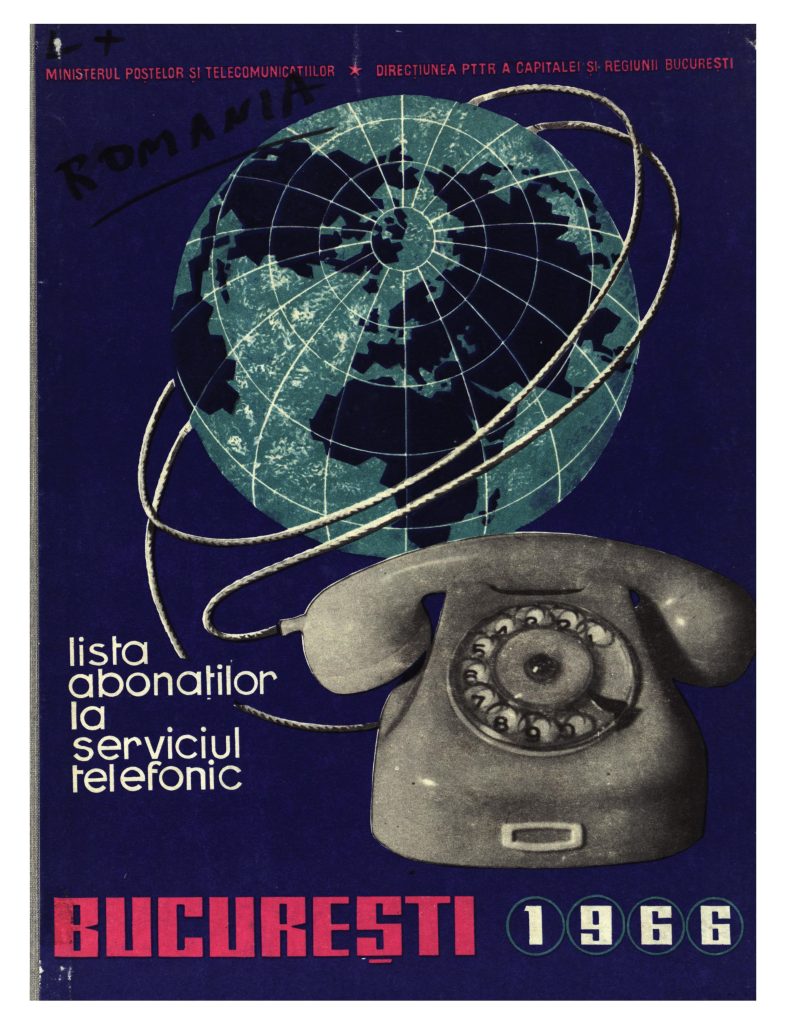
Telephone directories
The library’s general archive contains the world’s largest historical collection of telephone books (with numbers and addresses) and directories of North American cities. The library holds thousands more such microfilmed documents. This vast collection also includes directories of historical foreign cities.
Comic books and newspapers
The Serial and Government Publications Division contains the world’s largest repository of comic books. The oldest comic book in its collection is “Popular Comics” from February 1936. The division also holds the world’s most extensive newspaper archive. The oldest original newspaper in the collection is Mercurius Publicas Comprising the Sum of Foreign Intelligence, dated December 29, 1659.
Science and Technology
The Library of Congress boasts one of the largest and most diverse collections of scientific and technical information in the world. These materials represent approximately one-quarter of the total archive of books and magazines. The Library’s Science, Technology, and Business Division also holds the largest collection of technical reports and standards in the country.
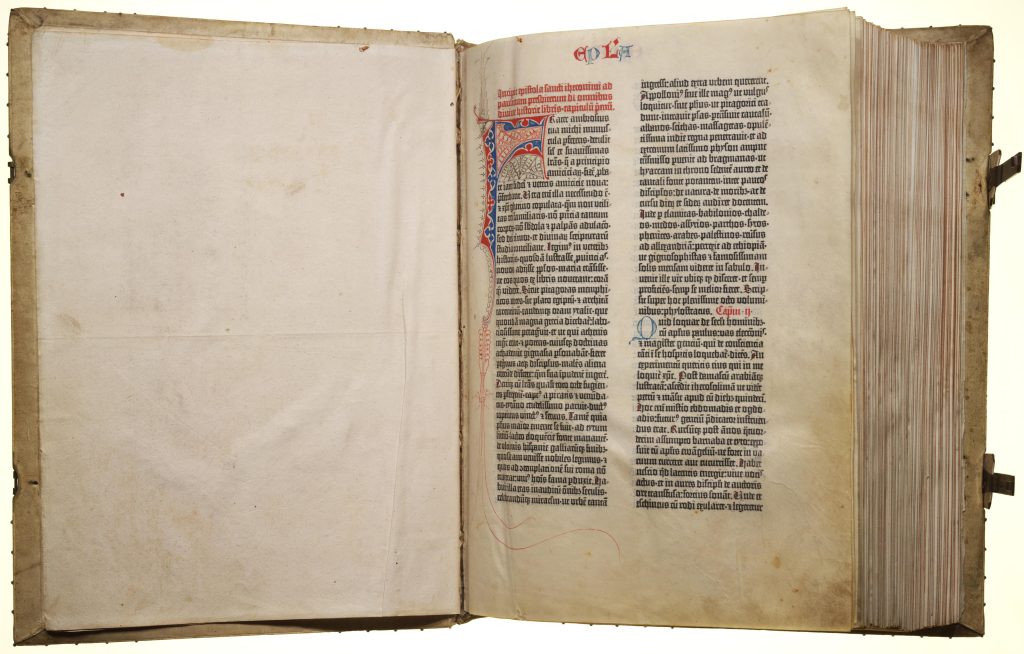
Gutenberg Bible Photo Shawn Miller, Library of Congress
Gutenberg Bible
The Library of Congress holds a copy of the Gutenberg Bible printed on parchment, a material made from calfskin that has been specially treated for this purpose.
It is one of four institutions that hold a complete copy of Gutenberg’s Bible on parchment, along with the State and University Library in Göttingen, the National Library of France, and the British Library.
All three volumes of the Library of Congress copy date from the mid-16th century (c. 1560) and are bound in wooden boards covered with white pigskin. The cover is decorated with patterns made with rotary stamps that leave a simple imprint on the leather. Two stamp patterns are distinctive: one depicts Christ, the apostles John, Peter, and Paul, and the other has representations of Faith, Hope, Charity, and Justice. Researchers believe that these imprints suggest that the Gutenberg Bible was still in use in Catholic worship at the end of the 16th century, and the specific patterns may help historians identify the connection.
The Library of Congress copy is 407 mm high and 300 mm wide, with 42 lines printed in each of the two columns, and researchers refer to it as the “42-line Bible” and “B42.”
The Gutenberg Bible is printed in Latin; it contains the translation of the Hebrew Old Testament and the Greek New Testament, the work of Jerome (c. 345-420 CE), who began the translation around 380 CE.
Over the centuries, manuscript copies of the Latin translation underwent changes and revisions, and in the 12th century, an attempt was made in Paris to create a standardized sequence of books and presentation for the Latin Bible. This version became known as the “Paris Bible,” and the Gutenberg Bible is based on a modified version of the Paris Bible, common in this area of the Rhine in the 14th and 15th centuries. Widely sold throughout Europe, the Gutenberg Bible and its many printed descendants became the standard versions of the Latin scriptures for centuries to come.
The total number of Bibles printed was probably at least 120 copies on paper and perhaps up to 40 copies on parchment.
The Library of Congress’s copy of the Gutenberg Bible has three volumes: Volume 1: Genesis through IV Ezra. Volume 2: Tobias through Ezekiel. Volume 3: Daniel through the Apocalypse of John.
The copy is on display in the Great Hall of the Jefferson Building.
The Library of Congress’s Conservation Division oversees the safety of the materials on display. A staff member changes the Gutenberg volume every six months (alternating between the three volumes) and the open page every three months.
Because the Library of Congress’s copy of the Gutenberg Bible is not highly decorated, employees give priority to displaying a page that is of particular visual interest (usually the beginning of a chapter, which often has a modestly decorated capital letter).
The Gutenberg Bible was part of a larger auction of 3,000 15th-century prints (called “incunabula”) that were part of Otto Vollbehr’s collection.
Congress authorized an allocation of $1,500,000 for the thousands of incunabula as well as the Gutenberg Bible.